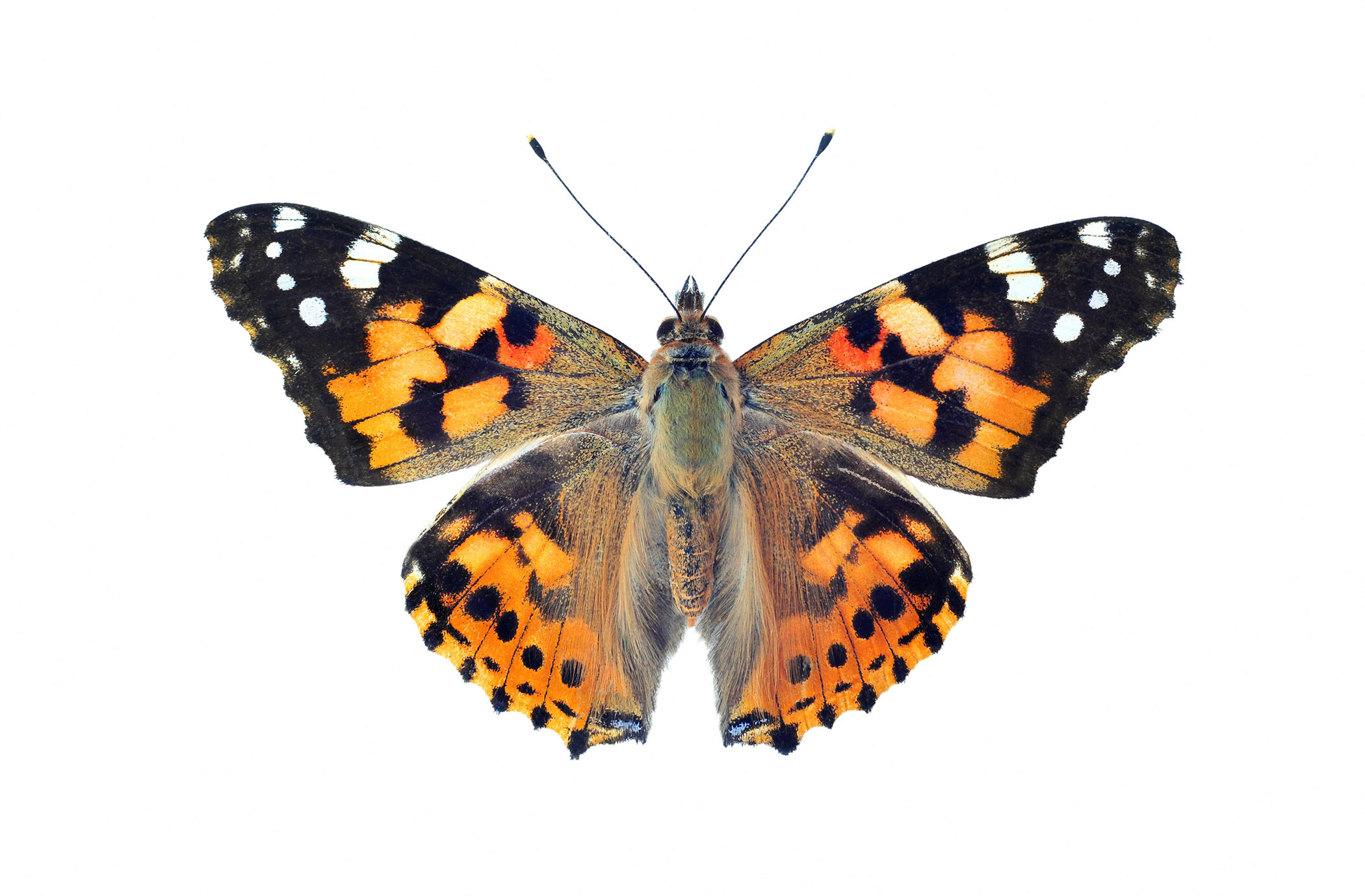



We are in the midst of a miracle: here’s an invitation to share it. All you have to do is find a buddleia. That’s the bush with long spikes of purple flowers that loves railway embankments, grows happily from the mortar of abandoned buildings and, being both decorative and easy, is a garden favourite.
It’s not just a favourite for those florescences, each of which can have several hundred tiny individual flowers. It’s also a butterfly magnet. So examine a handy buddleia, preferably on a nice sunny day, and look at the butterflies drinking and basking on the flowers. With a bit of luck you’ll find yourself revelling in an event that hasn’t happened in this country for 17 years.
It’s a painted lady year. Maybe it’ll be as good as the vintage year of 2009. It’s already pretty great: there are butterflies all over the place, filling every unforgiving minute of their brief lives with action: drink, sex, egg-laying and travel. You’ll see them on the wing, always in a hurry, a tangerine blur. Wait for them to settle for certain ID and the chance to appreciate their full beauty: butterflies of a hefty size, pale orange with black wing-tips, white spots within the black.
When you see a slightly tatty and faded one, hail a great traveller. When you see one fresh minted, apparently with the paint still wet, hail a traveller that will be, for the painted lady is not an insect you meet every day. They have flown from tropical Africa and, in this bumper year, some of them have already reached the Arctic Circle.
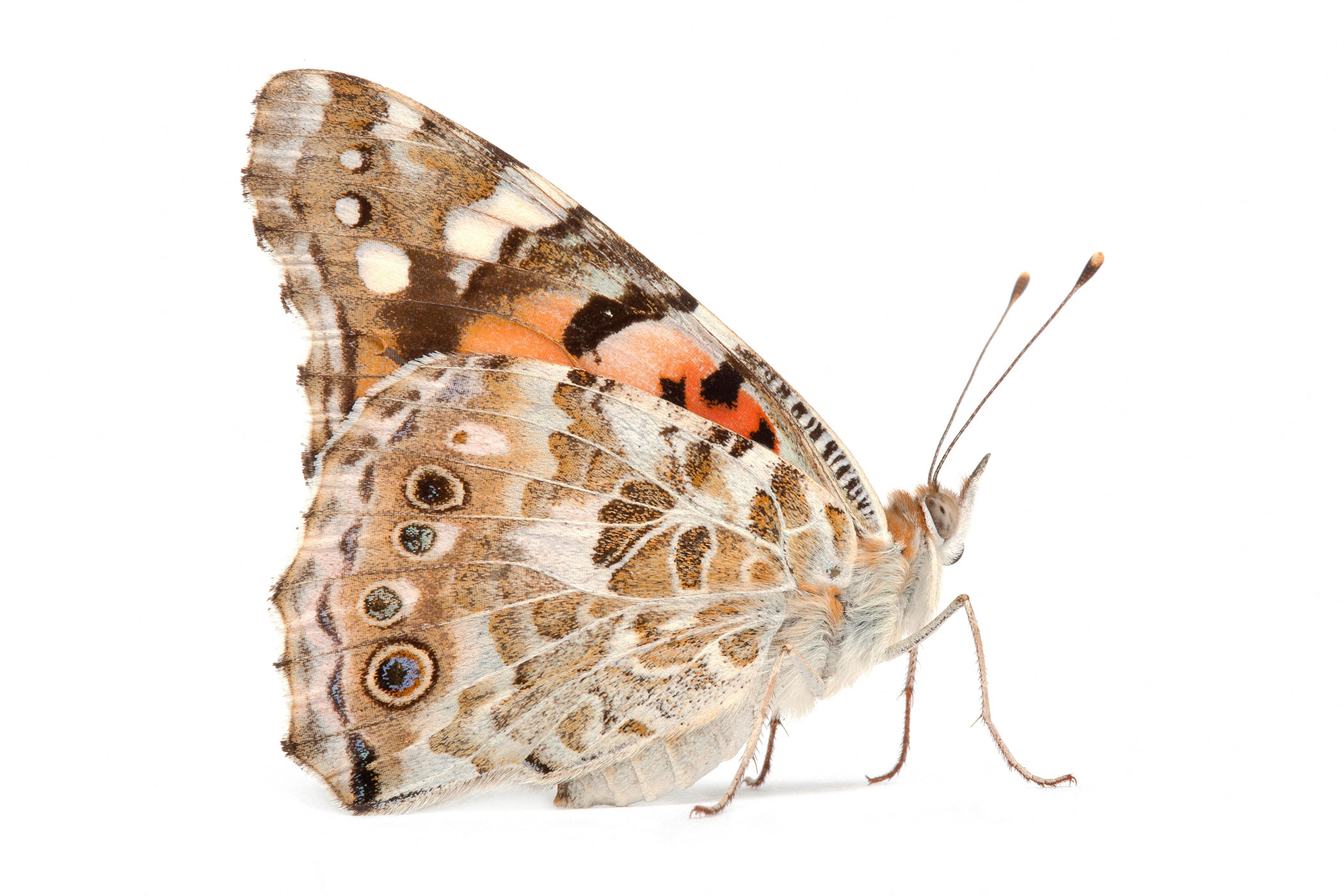
Aren’t butterflies proverbial dilettantes, creatures with a minute attention span, pathetic little things that can’t stick to anything for very long, feeble fragile flutterers? Well, try to keep up with a painted lady as it moves though a bank of flowering thistles and you’ll begin to appreciate both their speed and their sense of purpose.
They make their impossible journeys in the way humans might one day travel to the stars: in a series of generations. It might take three or four to reach the UK: eggs, caterpillars, pupae and finally the adults emerge possessed with a wild ambition to fly in the general direction of the North Pole. They can move from egg to adult in less than six weeks.
You’ll have noticed the major obstacle to their travels: the Sahara, a place notoriously short of flowering plants. The butterflies have no option but to cross it in one go. For the rest, they travel north, taking advantage of a fresh growth of plants as they advance with the advancing year, pausing to mate, lay eggs and die. The resulting caterpillars can tolerate a range of food-plants – thistle, mallow, plantain and even cultivated soy – and that’s essential to this long-range strategy.
You’ll see painted ladies most summers if you have an eye for butterflies, but every so often there’s a boom year, when everything goes right: rainfall at the right time to give the plants their best chance, sun when the adults emerge, along with a shortage of parasitic wasps and flies. In the great years they spread out across northern Europe seeking to make more painted ladies and to travel ever further north.
In the 1930s a pioneering citizen science project tried to establish the future of painted ladies hatched in Britain. It found no evidence of a return flight: perhaps this was a doomed generation, an evolutionary misstep.
But in the early 2000s Jason Chapman employed vertical radar, used in the prediction of weather, to track butterflies, and he found clear evidence of painted ladies making their journey south. Back they go, at 500 metres or higher, taking advantage of tailwinds to fly with a ground-speed of 30mph: one generation after the next heading back to the African tropics. And once they’re back, they turn round and start again.
It adds up to a round trip of 9,000 miles: half as much again as the monarch butterflies of North America. Something about it seems almost unnecessary: nature simply showing off. But there are plenty of reasons for the mad journey and, after all, the alternative strategy – lying doggo in the suspended animation of diapause – is not without its risks.
Travel allows the insects to exploit younger and fresher plants as they move north. They’re avoiding any overcrowding at the places where they emerged as adults. They might be escaping from parasites and pathogens. Any one of these, or any combination, is enough to make the wild journey a glorious necessity.
Newsletters
Choose the newsletters you want to receive
View more
For information about how The Observer protects your data, read our Privacy Policy
Figures from 2009 seem barely credible. In two days in May two million painted ladies arrived in the UK. Over the course of the summer there were a billion British painted ladies. It’s likely that when the numbers from this year have finally been crunched, they will excite the same awe and disbelief: so many butterflies of a single species on our own hectic, ruthlessly exploited and notoriously nature-impoverished island.
Bloody wildlife people: no sooner do they show us something wonderful than they tell us we’re all doomed. That, I’m afraid, is the naturalist’s lot. The joys – those of the everyday sort and those that come every 17 years – must be paid for in awareness of the fragility of nature in the 21st century.
But these impossibly fragile butterflies are at the halfway point of their 9,000-mile commute and right now it seems that nature, like the butterflies, is tougher than it looks: a billion or so symbols of hope.
The fact is that if you give nature even the fragment of a chance it’s always avidly seized. Recovery is still possible. Right decisions can still be made, at personal, corporate, national and international level. The rising generation, notoriously fed up with the values and practices of the current lot, might do things differently. On a good day the painted ladies of 2026 can be seen as the start of a long, hard and wholly necessary journey.
Simon Barnes is the author of How to Fly: Taking Wing with Birds, Bats, Insects and Humans
Photograph by Uros Poteko, Biosphoto via Alamy