Photograph by Charlotte de la Fuente
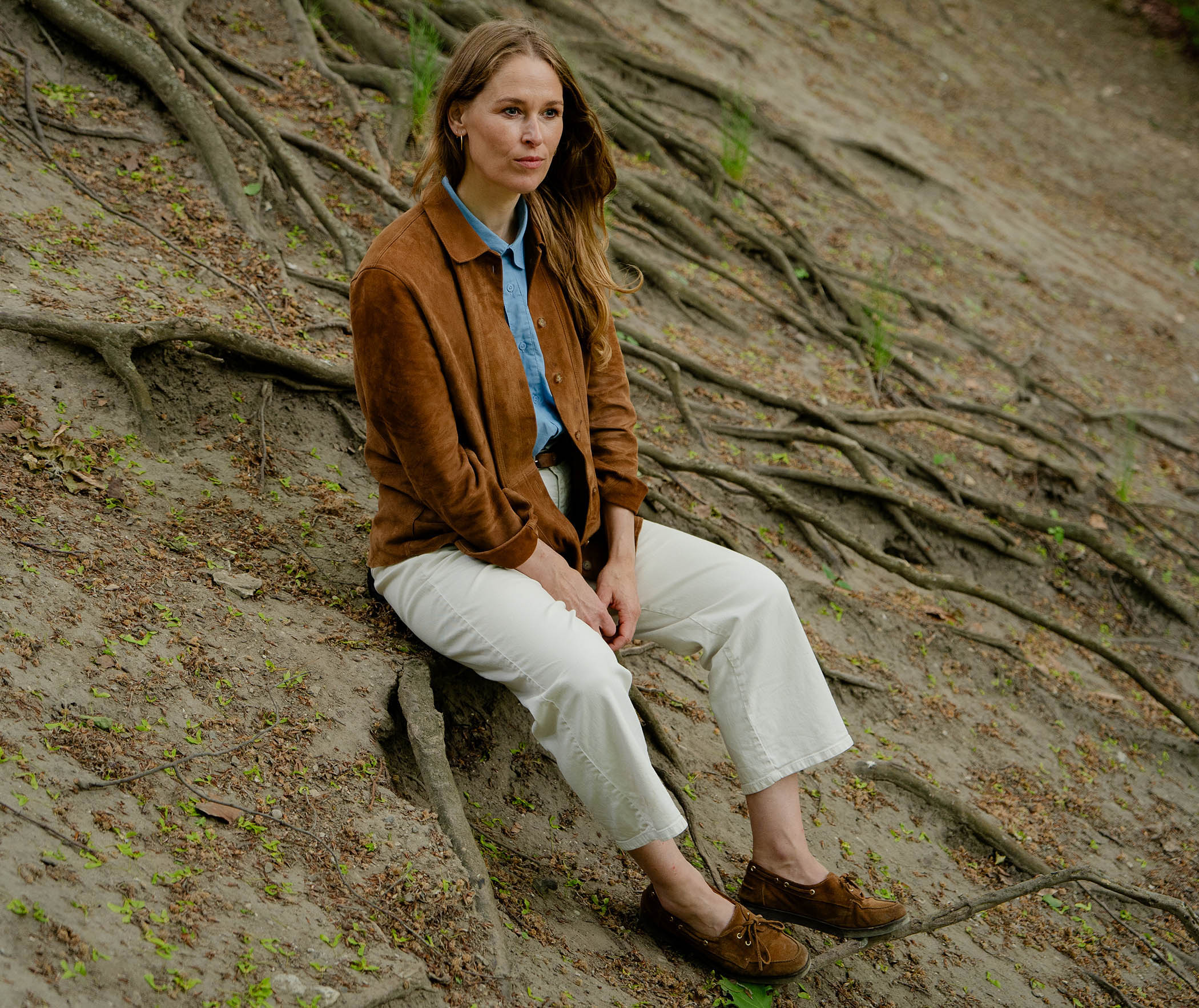
Since she spent a summer in search of every butterfly in Denmark, Lea Korsgaard has made a few changes. She has got rid of the showy English flowers in her garden – the roses and peonies – replacing them with the wildflowers that fritillaries and skippers prefer. She eats less meat. She has tried to retain a habit of paying close attention to nature, zeroing in on tiny insect-level events: the butterfly births, deaths and marriages unfolding inches from the ground. “And I started swimming in the ocean every morning,” Korsgaard says, in her perfect, matter-of-fact English. “Just to have 30 minutes of connection to the planet.” She goes naked with her husband at 6am and likes it best in winter, “When it’s dark and there’s frost on the waves”.
If this sounds insufferably Nordic and overachieving, well, Korsgaard is – but without the insufferable part. She is tall and good-looking, which is to say average for Copenhagen, and points out that “Viking swimming” is normal for Danes. Plus, why stop at that? When we meet at the offices of Zetland – the news site she co-founded in 2012, and now edits – she has already sneaked in an additional dopamine high: an hour of pre-work sober clubbing. A friend recommended dancing after reading her book The Butterfly Season, a Danish bestseller, which is part diary, part eco-treatise – all of it driven by a hunger for nature’s highs. “I need these rituals where you make yourself available to experiences you can’t buy or order, that are completely uncontrollable,” says Korsgaard.
She circles the newsroom looking for a free office, before settling on a cubicle with a deer’s skull on the wall – a mascot from Zetland’s early days. Korsgaard was on a sabbatical year as chair of the board when she started the book in 2022, rather than in the more relentless role of editor-in-chief, but still squeezed her “scavenger hunt” into weekends and holidays.
There are 64 species of butterfly, or sommerfugl (summer bird), in Denmark, on the wing between March and August, and it was a race against time, the weather and work to find them. In her clever, unsentimental book, Korsgaard details all the dead ends and false leads, the moments of joy – and the deep uninterest of her three young sons. One Saturday in June, she bribes them with sweets and ticks off five butterflies: the cranberry fritillary, lesser marbled fritillary, cranberry blue, northern blue and a rare large heath. “‘Nice work, boys,’ I said… Bjørn took off his T-shirt. His red soccer shorts shone against all the green. ‘It’s not fun when you don’t care about butterflies,’ he said.”
For Korsgaard, it was an exercise in seeing (she painted the delicate watercolour illustrations). “To begin with, I couldn’t tell the difference between the orange butterflies. But then orange became ochre, or paprika, or goldfish. It made me feel richer but also poorer, because now I know what I cannot see – I can’t tell the difference between dragonflies.” She learned to look at familiar landscapes differently, to see why an oak near her home in North Zealand, about 19 miles (30km) north of Copenhagen, was fat, while an oak in the Jutland peninsula was skinny, bent by wind and sand. She learned new words such as “mud-puddling” (when butterflies gather somewhere damp) and frass (insect exoskeletons and excrement), and can name two favourite species: the aurora, or orange-tip, and the meadow brown.
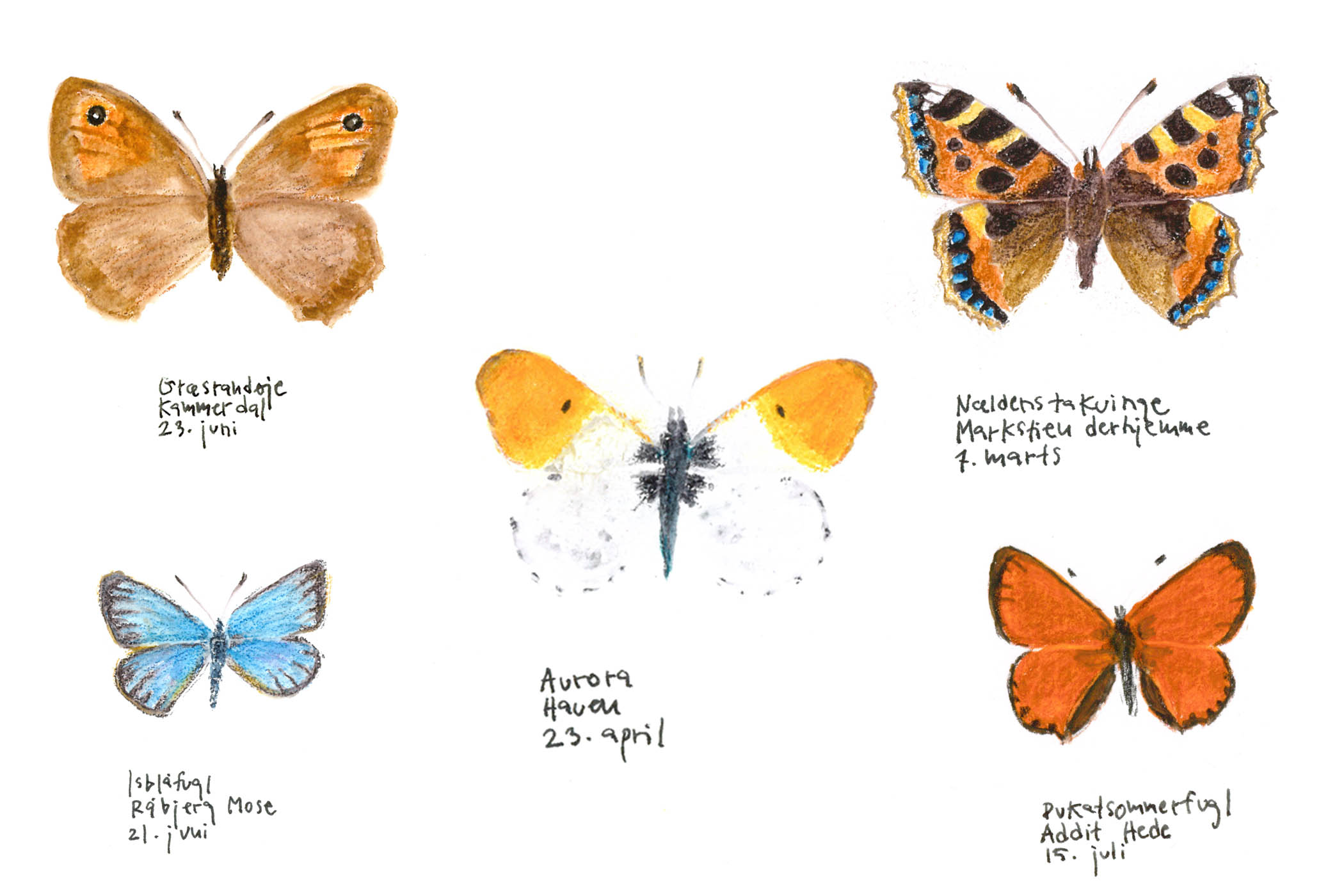
“The aurora is white with paprika spots. It’s very common, really beautiful and I’d never noticed it before. It shares its name with the Roman goddess of the dawn, who, again, I didn’t know, but she is amazing and very true to her erotic aspirations.” In the book, Korsgaard outlines the myth of how Aurora fell in love with the mortal Tithonus and asked that he be given eternal life, rather than eternal youth. Disgusted by his ageing, she took new lovers and turned him into a cicada. “She’s my secret favourite, but when people ask, I always say another one out of principle. The meadow brown is kind of dull – it’s not doing anything spectacular – but once you know it, it’s everywhere.”
Korsgaard doesn’t have a science background (she studied journalism and sociology), which makes her a friendly guide to metamorphosis; the freaky process by which an egg becomes a caterpillar then a chrysalis and, finally, a butterfly (“It’s as if, one day, I went into my garden shed and came out a month later as a rhinoceros,” she writes). There is the transformation from soft and hairy, as the caterpillar fattens itself up, splitting the skin behind its head and shedding it four to six times, to “coffin-like” cocoon, to winged insect. There are the creepy habits of the large blue, whose caterpillars disguise themselves as ant larvae in order to be carried down into a nest, where they gorge on baby ants all winter.
Butterflies have fascinated thinkers for centuries, and Korsgaard’s references range from Aristotle to Freud, who located one male patient’s terror of them in the opening and closing of their wings – an echo of a woman opening her legs. Superfan Winston Churchill built his own butterfly house, and Vladimir Nabokov wrote Lolita on a collecting trip in Colorado – a break from his day job studying the male genitalia of blue butterflies at Harvard. Local legends in different parts of the world have it that white butterflies are the souls of dead children (Ireland), and that the goddess of beauty made love to dying soldiers with a butterfly in her mouth (the Aztecs).
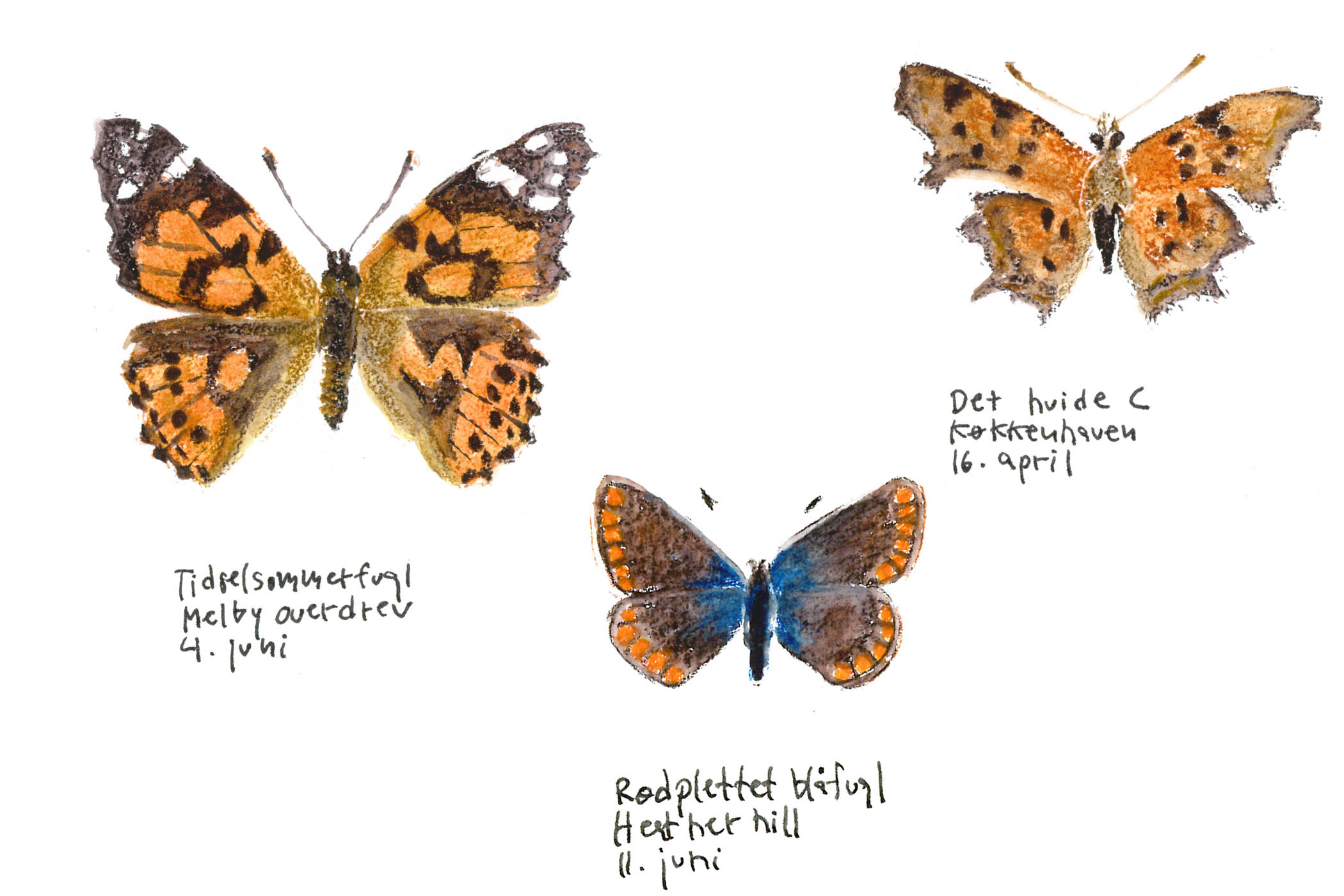
The book was personal too. Korsgaard recounts her mother’s stories of being visited by a small tortoiseshell after her own mother’s death, and at significant moments in her life since. It turned out to be a common experience. “Tons of people have written to me to say: ‘My mum was buried last month, and there was a butterfly sitting on top of her grave.’ Or: ‘My best friend died when I was 20, and every spring she comes back as a brimstone.’” Was she sceptical of her mother’s theory? “No, because I’ve had my own experiences of something bigger at play. Not with butterflies, but when the light shines through the clouds in a specific way, I think of my grandfather. It’s not just memories but a kind of presence.”
Newsletters
Choose the newsletters you want to receive
View more
For information about how The Observer protects your data, read our Privacy Policy
Korsgaard’s maternal grandfather, Erik Aalbæk Jensen, was a Lutheran minister and novelist who was sent to Dachau during the German occupation of Denmark. Afterwards, he spent years wrestling with his faith: why didn’t God and prayer fill him with the same awe he felt when in nature? For the first time, Korsgaard read his diaries, full of luminous descriptions of night walks and summer storms, and felt a strong sense of connection.
“I would call myself a ‘cultural Christian’,” she says. “I was brought up in a secular way but I go to church from time to time. My children are baptised. But when I go to church, it’s not to open myself up to the spiritual questions of life, which is what my grandfather struggled with. He gave the sermon and stood on the pulpit, feeling more and more distant from the Protestant way of thinking. It had lost its sense of mystery. He was trying to reckon with the experiences he had in nature – where his ego would vanish, and there would be this big channel to something greater.” If he were here now, he’d join Korsgaard for early morning dancing but instead he gave up his calling.
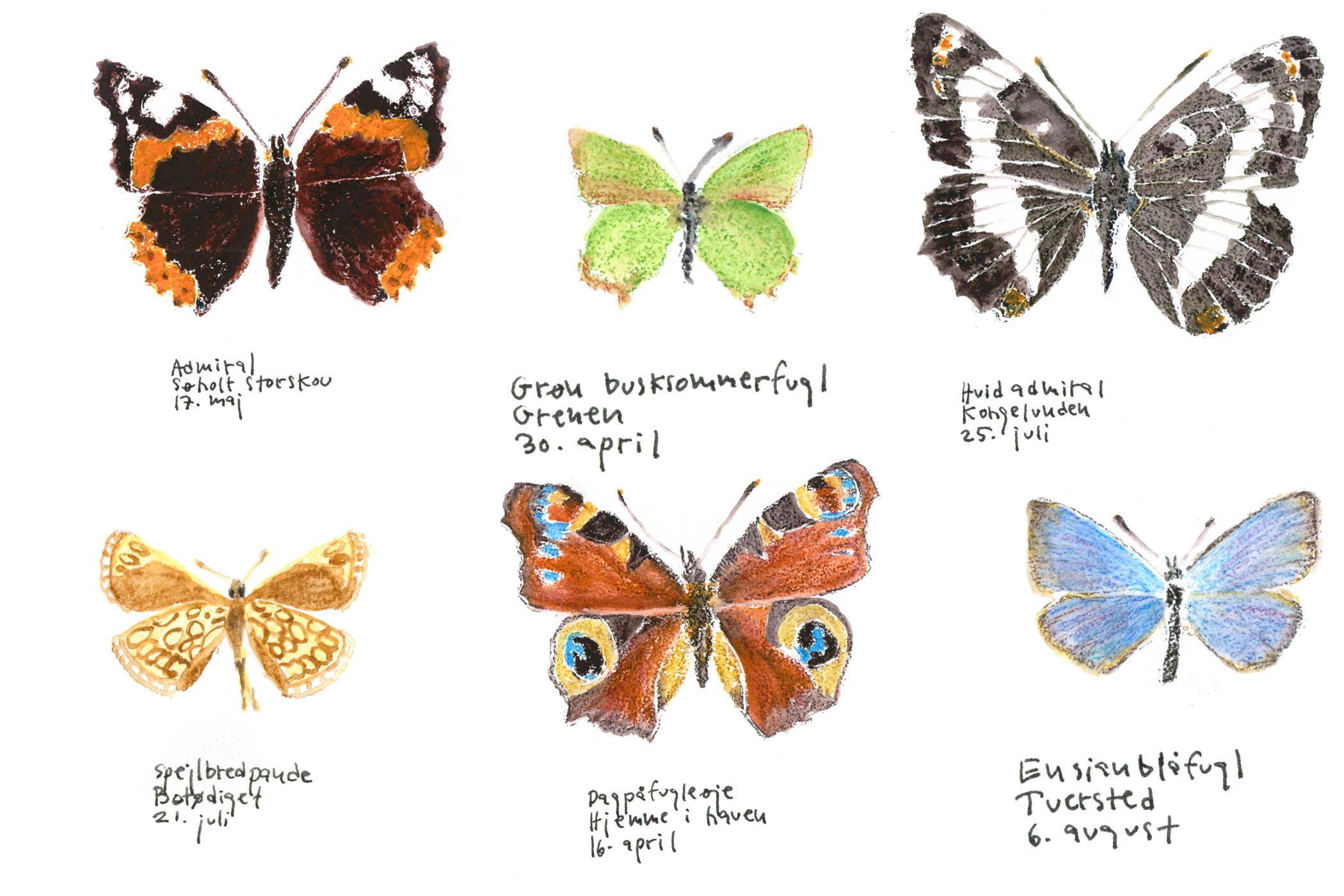
Late in the summer, as Korsgaard looks for the most elusive butterflies, she confronts the realities of the sixth mass extinction: are there any mazarine blues left to find? Since 1970, the global number of insects has plummeted by 75%, she writes, an unimaginable loss she can now translate into the disappearance of the pearly heath, black hairstreak and clouded Apollo. The habitat for many butterflies is shrinking: Britain’s swallowtail lives in only 20 places on the Norfolk Broads. Everywhere Korsgaard looks, there are “endlings”, the last of their kind – until, on a trip with her mother, she discovers a meadow “like a cathedral” full of butterflies.
The Butterfly Season is an unabashedly spiritual book, as well as funny and direct, and Korsgaard brings some of the same utopian thinking to her journalism. Here too she worries about “endlings”, in the form of people who can no longer think or write. “Yesterday, I interviewed the chair of Danish schoolteachers, and he said we are living through a time of ‘knowledge sorrow’.” He meant that children were no longer learning but searching ChatGPT. “It reminded me of butterflies, because it was like he was describing a dying species. It’s meaningless to ask your students to write at home, because you won’t know if it’s their work. So they don’t practise coherent thinking in writing – and what that will do to our ability to think is monumental. The writing me is more clever than the speaking me.”
Zetland is built on what she and the British editor Joshi Herrmann have together called “the romantic school of journalism”, taking the curiosity and ethics of newspapers and powering them with new technology. The word Zetland is a hybrid of zebra and pony (“the best of some really bad names”), and narrative is central to everything it does: a morning newsletter, a deep dive on the story of the day, two daily features, plus long-form podcast series for 45,000 paying members.
At the moment it has a hit in the form of a podcast that tells the story of an alleged rape from both victim and accused’s point of view, and Korsgaard is excited about another piece in the works, on why millennial managers struggle with gen Z employees. “They are lovely people but so fragile and impossible! The writer will get tons of input from members, and I love that.” Increasingly, Zetland’s journalism is consumed as audio – the platform allows you to read half a story and listen to the rest, or vice versa – part of what Korsgaard enthusiastically calls “the creatification” of news. Is that her word? “I feel it’s my word,” she smiles.
Korsgaard went to folk high school (højskole) after regular school, a sort of gap year where Danish teens learn in a Steiner-like environment (her husband, Rasmus, is a folk high school principal). She has brought some of its rituals to Zetland, including a morning song around the office piano, communal lunch and a manifesto headlined: “So it sparks.”
“One of the schools’ founders said: ‘First spark, then enlighten.’ I 100% agree. So my little manifesto explains why we have to start with that delightful feeling of: ‘Someone is going to tell me a story.’ If we don’t, no one will listen.” As a twentysomething features writer on Denmark’s Politiken newspaper, Korsgaard had felt there was no plan for a world after print. “I was brought up doing old-school news written in a very neutral, institutional voice. It didn’t spark energy, it didn’t spark connection. There’s a long tradition of [storytelling] in American journalism, but it was not a tradition in Denmark or even Europe.” In the past year, Zetland has launched editions in Finland and Norway, and is in talks with German partners.
It is lunchtime, and Zetland’s small team of 60 have gathered at two trestle tables to eat. Korsgaard proudly points out the way they are mixing, the investigations editor talking to a reporter and a marketing manager. She has a busy afternoon, but first we walk four blocks south to Amager Fælled, a 223-hectare (550-acre) nature reserve not far from the city centre. This is prime butterfly territory; a former military zone that has been turned over to meadows, woods, ponds and, today, the very loud, very horny marsh frog. It has been raining and steam rises from the path, which is not prime butterfly weather, but Korsgaard is hopeful and does her spotter walk: four steps forward, hands behind the back, pause, scan, continue.
She found 61 of Denmark’s 64 species in 2022, and two of the missing three last year. The grizzled skipper she has decided not to look for. “If I turn 100, yes, but not before. But there! Do you see that?” A small white butterfly skips over the dripping hedgerows before landing nearby. We creep closer. Its hind wings are striped green and there is a black spot on the upper wing. It’s a green veined white, common as muck in Denmark and the UK, and if you take the time to look – really look – you’ll see them everywhere.
The Butterfly Season: On Beginnings, Endings, and the Life in Between by Lea Korsgaard is published by Particular Books on Thursday (£24). Save 10% at observershop.co.uk. Free UK standard P&P on online orders over £25. Vote for your favourite British butterfly at butterfly-conservation.org. Poll closes today
Illustrations by Lea Korsgaard