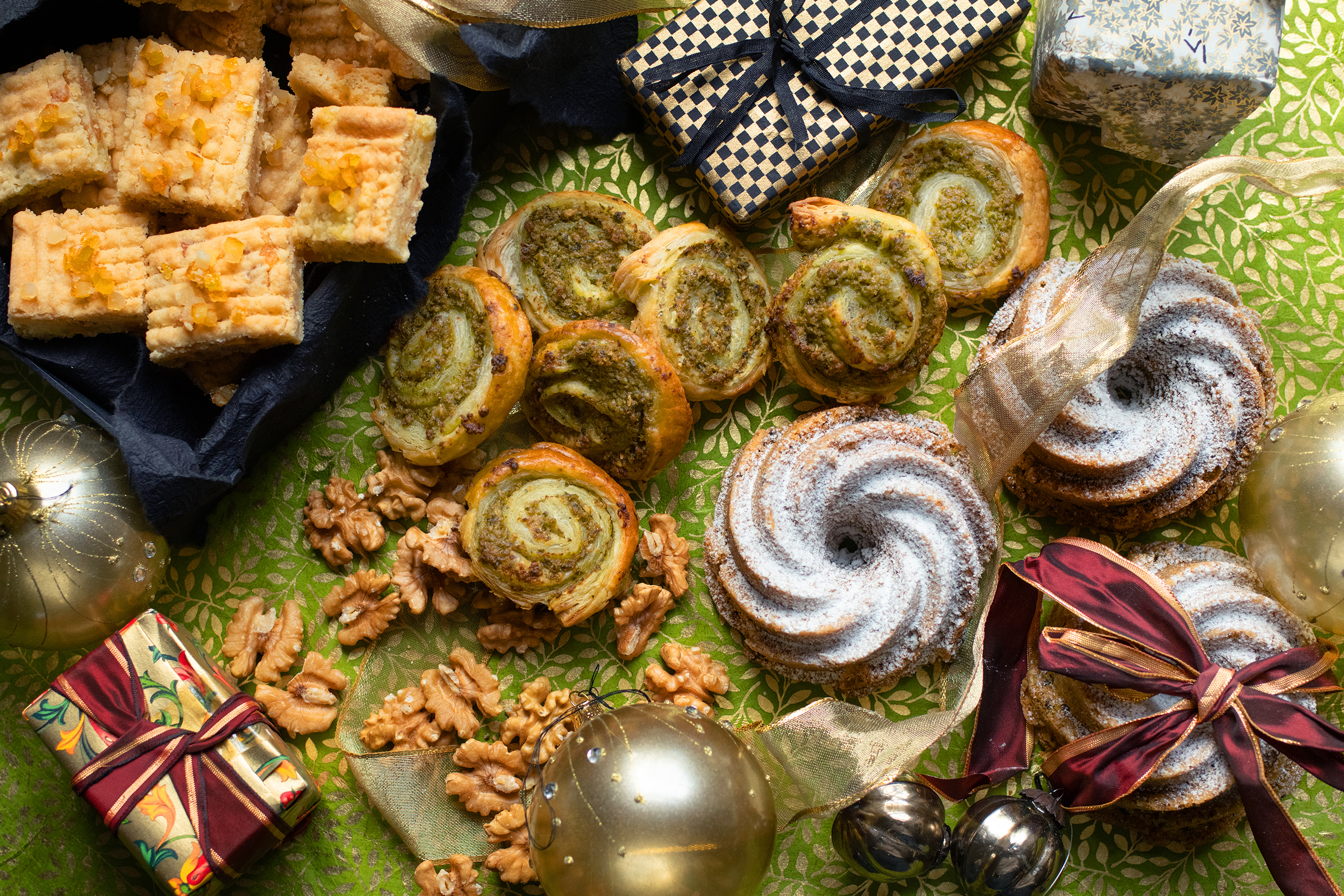



Most of my daily cooking is purely about getting dinner on the table. Something sustaining to soothe and satisfy at the end of the working day. I rarely get the opportunity to cook just for fun. Something frivolous to amuse and delight, or to give as a gift. But if ever there was a moment for it, it is now, in the run-up to Christmas.
When a visitor leaves, I like to send them home with a small present, usually of the edible variety. That might mean a wedge of Christmas cake or a few mince pies, or it could be something I have made specially for them. A box of chocolate-covered nuts or dried fruits, perhaps; buttery biscuits flecked with candied citrus; or a tiny chocolate-freckled cake in a crinkly cellophane bag.
Of course, all of these are good for the Christmas table, too. A miniature chocolate and pistachio cake as a change from the traditional fruit cake; shortbread to nibble with Christmas Eve drinks; nuts to offer at the end of the feast. A savoury version might include tiny danish pastries with a layer of herb and olive paste running through the crisp pastry. Such little treats can also be taken to a party for your host – it is always good to arrive with something you have made yourself.
This is cooking to indulge ourselves as much as anyone else. An afternoon tucked up in the warmth of the kitchen, radio or podcast on – maybe even a few carols – and cooking just for the festive joy of it. The bits that we all too often rush, but become a quiet pleasure when we can take our time over them – buttering cake tins, melting chocolate and chopping candied peel, shelling pistachios and making herb pastes. This year, I might get round to wrapping my handiwork, packing dipped nuts into pretty boxes and shortbread into gift bags. There may even be ribbons and gift tags. Then again, they may simply end up on the Christmas table, tiny edible treats for everyone. Happy Christmas!
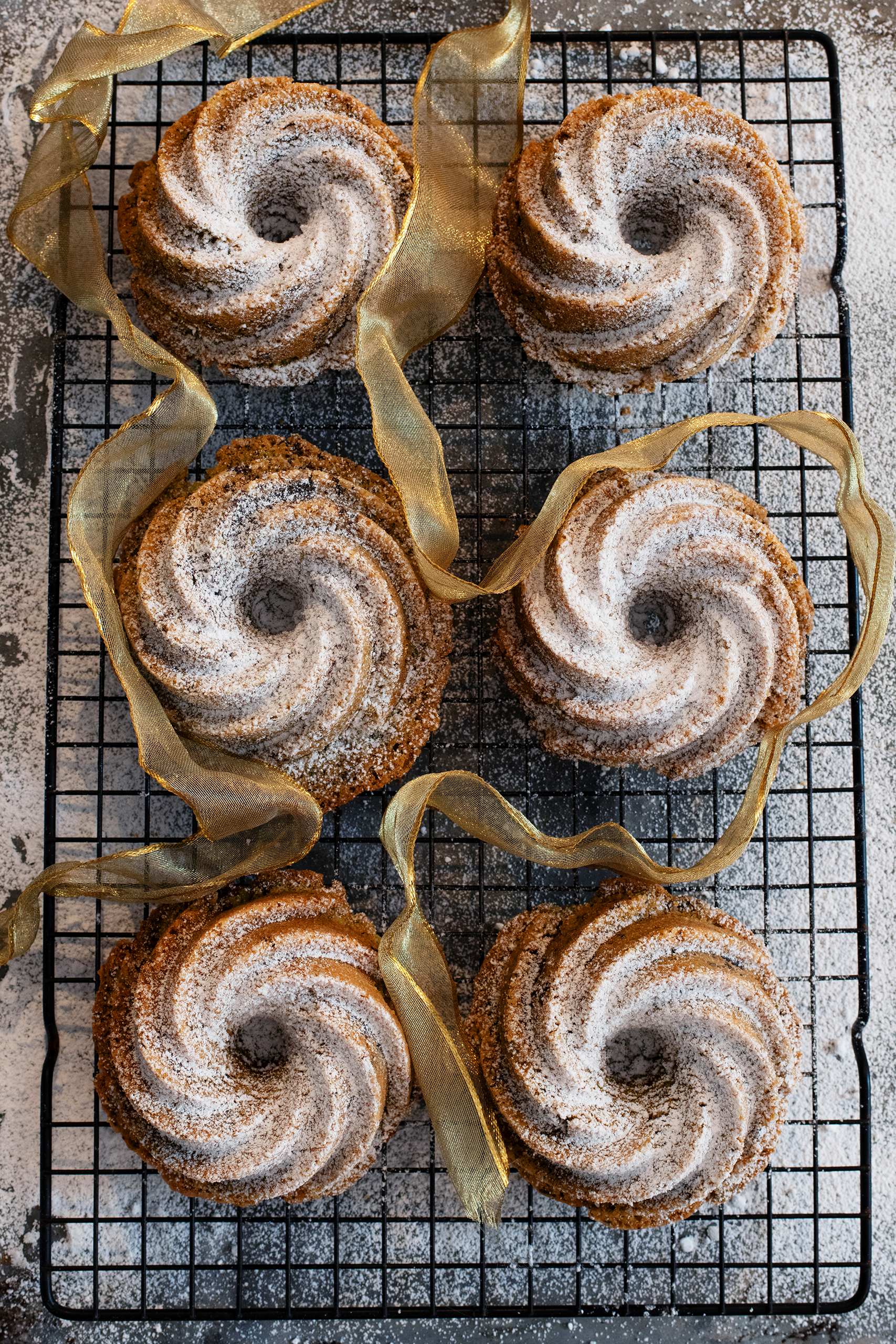
PISTACHIO CHOCOLATE BUNDT CAKES
Bundt cake tins come in all manner of designs, from soft swirling lines to full Christmas tree versions. The more complex the design, the more difficult it will be to get the cakes out in one piece. The trick to success with any bundt cake, large or small, lies in the thorough coating of the tins with butter or a commercial cake-release product and then a careful, light flouring. You can of course make the cakes in a simple sponge tin, if you prefer.
Makes 6
butter 200g, softened
Newsletters
Choose the newsletters you want to receive
View more
For information about how The Observer protects your data, read our Privacy Policy
caster sugar 200g
shelled pistachios 100g
self-raising flour 120g, plus some for the tins
eggs 3
dark chocolate 95g
icing sugar to finish
You will need 6 individual small bundt tins, and some non-stick baking spray (cake-release oil) for oiling them.
Set the oven at 160C fan/gas mark 4. Prepare the bundt tins by brushing with the non-stick baking spray (you can use melted butter if you prefer, but I have had more success with the dedicated cake-release products). Dust lightly with flour. Turn the tins upside down and shake lightly to remove any excess flour.
Cream the butter and sugar together in a food mixer until pale and fluffy. Grind the pistachios to a coarse powder in a food processor then stir in the flour. Break the eggs into a small bowl and beat thoroughly with a fork. Chop the chocolate into coarse crumbs, a matter of seconds in a food processor.
When the butter and sugar are well creamed, add the flour and pistachio mixture and the beaten eggs, alternately and a little at a time, beating continuously.
Fold in the chopped chocolate. Mix lightly but thoroughly, then spoon into the bundt tins, smoothing the surface as you go.
Bake for 20-25 minutes until the cakes have risen. Test with a skewer. If it comes out clean they are ready. Remove from the oven and leave to settle for 15 minutes. Loosen the edges of the cakes with a palette knife, then place a cooling rack over the top. Holding the tray in place, turn the tin upside down and shake very firmly to release the cakes on to the cooling rack.
Dust lightly with icing sugar.

GREEN OLIVE PASTRIES
A savoury danish pastry, the usual sweet filling swapped for one of green olives, basil and garlic. They are at their most delicious when warm from the oven, but will also keep overnight in an airtight container if necessary.
Makes 24
green olives 200g, stoned
garlic 2 cloves
basil 15g
parsley leaves 10g
olive oil 120ml
parmesan 60g, grated
puff pastry 1 x 320g roll
egg a little, beaten, to glaze
Put the olives into the bowl of a food processor. Peel the garlic and add the cloves to the olives. Put the basil, leaves and stalks, and the parsley leaves, into the bowl of the food processor, then add the olive oil and most of the grated parmesan. Process until you have a loose green paste. Keep back a little of the grated parmesan to scatter over the finished pastries.
Set the oven at 180C fan/gas mark 6.
On a floured work surface, roll out the pastry to a rectangle of about 38cm x 28cm. Spread the olive paste over the surface of the pastry, leaving a 2cm rim of bare pastry on all sides. Brush the rim with egg wash.
With the narrow edge towards you, roll the pastry up into a long thick sausage, pressing the seam tightly to seal. Wrap the roll lightly in kitchen paper and refrigerate for 30 minutes. It will firm up a little, making it easier to slice.
Line a baking sheet with baking parchment. Cut the roll into finger-thick slices, placing them flat on the parchment. You will have 24. Scatter a little of the remaining parmesan over the surface of each and bake for 15-20 minutes or until crisp, golden and puffed.
Using a palette knife, remove the cooked pastries from the baking tray and serve warm.
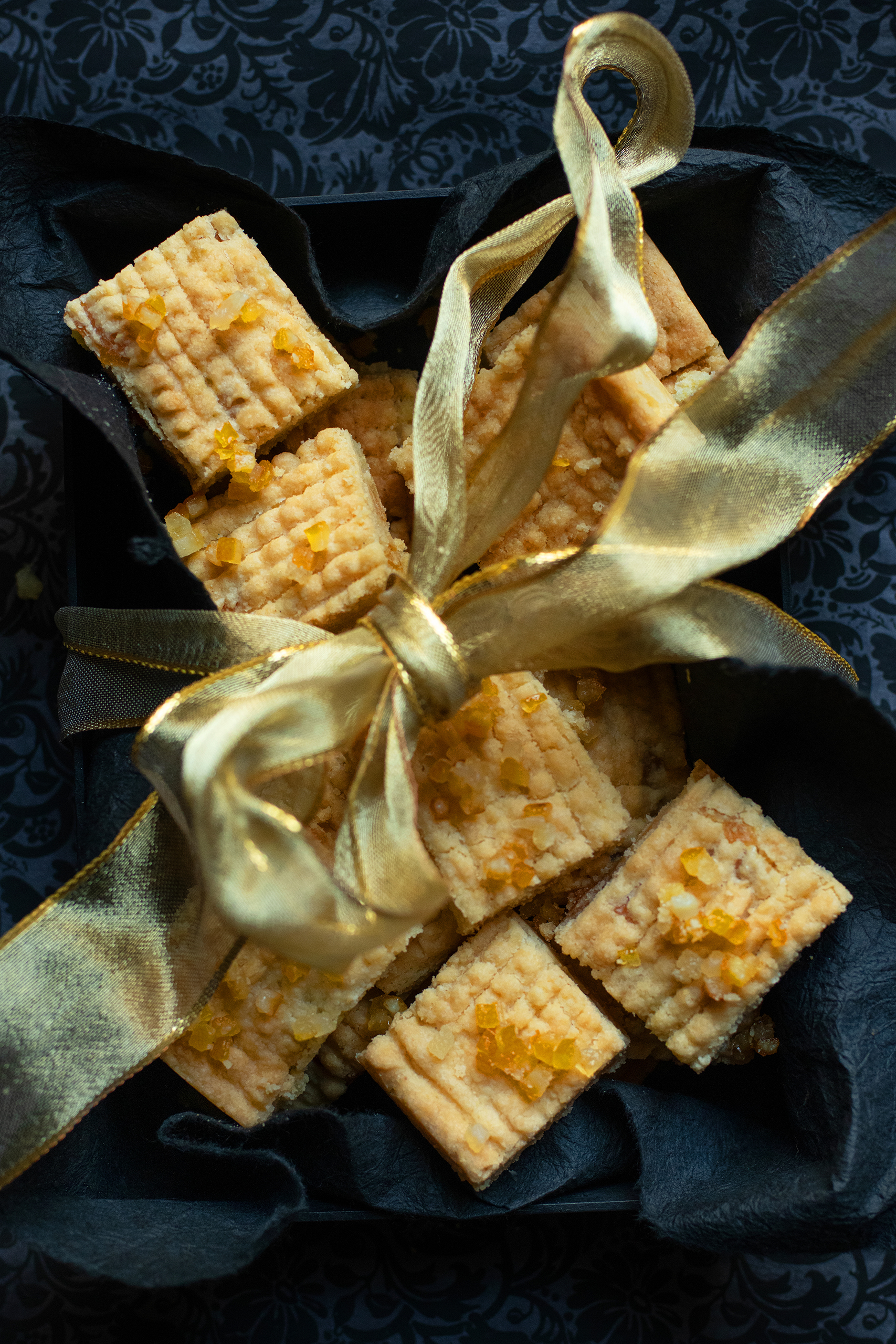
CANDIED PEEL BISCUITS
Crumbly shortbread made especially soft and tender by the addition of fine semolina and a little cornflour. The shortbread can be cut into wide fingers and finished with cream and fruit for a summer tea or dessert. Once baked and cooled, the biscuits will keep in an airtight tin for several days.
You can use ready-chopped peel for this, although the result may be better if you can get hold of whole pieces of candied fruit and chop it yourself. Speciality food shops and Italian grocers are the best hunting ground.
Makes 16 pieces
butter 250g
caster sugar 125g, plus extra for sprinkling
vanilla bean paste 1 tsp, or a few drops of vanilla extract
plain flour 250g
fine semolina 50g
cornflour 50g
sea salt 2 good pinches
candied peel 150g, finely chopped
Set the oven at 160C fan/gas mark 4. Line a shallow-sided baking tin measuring 20cm x 30cm with a piece of baking parchment.
Cut the butter into small pieces, put it in the bowl of an electric mixer with the sugar, then beat until light and creamy. Mix in the vanilla paste or extract. Stir together the flour, fine semolina, cornflour and a couple of generous pinches of sea salt.
Add the dry ingredients to the creamed butter and sugar, combine well, then add the chopped peel. Turn out the dough on to the lined baking sheet and press it into shape. Be gentle, taking care not to compact the dough, carefully patting it out to fit the baking sheet. Prick all over with a fork.
Cut the dough into 24 pieces (8 lines across the long side, 4 across the short), then bake in the hot oven for 20-25 minutes until pale golden. Remove from the oven and sprinkle with sugar. (I also go over the score marks with a knife to make the biscuits easier to separate.)
If you wish, scatter a few pieces of chopped peel over the shortbread before serving.
Once cool, the shortbread can be stored in an airtight tin.
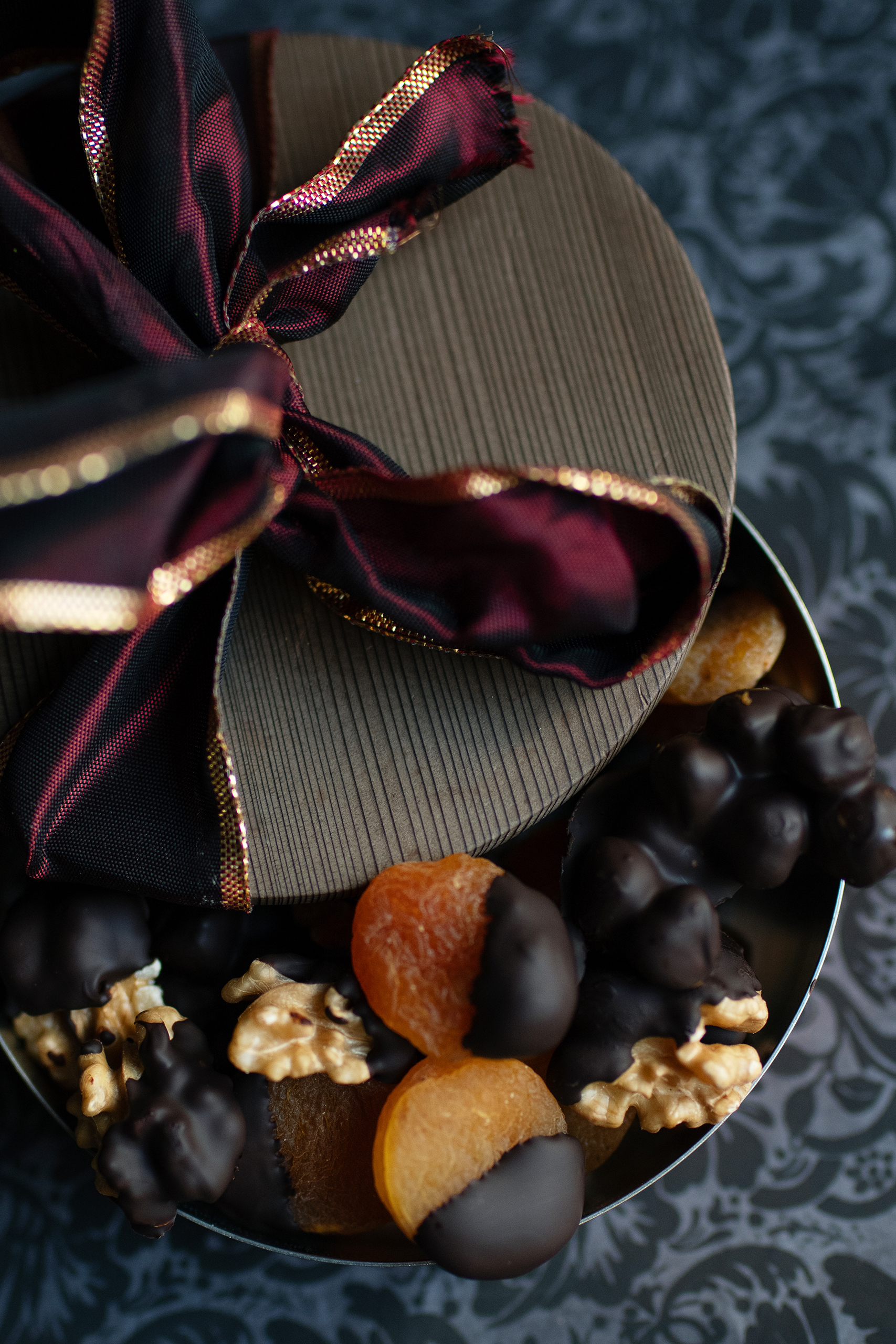
CHOCOLATE DIPPED FRUIT AND NUTS
This is a good recipe for kids to make – just make sure the chocolate has melted and is off the heat first. It is best to use a pair of kitchen tongs for holding the fruits and nuts, except for the hazelnuts, which are made in clusters, so I use a spoon for those.
You will need a baking sheet covered with non-stick baking parchment.
Makes about 200g
shelled hazelnuts 50g
dark chocolate 150g
shelled walnut halves 100g
dried apricots 50g
Put the hazelnuts in a dry, shallow pan and toast over a moderate heat for 10 minutes or so, until the skins darken and start to flake. Remove them from the heat, tip on to a clean tea cloth and rub the nuts in the cloth until most of the skins have flaked off. If you wish to be meticulous about it, put any that aren’t perfectly skinned back into the pan and repeat the process. Shake the pan occasionally, so they colour evenly.
Break the chocolate into small pieces and put them into a heatproof bowl suspended over a pan of simmering water. Once the chocolate starts to melt, don’t be tempted to stir it, just let it become liquid. Remove from the heat.
Dip heaped tablespoons of the hazelnuts into the chocolate to cover, then lift out and place on the parchment. Holding each walnut with kitchen tongs, dip half the nut into the chocolate then place on the paper. Repeat with the apricots. Leave the chocolate to set. To speed up the process, slide the tray into the fridge for a few minutes.