


We’ve been enjoying the news that apparently Trump’s closest advisors are all on a miraculous sauerkraut diet. Apart from almost unbelievable weight loss and glowing skin, the Wall Street Journal reports that the side effects include… “domestic friction”. How trumpy does a cabinet have to be for it to be reported in the national press?
Kenji Morimoto, a chef and author of the book Ferment, says it’s not an uncommon reaction if your body is not accustomed to fermented foods and then you’re suddenly chugging pints of kimchi. “Introduce a small amount of fermented foods per day,” he says, “and then adjust once your body gets used to the new foods.”
He’s also not convinced by some of the other advice being touted – quite apart from the extreme health benefits – for instance, that you should be paying someone $18,000 to write a custom diet for you and tell you that you should only be taking fermented products from a dark part of the fridge. “The main thing to be aware of when buying fermented products is whether they’re in cold/refrigerated storage,” Morimoto says. “While it’s important to check labels (for words like live, raw, unpasteurised), if it’s sitting at room temperature on a store shelf, it’s definitely pasteurised and therefore does not contain live bacteria.”
The actual health benefits of fermented foods are thought to be increasing microbiome diversity, including for gut health (which some believe is linked to mental health) and aiding digestion. The true benefit is how delicious it is. Kimchi, kefir, kombucha, even yoghurt – all a big yes!
Fermenting at home is preserve of people who love a project, but for beginners, where to start might be daunting. Morimoto says to start with what you like to eat. “This may sound obvious but I know many people who jump head first into a ferment and then struggle to incorporate it into their cooking or diet,” he says. As a gateway ferment though, Morimoto suggests sauerkraut. “It’s easy, requires two ingredients (at its most basic) and is a masterclass in dry brining lactofermentation.”
The lactofermentation process is what creates the preservation effect – bacteria feeding on sugars, leaving behind a lactic tang. Summer, with its gluts of produce, is a great time to try fermenting. Morimoto is a fan of making hot sauces with summer fruit, or fermenting whole cherry tomatoes. The Ukrainian chef Olia Hercules also is a keen tomato preserver, using the fruit over labne on toast, and the brine in martinis.
PRODUCTS
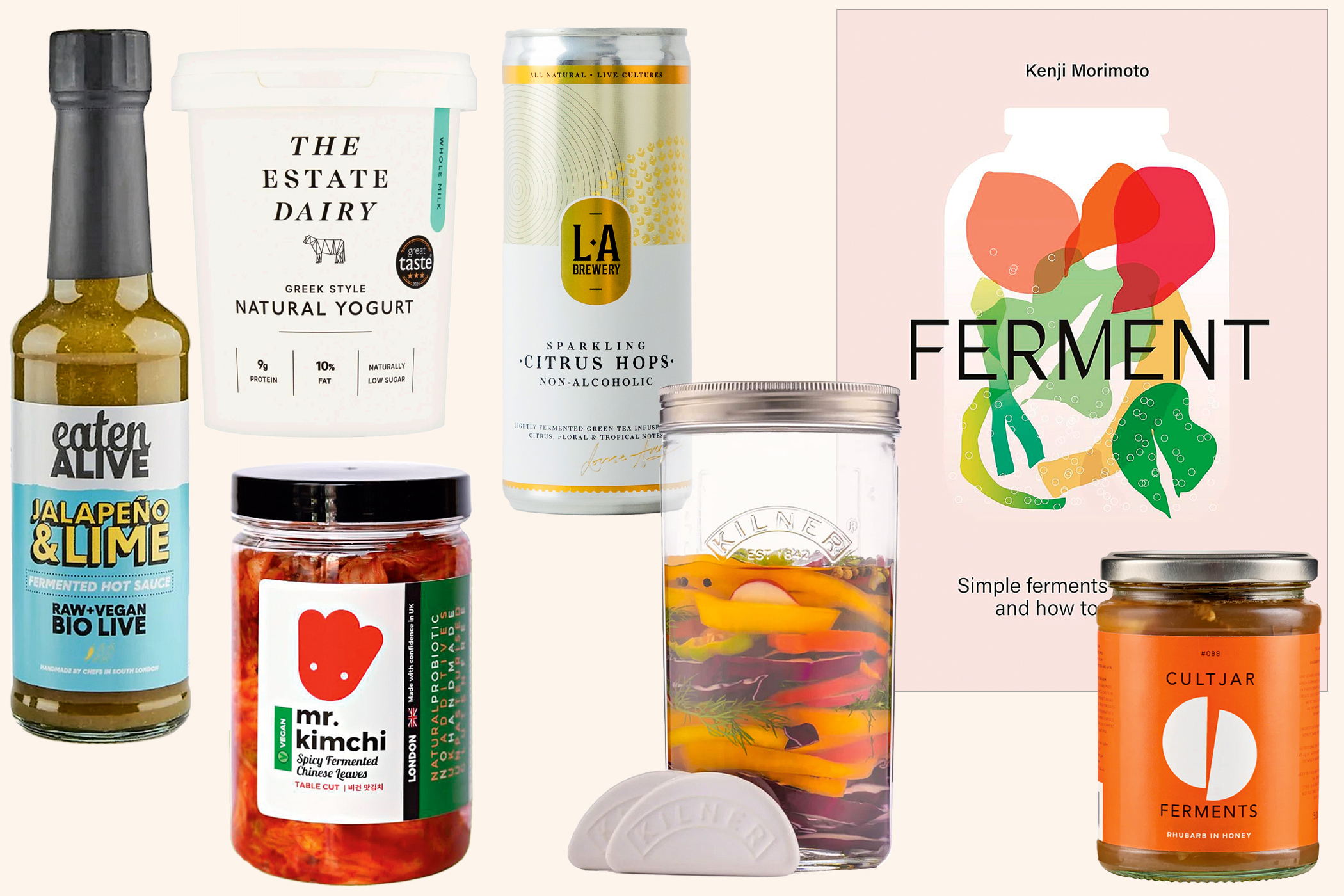
Rhubarb honey: Intriguing and pickly sweet, from masters of the seasonal ferment; works with yoghurt as well as it does with offsetting oily grilled mackerel. £9.95, cultjar.co.uk
Ferment by Kenji Morimoto: (Pan Macmillan, £22). Save 10% at observershop.co.uk. Free UK standard P&P on online orders over £25.
Jalapeno and lime hot sauce: Triple tang – from citrus, chilli and fermentation – for the barbecue season. £4.99, eatenalive.co.uk
Newsletters
Choose the newsletters you want to receive
View more
For information about how The Observer protects your data, read our Privacy Policy
LA Brewery citrus hops: Fragrant, tart and complex, a good option for a grown-up 0% aperitif. £35 (12 x 250ml), labrewery.co.uk
Kilner set: Comes with weights, essential for keep veg submerged in the fermentation process. From £14, souschef.co.uk
Estate Dairy yoghurt: Our current favourite way to start the day. £2.95, ocado.com
Mr Kimchi: Korea’s favourite ferment, made in the UK at time of order, then delivered to you to continue fermenting. £12.90 (2 x 330g), mrkimchi.co.uk