

Photographs by Jonathan Gregson
When Covid struck, Camellia Panjabi found herself, like so many other restaurateurs, with time on her hands. After decades of working in the hospitality industry – she is behind London’s Masala Zone and Chutney Mary, as well as the Taj Hotel restaurants – this fallow period opened a window of opportunity for her to focus, finally, on the follow-up to her bestselling 2004 debut, 50 Great Curries of India. “Undistracted, I could put my thoughts to paper and sift through my treasure trove of vegetable recipes,” she says, “which I had realised deserved hero status of their own.”
The result is Vegetables: The Indian Way, a heavy tome of more than 100 region-crossing, meat-free recipes, notes on scientific and holistic health properties, and essays on topics such as the country’s political history and what it is to be vegetarian in India. It’s a colourful, considered dedication to what is (in the UK) an often overlooked part of a meal. “Everyone knows we should eat more vegetables,” she says, “but many don’t know how to prepare them. I wanted to give people the information they need to feel encouraged to try something new.”
Panjabi’s research was extensive and years in the making. “India is very large,” she says. “It’s taken a long time to travel and cover the whole country.” There were visits to India’s National Institute of Nutrition and, crucially, conversations with cooks of every kind. “Housewives, street food sellers, caterers and chefs,” she says, “all gave me their best recipes for vegetarian simple snacks, popular home cooking and dishes for special occasions.” Deciding which to include consisted of lots of time in the kitchen, recipe testing and adjusting.
Her hope is that Vegetables: The Indian Way will not only give home cooks the confidence to prepare Indian meals at home, but to also add flavour to other, more familiar cuisines. “Imagine sausages and mash with a lovely onion curry instead of a gravy,” she says. “Or roast chicken with Bengal potatoes and broccoli chili fry. With vegetables,” she adds, “endless creative combinations are possible.”
Bombay potatoes – batata bhaji
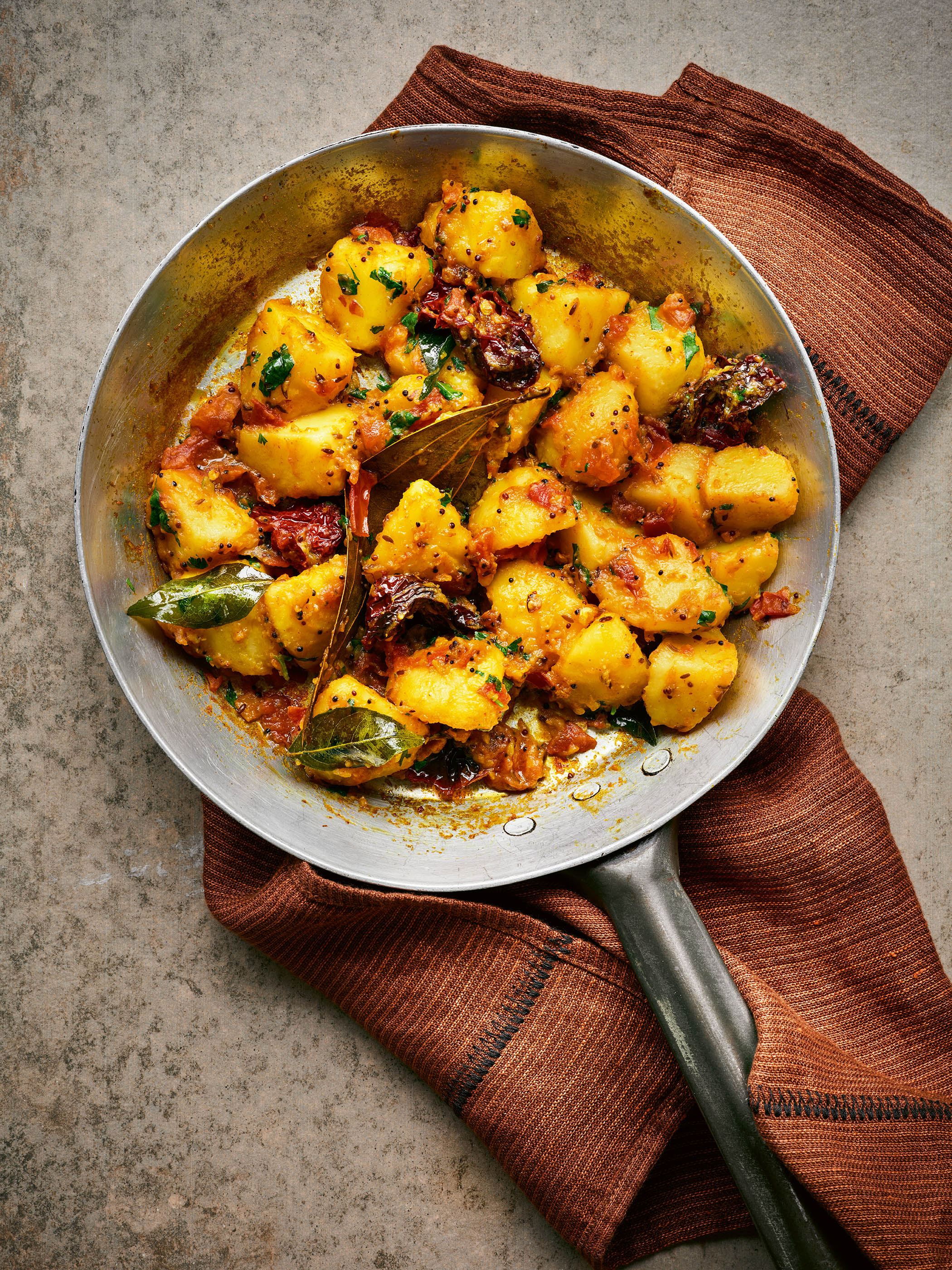
This is a tasty potato dish that is served in Gujarati homes, often with fried puffed bread called puris, the combined dish being known as puri bhaji. However, it’s a perfectly nice dish as a side vegetable in any cuisine, and can also be served with dosas.
The dish contains no onion, ginger or garlic, because some Gujaratis are Jains and don’t eat these ingredients.
Serves 4
potatoes 650g
salt 1½ tbsp
oil of your choice 60ml
cassia leaves or bay leaves 4
red dried chillies 4, broken into 3 or 4 pieces
black mustard seeds 1 tsp
cumin seeds 1 tsp
asafoetida ½ tsp
ground turmeric ½ tsp
curry leaves 15-20
green chilli 1, chopped
red chilli powder ½ tsp
tomatoes 2, finely chopped
sugar ½ tsp
coriander leaves 3 tbsp, chopped
Cut the potatoes in half and parboil them in 1 litre of water with 1½ tbsp of salt. When three-quarters done, drain and leave to cool. Then peel and cut into medium pieces.
Heat the oil in a kadai (or a wok or frying pan). Add the cassia leaves and 15 seconds later add the chillies, mustard seeds, cumin seeds, asafoetida, turmeric, curry leaves, green chilli and red chilli powder. Stir, then add the tomatoes and the sugar. Cook for a minute, then add a little water. Add the potatoes and cook on a medium heat until they are done. Taste for salt and season. Add the coriander leaves and stir.
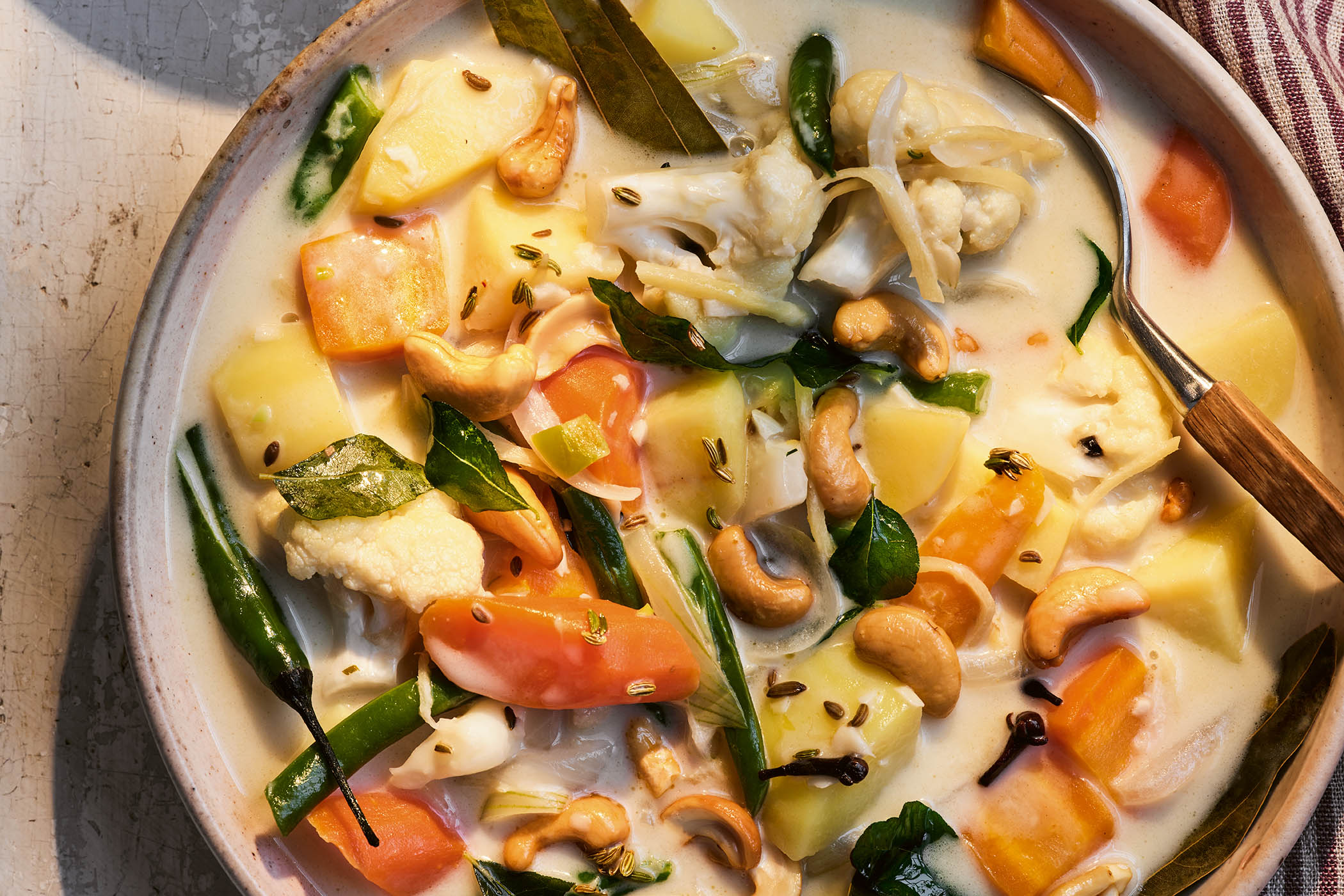
Kerala vegetable stew
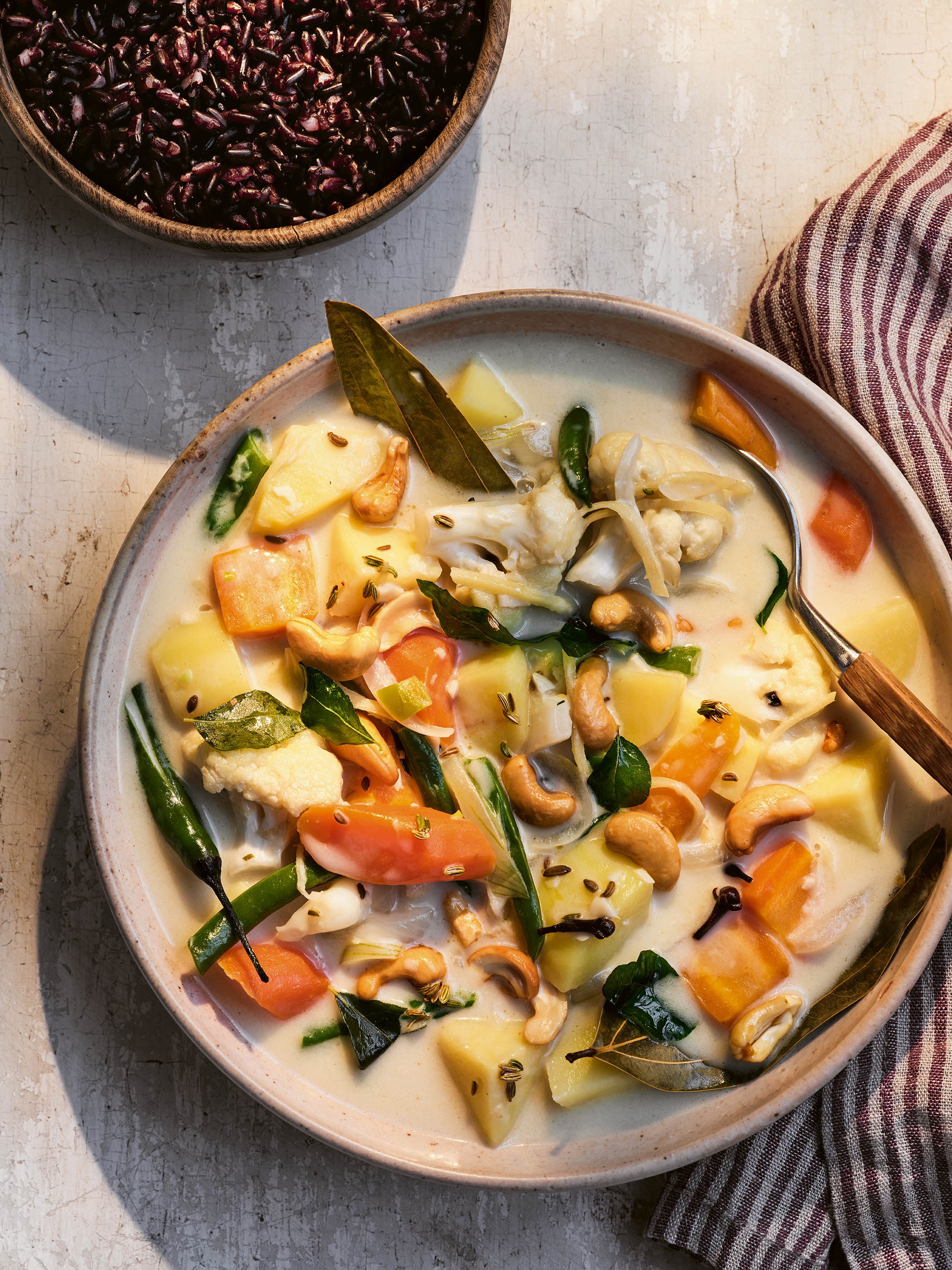
In Kerala, this is often eaten at breakfast with appams – rice pancakes – or string hoppers. But it works well as a meal, served with rice. A white stew with brown, black or yellow rice (boiled with turmeric) looks lovely. If using black rice, soak overnight and cook over a low flame.
Serves 2
oil of your choice 3 tbsp
cassia leaves or bay leaves 2
cinnamon stick 5cm
green cardamoms 10
cloves 10
peppercorns 10
fennel seeds ½ tsp
onion ½, sliced
ginger 1 tsp, shredded
green chillies 2, each split in half lengthways
curry leaves 10-12
garlic 3 cloves
mixed vegetables (carrots, potatoes, beans, cauliflower florets, peas) 350g, diced
coconut milk 250ml (dilute tinned coconut with water) or 40g Maggi coconut milk powder combined with 2 tsp flour and 250ml water
salt 1tsp
cashew nuts a few fried for garnish
Heat the oil in a deep pan and add the cassia leaves and whole spices. Sauté for 30 seconds, then add the sliced onions, ginger, chillies, curry leaves and garlic and saut´e for 2 minutes on a medium heat. Add the vegetables and sauté for 3-4 minutes, then add the coconut milk and salt, and cook until the vegetables are tender and done to your liking. When serving, sprinkle with fried cashew nuts.
Quick str-fried cabbage – kadai bandh gobhi
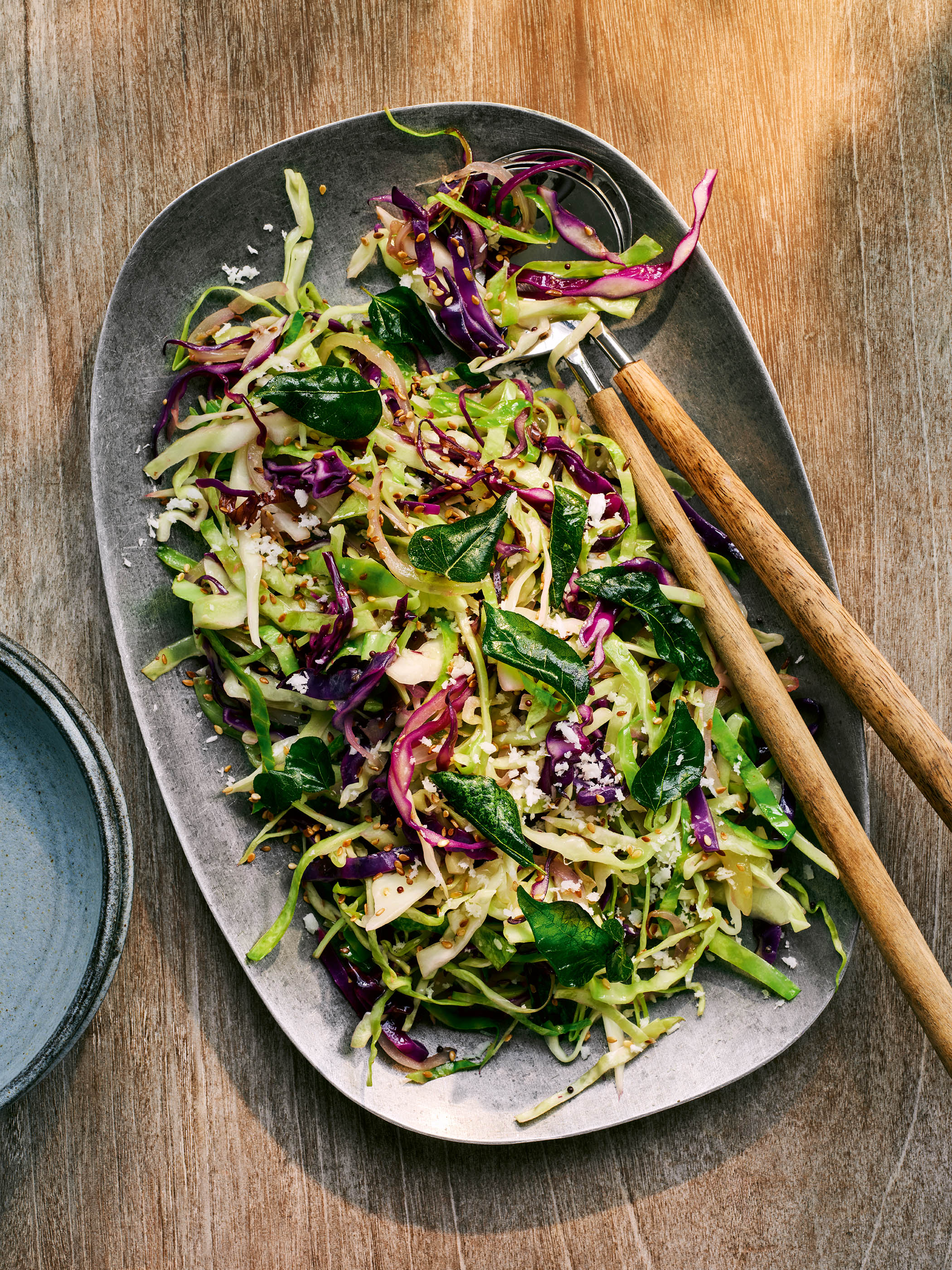
The Gujarati neighbours at our family apartment in Mumbai often made this quick-cooked cabbage. It’s such a simple way to enjoy this vegetable – like subtly spiced coleslaw. I have added sliced onions to the original Gujarati recipe, for added sweetish flavour. I thought it would be nice to incorporate the two colours of cabbage, both for colour and for the range of nutrients.
Serves 4 as a side-dish
green cabbage 400-450g
red cabbage 75-100g
oil of your choice 3 tbsp
onion 1, finely sliced
green chillies 1 or 2 , very finely chopped
mustard seeds 1 level tsp
ginger 10g, finely grated
curry leaves or fresh basil leaves 15
sugar ½ tsp
salt ½ tsp
lime juice 1 tsp
garnish of your choice shredded coconut, toasted sesame seeds and pine nuts, or coriander leaves
To shred the cabbages, first slice them in half. Put each half flat side down and with a long sharp knife shred as finely as you can. Then separate the shreds with your fingers. Heat the oil in a large kadai or wok (or a deep frying pan). Add the onions, green chillies, mustard seeds and ginger, wait for 10 seconds, then add the curry leaves or basil and the sugar and stir. Add all the shredded cabbage and 1 minute later stir, then keep stirring continuously so that all parts of the cabbage are exposed to the heat of the pan and the spices. Add ½ tsp of salt. In 4 minutes the cabbage will soften. Take the pan off the heat and continue to stir the cabbage in the hot pan until you achieve the amount of done-ness you prefer. Add the lime juice and stir. The cabbage is quite nice even before the completely soft stage, and some people prefer it this way.
You can garnish with shredded coconut, toasted sesame seeds or toasted pine nuts, or just with chopped coriander.
Vegetables: The Indian Way by Camellia Panjabi (Michael Joseph, £40). Order a copy at observershop.co.uk for £36. Delivery charges may apply.
Newsletters
Choose the newsletters you want to receive
View more
For information about how The Observer protects your data, read our Privacy Policy