


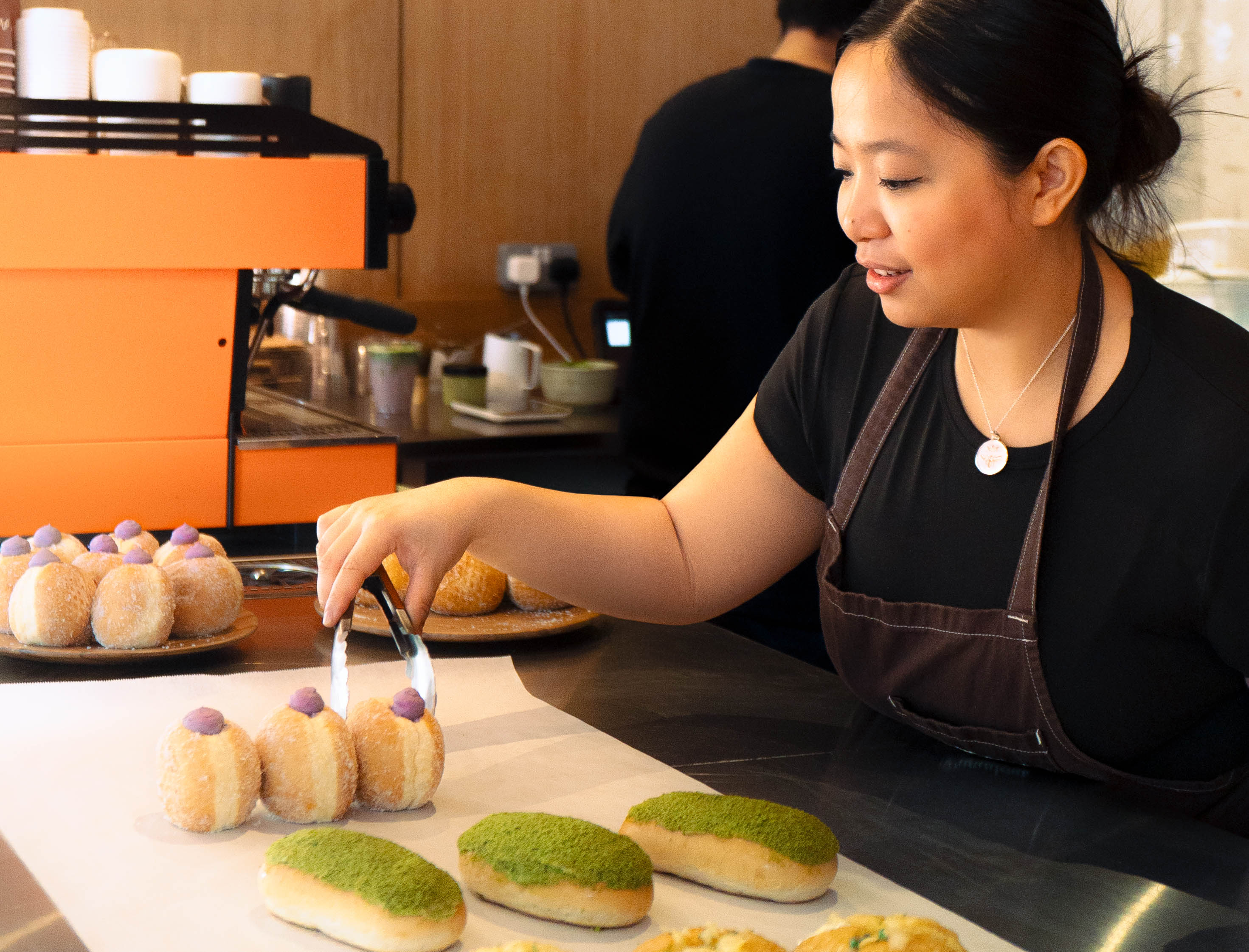

Biscuits are a big thing in Germany at Christmas,” Jürgen Krauss says. “We start to make them when the evenings draw in, and give them as presents throughout Advent.” So it is that they feature prominently in his second book, The German Christmas Cookbook. As well as festive sweet and savoury recipes, the book recounts the food writer and Great British Bake-Off alumnus’ wintery memories of his childhood in the Black Forest. “The air in the valley and in our house is full of the scents of log fires,” he writes, “and soon there will be others mingling in: the scent of cinnamon, cloves, cardamom and of freshly baked biscuits.”
The book is sprinkled with these: the Weckmanner pastries given at the lantern processions that celebrate the festival of St Martin’s Day on 11 November; the sweet gifts given on St. Nicholas Day on 6 December; and the fish caught by his father. “The traditional Christmas meal would be goose, but we had carp or trout quite often," he says. “For the book, I chose a simple trout recipe, fried in butter and scattered with almonds.”
For keen cooks at the start of their baking journey, or looking for a homemade treat for visitors or more thoughtful presents this year, Jurgen has recommendations. He says his vanilla crescents are almost foolproof: “The ground almonds in the dough lessens the danger of overmixing, and it doesn’t take long to start again if you need to.” Almost as easy are the hazelnut macaroons, the first recipe in The German Christmas Cookbook. “Very little can go wrong unless you overbeat it,” he says. “And, if you can get nuts with the skin on and grind them yourself, the flavour will be better.”
There's also a honey cake, or lekach, a new family tradition inspired by his Jewish wife. “It’s like gingerbread, but more cakey.” Krauss hopes to bring some of his family’s culinary traditions to a new audience, not least the UK where he has lived for over 20 years. Already, people have told him it’s a new reference book for Christmas cooking. “Well," he says, "that would be beyond my dreams."
VANILLE-GIPFELE – VANILLA CRESCENTS
Thanks to its nut content, the dough for these vanilla crescents (pictured, top) is quite forgiving, by which I mean it remains pliable to shape without cracking. These biscuits are a favourite of my brother, and quite easy and quick to make. It wouldn’t be Christmas without them.
Makes about 40
caster sugar 40g
vanilla bean paste 1½ tsp
unsalted butter 120g, at room temperature
Newsletters
Choose the newsletters you want to receive
View more
For information about how The Observer protects your data, read our Privacy Policy
plain flour 120g
ground almonds 80g
icing sugar 100g, for dusting
Preheat the oven to 170C fan/gas mark 5. Line a baking sheet with baking paper.
Combine the sugar with ½ tsp of the vanilla paste in a bowl. Add all the other ingredients, except the icing sugar and work the dough with your hands until smooth.
Roll it into a log about 2cm thick, then slice it widthways into 2cm rounds. Roll each round between your hands to create a mini log tapered at each end. Place on the prepared sheet and bend the tapered ends inward to get a crescent shape. Make more crescents in the same way, spacing them about 2cm apart.
Bake for about 10 minutes, until still pale but starting to warm up. Set aside to cool on the sheet for about 3 minutes, then gently transfer to a wire rack. Once cool, dust the crescents with icing sugar. These biscuits will keep for at least 6 weeks stored in an airtight container.
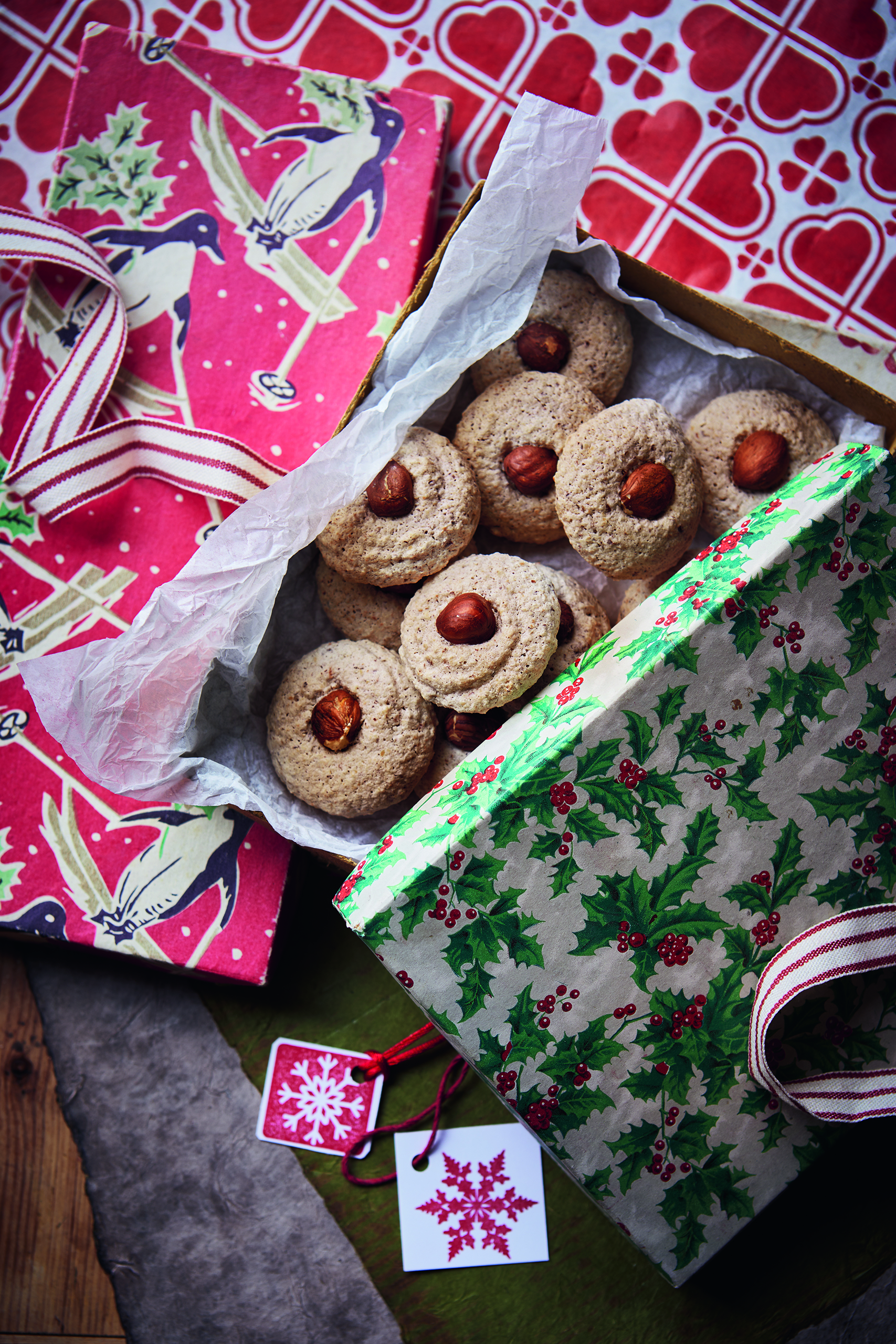
HASELNUß-MAKRONEN – HAZELNUT MACAROONS
This is a delicious, gluten-free staple found on German coffee tables at Christmas. It’s a good idea to bake them on traditional German baking wafers, known as “back oblaten”, or on a sheet of rice paper. You can cut the rice paper into small squares in advance, but it’s not strictly necessary as the paper will tear into roughly macaroon-shaped pieces when the baked biscuits are lifted off at the end. If you can’t get hold of rice paper, nonstick baking paper works well too.
Makes about 35
egg whites 2
icing sugar 120g
ground hazelnuts 160g
ground cinnamon ¼ tsp
whole hazelnuts about 35, for decorating
Preheat the oven to 150C fan/gas mark 2. Line two baking sheets with 35 back oblaten (round German baking wafers, 4cm in diameter), or two large sheets of rice paper or nonstick baking paper, cut into small squares (see note in intro).
Whisk the egg whites into soft peaks in a big bowl. Add the icing sugar bit by bit, whisking as you do so, and continuing to whisk until each addition has dissolved completely. Fold in the ground hazelnuts and cinnamon.
Using two teaspoons or a piping bag fitted with a 1.5cm plain nozzle, place or pipe small mounds of the mixture onto your prepared sheets, setting them about 3cm apart. Push a whole hazelnut into the centre of each mound.
Bake for about 25 minutes, until the macaroons are just a little bit soft and chewy in the centre. Set aside to cool on a wire rack, then store in an airtight container, where they will keep for several weeks.
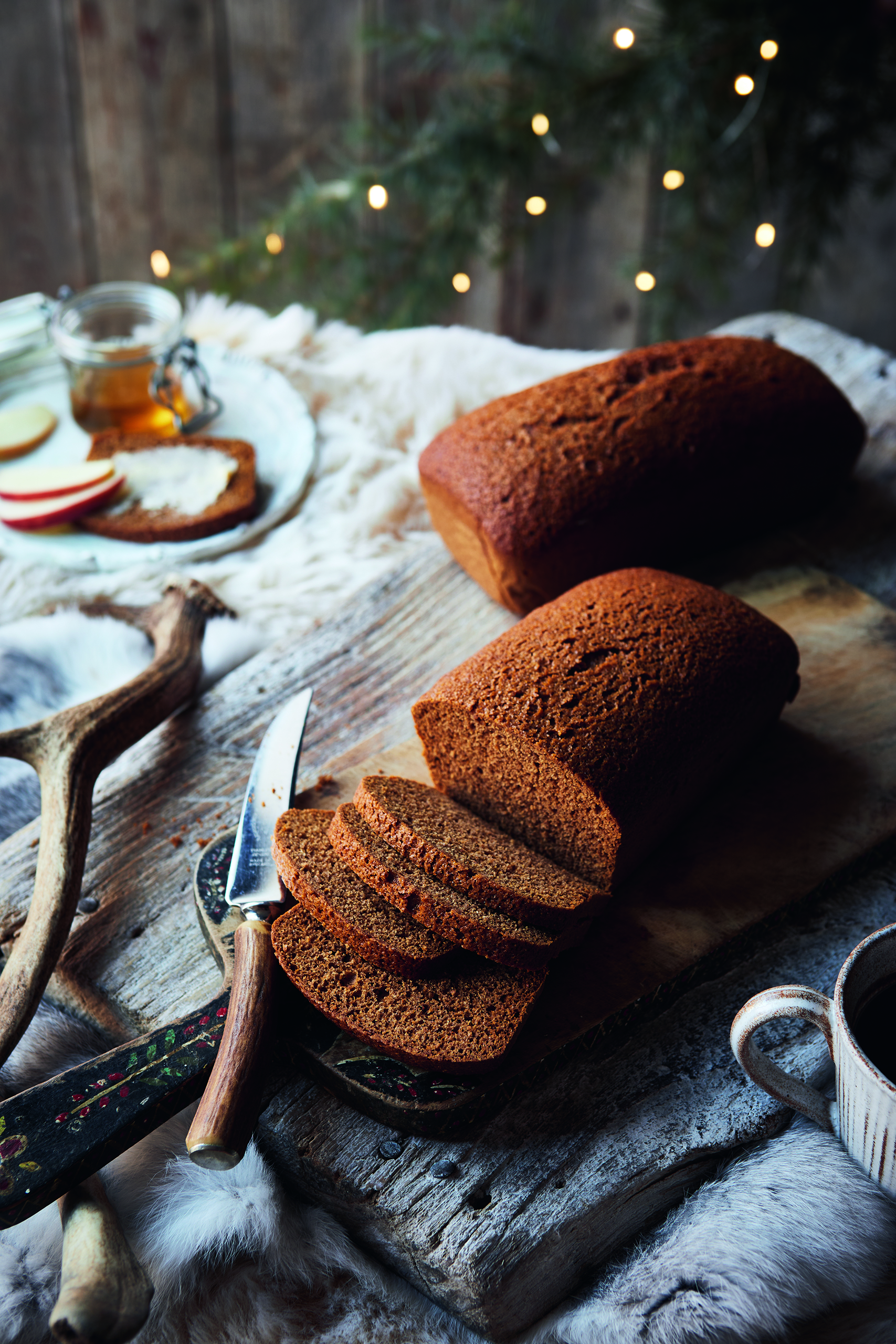
HONIGKUCHEN – HONEY CAKE OR LEKACH
Through my wife and her family, I was introduced to Jewish festivals and the specific foods connected with them. Honey is particularly associated with Rosh Hashanah (New Year), symbolising the hope that the year to come will be sweet. When I first had lekach, I immediately recognised its similarity to the honey cake we traditionally had in my family at Christmas, so it was like meeting an old friend. The colour and wonderful aroma of the cake comes from the rye flour and a long bake at low temperature.
Makes 2 x 500g loaf cakes
brown sugar 90g
gingerbread spice 2 tsp (see recipe below)
bicarbonate of soda ½ tsp
salt ¼ tsp
egg 1
vegetable oil 50ml
honey 450g
water 125ml
wholemeal rye flour 300g
plain flour 100g
Preheat the oven to 130C fan/gas mark 2. Line two 500g loaf tins with baking paper.
Place all ingredients, except the flours, in a large bowl and beat together with an electric mixer at low speed. Once well combined, continue mixing while adding the flours bit by bit. Beat for another 5 minutes, until smooth.
Pour the batter into the prepared tins and bake for 2-2½ hours. Turn the cakes onto a wire rack and set aside to cool.
If stored in an airtight container, the cakes will keep for about 2 weeks.
LEBKUCHEN-GEWÜRZ – GINGERBREAD SPICE
Makes 1 jar
ground cinnamon 5 tbsp
ground cloves 2 tsp
ground aniseed 1 tsp
ground nutmeg ½ tsp
ground cardamom ½ tsp
ground coriander 1 tsp
ground allspice ½ tsp
ground black pepper ½ tsp
Place all the spices in a small screwtop jar. Seal tightly and shake well to combine. Use as needed – in the honigkuchen above, or however you like.
The German Christmas Cookbook by Jürgen Krauss (Kyle Books, £26) is out now