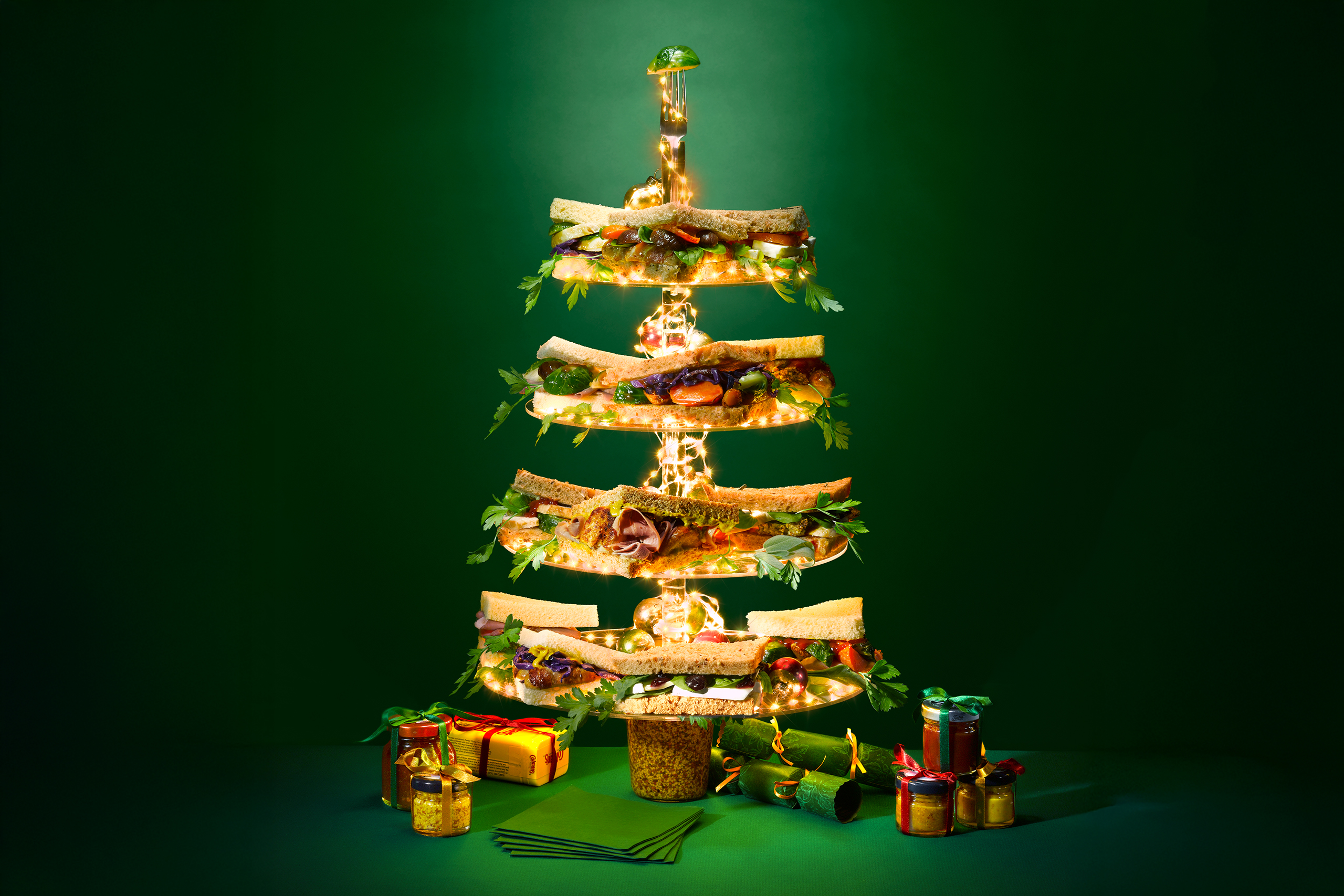

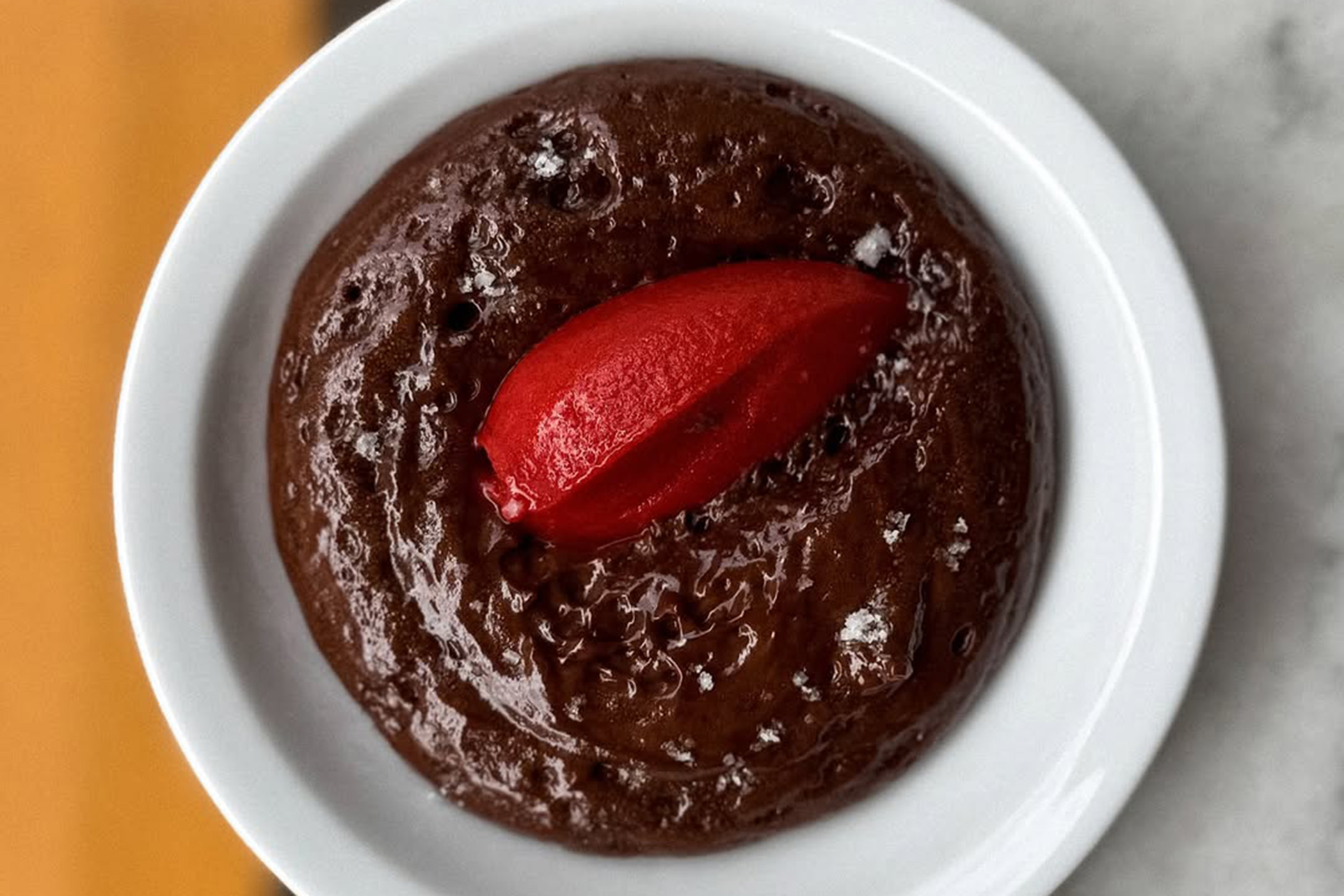
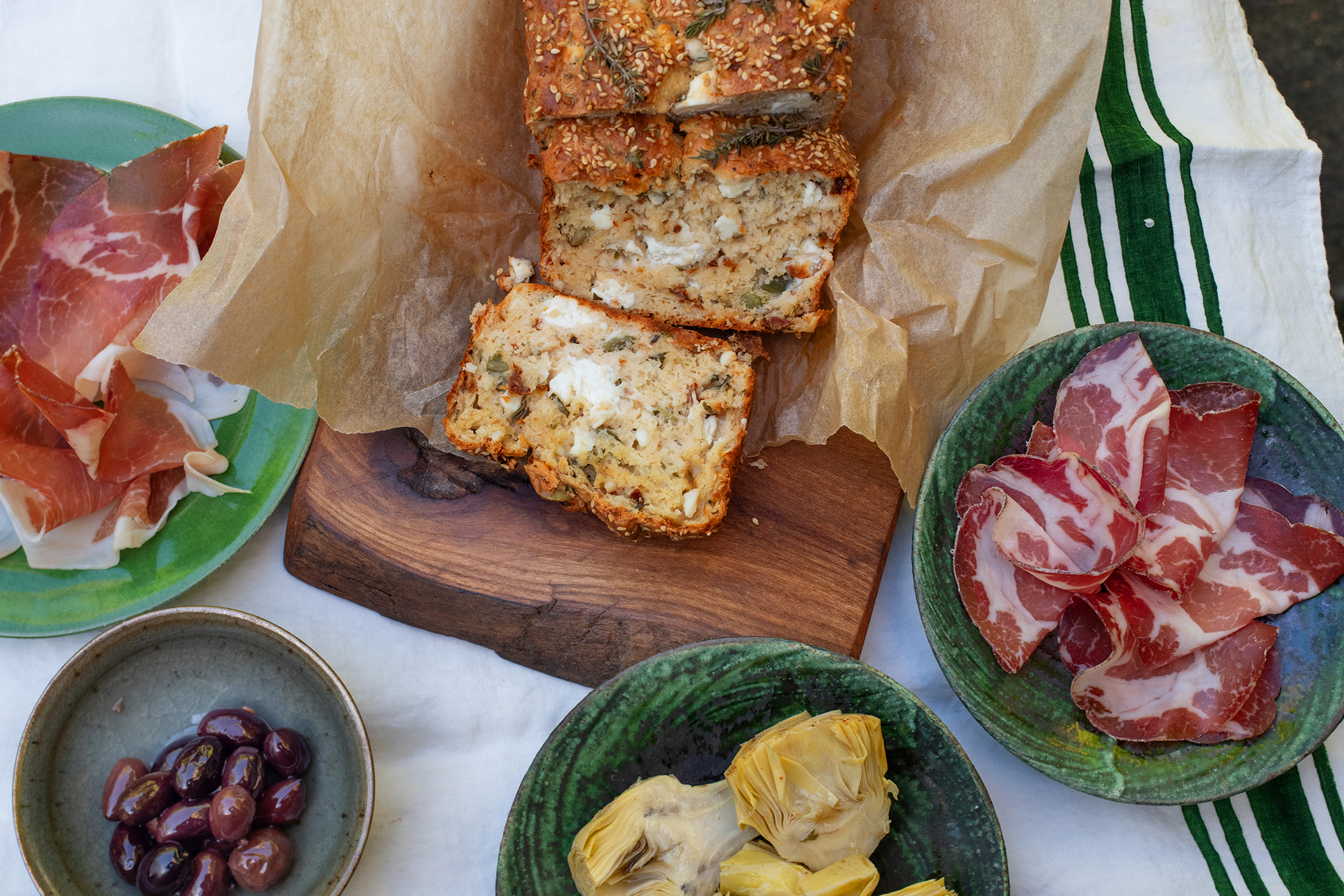
Chef Max Halley once created a Christmas sandwich so inventive, it made a pop star swear on daytime TV. “A few years ago, I was on Sunday Brunch, making different Christmas sandwiches,” recalls the proprietor of Max’s Sandwich Shop in north London. “The last one was filled with Christmas pudding leftovers – as a dessert, not a savoury thing. I had a Thermos flask with me and that alt-rocker Yungblud, who was one of the guests, kept glancing over at it. Eventually he asked, ‘What have you got in there?’ I said, ‘Hot brandy.’ He went, ‘Shit! You’re going to set it on fire, aren’t you?’ They drill it into you not to swear on that show. All hell broke loose.”
Flaming or not, there’s no denying that Christmas sandwiches are hot right now. In the past three decades, they’ve risen from nowhere to become a pivotal part of the festive period. The first hearing of Fairytale of New York. The first attempt to “mull” a drink. The first Christmas sandwich. They’re now as much a part of the annual build-up as untangling fairy lights, missing parcels or rummaging for your favourite Quality Street.
Seasonal sarnies have attained cult status. Devotees wait eagerly for them to be rolled out each year. As a result, they go on sale earlier and earlier. Most supermarkets launched their 2025 ranges in mid-October, long before pumpkin-spiced Halloween season was over. Even Santa’s thoughts probably hadn’t turned to Christmas by then – and that’s his only job.
“Our customers are thinking about Christmas even earlier this year,” explains Owen Lilley, lead product developer for M&S Food. “We launched our festive range earlier than ever to tap into that excitement. It’s never too early for a seasonal sarnie, right? It’s when Christmas officially begins.”
Yes, it’s the most wonderful lunchbreak of the year. So how did some sliced poultry between two pieces of bread become one of the highlights of the culinary calendar? Trying to nail down the origin story of the high street Christmas sandwich is an inexact science. Were Delia Smith, Michael Bublé or Noddy Holder involved? At this time of year, they usually are.
It’s widely agreed that Christmas sandwiches arrived during the late 1990s, like Oasis, alcopops and playing Snake on a Nokia. Dear old Marks & Spencer was the first to make them an annual fixture, just as it had been the first to launch chilled, pre-packaged sandwiches back in 1980 (original price: 43p). “We’re the OGs of on-the-go sandwiches,” Lilley says proudly.
It’s never too early for a seasonal sarnie, right? It’s when Christmas officially begins
It’s never too early for a seasonal sarnie, right? It’s when Christmas officially begins
Roger Whiteside OBE led the M&S sandwich department from 1990 and masterminded its exponential growth. The market trebled in size over the ensuing decade, partly thanks to the arrival of Pret, Eat, Subway and the coffee chains. Whiteside later left to co-found Ocado and become CEO of Greggs, so he’s something of a grab-and-go lunch guru. He is now retired but graciously broke his silence: “I honestly can’t remember how our first Christmas sandwiches came about, or precisely when. But every year, each M&S department would try and come up with a new Christmas idea. The sandwich one stuck and became a tradition.”
Britons now buy 4bn takeaway sandwiches per year. Fuelled by the ubiquitous meal deal, the UK sandwich industry is worth a bread-bloated £8bn annually. That’s big business. In the scramble for a thicker slice, it’s no wonder sandwiches became Christmas-ised.
“One of the great things about sandwiches is that they’re so adaptable,” says Jim Winship, head of the British Sandwich Association. “You can easily change the fillings or the carriers [as the bread bit is termed in the trade] to make something different. There’s demand from consumers to get into the festive spirit, so the Christmas sandwich market has grown over the years.”
M&S sold a whopping 3.2m Christmas sandwiches last year and expects to exceed that in 2025. Co-op sold 1.7m, averaging 13,000 every hour. Jack Hammersley, food-to-go buyer for Waitrose, says: “Our sales were up by 8% last year and we’ve built on that by dramatically increasing our range. Customers are keen to capture the celebratory spirit of Christmas, even during a busy workday.”
Newsletters
Choose the newsletters you want to receive
View more
For information about how The Observer protects your data, read our Privacy Policy
Christmas sandwiches have come a long way. They began with just turkey, maybe some stuffing, and a smear of cranberry sauce. Over the past 30 years, ever more ambitious fillings have been added: pigs in blankets, chestnuts, spinach, crispy onions, even roasted carrots and red cabbage. Nowadays, it’s basically an entire roast dinner, slapped in bread and shoved into a triangular cardboard box.
One of the main challenges with mass producing Christmas sandwiches is keeping it moist without lapsing into sogginess. “Turkey does tend to be a bit dry, so probably needs a Christmassy condiment with it,” agrees Winship. “Cranberry sauce, onion chutney or a flavoured mayonnaise: it all helps.”
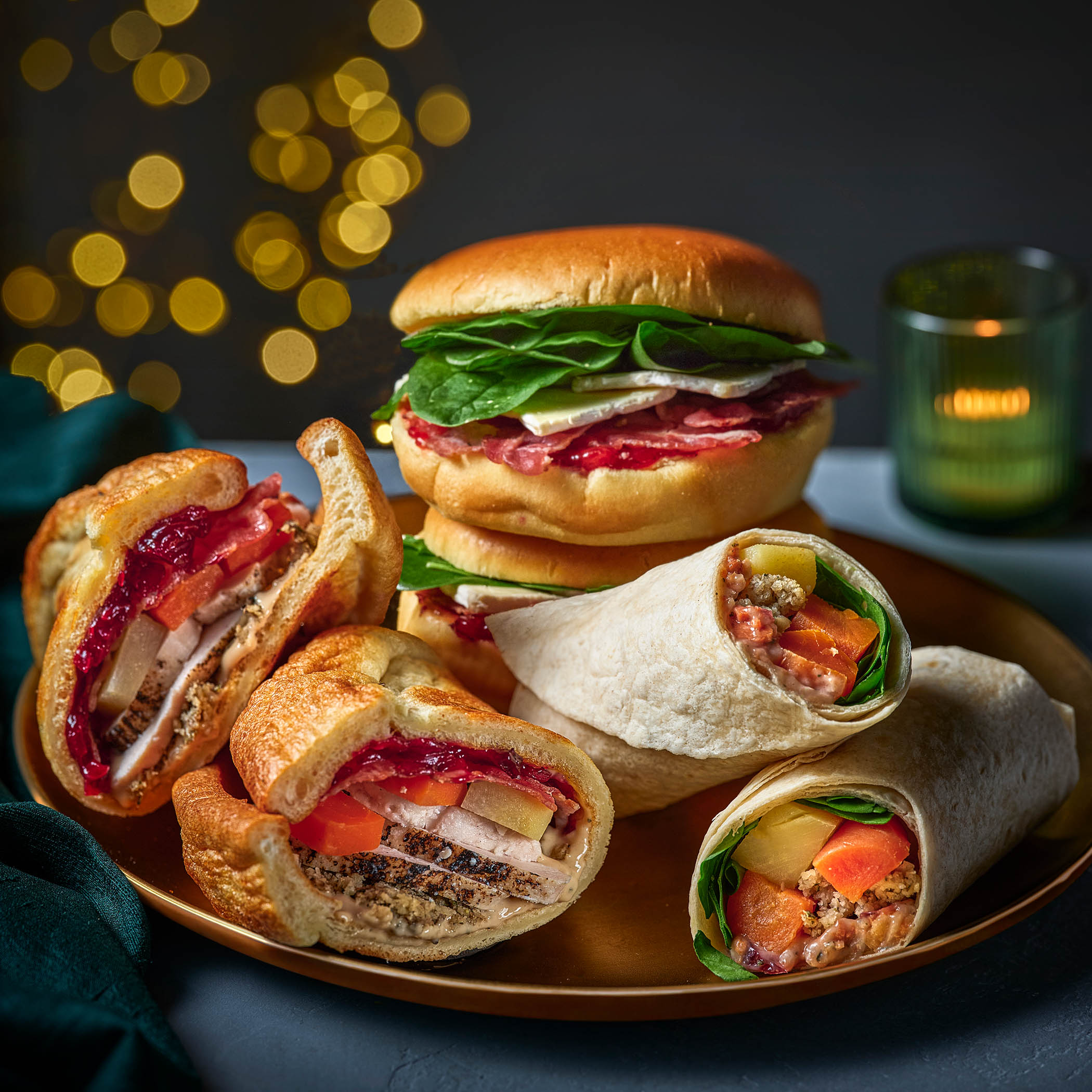
Halley says the secret lies in contrasts, especially if making your own. “Sandwiches should be built in layers so every bite contains every element: hot, cold, sweet, sour, crunchy, soft. That’s my sandwich shop’s mantra.
“There’s a lot of soft stuff in a Christmas sandwich, so add crunch with crisps, croutons or some chopped-up roast potatoes, baked hard or refried,” Halley explains. “A squeeze of orange or lemon for an acidic hit. Loads of mustard or mayo, some lettuce for freshness and an enormous amount of warmed-up roasted meat.
“What makes a good Christmas sandwich are the things that make any good sandwich: a liberal attitude to condiments and a good variety of textures and flavours.”
Don’t get him started on pigs in blankets though, or pigs under blankets, as they’re increasingly known: “They’re a disgrace! It’s just a sausage and bacon sandwich, which has been around forever. This should be a national scandal.”
High-street chains and supermarket chiller cabinets are currently crammed with turkey-based lunches. There are Yuletide toasties and paninis, festive rolls and wraps. And then come the sickly monstrosities. One of this year’s talking-point items is Sainsbury’s mince-pie wrap, an abomination to rank alongside Tesco’s birthday cake sandwich – both guaranteed to go viral and clock up column inches, while making us queasy at the mere thought.
Lunchers looking to get in the festive mood are spoilt for choice. Will it be Sainsbury’s festive duck brioche roll? Tesco’s currywurst sausage sub? Pret’s truffle and brie toastie? Asda’s cracker-shaped pork and stuffing sausage roll? If copywriters can crowbar a ho-ho-ho gag in there, probably tacked on to the words “honey” or “ham hock”, all the better, though M&S has gone one louder with its fa-la-la-la-fel wrap.
For all the fancy fillings, it’s traditional turkey that rules the roost
For all the fancy fillings, it’s traditional turkey that rules the roost
“They’re packaging prawn cocktail and beef wellington sandwiches as Christmas ones now, which is cheeky,” says Halley, taking issue with some of the labelling. “There’s nothing inherently Christmassy about those. They’re getting away with it by writing Christmas on the box.”
For all the gimmicky formats and fancy fillings – Co-op’s latest twist is its turkey double dip ’n’ dunk wrap, which comes with dinky pots of gravy and herby crumbs, enabling consumers to customise their toppings – it’s traditional turkey that rules the roost. “When you look at the research, most still go for the standard products,” says Winship. “They’re attracted by novelty and new ideas but that’s often marketing-driven to grab consumer interest.”
Every year, Waitrose’s bestseller is its turkey, stuffing and bacon, followed by smoked salmon and cream cheese, and brie and cranberry. Pret’s Christmas lunch sandwich is always its most popular festive offering, too. (Fun bonus fact: Pret’s busiest day of the year for all-day breakfast sandwiches is the last working Friday before Christmas – which this year falls on 19 December – due to office party hangovers.)
Just one problem remains for our latest Yuletide tradition: its name is arguably a misnomer. “For me, it’s not a Christmas sandwich,” says Halley. “It’s a Boxing Day sandwich. They’re all founded in leftovers, even if that’s been forgotten on the high street. My truly mega sandwich of the year is always on Boxing Day.”
At heart, perhaps all Christmas sandwiches are an attempt to mimic a homemade doorstep crammed with fridge-raided leftovers on 26 December. It’s just that they go on sale two months earlier and counting.
Food styling by Alice Ostan, prop styling by Patrice de Villiers