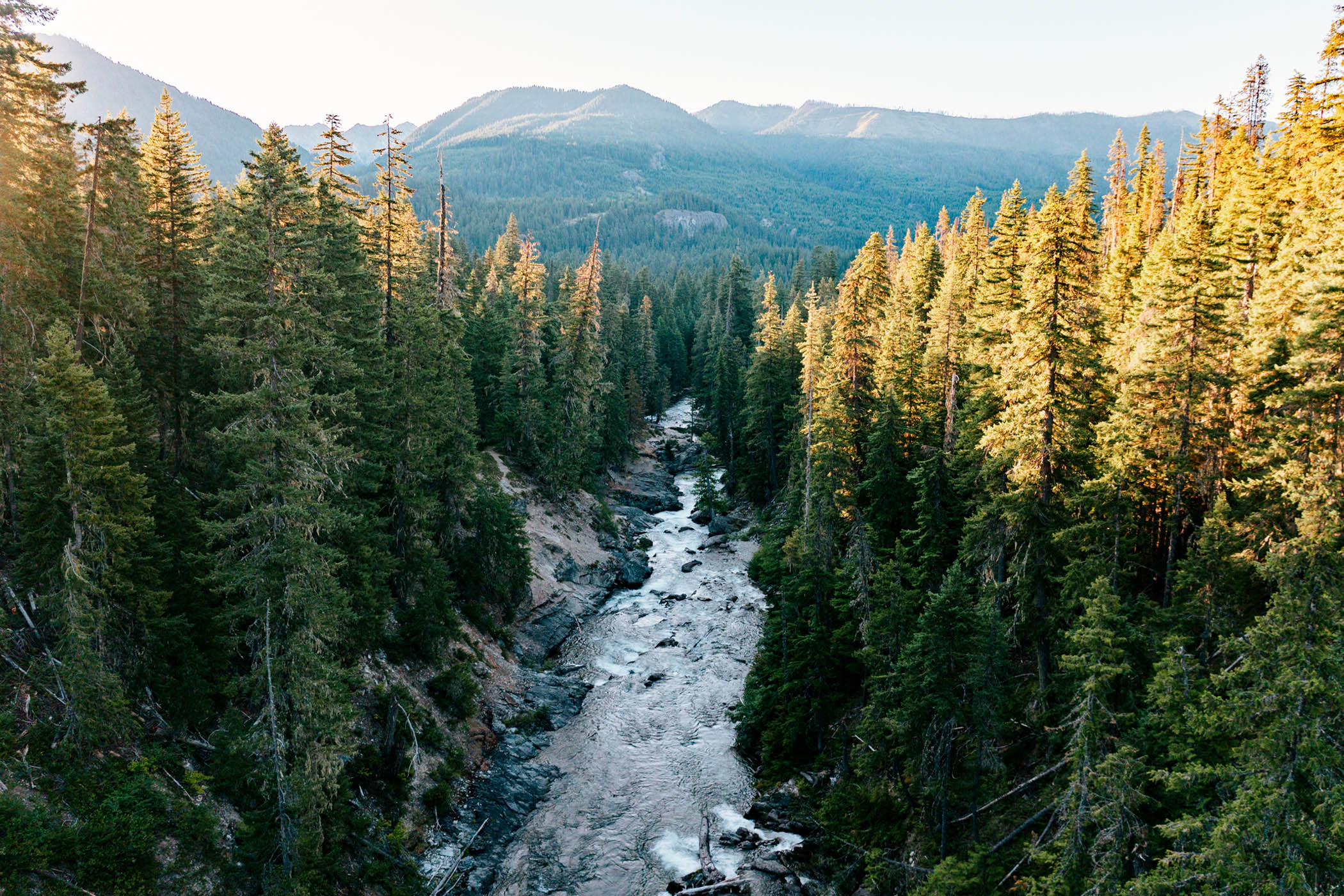


Head to the mountains in Washington State, on the western slopes of the Cascades, where the storm clouds collide in big piles and it only stops raining when the snow starts falling. Find the Skykomish River, where it splits below Gunn Peak, Mount Index, and the Wild Sky Wilderness. There, venture into the forest, wade through the ferns, pick a path through the Douglas fir, the western red cedar, and the bigleaf maple, until you find the place where, amongst the moss and the salmonberry it waits, glowing a pale grey against a sea of emerald green: a rather crap looking wooden cabin.
And if you see it, say hello for me. Because the truth is, I miss that place.
When I was 27, I bought this isolated, rural hut for $7,500. It was tiny, smaller than most bedrooms. If you’re imagining there was a whole lot packed into it, like some efficient Swiss-Army-knife of a shelter, you’d be wrong. It had no electricity, no plumbing, no toilet, no wifi, no cell service, no running water, no source of heat or comfort. It wasn’t even interesting to look at, honestly.
The corner foundation had sunk into the ground. The siding was incomplete. Its haphazard framing was exposed, revealing mouldy insulation and thriving mouse communities. The roof leaked. The door barely opened. The driveway was a sinkhole, and the outhouse didn’t exist beyond a large hole in the ground.
It was as if someone had started building a cabin 20 years ago and then grown so frustrated by their sheer incompetence that they’d simply given up, dropped their hammer and walked into the river.
The scale and severity of these problems were invisible to me. Invisible because my understanding of carpentry was not unlike a dog’s understanding of quantum mechanics. Instead of challenges, I saw possibilities. On my first, pre-purchase visits there in 2013, I pictured weekends with friends, long days on the river, winter nights cozied up to a wood stove and long, lazy mornings. It reminded me of my childhood.
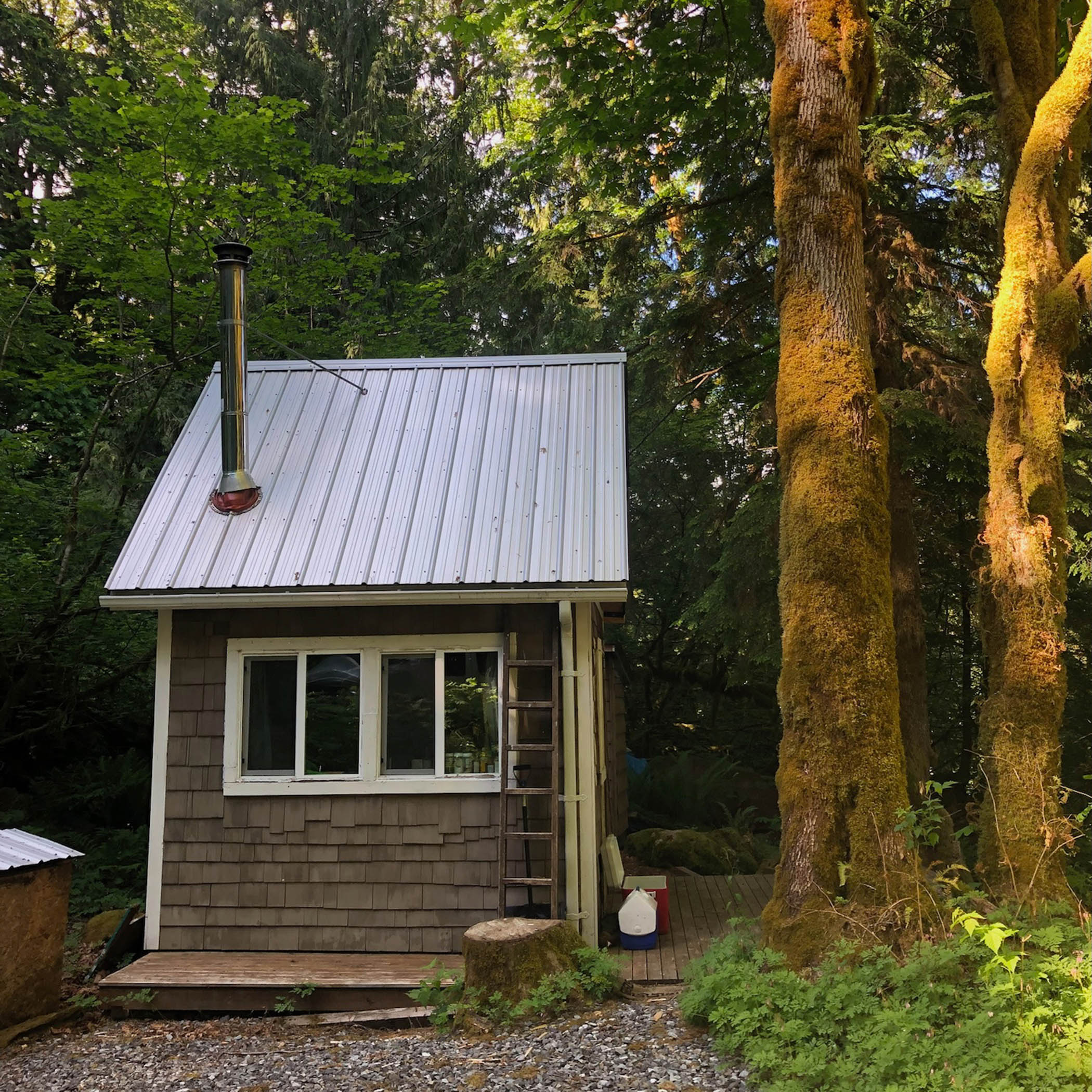
'A pale grey against a sea of emerald green': the cabin in the Cascade mountain range
I’d grown up in the woods, or at least it felt that way. Our home was set on a few acres surrounded by thick forest that made the neighbours, though close by, feel a world away. Many of my earliest memories are of making trails, climbing trees, and constructing crude forts out of branches. The cabin felt like an opportunity to go back to that time, which was a relief because adulthood, back then at least, did not feel a good fit for me.
I was lost. Lost in the same way most of us were in our 20s.
I was living in Seattle, trying to be a writer and getting nowhere. After college, I’d imagined a dream job where I would crisscross the globe seeking out wild places and eccentric characters. A life that seemed guaranteed to be full of adventure. But the truth was, it wasn’t working out and I’d begun to give up. When I saw the cabin, I stopped thinking about how much I hated my job, or what internship I should apply for, or whether grad school was a good fit. Instead, I started thinking about the best way to season firewood, how to forage for wild edibles, and when the leaves might begin changing color. It felt like I could pause the pressures of life for a bit, or maybe forever.
Fixing it up wasn’t part of the draw, mostly because fixing it up wasn’t something I was capable of doing. I was a copywriter. I knew my way around a keyboard, not a drill and a saw. If something was broken, my go-to fix was to kick it. I purchased the cabin six days after first seeing it online, and my goal was to make it barely habitable, to put just enough effort into it that it didn’t seem like the walls would collapse when you sneezed. Or so I thought.
The first weekend after purchase, a group of friends gathered. We hustled to top the deck with cedar, cobbled together an outhouse, smoothed a big pile of rocks into a driveway, and made the inside more liveable. It was an ambitious beginning. We all lived in the city – none of us knew what we were doing. Our inexperience was part of what bonded us that weekend. There were no egos around the power tools, no alpha male energy surrounding the use of the generator. We were like curious kids, eager to help each other out, learn a little, and make mistakes without fearing that someone was watching in judgement. And so we learned, one jagged cut at a time. As the work continued, I noticed the tasks and tools were transforming from mild interests to obsessions. I started going to the lumber yards for sheer amusement. I began reading catalogues of metal fasteners as if they were thrilling spy novels. I spent as much time there as I could. And, as time went on, I noticed that the listlessness that I’d felt in years prior was evaporating.
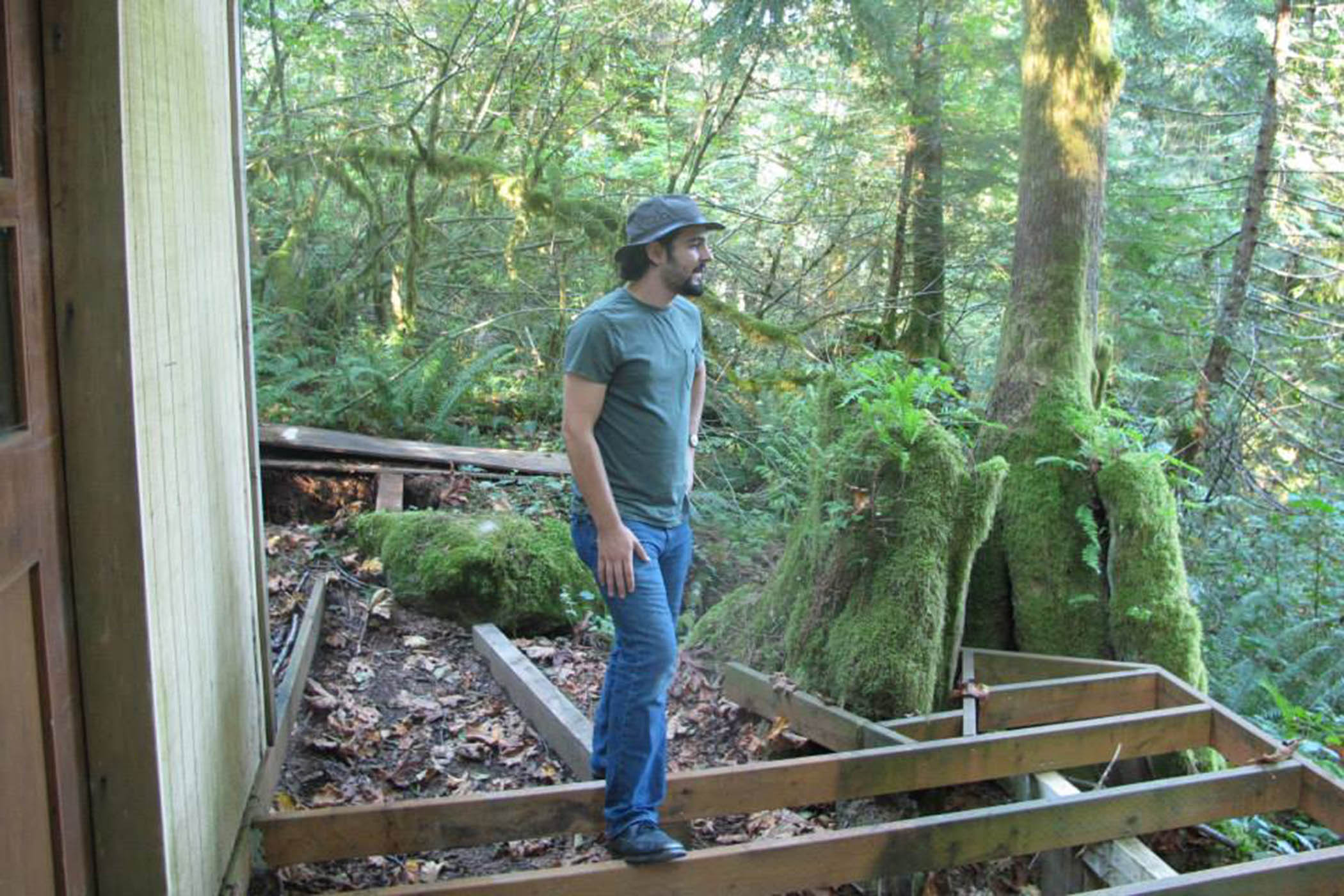
Cabin crew: rebuilding the porch
Nights I'd normally spend tossing and turning, wondering how to manipulate my career path into some meaningful direction were replaced by nights tossing and turning about a new ladder design or picking a stain color for the cabin’s cedar shingles. This work felt refreshingly tangible: fixing a door wasn’t abstract – it meant someone might enter easily for decades after me. I’d found something that I loved doing, even if I wasn’t any good at it. In many ways, the fact I loved doing it – in spite of being somewhat useless – was the thrill. It took eight years of visiting on odd weekends and holidays to get the cabin to a place where it felt finished, the same amount of time it took me to realise I didn’t want to go into an office anymore, that I wanted to build instead. It was a realisation that made me love the cabin even more. It was no longer just a beloved basecamp, it was a mentor, a scarred façade where nearly a decade of trial-and-error building had awakened a passion in me. And that desire to keep building was also the reason that I was certain I had to sell.
The cabin was a kaleidoscope of poor carpentry. We had filled it with poor cuts, bent nails, stripped screws, and cheap materials. I had eventually picked up the skills necessary to fix all of it, but I couldn’t bring myself to pick up a hammer and do so. Every corner of sloppy construction represented a cherished memory. To fix it up, again – to make it sturdy and square and level and plumb – would have been to erase the evidence of those good times. The cabin’s quirks and shortcomings were what made it special.
The only thing I craved more than the space itself was the opportunity to create it again. Plenty of things in my life were consistent: my job, my friends, my apartment, my personal relationships. The cabin was something that was pulling me forward. It was a problem to solve, always evolving, always teaching me something new. I wanted more of that. Selling the cabin meant a chance at more land, more space, and the chance to build something unique that I could fall in love with all over again.
But it’s not like it wasn’t hard to say goodbye. The last weekend I spent there, it was through broken sobs that I boxed up the lanterns and books and games that we’d gathered over the years. I even took pictures of every nook and cranny, jotting down measurements and noting materials so that I could build an exact replica someday, thinking that notion would help alleviate the grief.
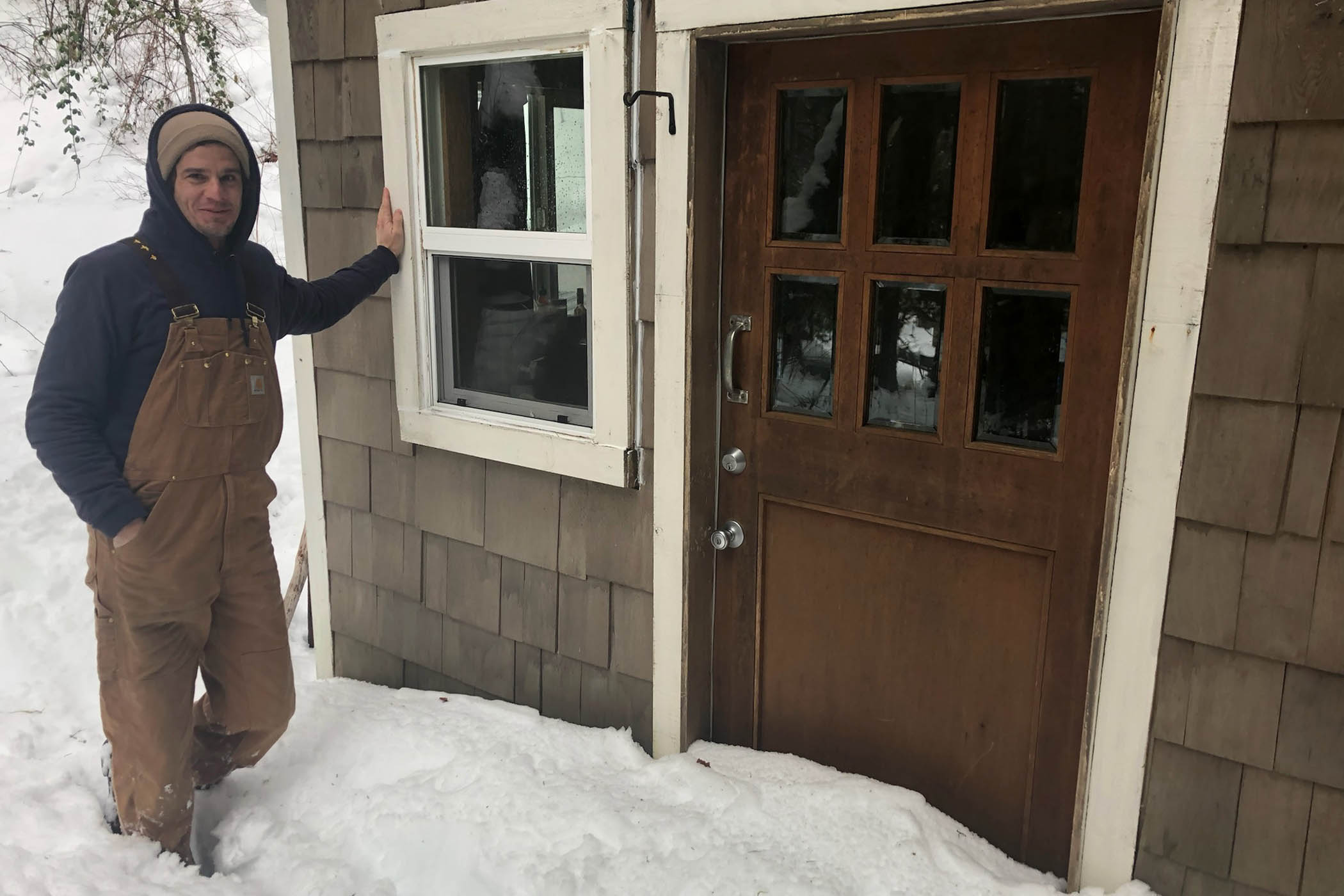
There was one thing that made me smile that day. I thought about the condition that the cabin was in when I found it: neglected, half-finished, easy to forget, barely worth the lumber it contained. It would have been easy for someone to knock it down and start again, or for the forest to simply reclaim the space, for the leaky roof to eventually rot out the framing and collapse. A few years and there’d be ferns growing up out of the floor and moss covering the windowsills. And while I hadn’t made the cabin into some luxury studio, it was now a place worth saving. Eventually I found a new property, and built more little escapes in the woods. A friend and I built two more cabins from the ground up and sold both because selling meant we could build again, and that’s when we had the most fun.
I’m 40 now. It’s been five years since I sold the cabin, and I still wonder if it was the right thing to do. Though I never lived there full time, it still aches like the loss of a home, the way it might feel to lose the place you grew up. Because, in so many ways, it felt like I did grow up there. And I worry. I worry that the new owners aren’t caring for it the way I did. I worry that they aren’t sweeping the leaves off the porch often enough, that they don’t fry steaks wildly on the stove so the mice have a bit of grease to lick off the walls. But I don’t worry that they love the cabin as much as I did, even if they do it in a different way.
I remember when I was in high school, talking to an uncle about a relationship that I was trying to end. I’d never broken up with anyone, and the thought of hurting someone else, or of potentially regretting my decision was weighing heavy on me. I remember him saying, “Don’t ever think you’re the only person that can make someone happy”.
Loving and letting go is one of the natural rhythms of life. And though letting go can hurt, it’s often the only way to return to the thrill of falling in love again. Letting go of a cabin let me build many more. Letting go of a career as a writer allowed me to fall in love with being a carpenter, and the cycle of it all has taught me to trust my instinct when it comes to saying goodbye.
Cabin: Into the Woods with a Clueless Craftsman by Patrick Hutchison is published by William Collins and is out now
Newsletters
Choose the newsletters you want to receive
View more
For information about how The Observer protects your data, read our Privacy Policy