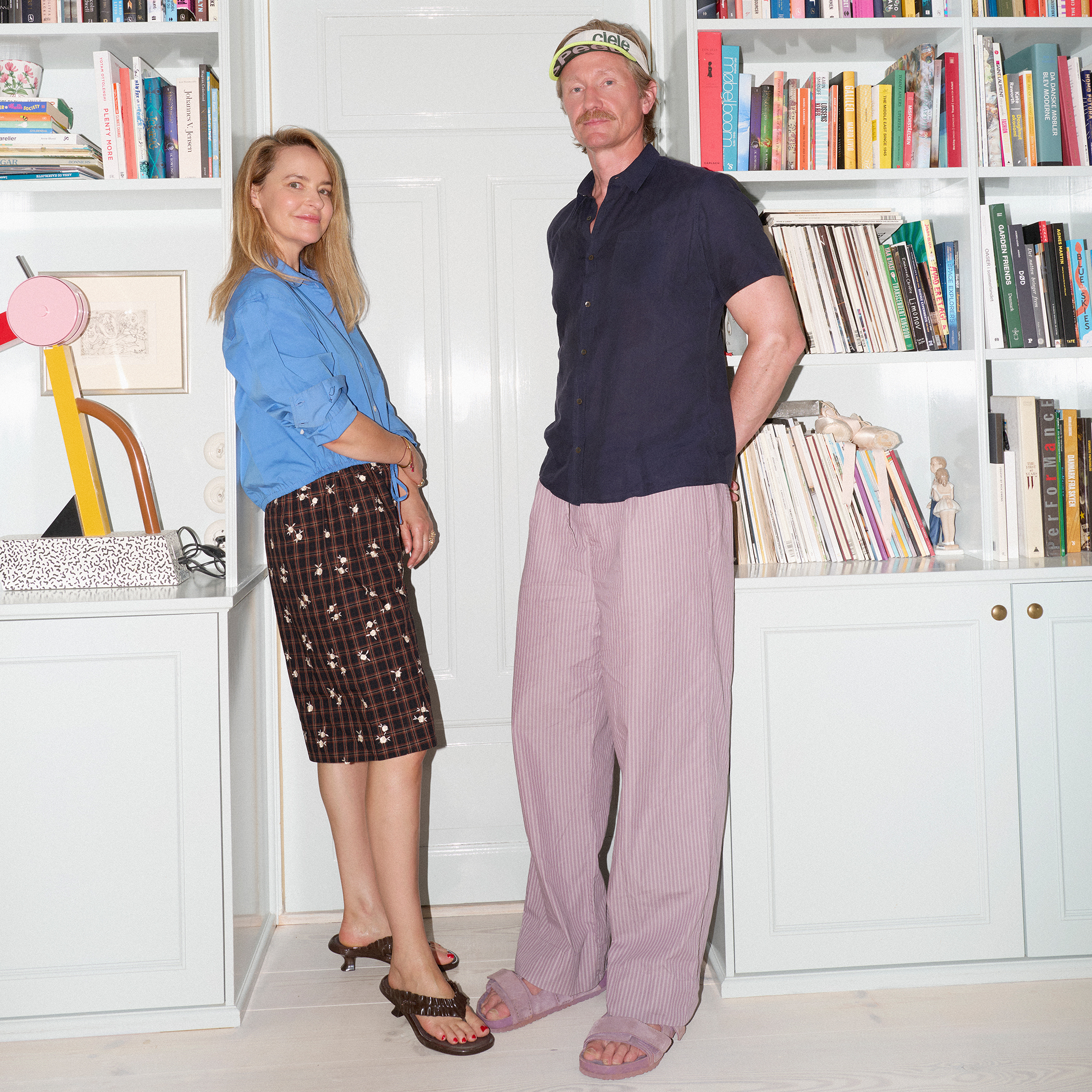



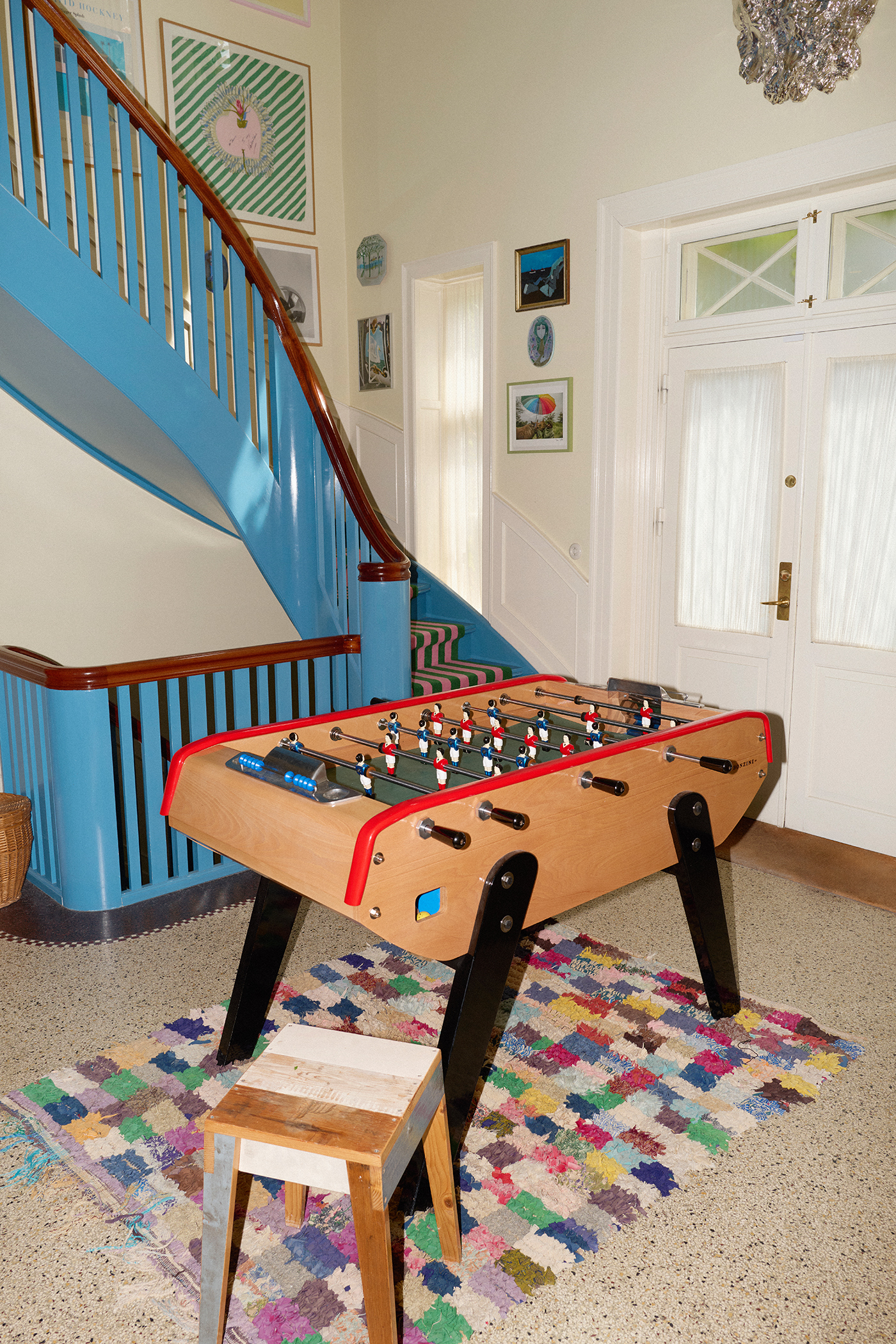
The first thing you notice when you step into the Copenhagen home of Ganni founders Ditte and Nicolaj Reffstrup is not the art, though there is plenty of it. It’s not the iconic blue staircase. Nor is it the stunning terrazzo floor, its speckled black-and-cream expanse anchoring the 19th-century villa they share with their three children.
No. The object that offers the most striking initial impression is the football table. Occupying much of the space just inside the front door, it actually functions as a piece of common hallway furniture. Jackets and sweaters tangle around its poles; backpacks dangle from its handles. On a normal weekday afternoon, Nicolaj says, the table itself disappears beneath the accumulating detritus of everyday family life. “We’re messy,” Ditte confesses, gesturing toward a pile of cords and papers shoved in a corner. “And I mean actually messy. Not cool messy.”
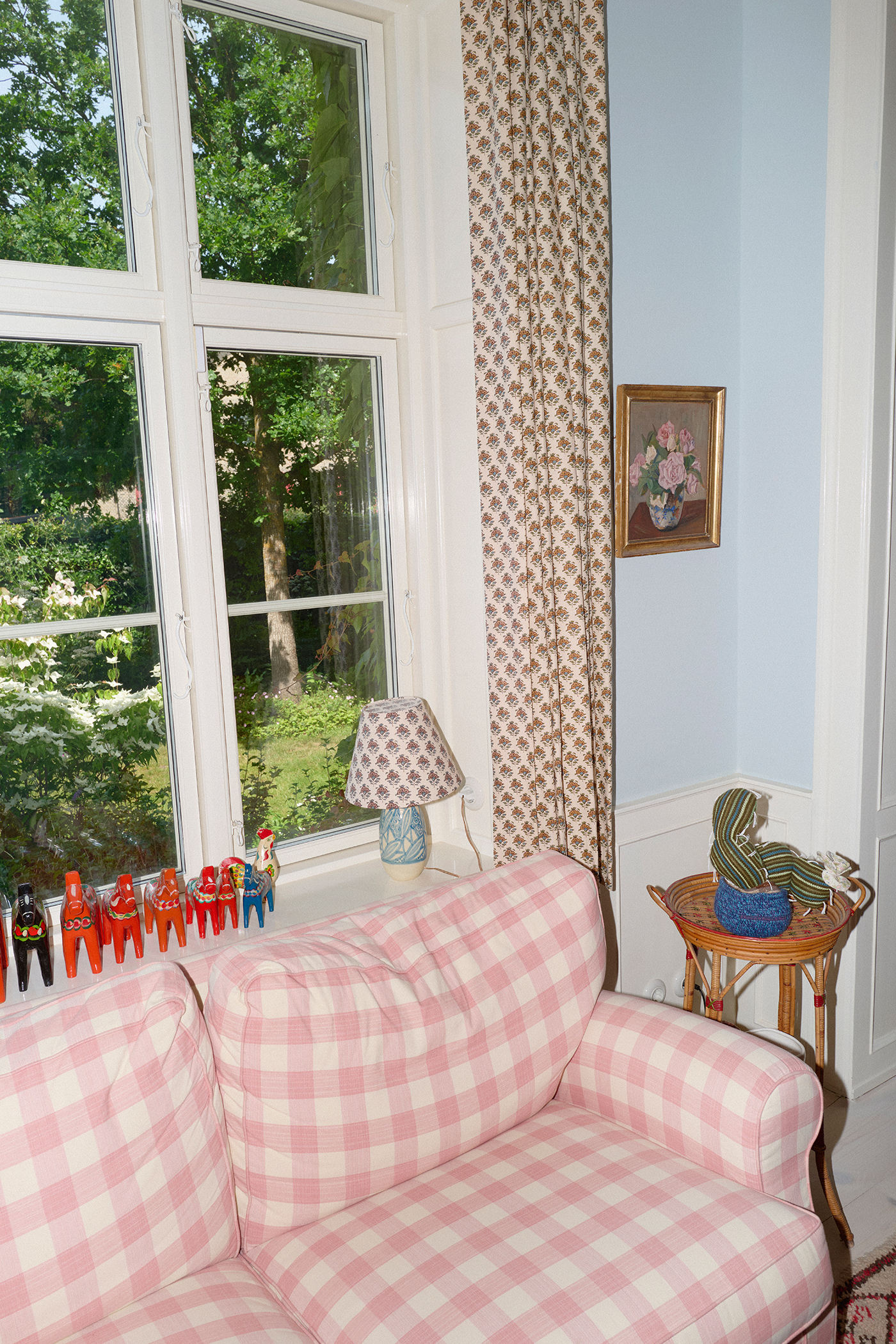
That distinction offers an unexpectedly apt introduction to the couple behind one of fashion’s most influential global brands. For all of Ganni’s global success, there is remarkably little performance happening here, in a quiet leafy quarter of Østerbro. Paintings lean casually against walls waiting to be hung. A kitchen drawer, proudly presented as evidence of the family’s habits, overflows with a jumble of cables, remote controls and hair clips.
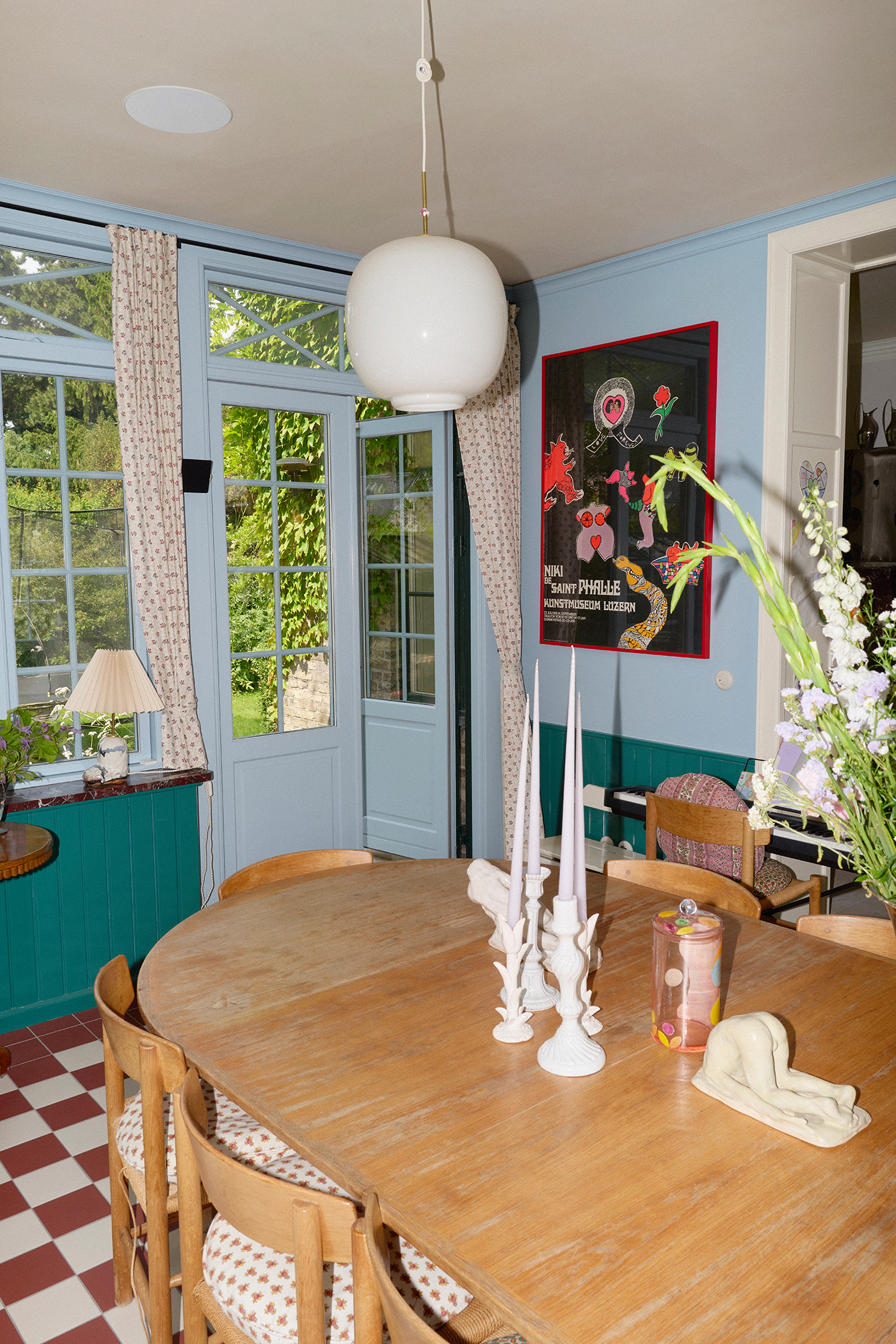
And while the house is beautiful, an eclectic symphony of style, it is also refreshingly unprecious. Nothing feels staged; it is clean but chaotic, throbbing with textures, patterns and colours that keep the eye in motion. There are inviting places to sit in every room, and at the centre of the dining room stands a large wooden table, its surface scratched, stained with pen marks and water rings, cracked softly with age.
“Most people would probably replace it,” Ditte says. “But I like that it looks like it’s seen some things. I guess we like contrast – we’ve always been drawn to that. And the dynamics that happen there are so much more interesting.”
‘Most people would probably replace the table, but I like that it looks like it’s seen some things’
‘Most people would probably replace the table, but I like that it looks like it’s seen some things’
Indeed, the Reffstrups share a pronounced instinct for contradiction. Vintage furniture sits beside contemporary pieces, scumbled ceramics are juxtaposed with chrome. Their children’s hand-drawn sketches share space with antique oil paintings in gilded frames. Nothing matches exactly, but everything belongs.
In many ways, the house feels like a physical expression of the brand’s founding principle: stop worrying about what you’re supposed to do. That philosophy has deep roots in the Reffstrups’ personal histories. Nicolaj is from the island of Fyn; Ditte grew up in a small fishing community on the northern coast of Jutland, where life revolved around football pitches and industrial harbours. Long before she entered fashion, she was already honing a personal tendency to pair practical and grounded with bold and fresh – an impulse that would eventually shape the culture of Ganni.
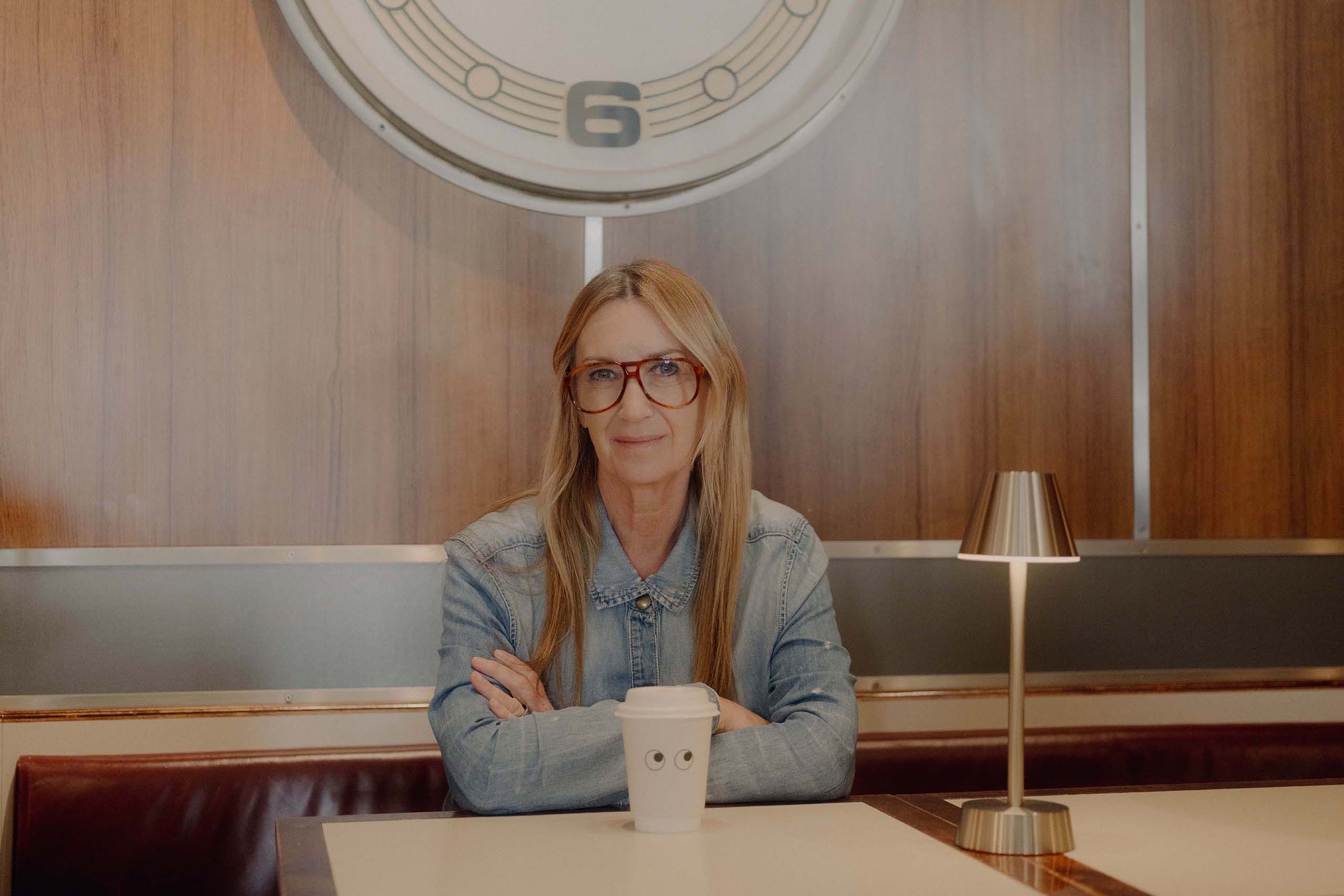
“I played a lot of football and I loved thrift stores,” she says. “So I would wear old floral dresses with trainers and a denim jacket. At the time, people really weren’t dressing like that.” Although that mix feels woven into contemporary fashion today, two decades ago it didn’t. At the time, Scandinavian fashion in particular fell primarily into two camps: bohemian romanticism or severe minimalist uniformity.
“I never felt like the people who inspired me were represented by what was available,” Ditte adds. “People assumed that because you were Scandinavian, you should look a certain way, but I couldn’t really see myself in that vision.”
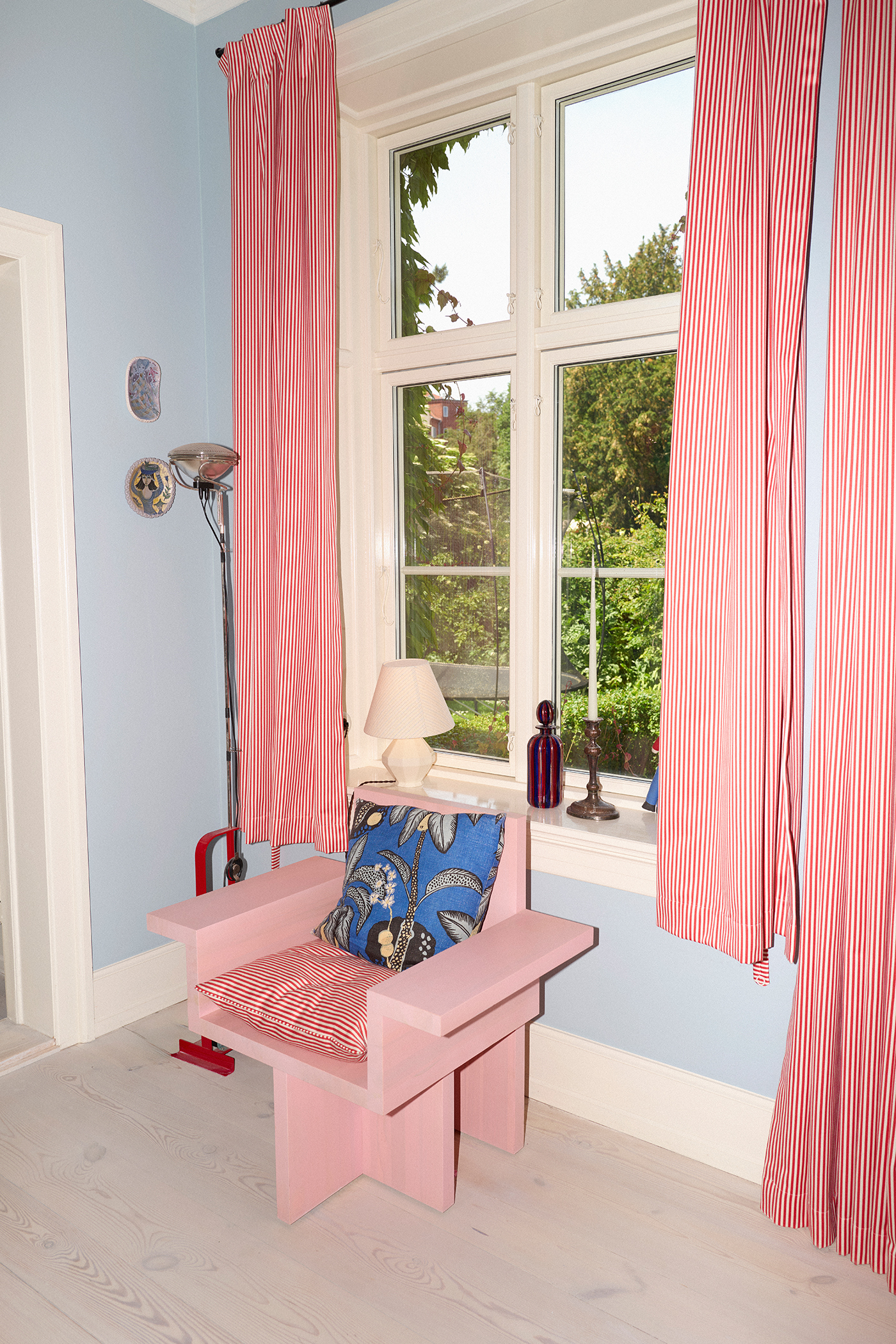
Like many things in their lives – including their home, which they acquired by visiting neighbours and planting the seed that they hoped to buy one day – Ganni fell into their laps. Ditte had worked as a buyer in retail and Nicolaj was in tech; neither of them came from fashion’s traditional circles. When they bought the brand, originally a small cashmere company, from a friend in 2009, their only motivation was to create the kind of clothing they themselves wanted to wear.
Newsletters
Choose the newsletters you want to receive
View more
For information about how The Observer protects your data, read our Privacy Policy
“For a while we were trying to catch up with everybody else,” Nicolaj says. “But one of the most important decisions we ever made was simply to stop comparing ourselves. We realised we had to trust our instincts instead.”
‘One of the most important decisions we ever made was simply to stop comparing ourselves, and trust our instincts instead’
‘One of the most important decisions we ever made was simply to stop comparing ourselves, and trust our instincts instead’
Following their noses has led them down roads others might not have chosen. When they moved into the villa in 2019, they undertook significant renovations. But rather than opening everything up into one vast space, as was the trend at the time, they preserved the home’s smaller rooms. “To keep its spirit,” Nicolaj says.
Even now, Ditte finds herself drawn towards decisions that introduce a little friction rather than polish. The original wooden floors, for example, have been lovingly maintained. And while most homeowners would consider them an achievement, the Refstrupps are now contemplating painting over them. “I think they look too nice, in a way,” Ditte says.
It’s a revealing comment, speaking to a broader impulse that runs through both the house and the company. Perfection is never the goal. For years, Ditte admits, they resisted screens, convinced that they disturbed the atmosphere and aesthetic of a room. “We believed TVs weren’t very cool,” Nicolaj says. “But then we had children. Now we have screens all over the house.”
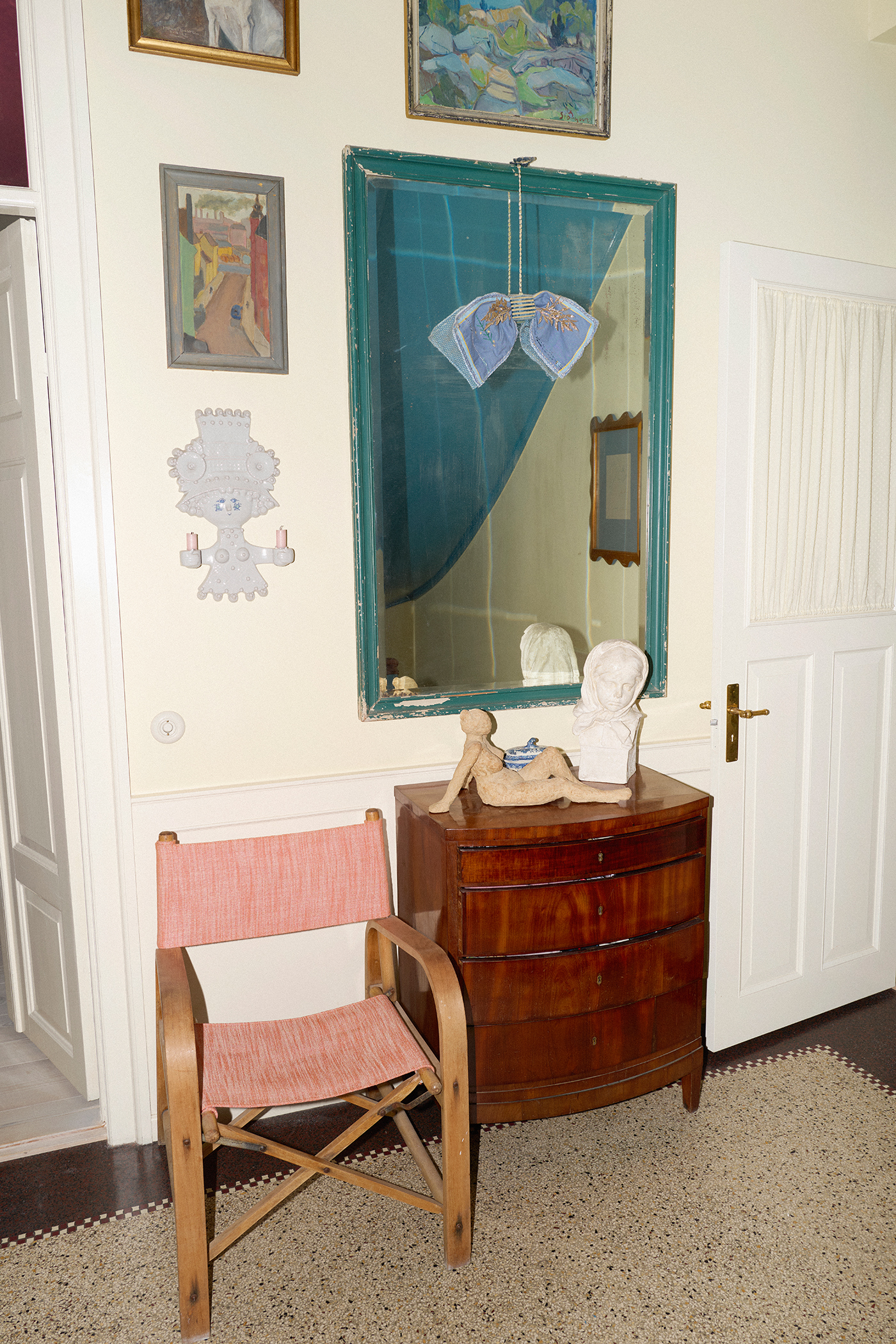
The televisions have since become gathering places – for football matches, movie nights and the small rituals that quietly structure family life. In a way, they feel modestly emblematic of the Reffstrups’ worldview: useful things are allowed to be useful. Life is permitted to leave a mark.
This democratic spirit is alive throughout the Ganni home. Their children’s friends wander freely in and out of rooms, and guests are encouraged to help themselves. Nobody seems particularly worried about preserving appearances. “We want our kids’ friends to feel comfortable enough to open the fridge,” Ditte says. “My mother sometimes says they’re almost too comfortable here. And actually, that’s exactly what we were going for.”
For all the attention that surrounds Ganni, life inside the Reffstrup household remains remarkably ordinary. Lunch boxes are packed. School runs are negotiated. Tennis practices are scheduled. Work conversations weave in and out of family logistics. By the time I leave, the football table has acquired another jacket. Someone is looking for their phone, and cherry pips litter the countertop. The house is beautiful, but what lingers is the feeling that inside it, anything goes – style and family life, aesthetics and practicality have somehow reached a comfortable truce. Which may, in fact, be the most Ganni thing of all.