

The Rue de Rivoli has always been a bit of a paradox. Laid out under Napoleon and extended through the 19th century, the famous Paris street cuts across the Right Bank in a long line, skirting the Louvre, the Tuileries and the Hôtel de Ville before dissolving into the Marais. If that makes it sound grandiose and monumental, it is also very “mid-range commercial”. Look one way and you’re admiring neoclassical columns, elegant arcades and ornamental lakes; look the other and it’s Zara, Bershka and Sephora.
For a long time it was a road that people found themselves on quite often, but hesitated to inhabit. When Julie Passerat and her husband bought their apartment here, just before Covid, it was still one of Paris’s busiest traffic arteries. “Nobody wanted to live here,” she says. “It was the biggest, noisiest street. You couldn’t shut it out, even with the window closed.” She visited and refused to consider it.
Comfort zone: the flat combines arty touches and soft furnishings
After months of fruitless searching, the same apartment appeared on the market with another agency. Passerat looked again. “OK, well, it’s the right size,” she said to her husband. They had three children and were looking for a space that could accommodate four bedrooms, an increasingly tricky proposition in central Paris. “We decided to go ahead and buy it.”
Nobody wanted to live here. It was the biggest, noisiest street. You couldn’t shut it out, even with the windows closed
Nobody wanted to live here. It was the biggest, noisiest street. You couldn’t shut it out, even with the windows closed
Of course, they had no idea that, three months later, much of the world would enter lockdown, or that the city would use the cover of Covid to turn the Rue de Rivoli into a single vast bicycle lane. At a stroke, the one-time traffic trap became a symbol of car-free urbanism. The noise problem was rendered a thing of the past. “Now everybody wants to live here,” says Passerat.
We are sitting in her living room with the interior architect Camille Hermand, whom she enlisted for both the original renovation and a subsequent expansion. Also present is Boris, the family’s fluffy grey cat, who has made his mark on the home in his own way (there are dedicated corners – beds, scratching posts, niches – for him in just about every room).
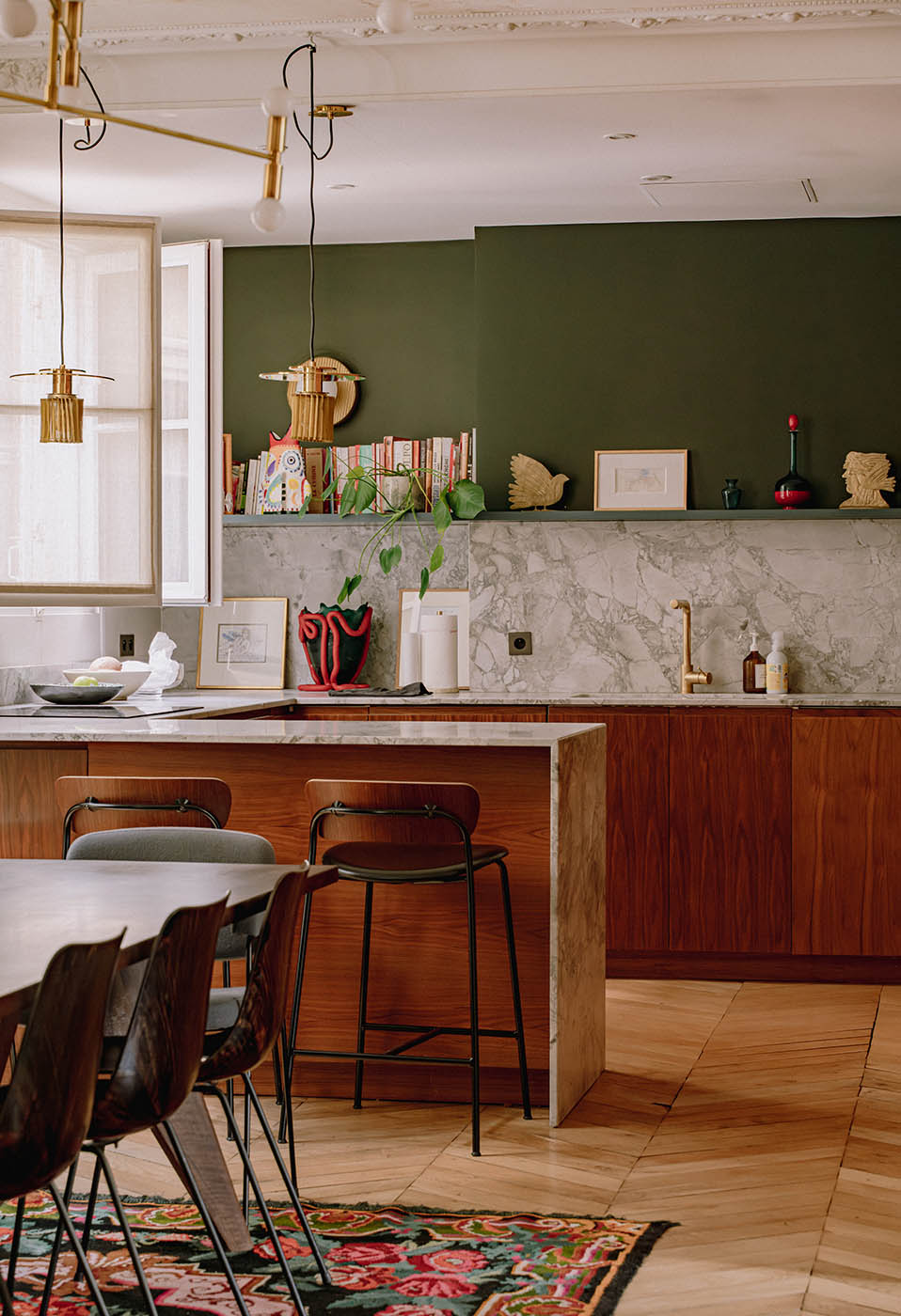
Convivial kitchen: walnut panels, marble worktops
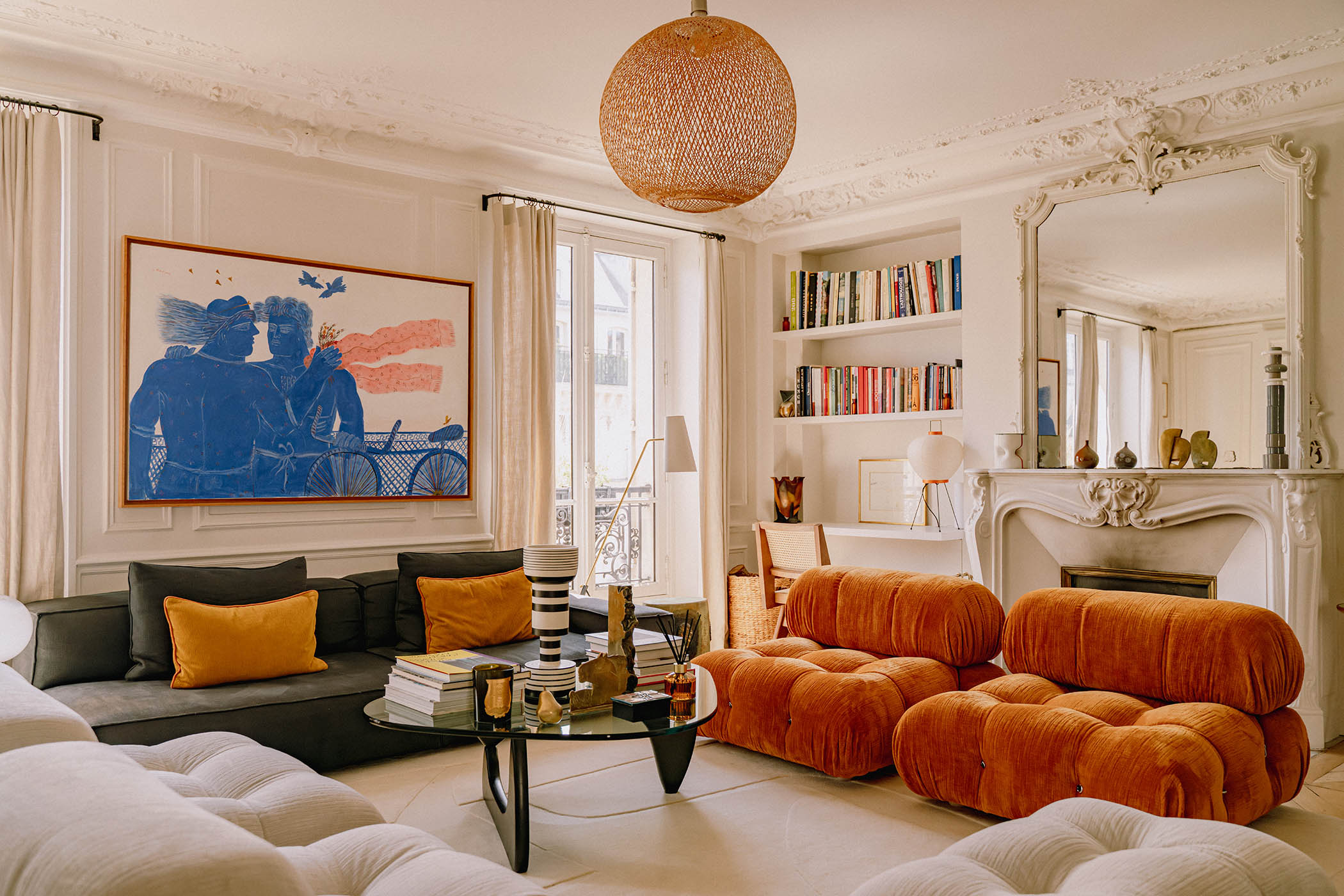
The building is Haussmannian, with high ceilings and classical detailing. There is a fireplace, parquet flooring and elegant mouldings: the bacon, lettuce and tomato of Paris interiors. But in other ways, the apartment’s internal logic was unusual.
Unlike the classic Parisian plan (entrance gallery, formal salons facing the street, a long corridor leading to private rooms), the flat benefited from a more fluid layout. Living spaces facing both the street and the courtyard flowed into one another, creating a sense of continuity and a double exposure to sunlight.
When Passerat first moved in, the apartment measured around 1,700 sq ft. In 2023, they acquired the floor above, bringing the total closer to 2,500 sq ft. Passerat had admired Hermand’s work while scouring the interiors press for inspiration. Their collaboration moved in stages, but the guiding principles remained consistent.
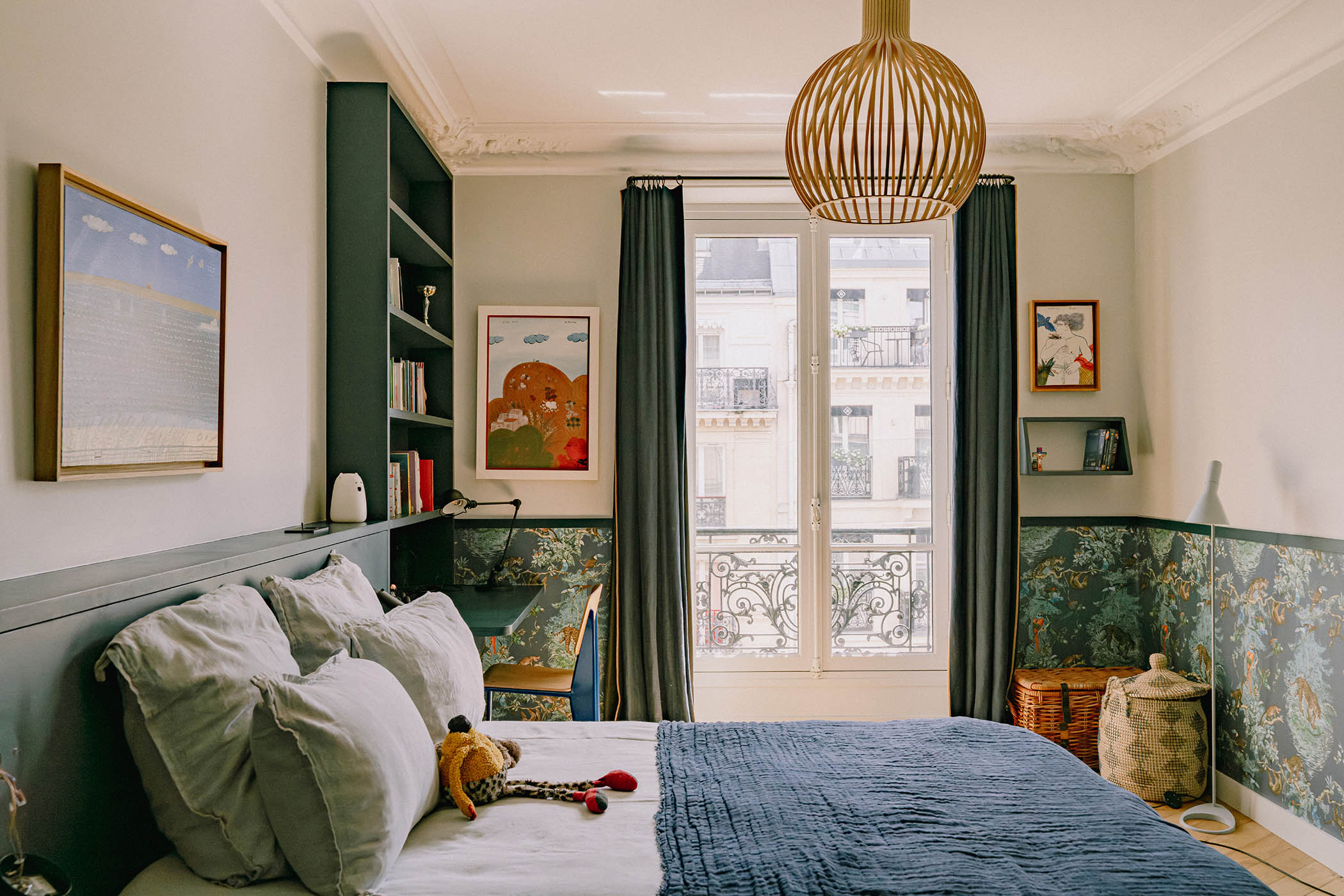
Beauty sleep: when the cars were here it was impossible
From the beginning, one thing was non-negotiable: the art. “When you grow up with art objects and paintings, it’s a part of you,” says Passerat. Her father was the gallerist and art dealer Jean-Pierre Masset, who represented the Greek artist Alekos Fassianos, and his works – flowing lines, strong colours, as hypnotic as myths – are all around.
“For me, it’s like a relationship,” she says. “And when my father died, it just became stronger.”
Hermand understood the brief. “With Julie, I knew the most important thing was the art, so I based everything around it,” she says. The exact positions of paintings were determined before anything else, and became reference points for the entire project.
Colours were chosen in response to canvases, lighting calibrated to complement them, furnishings selected to achieve harmony with painted lines and shapes.
In the main living space, Hermand widened the former dining room to accommodate a large, convivial kitchen: now the heart of the apartment. Its walnut cabinets and dark green walls, Studio Green by Farrow & Ball, contrast with marble surfaces, grounding the space while allowing artworks (there are many Fassianos in this room, too) to hold their own.
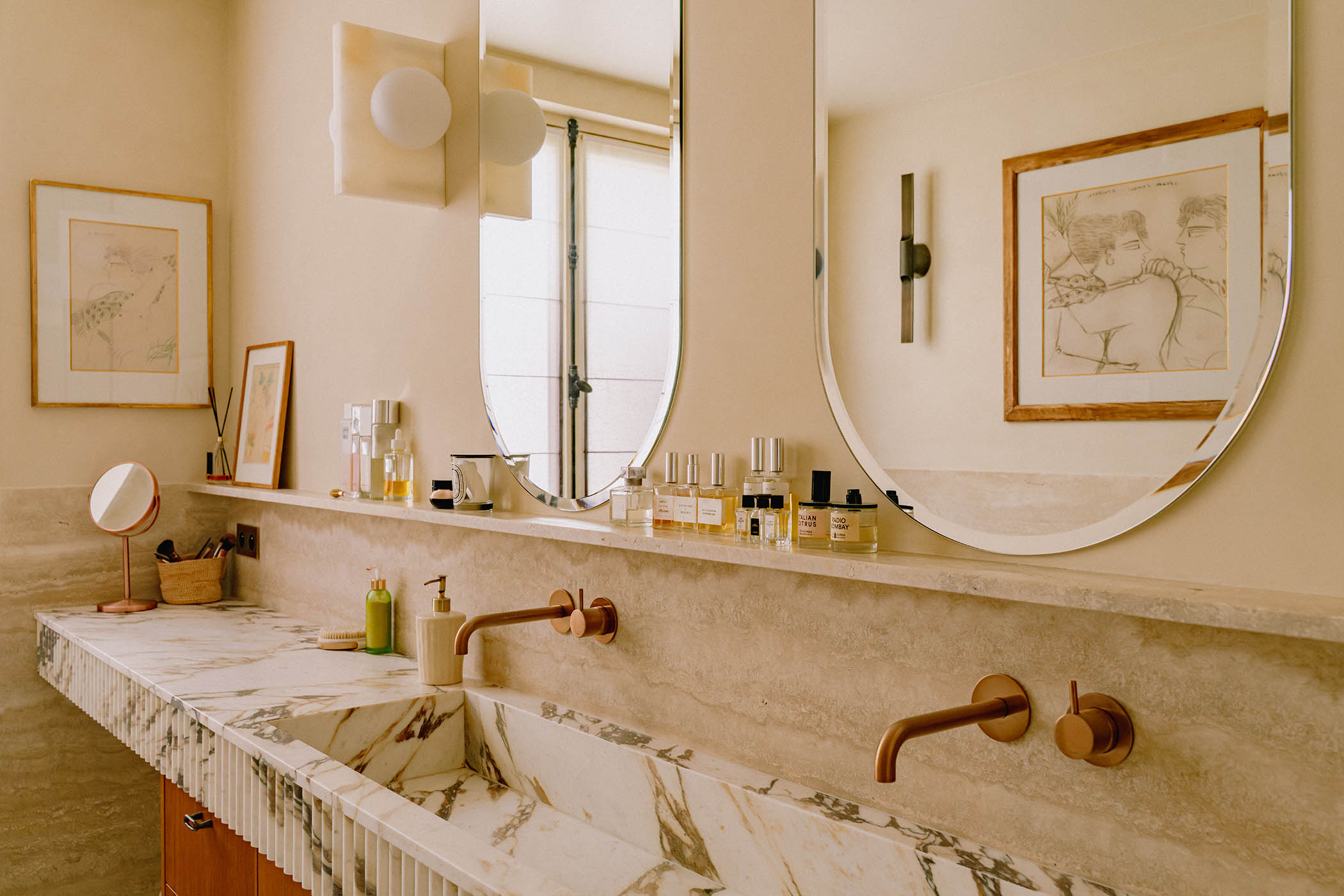
Shining example: more marble in the bathroom
Colour is used to mark transitions from one territory to another. A deep blue signals the threshold between the children’s bedrooms and the white living areas. Bookshelves are painted blue, bedrooms are differentiated with tones of pink, khaki and turquoise.
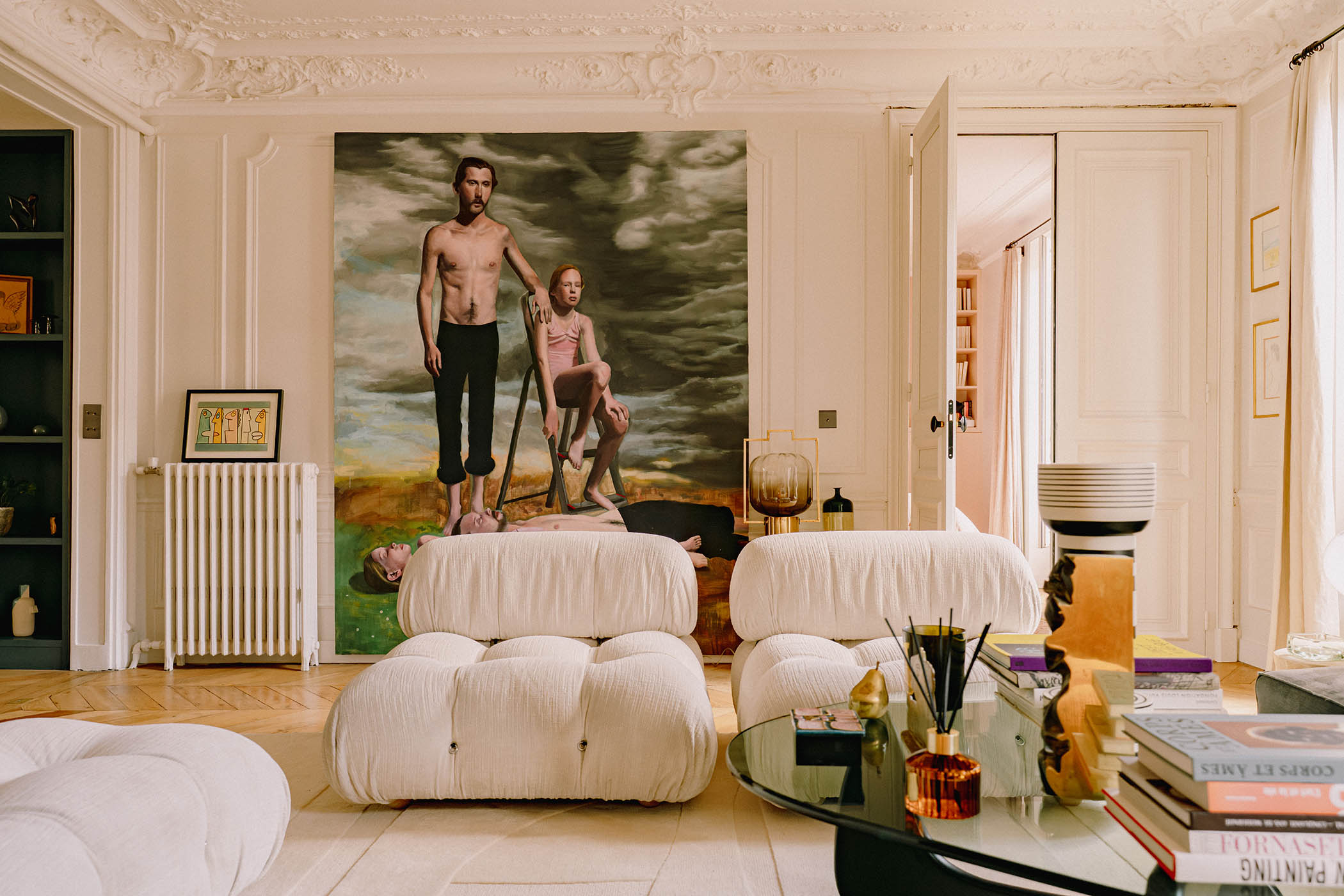
Furniture is sculptural and elegant without being overly showy: a Camaleonda sofa by Mario Bellini, a Noguchi coffee table, a Pacha armchair by Pierre Paulin for Gubi, and richly coloured rugs.
With children at large, storage was an important priority. Discreet cupboards absorb the realities of daily life. “One of my main needs was to have closets everywhere,” says Passerat. “You don’t want things under your feet all the time.”
Besides Fassianos there are works by many other artists on display, such as the French painter François Malingrëy and the Hungarian artist László Fehér. Even architectural decisions were filtered through the lens of art. “Sometimes you kept the mouldings because it was better for the painting,” says Hermand. “Sometimes we said, ‘No, we need a plain wall for this one.’”
The effect isn’t meant as some kind of aesthetic gimmick. Indeed, a visitor isn’t meant to consciously notice it at all. I certainly don’t, until Hermand points out how the curve of a light fitting exactly matches the curve of some hills in a painting in one of the rooms upstairs. “You’re not supposed to see it, but you can feel it,” she says.
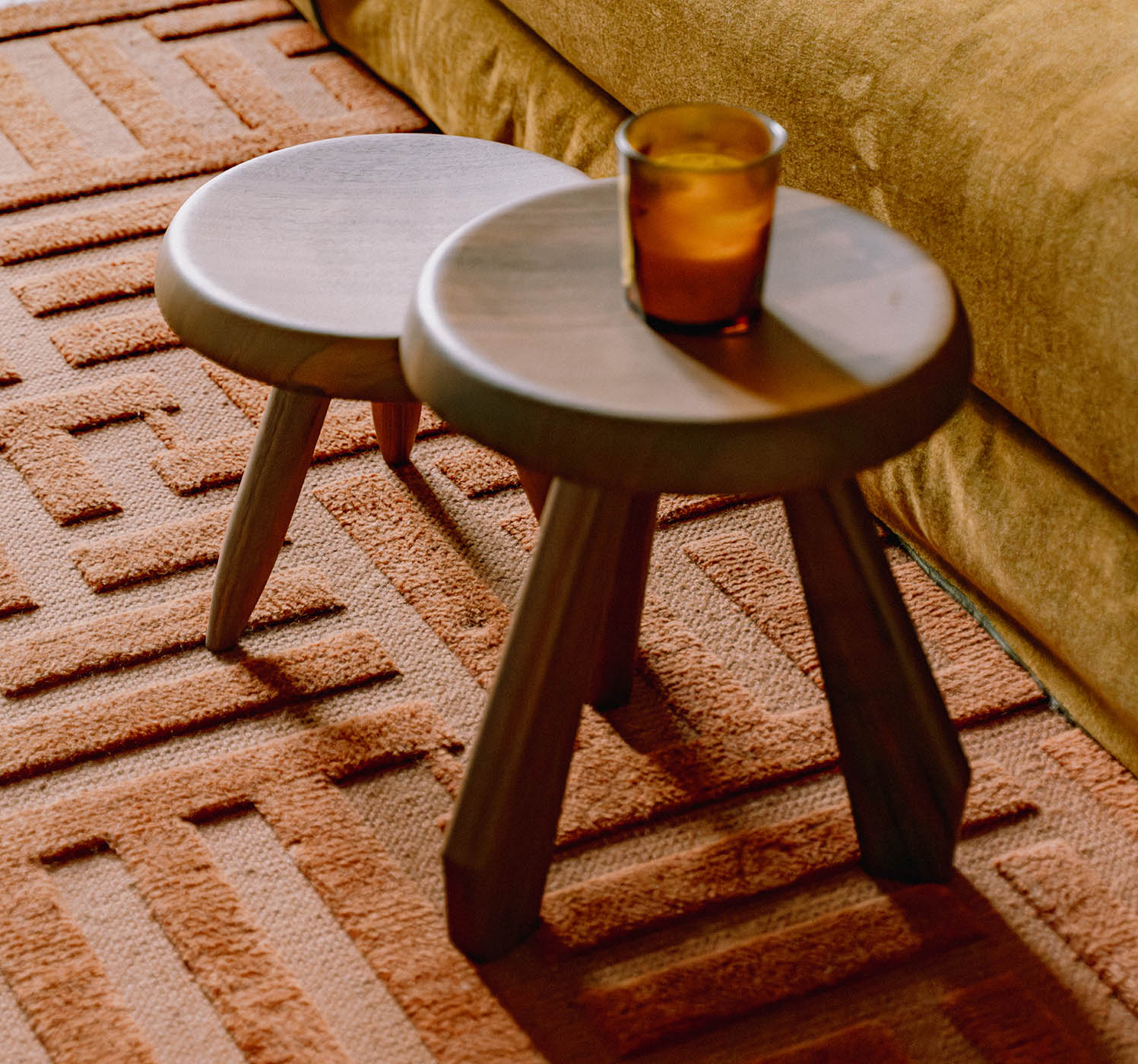
Creature comforts: rugs are soft underfoot
Both architect and client ultimately share a resistance to anything that could be read as overt style. When I ask them how they’d describe the overarching concept, Passerat simply says, “Parisian,” before clarifying: “I think that real Parisians don’t want any ‘style’.” It’s another paradox, how the appearance of effortlessness is actually quite hard to achieve.
Hermand frames it like the proverbial swan’s feet working hard beneath the water: “My job is to be invisible. If you can’t see the work, it’s perfect.”
Newsletters
Choose the newsletters you want to receive
View more
For information about how The Observer protects your data, read our Privacy Policy