
Related articles:
On leafy Crooms Hill in southeast London, where parakeets streak green across Greenwich Park, stands a Queen Anne house that has never quite left the 18th century. Its current custodians, the artist Emily Patrick and merchant banker-turned-picture framer Michael Perry, describe it as “an attractive, old-fashioned family house,” which is the exact wording used on the 1882 auction particulars they found when they moved in nearly three decades ago.
“Even 150 years ago it was already old-fashioned,” Michael says. The couple’s aim ever since has been to let it remain fine and old-fashioned, while never allowing it to become a museum piece. “A place like this, without life happening in it, ossifies and becomes sad,” Emily says.
Crooms Hill is among London’s oldest streets, its name is thought to derive from the Celtic word “crom”, meaning “crooked”. Hidden beneath the house’s pale Georgian skin lies carved brickwork in the Artisan Mannerist style, identical to that on the facade of a 17th-century manor nearby. This, says Michael, “means part of the house may be early-to-mid 1600s.”
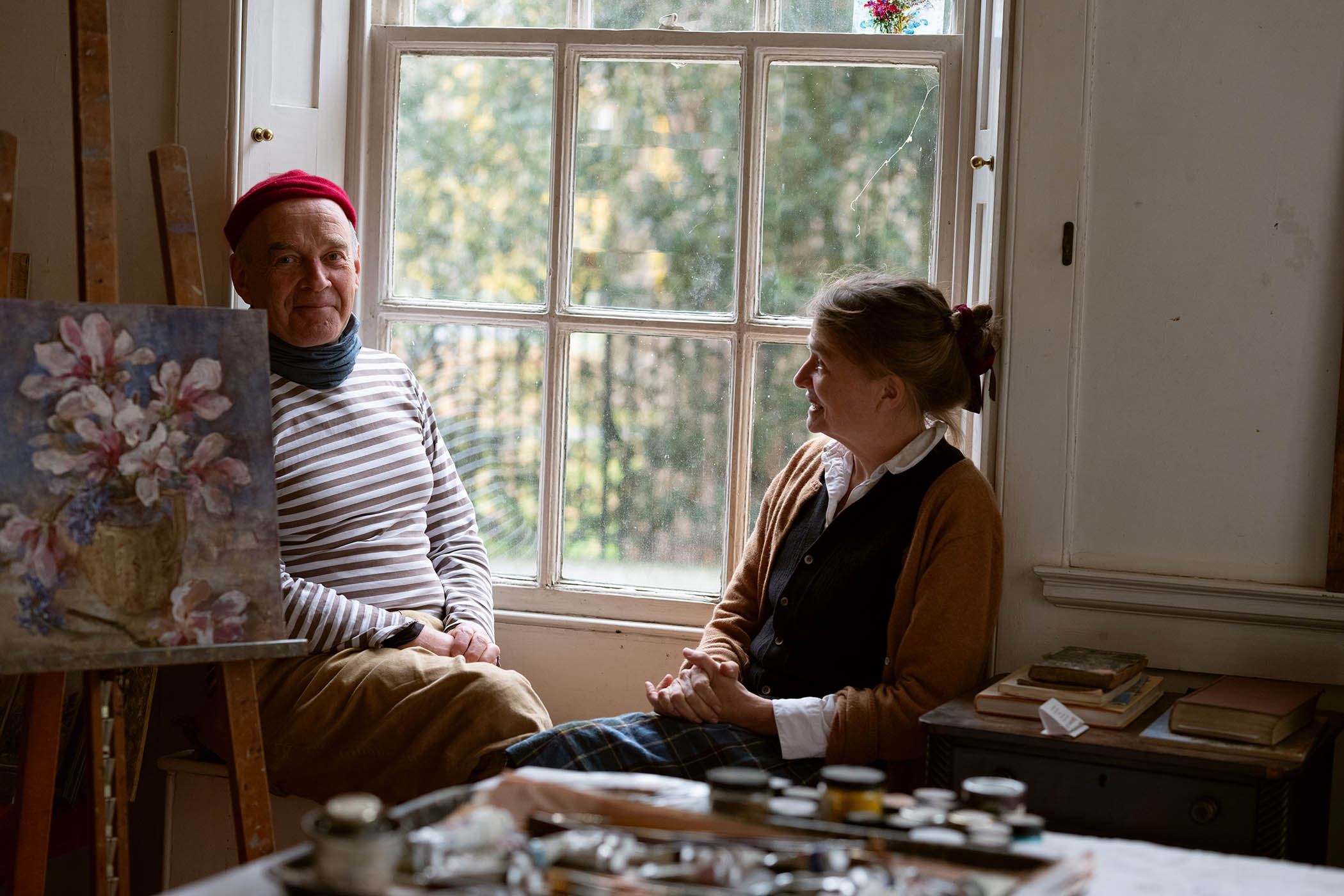
‘People leaving evidence of themselves is very beautiful’: Michael Perry and Emily Patrick in their home in Crooms Hill
Walking through the rambling five-storey home today, you sense centuries accumulated like sedimentary layers. In the main bathroom, a patchwork of old wallpaper has been left exposed – florals in faded pinks, blues and greens – elsewhere exposed plaster in dappled peach, yellow and blue-grey is every bit as beautiful. As Emily puts it: “You can see the layers of time.”
The couple refer to it as a “working house” (whereas most houses are “resting houses”, says Michael), as it contains Emily’s painting studio and the workshop where he frames her paintings. “Living where you work is how artisans have lived for centuries,” Emily notes.
Evidence of their creativity is everywhere. Emily’s work features in every room, barring the pantry. Where others might hang family photographs, the couple have painted portraits of family and friends. These sit alongside her luminous still lifes and studies of nature. “I have a horror of homes that feel like they’ve been sterilised,” says Emily. “I think people leaving evidence of themselves is very beautiful – you have to love signs of life.”
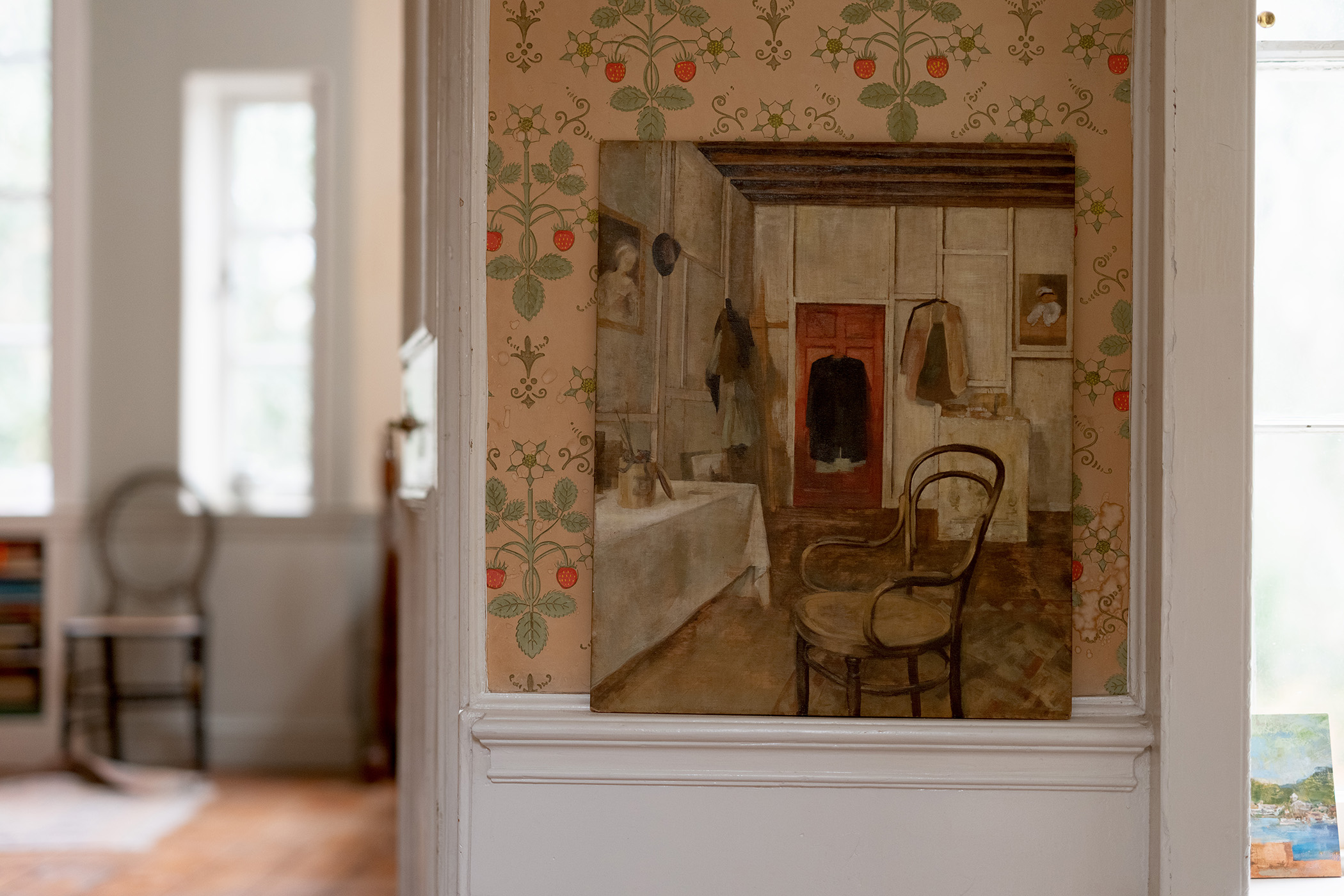
In the hallway, small pictures painted on scraps of board and wood, and even a paint palette, line the panelling. They glow against a wild strawberry wallpaper pattern that dates from 1840, while above hangs an antique hot-air balloon chandelier – one of many playful touches across the house. The place is full of idiosyncrasies, a staircase that leads to nowhere, caryatids salvaged from a Victorian bath house supporting a neoclassical shelter in the garden.
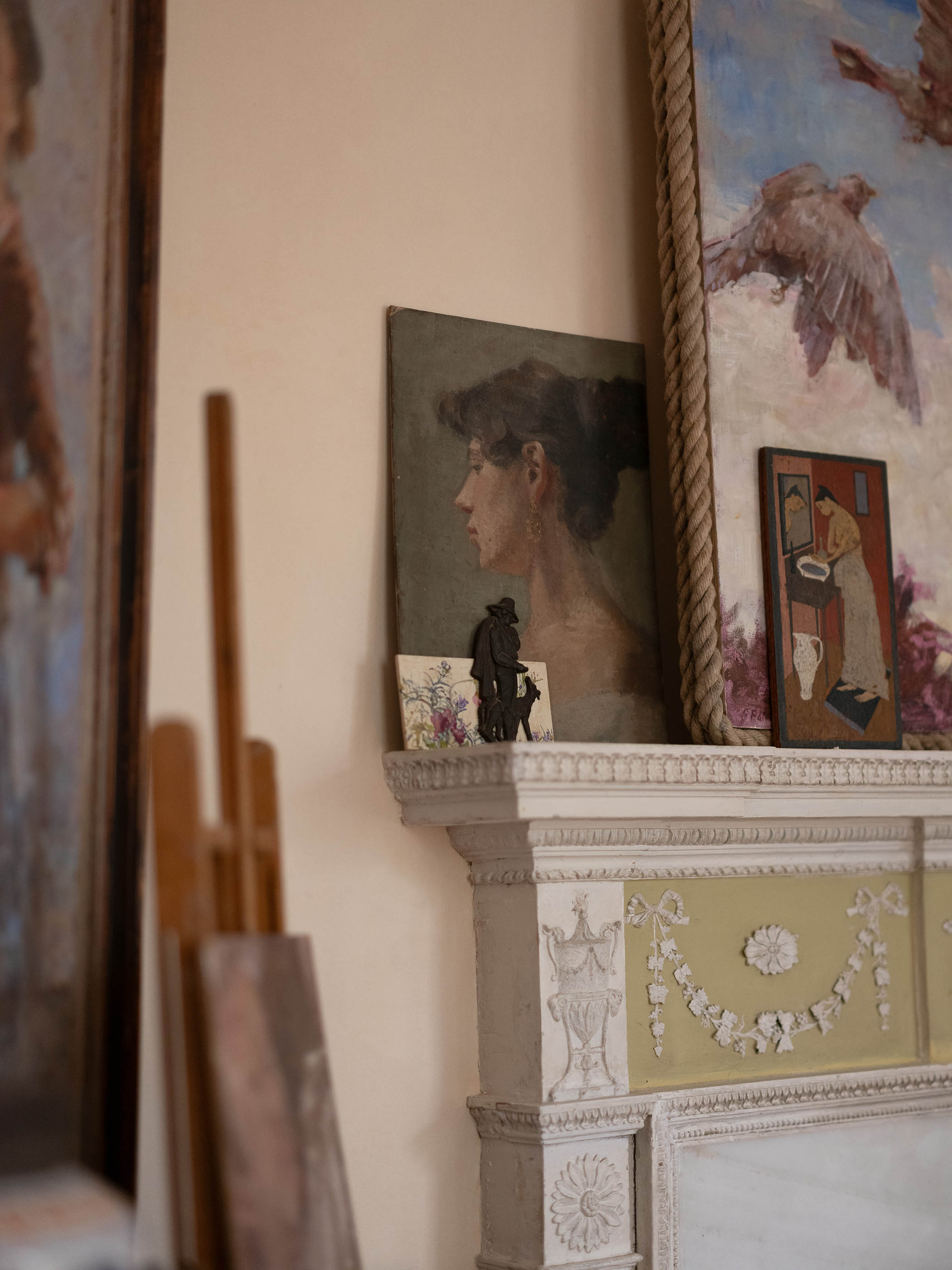
The house has long attracted creative inhabitants, including the writer and artist Denton Welch
Every surface seems to host a small still life. Vintage toys, feathers and porcelain cups and saucers are assembled with a magpie eye. These treasures can be spotted in Emily’s paintings – a taxidermied red squirrel, say, or an antique figurine – alongside more contemporary objects such as a Penguin paperback, a jar of Marmite or, once, a packet of Marlboro Red (“I just love the red and white”). Though she has a studio facing the park, Emily often paints in the living room beside the Georgian bow window overlooking the garden, which offers inspiration all year round, from magnolia blooms to crab apples.
Related articles:
The house has long attracted creative inhabitants. In the 1930s, the writer and artist Denton Welch lodged here while studying at the nearby Goldsmiths College. Welch’s landlady ran the place as a genteel boarding house. “We’ve got her advertisements: ‘seven-and-six for afternoon tea’,” Michael says.
In Welch’s “A Novel Fragment”, published in A Last Sheaf (1951), he describes the place in extraordinary detail – writing of how he “delighted to look through the distorting mauvish glass,” which “twisted the trees in the park into shaky watery shapes.” You can still peer through those same wavy panes in his former bedroom, now a study, with an elegant triptych of narrow windows that Welch describes.
It’s striking how Welch’s account of nearly a century ago chimes with the Perry-Patrick aesthetic today. Then, as now, there are surfaces “reverently left shabby, with half a dozen different coats of paint showing on the most worn and polished surfaces.” There is still a pleasure in everyday beauty: a casual bunch of garden flowers on the table, fruit ripening in much-mended Chinese bowls. Welch delighted in arranging “old green and gold plates and a whole row of brilliant oranges” on a wide dado rail in his bedroom, before “greedily eating them one after another”.
When the couple moved in, this room was a wood-panelled library, which they restored to a state Welch would have recognised. The replacement dado rail is still “orangeable”, as Michael puts it. (That love of citrus also continues, as chance would have it: Michael is a judge of the World Marmalade Awards.)
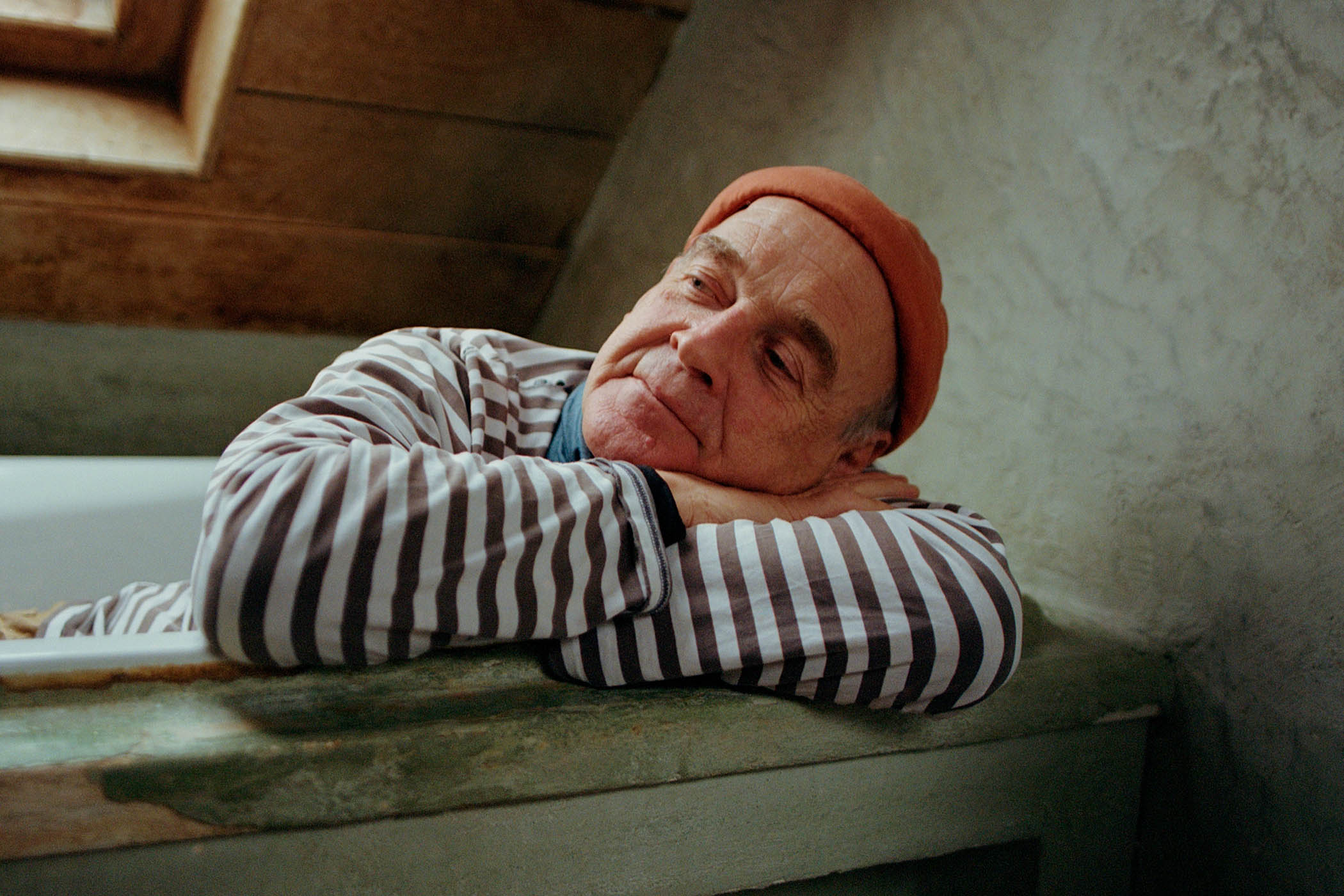
‘The very first thing I did was mend a window… I’ve really loved looking after it all ever since’: Michael Perry
Other 20th-century residents included the painters Bernard and Noël Adeney, contemporaries of Walter Sickert and founding members of the London Group. On the back of one door survives a pair of floral still lifes – perhaps Noël’s work, thinks Michael. Further back, in the 18th century, a Huguenot family whose descendants include Laurence Olivier owned the house.
Every so often, enthusiasts come knocking: biographers, historians – even, once, an American cocktail waiter-turned-haiku poet wishing to see where Welch once lived. Emily attributes this to the author’s “great sensitivity”, adding: “All the people who’ve come here for Welch have that sensitivity in common.”
Such an old house demands a good deal of care. “When I stopped working at the bank, the very first thing I did was mend a window,” Michael remembers. “It was spring and I was sitting outside with the sun shining, a cigarette, a coffee and a window to repair. I’ve really loved looking after it all ever since.”
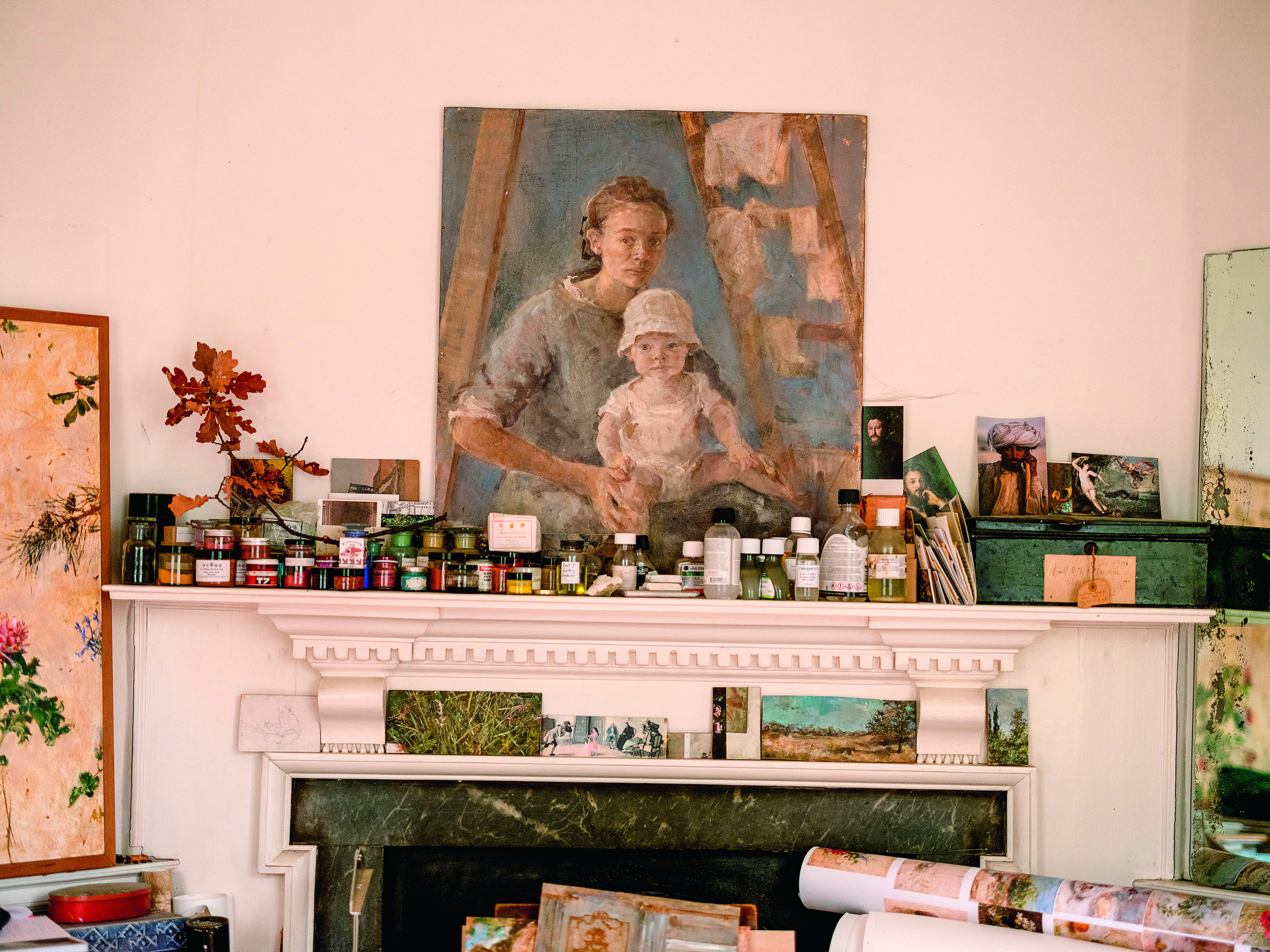
‘If something’s lasted 300 years already, it’s probably because it’s a simple thing’
Michael’s approach to restoration is that of a patient craftsman. He mixes pigments into paint by hand, softening harsh modern whites with raw sienna pigment borrowed from Emily’s painting supplies. Leaking windowsills are repaired with burnt sand mastic – “silver sand, rosin and linseed oil,” he explains – rather than plastic filler; the exterior has been repainted in a mineral paint that allows the old bricks to “breathe again”.
He speaks with the precision of someone who has spent years studying what works and what doesn’t. “I’ve become less inclined to copy what other people do,” he says. “Now I try to work from first principles. If something’s lasted 300 years already, it’s probably because it’s a simple thing.”
The couple are passionate about preservation. “We care about looking after history, about creating, saving and sharing beauty,” says Emily. “We’re all passing through, but some people do more damage than others.”
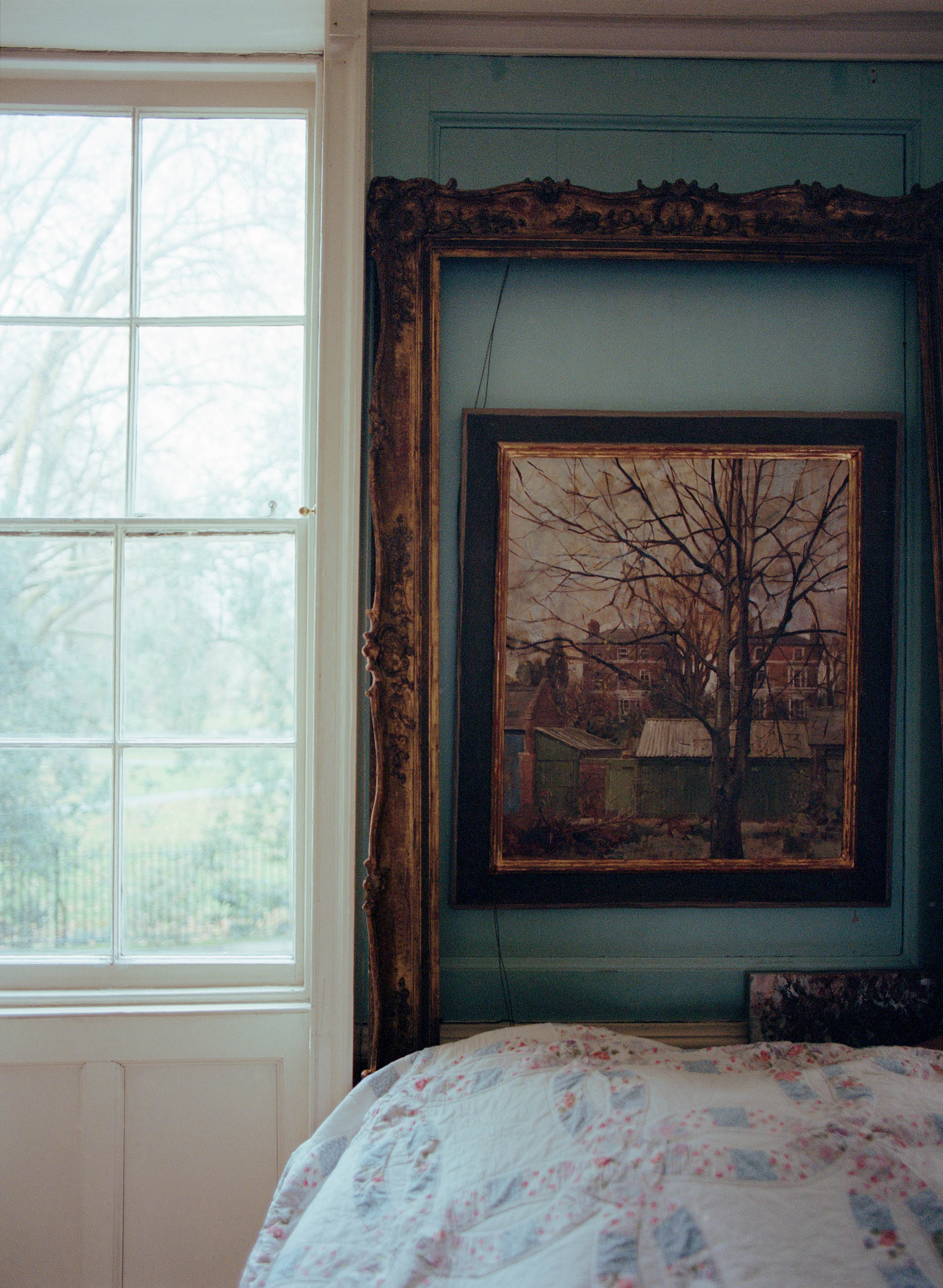
The bedroom, with its sky blue panelling on the walls
In their bedroom – its panelling painted a vivid sky blue – is a large antique dolls’ house that Emily’s father salvaged from a skip and restored for his young daughter. (Welch, too, was a fan of dolls’ houses; the 18th-century example he restored is now in the collection of Young V&A, in Bethnal Green in east London.) She continues to add to its bohemian assemblage of mismatched wallpapers, antique furniture in dark wood, and even a tiny Patrick painting. It is a perfect microcosm of the artist’s aesthetic, but also of the couple’s values.
Outside, a grapevine loops over the windows, heavy with candyfloss-sweet fruit. Above, bats roost in a bat box. And in the walls, under layers of plaster and paint, the 17th-century bricks keep breathing.
Newsletters
Choose the newsletters you want to receive
View more
For information about how The Observer protects your data, read our Privacy Policy