
Some people seem so at ease in their homes that it’s hard to imagine them living anywhere else. That is certainly the impression Paul West and Michelle Bower-West give in their 18th-century townhouse near Stepney Green, east London. In the five years since they moved here, their home has become more than the place they live. It has grown into a physical articulation of their approach to life and design, and their ability to merge the two.
When they first viewed the property in 2021, they had an immediate feeling of things being in their right place. “We stepped off the busy street, closed the heavy door and I remember thinking, ‘This is the one’,” recalls West, standing in the ground-floor living room, the noise of the road outside now barely audible. The four-storey house was built in 1717, making it an early Georgian design, but it has certain Queen Anne flourishes, such as curved window pediments. It was restored in the early 1990s by the Spitalfields Trust, a conservation charity best known for safeguarding Huguenot houses in nearby Spitalfields, with structural repairs carried out alongside restorations to shutters, windows and panelling.
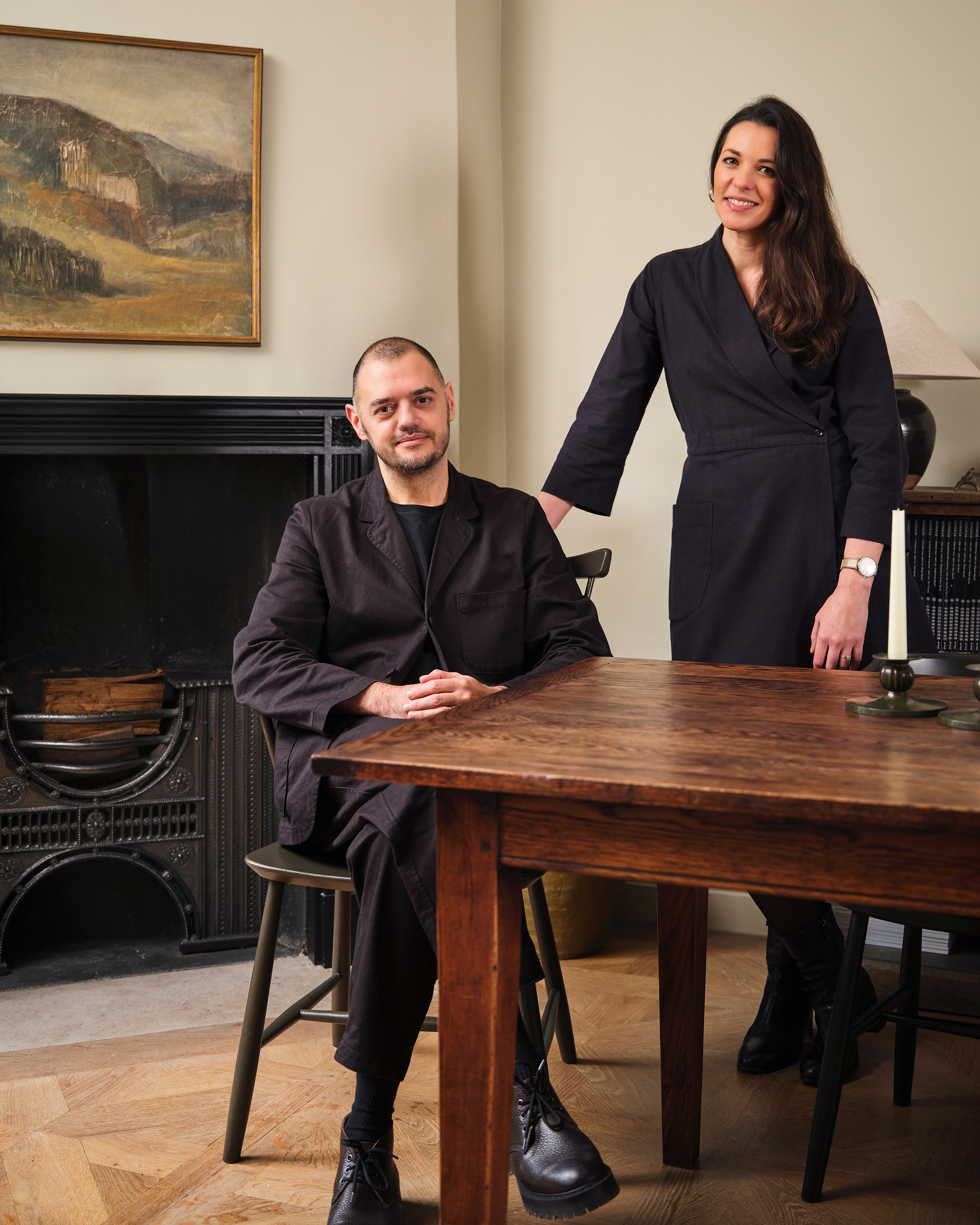
‘This is the one’: Michelle Bower-West and Paul West at home
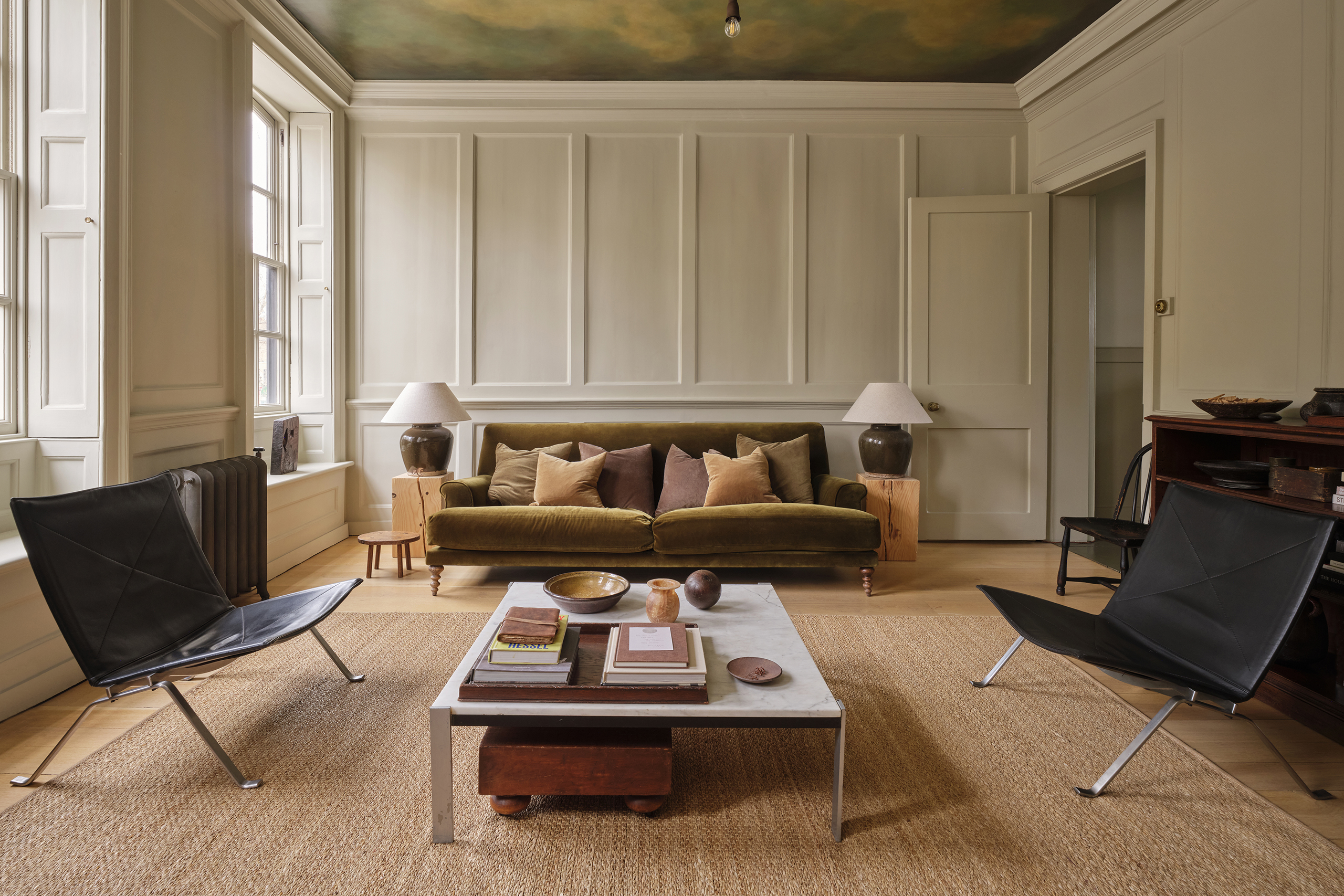
However, when the couple first visited, those features were somewhat masked by the maximalist sensibility of the previous owner, who was running a micro hotel from it. So bold was the decor, in fact, that they failed to notice the dramatic trompe-l’oeil ceiling in the first-floor drawing room, with painted clouds giving the illusion of an open sky, until after they moved in. But it was always clear that the house’s bones had been cared for.
“It felt solid and composed,” says West, who trained in interior architecture before switching to work for a brand consultancy, where he met Bower-West (the couple still work at the same agency).
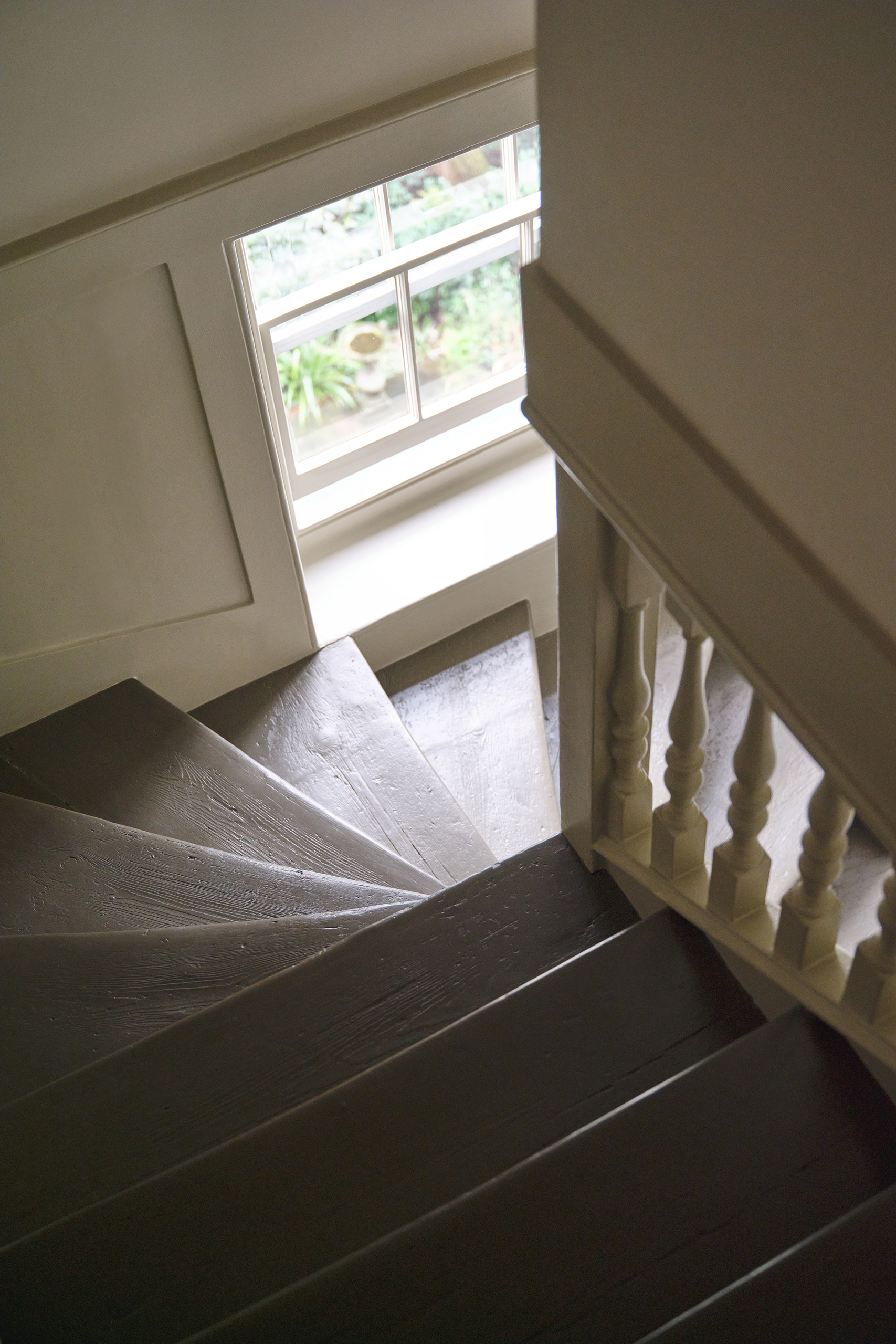
Original features: a wooden stairwell
Preferring more muted interiors themselves, they set about a “make-under,” as he puts it. They decorated the entire house in a single shade of off-white to create a “grounding canvas,” which allows the pared-back elegance of the original carpentry and proportions to be better appreciated. Though they kept the celestial painted ceiling upstairs, another one in the basement “literally depicted black clouds” and was “a bit oppressive,” says West, so that was painted over.
Apart from converting a top-floor bathroom into a utility room, the couple’s interventions have been more preservative than transformative. “A bit like an old car, there is as much pleasure in caring for this house as there is living in it,” says West. What might raise eyebrows among the purists is their lack of interest in fastidiously recreating 18th-century interiors. “Some of our pieces are from the 1950s, some are contemporary,” says West. “I love design that has a story, but is for now.”
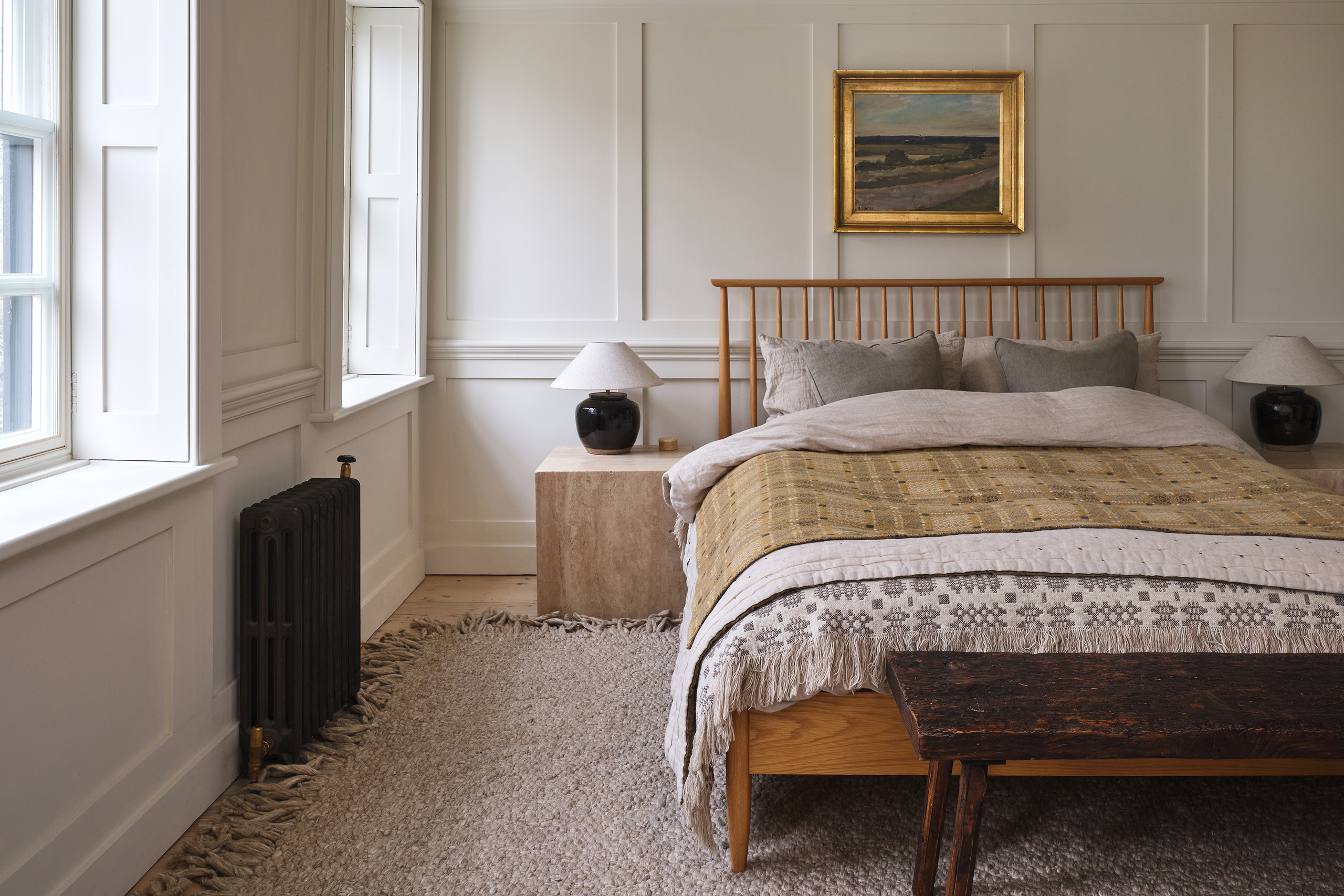
Sweet dreams: off-white painted panelling in the main bedroom
A series of chairs by midcentury Danish designer Børge Mogensen found throughout the house embodies that idea. “He trained using spindle techniques, which were invented around the time this house was built,” explains West, sitting on one of the chairs surrounding a 1950s table in the dining room. Other chairs in the spindle tradition by Hans Wegner, Ercol and an antique Welsh one are positioned alongside more explicitly modernist pieces, such as the two black leather PK22 lounge chairs by Poul Kjærholm and a sofa, also by Mogensen. For West, there is nothing anachronistic about this. “There’s an inherent rigour to Georgian and modernist design I’m drawn to,” he says, adding that they share “simplicity and honesty.”
Almost everything the couple live with was sourced on trips to antique markets across the UK and Europe, which Bower-West says has become “a complete addiction”. She laughs as she glances towards their latest acquisition: a medieval pot found in Sussex, now sitting on the dining room mantelpiece. But, while they certainly enjoy the hunt, the space doesn’t feel overcrowded. “We’re collectors, but minimalist as well,” says West. “We don’t want to hoard.” Pieces are generally acquired with some purpose in mind: landscape oil paintings to counter the urban environment outside; ceramic pots the couple had turned into reading lamps; or wooden trays used for both serving and neatly stacking books on.
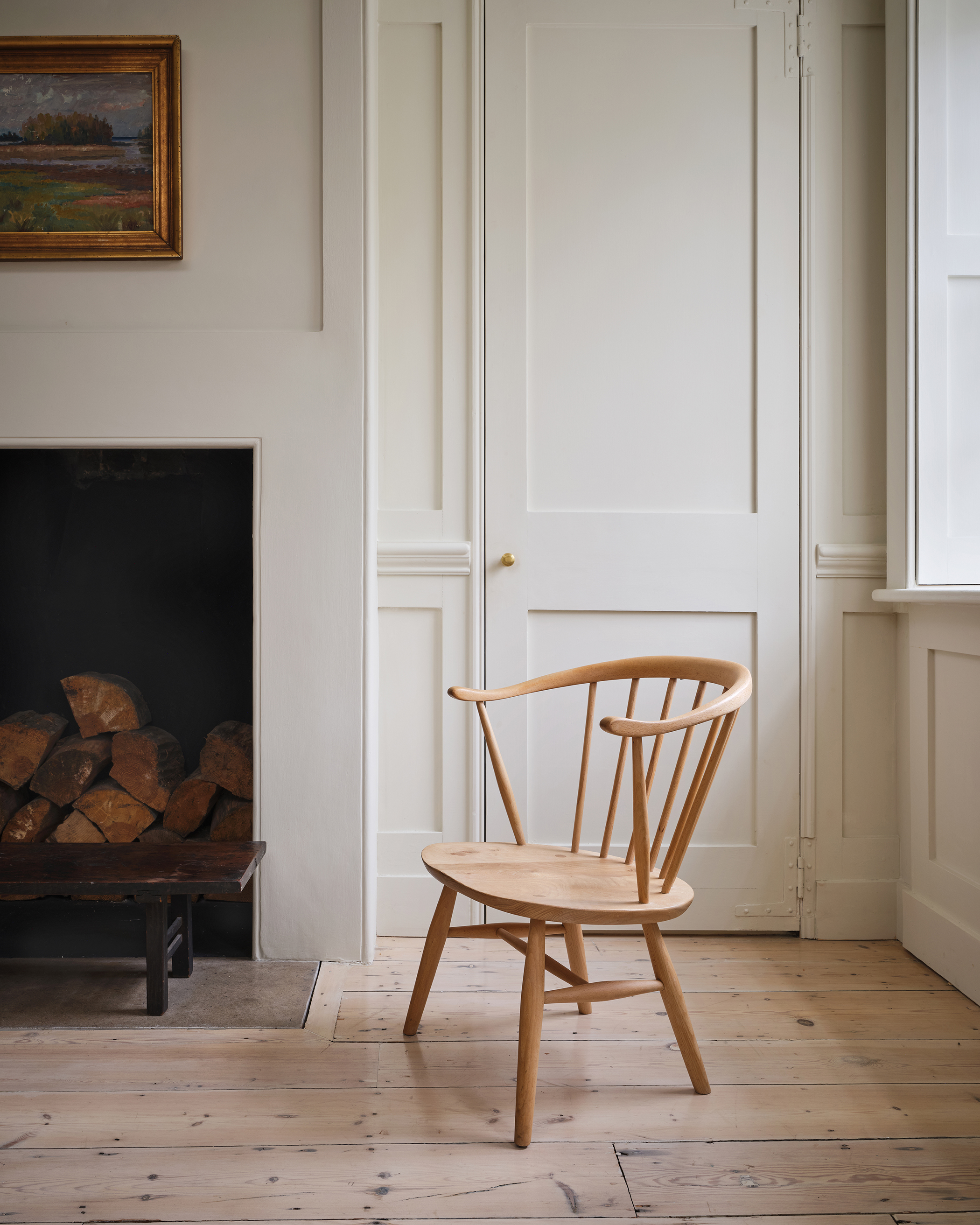
Old and new: this spindle chair by Ercol is traditional, but modern
Several times during our conversation, the pair reference Kettle’s Yard as an influence, the Cambridge home of the late curator and collector Jim Ede, which he intended as “a living place where works of art could be enjoyed”. Like Ede, West and Bower-West’s taste in furniture and art is not confined to eras or styles, and they place as much value on objects of humble origins as on authored works.
The most striking parallel between them, though, might be their willingness to share their homes. Ede famously lent pieces from his collection to Cambridge students and opened his house every afternoon during term-time – a tradition that continues to this day through free guided tours.
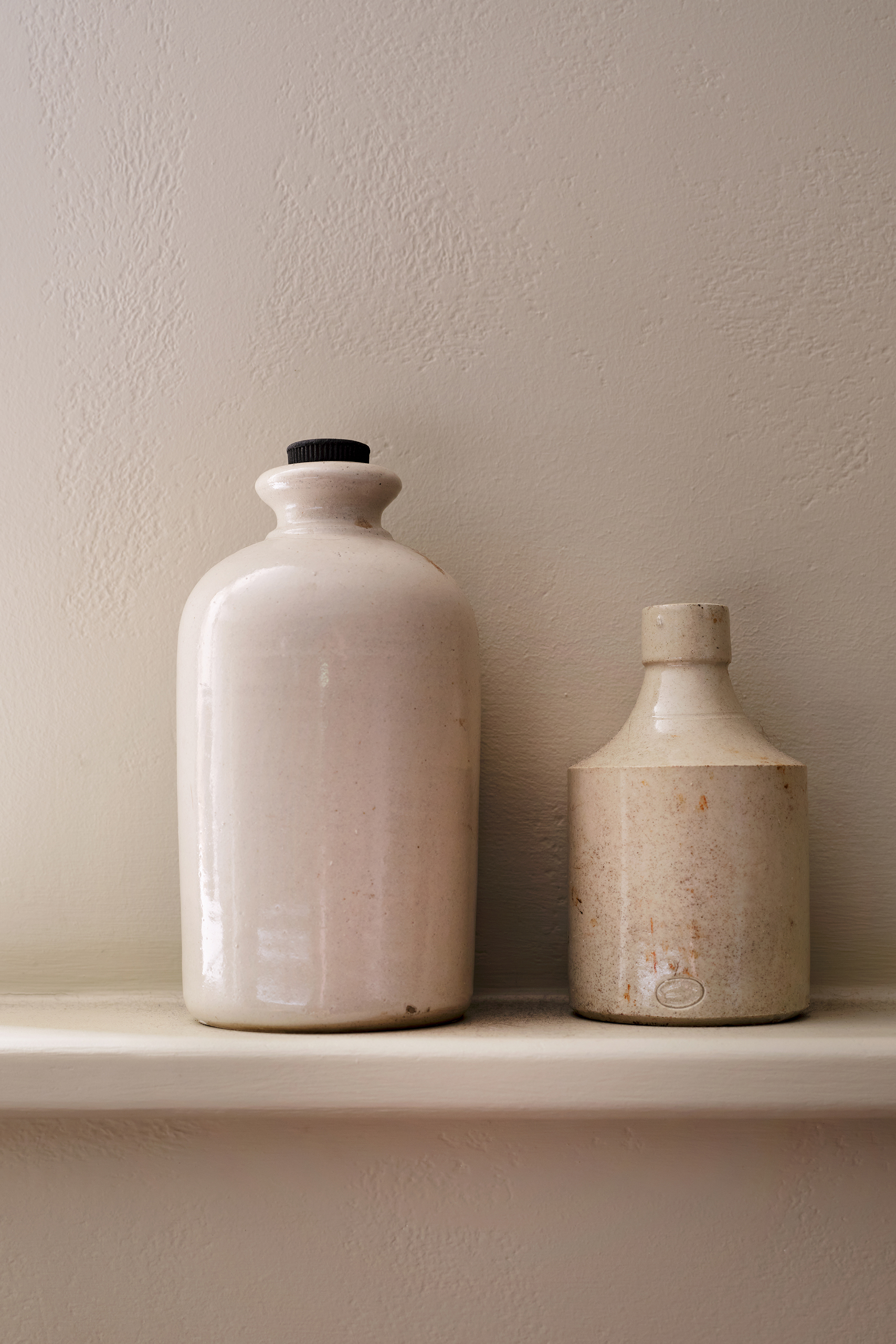
Jug band: the couple have assembled a collection of old homewares
West and Bower-West have done the modern equivalent. West started the Instagram account Considered Things while they were living in their previous apartment and has subsequently used it to document life in their new home. Posts share everything from renovation updates to book recommendations and invitations to pop-up events.
As Considered Things has grown (it now has over 50,000 followers), so too have the opportunities around it. After taking part in a television series with kitchen makers deVOL, in which the company co-created the Shaker kitchen here, West and Bower-West more recently collaborated with Pashley Cycles and their neighbour, the former Royal Academy of Arts director Charles Saumarez Smith, to design a bike rooted in British craft and utility. It’s easy to imagine Considered Things taking on a more formal shape, especially given the couple’s backgrounds in branding and spatial design.
For now, though, they prefer to think of Considered Things as simply an extension of their home – a “design house and living gallery,” as they describe it, with an evolving expression of what West calls a more considered way of life. “A home should help you live well, to do more of the stuff that makes you happy,” says Bower-West. Theirs is certainly doing just that.
Newsletters
Choose the newsletters you want to receive
View more
For information about how The Observer protects your data, read our Privacy Policy