There are lots of things I might consider to be wild, but instinct told me that the quaint Hertfordshire town of Berkhamsted, in London’s affluent commuter belt, might not be one of them. I had this thought on the train there from Euston, and it was validated by the short walk from the station, over the Grand Union canal, past the high street’s tasteful bistros and through a sizeable Waitrose car park to a newly opened destination.
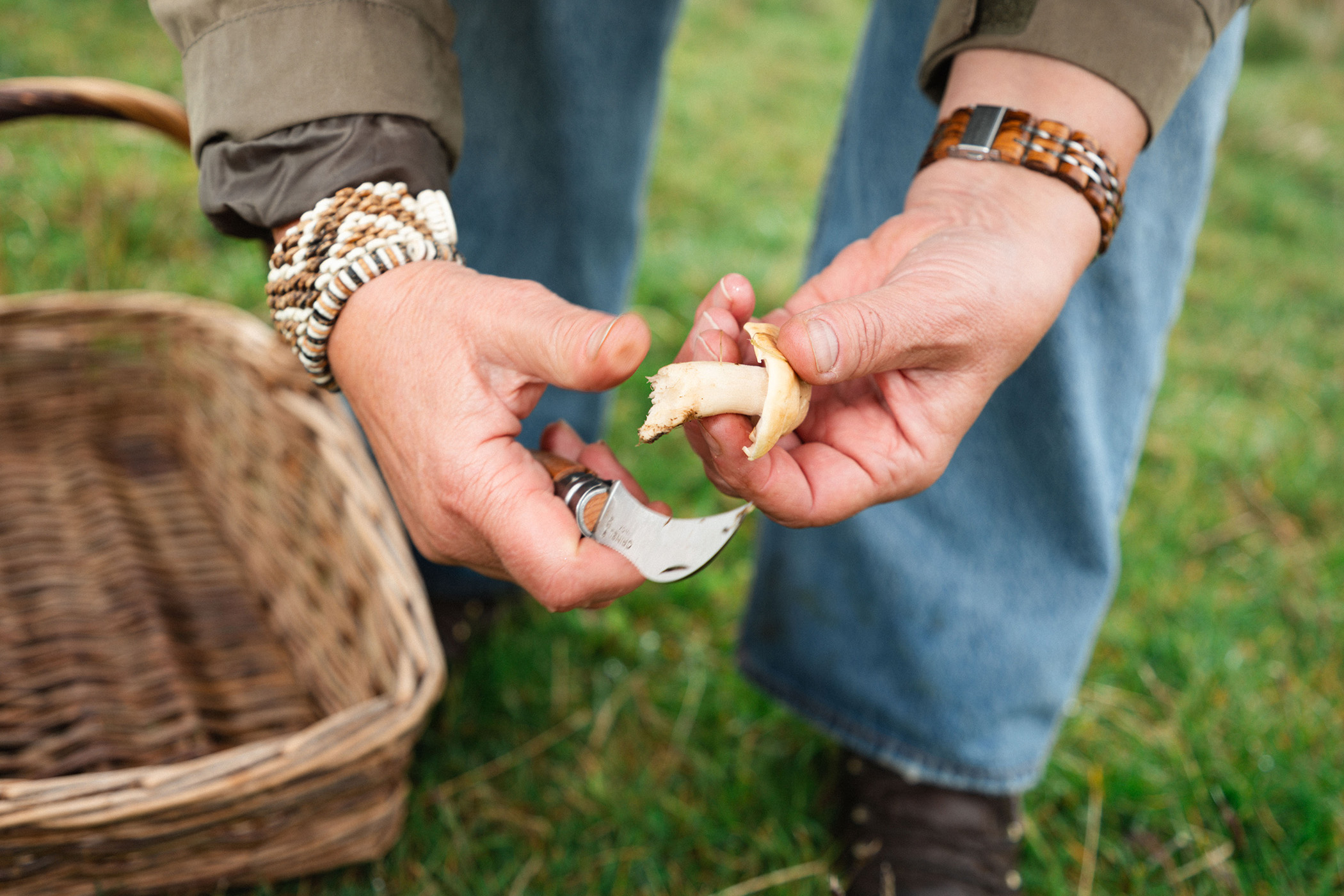
Wild is the brainchild of chef patron Matt Larcombe, who before opening up in Hertfordshire led the kitchens at the Fat Duck Group’s highly regarded gastropubs in Bray and Oxshott. He is clearly a cook who knows the mores of the home counties – and believes it’s time for their tastes to be directed by the limits of the British seasons. So his new kitchen sources the majority of its fresh ingredients from its own farm, in nearby Radlett, supplemented by a network of UK producers. The changing menu is dictated by whatever manna the farm delivers each day, and there is the sense of Radlett being a bit of a promised land. It is described on the restaurant website as “bountiful”; meanwhile the puddings include a signature dish of “milk and honey”.
If you, like me, are accustomed to online menu-browsing and Google review-scouring ahead of time, then tread carefully. You might learn that Wild’s crab hash browns are to die for, or be seduced by pictures of pork tomahawk with mustard but find no trace of them on a given day. Wild promises to feed you – but what it feeds you is written in the seasonal stars.
On the Friday lunchtime I visited, no sooner had we sat down than we were told the hispi cabbage was having a break that day (very Gen Z behaviour) and that savoy (a boomer workhorse of a brassica) was standing in. I’d brought my mum with me – my children call her Cazza – a retired dental journalist and harsh critic of anything she hasn’t cooked herself. We ordered some wine from a list put together by Remi Cousin, one-time head sommelier at the Fat Duck, that runs the gamut of delicious good value (a southern French merlot for £7 a glass, say) to splashy classics (a glass of Puligny-Montrachet for £29) and some fun surprises by the bottle – Serbian gamay, a chardonnay from Morocco. We landed on a briochey Deutz brut champagne for me, and for Cazza an aromatic riesling blend from the Dolomites. Everything on the menu is designed for sharing, and as we looked it over a little plate of just-picked farm radishes arrive, one with a tiny, reassuring trace of earth on its wiry root alongside anchovy aïoli for dipping: it’s certainly an interpretation of “wild”.
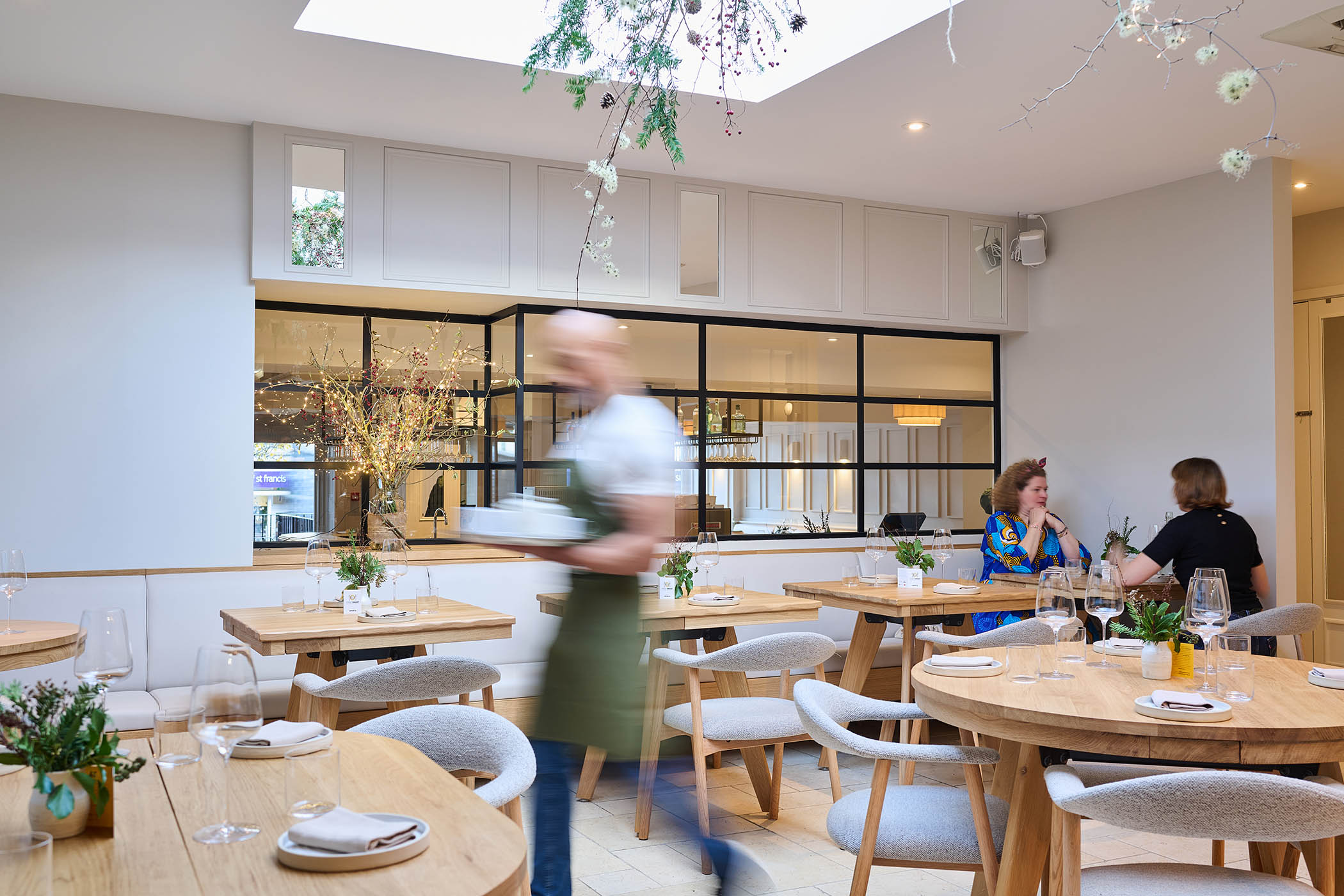
Still, it is a curious name for a place that feels so orderly. We sat at a custom-made oak table, each side with a concealed cutlery drawer; and, as some of the first diners to arrived, we had several staff to ourselves. They told us about their monthly days on the farm learning about soil health. Because Wild is essentially a fine-dining establishment – albeit a relaxed one – with a message to convey, storytelling like this is important. Just as the kitchen’s waste makes it back to the farm in the form of compost, front-of-house staff close the information loop on the floor (which, incidentally, is made from recycled cheese slates).
A potted-shrimp flatbread cooked in a wood-fired oven arrived all stern and crisp-edged, soft and smirking beneath. I lurched forward as I bit and a squelch of seasoned, crustacean-infused butter dripped from my chin. “Leek, red peppers, almonds” was no less delightful (dishes are mostly written as a cryptic list of ingredients), and something of an homage to Catalonia: small, neat chargrilled leeks lined up like naval officers on a sea of romesco sauce. The almonds were smoked and Cazza, in service to her Instagram following (who come to her for content on recycling, toothpaste and medlars) took a very close-up photo of the dish before tasting it. “Ah!” she said, “Hashtag amazing.”
Sustainability is seldom people’s primary reason for buying into something (my mother, who requested a TerraCycle box for Christmas last year, is one of the outliers). Field-to-fork dining can, therefore, lack the allure that turns heads – especially during the British winter; local, biodynamic carrots might be more delicious than those grown en monocultural masse, but glamour doesn’t come easily to the root and cruciferous vegetables that are abundant at this stage of midwinter.
Thankfully, Larcombe and his team have stepped in, transforming muddy ingredients into gorgeously rendered edible art. His carrots were slowly cooked in lamb fat; celeriac came with house-pickled walnuts, and fresh mackerel with homemade beetroot dressing. If anything, the rare appearance on the menu of something beyond the seasonal palette – say, the passion fruit that accompanied the crispy pig’s head snack – seemed almost unnecessary and offputting.
Not so with our grilled Cornish bream, served with “moules marinière” – a little bowl of thick, light-gold sauce that I later learned was mariniere liquor put through a mixologist’s infuser for a custard-like consistency, beneath which shelled mussels waited. It was rich and unusual but worked delightfully alongside the simply prepared whole fish, and saw Larcombe flex his muscles under the guise of the familiar. He did this again in a side dish of “potato, yeast, chives” – salty little bronze cubes, the lovechild of pommes Anna and cheese and onion crisps.
We were too impatient for pudding to wait the requisite half an hour for the tarte tatin for two, so we ordered the “milk and honey”: honey cake, honey crumble and honeycomb, all made with honey from – of course – Radlett bees, served with a generous dollop of British Jersey ice-cream. I had to restrain Cazza from repeatedly scraping her spoon along the base of her empty bowl in search of a final morsel.
It’s hardly a wild idea to cook seasonally, but in a food culture that sees mangoes, green beans and blueberries available all year round, the dishes at Wild – even in December, cooked with inescapably slim pickings from a Hertfordshire farm – were a revelation in what is possible with food (almost entirely) grown on our doorstep.
Wild, 247-249 Berkhamsted High Street, Hertfordshire HP41 1AB (wildrestaurant.co.uk). Sharing plates £7.50-£20, desserts from £7.50, wine from £40
Newsletters
Choose the newsletters you want to receive
View more
For information about how The Observer protects your data, read our Privacy Policy