


The booking confirmation comes in, but with a delicious query: “Would it just be you and a guest (ie no children)?” It’s important I state for the record that I love my child. But being able to respond to that question in the affirmative is unalloyed joy. Our bags packed, and our daughter happily ensconced on the sofa with her grandma, my partner and I set off for Fowlescombe Farm.
Fowlescombe is a small hotel with 10 suites, situated in a shallow valley between Dartmoor and the South Devon coast. It opened in May and is one of a new crop of hotels across the UK offering well-heeled city-dwellers a taste of the countryside, an active sense of connection to the land and an affinity with the changing seasons, while still maintaining a high level of comfort. As someone who rarely leaves the city and treats anything natural with a healthy dollop of distrust, this is the kind of countryside I can get onboard with. No drafty windows or doilies here. No paintings of cows.
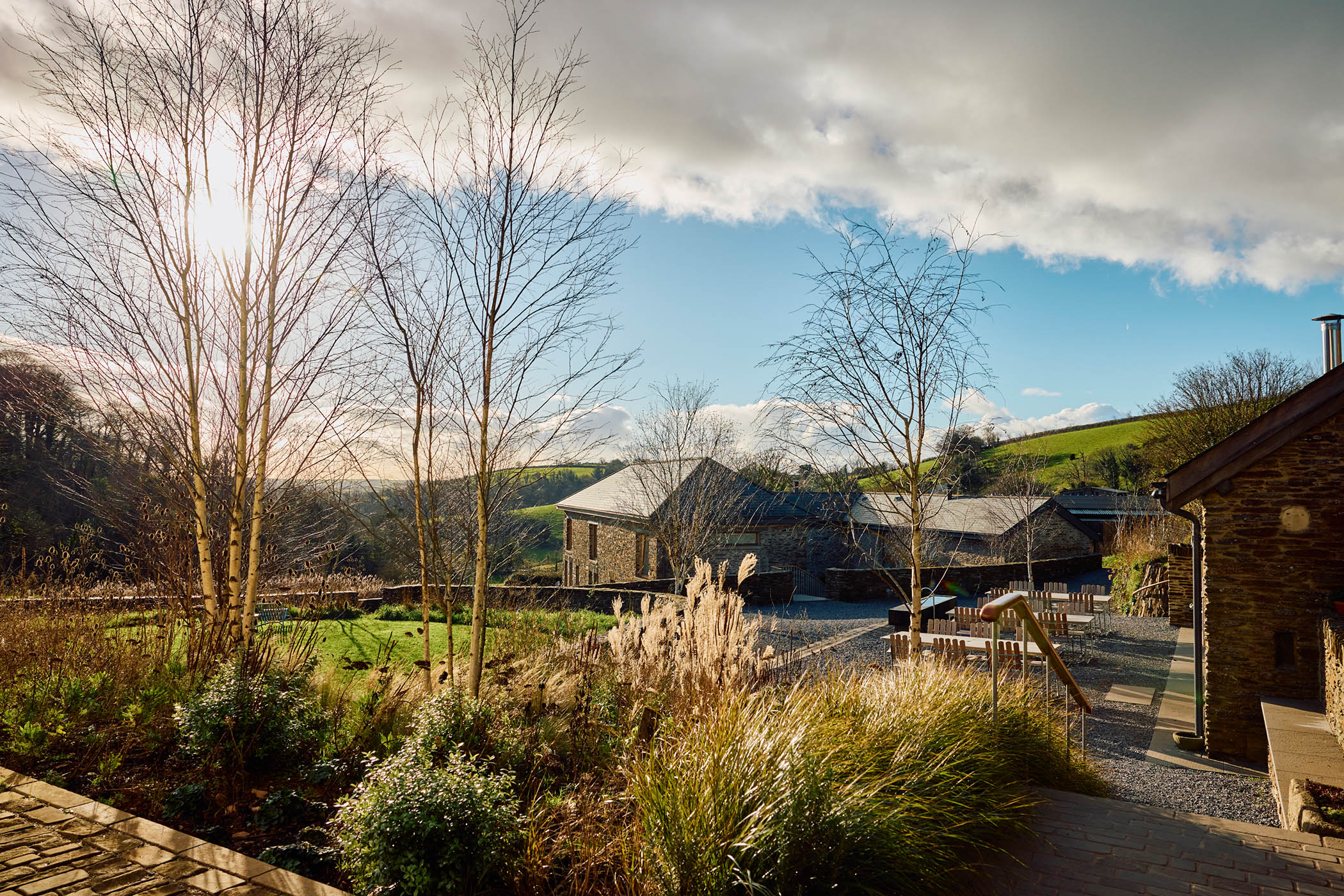
Peace in the valley: Fowlescombe Farm
I say “well-heeled” because Fowlescombe isn’t cheap – the smallest room starts at £534 a night, including breakfast and dinner. Our 20-year-old Honda Jazz, with parking sensors that occasionally go off for fun, looked out of place in the car park. Nonetheless, I cranked the handbrake at 3pm and we headed for the Refectory, the hotel’s restaurant that doubles as a reception.
We were greeted by a smiling, smartly dressed waiter who offered a glass of local beer and crisps while they checked us in. Sitting outside (it was a rare sunny day), with the calming sounds of a water feature nearby, we instantly began to unwind. The healing power of freedom? Or the 6.5% ale.
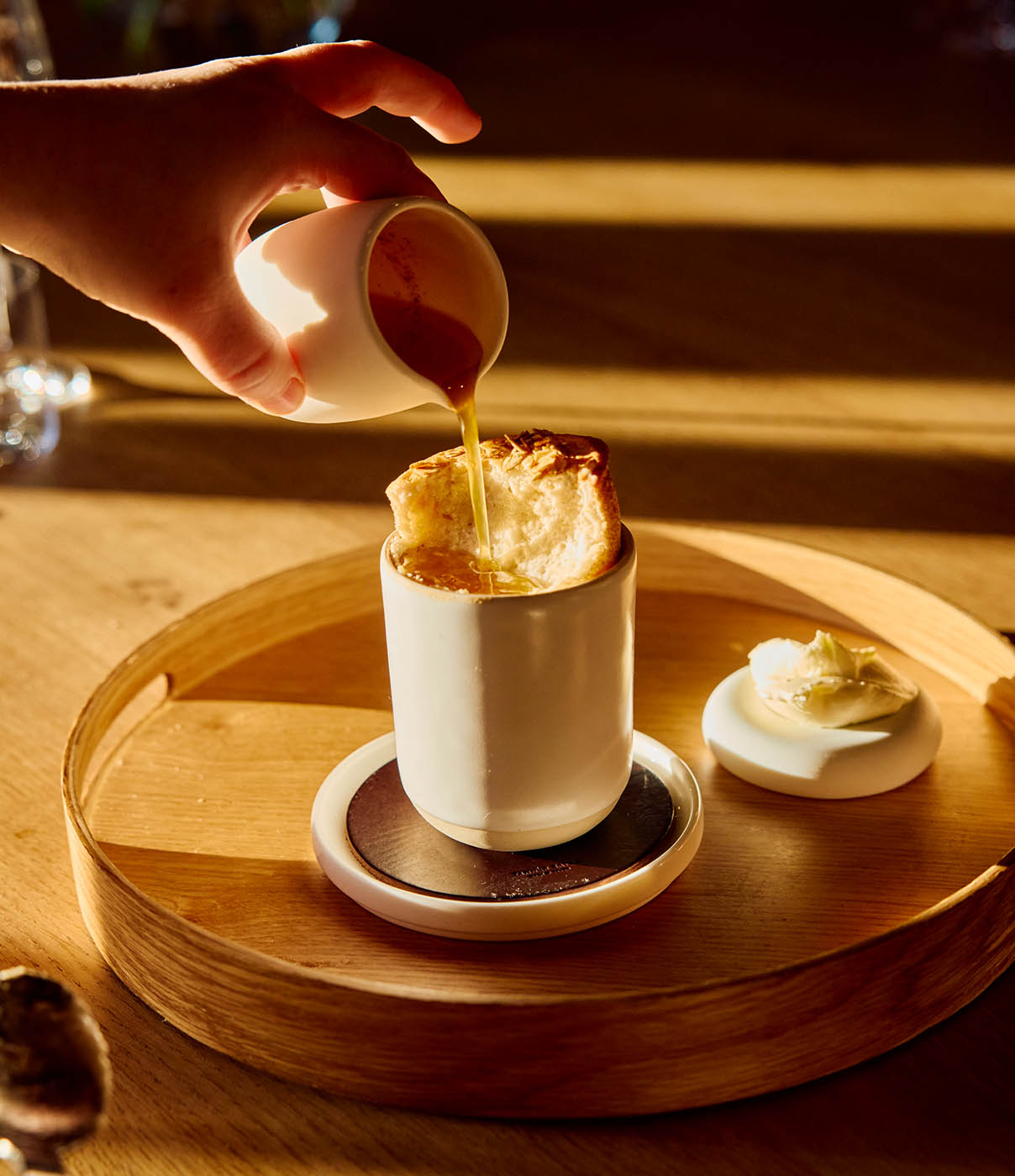
Home comforts: orchard apple soufflé
Our room helped, too. We were in the Valley Suite, a cavernous space with a vaulted ceiling and picture windows that offered a view down the valley. The suites at Fowlescombe were converted from old barns and farm buildings by the Swiss architecture firm Studio Gugger and creative director Paul Glade, the partner of the hotel’s managing director, Caitlin Owens. As such, many of the rooms have charmingly odd proportions, for example Long Barn, with its towering and wonky-shaped doorway. Glade likes them because, he tells me later, it’s “a subtle reminder that these spaces weren’t really designed for humans, but for animals and machinery.” Inside however, the rooms are very definitely designed for humans: there are warm, natural materials – oak, local stone, wool from sheep on the farm – a vast bathtub and an even vaster bed.
It would have been easy for us simply to stay in our room, but Fowlescombe is about getting out into nature. The hotel puts on a range of activities throughout the week, depending on the season, from yoga in one of the greenhouses to trail-running through the surrounding hills. Our first caper was a tour of the gardens with head gardener Shelley Hutcheon, who grew up locally and has worked at Fowlescombe for 15 years, starting before the current owners bought the property. (“I was kind of sold with the furniture,” she said, only half-joking.)
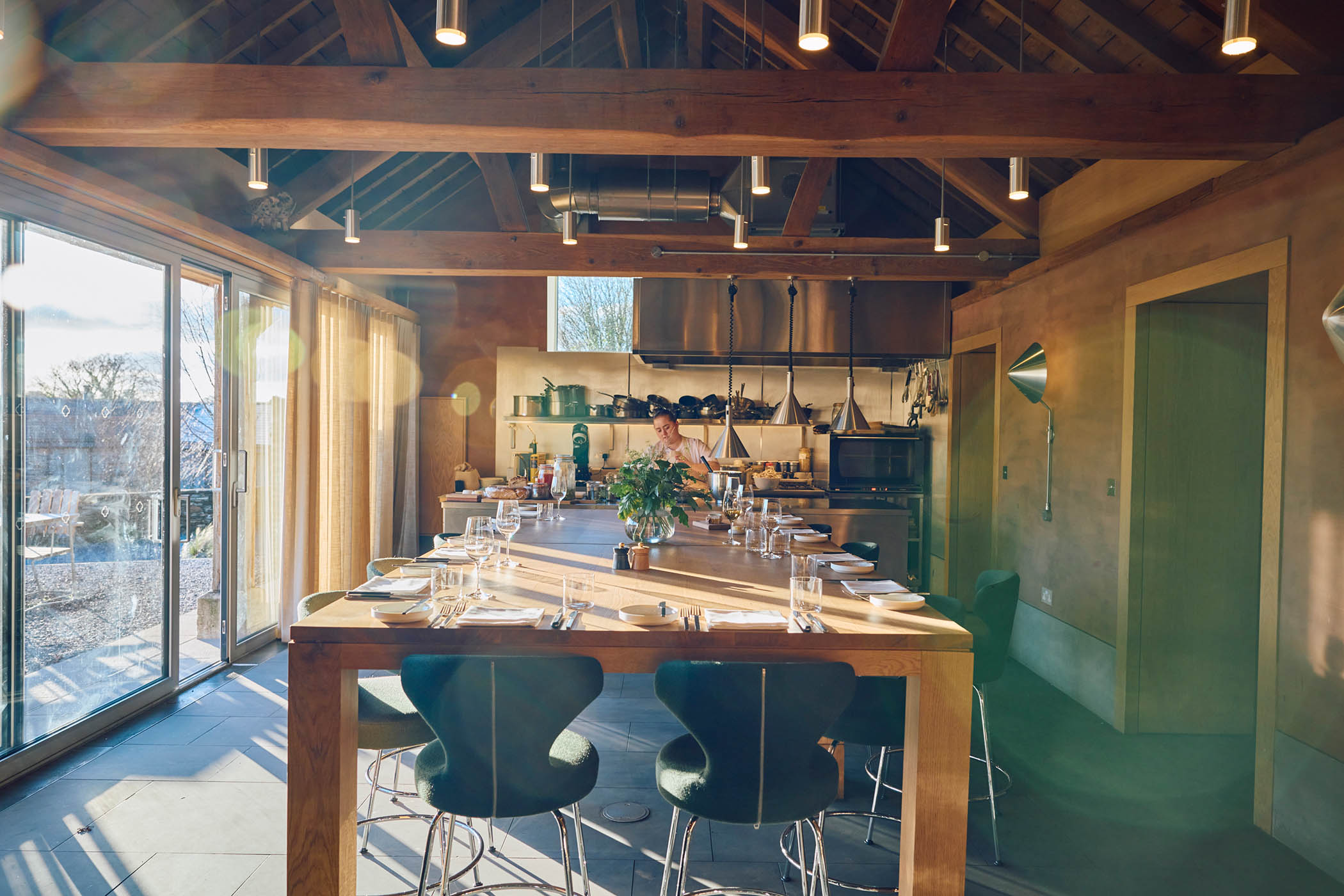
Top table: The Refectory at Fowlescombe Farm
Hutcheon took us first to the cider-apple orchard, where she explained that she’d done some “wassailing” earlier in the year, which was why the harvest had been so bountiful. I nodded politely, but had to look this term up afterwards and found that it refers to an ancient tradition that involves blessing orchards through singing and making noises to wake tree spirits.
We then headed over to the kitchen garden behind the Refectory, into the greenhouses and past rows and rows of kales, squashes and cabbages. “Apart from everything people take away in their tummies, almost everything else is circular,” said Hutcheon, showing us how the kitchen waste is turned into compost.
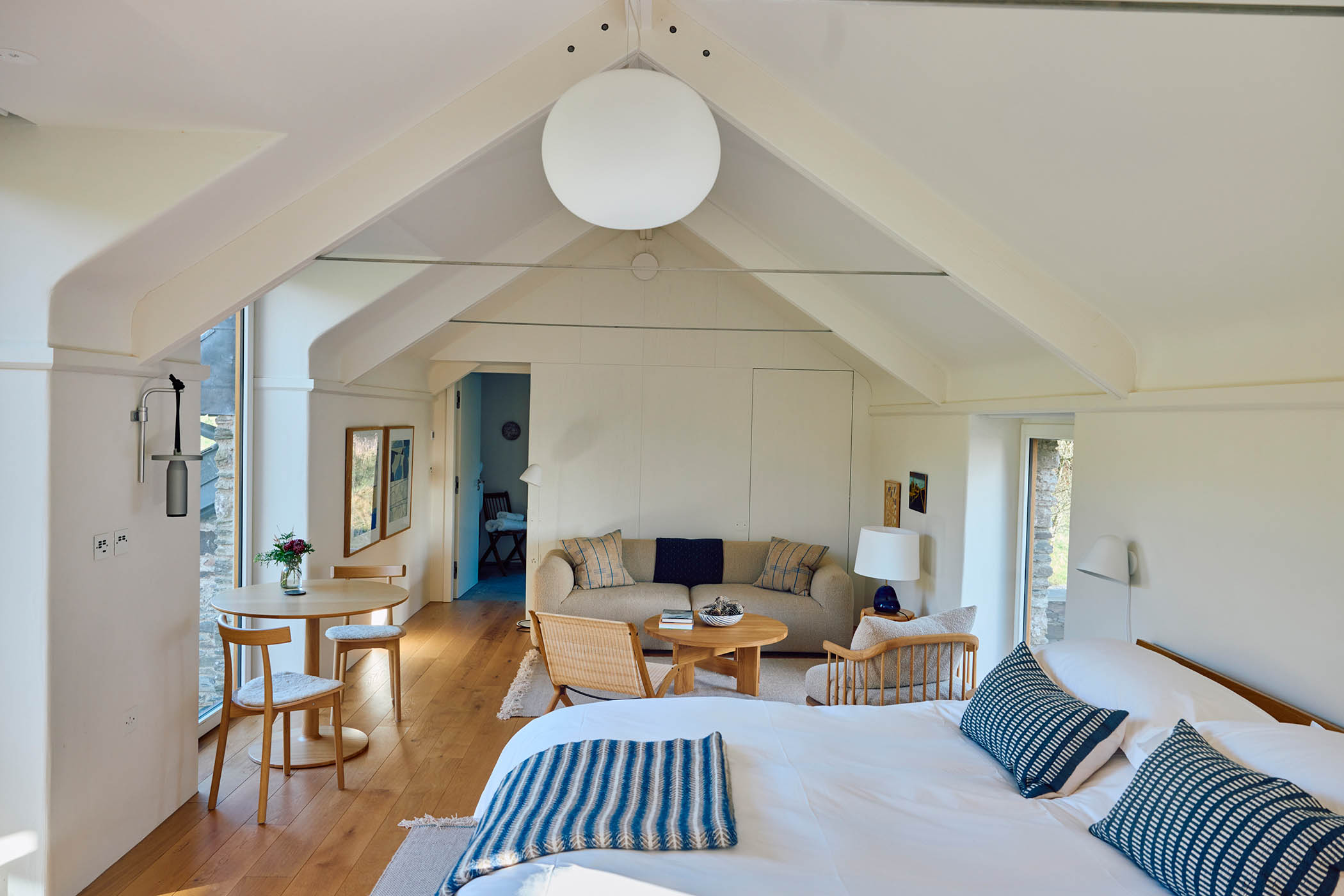
Sleep tight: The Orchard Suite
That evening in the Refectory, we saw that fresh produce transformed into delicious, refined dishes by executive chef Elly Wentworth and senior sous chef Brandon Head. We arrived for dinner to find one large communal table in the middle of the room. Call me a curmudgeon but, usually, the sight of a communal table makes me quietly groan. This one was, luckily, wide enough that we could have our own conversation without having to make small talk with other guests, while the open kitchen at one end allowed us to chat with the (remarkably calm) chefs as they plated up. And what they plated up was very good.
For our starter, we had marrow and watercress velouté, served in tiny white bowls, and with it two slabs of spongy rosemary focaccia and a perfectly shaped ice-hockey puck of butter. Next was charcuterie made onsite by the Owens family’s charcuterie company, Rare & Pasture, with pickled courgettes and radishes, which was followed by ceviche of scallops. Each of these scallops, we were told, was hand-picked by James Kirkaldy, an expert free diver who dives off the coast of Devon every day, without an oxygen tank, to pick fresh seafood. It all sounded like a lot of work.

Old stones: a remodelled farmyard
But then the scallops, served here with green tomatoes and limes from the garden, were wonderful: sweet and firm, with a hit of tartness. Dessert was a perfect slice of kaffir lime tart, a combination of crisp, short pastry and a creamy, sharp filling, served with basil sorbet. Yum.
The next day, after a big breakfast, served with a very worthy homemade green juice, we went off on our second activity: a farm tour with Pim Wolfs, Fowlescombe’s indefatigable Dutch general manager. Before we set off, he bounded up excitedly and handed us a couple of ground cherries he had found in one of the greenhouses. “When they fall off the plant, they’re ripe,” he said, beaming. “You dry them out and they get more yellow and sweeter.” Inside its crispy casing, the little golden berry was a pearl of acidic deliciousness.
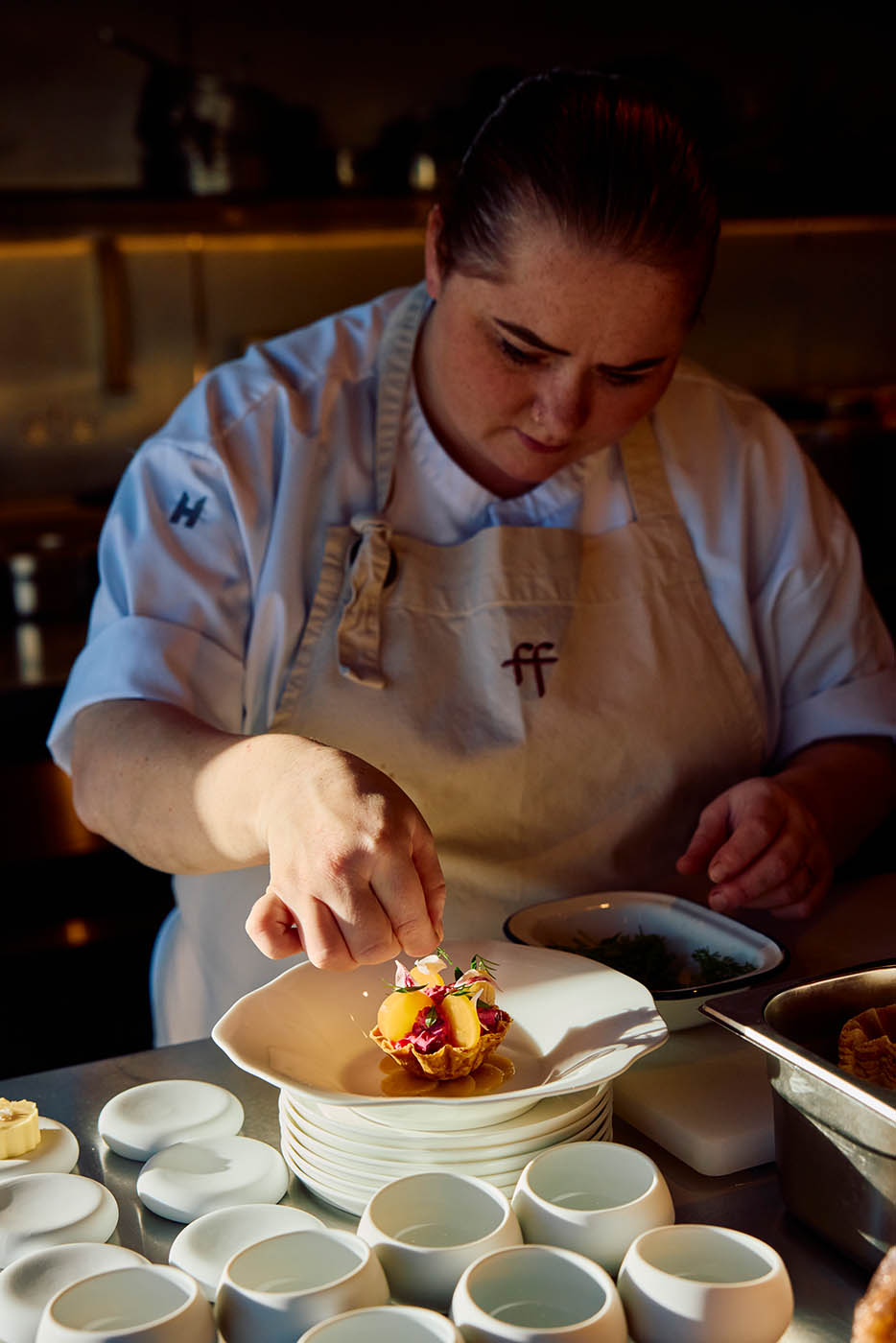
Devon on earth: beetroot tart
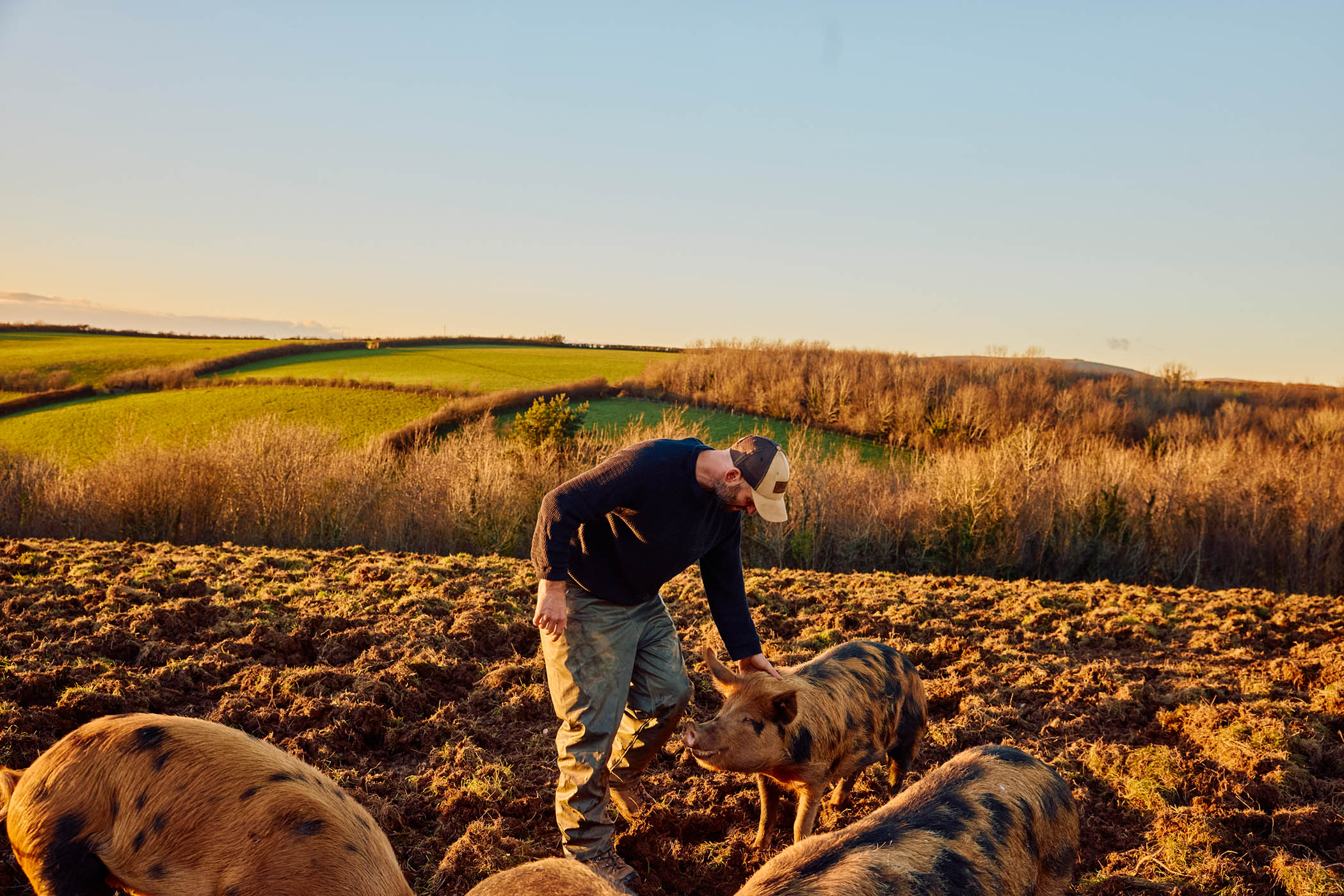
The farm tour took around two hours. Under leaden skies, with wellies on and wearing the hotel’s raincoats (designed by Paul Glade’s mum and made bespoke for Fowlescombe), we marched through muddy fields, picked berries, fed chickens (life goal: find someone who looks at you the way Wolfs looks at those chickens), collected apples, played with piglets – with a pang of guilt, as our daughter would have loved this – and returned in time for a light lunch of soup and sandwiches. We were on the tour with another family, with two kids under 10, but I was the one giggling as we fed the goats.
As we got ready to head back to London and our daughter, I reflected on something Fowlescombe’s Caitlin Owens had told me. She and her family had decided to turn this farm into a hotel after spending time here during the pandemic. “Coming into the valley, it’s magical,” she said. “We knew we’d really gained something by being here, and we thought guests would as well.” If Fowlescombe can turn me, someone who appreciates the warm hug of city pollution, into Monty Don – well, she just might have a point.
For more information, go to Fowlescombe Farm (fowlescombe.com)
Newsletters
Choose the newsletters you want to receive
View more
For information about how The Observer protects your data, read our Privacy Policy