
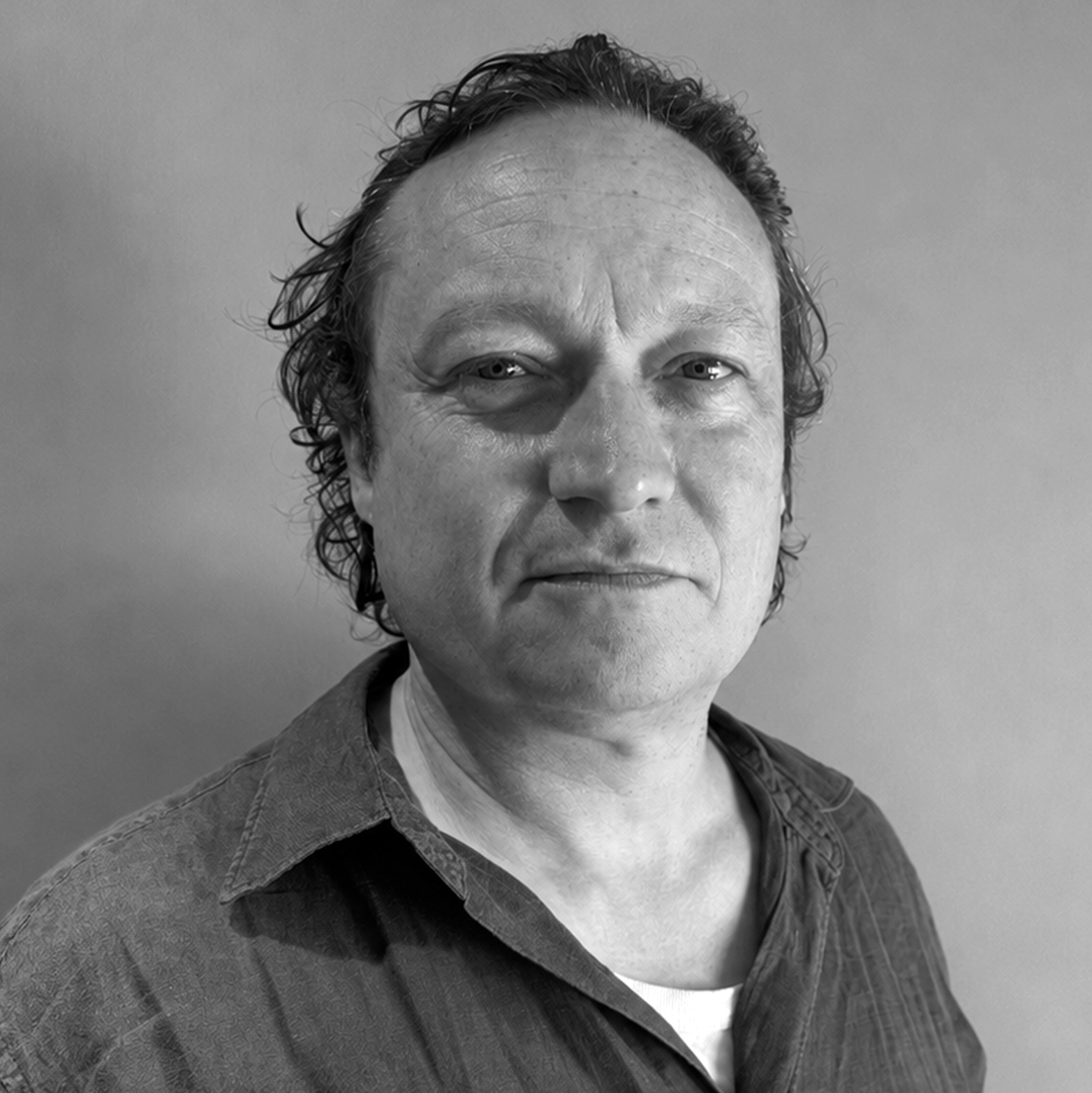
Sitting in the nucleus of Gloucestershire’s Five Valleys, Stroud technically lies within the Cotswolds. In practice, it resists almost everything that label implies. The market town moves in step with an outlook that locals half-jokingly badge in its unofficial mantras: “Stroud and Proud” and “Keep Stroud Weird”. There is less honey-stone glow here, and certainly no corduroy small talk. It is more a way of doing things than a half-baked slogan. “Thank God it isn’t picturesque,” says Dan Chadwick, artist-turned-accidental publican and now the unlikely custodian of the Woolpack, one of Stroud’s most important institutions. “What Stroud has is an industrial history: wool, scarlet dye, water-powered mills. Before coal and steam, this was a major industrial centre.”
Chadwick is best known locally as the man who saved the Woolpack Inn, the Slad Valley pub immortalised by Laurie Lee in Cider with Rosie, and more recently for opening Juliet, a Stroud restaurant just up the road (in countryside terms) last year. Together, the two places act as a kind of compass for the town’s creative and social life. He grew up nearby at Lypiatt Park, a medieval manor house in the Chalford Valley, after his father, the artist and sculptor Lynn Chadwick, bought it in the 1950s. “My father came here because of the ley lines,” he says, of the town’s geography, which sits mystically along ancient tracks of the Cotswold Escarpment and Neolithic long barrows. “He was a hippy. So he came to the Whiteway Colony – a commune that existed well before the First World War, and is still going.”
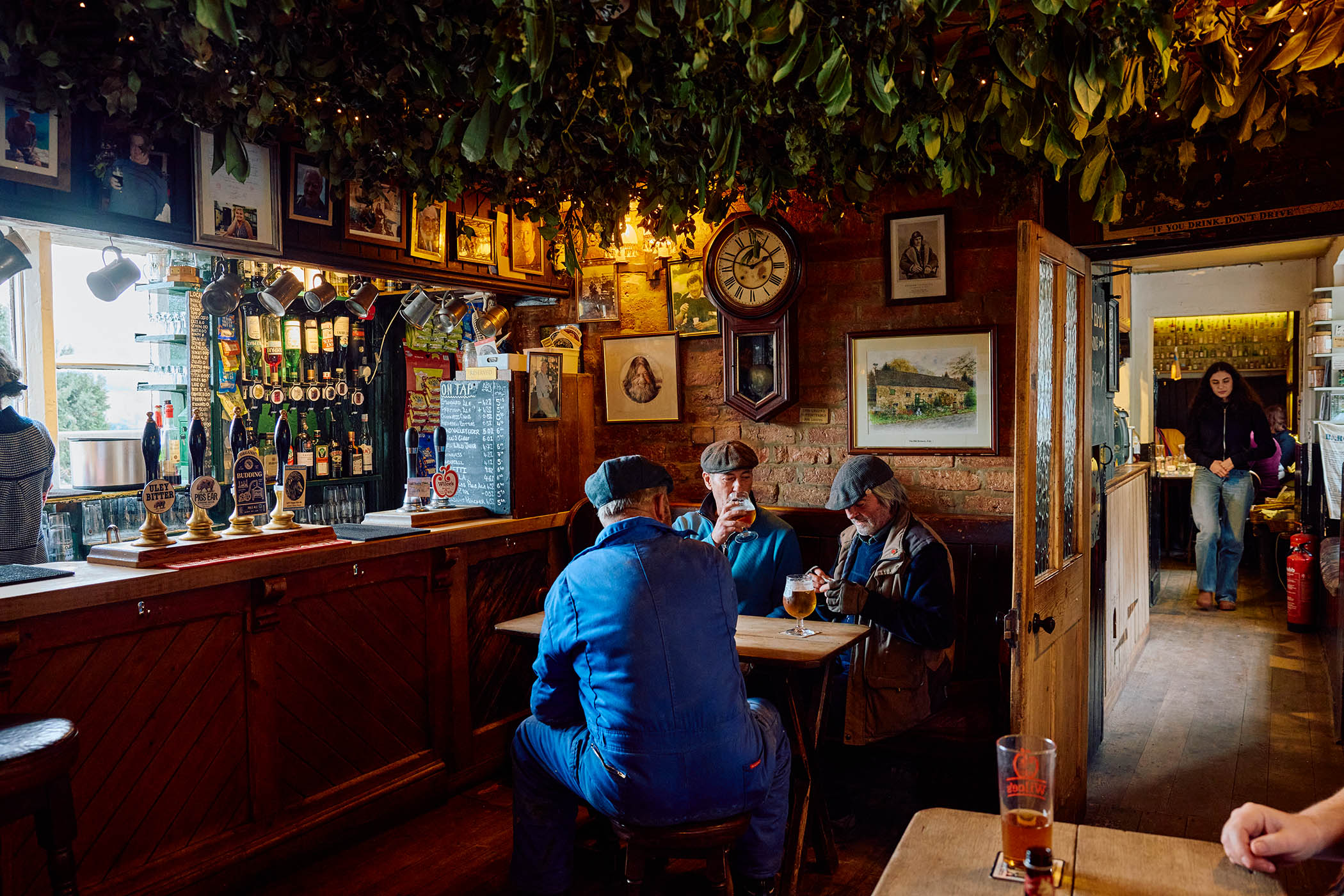
He recalls his father’s devotion to good bread, particularly that baked at the colony’s now-shuttered Protheroe Bakery. “My father always swore he’d never had a cold since switching from white to brown bread,” he says. The idea that food and culture are inseparable feels central to both Chadwick and Stroud. “Artists and chefs are drawn to each other,” he says. “Stroud needs balance – somewhere in between grit and independence.” His own route into food came, fittingly, through people. “I loved pubs, because I loved talking to people,” he says. In the 1990s, he found himself drinking regularly at the Woolpack. “I’d been boozing there for five years. That whole time, there was a For Sale sign outside. Nobody wanted it.” One howling winter evening, the weather-beaten sign finally came crashing down in a storm. “I stood there and thought, ‘For heaven’s sake, I’ve got to do it.’” His parents were horrified. His art career was put on pause. But the pub survived, and is now a vital social artery (as well as home to one of the best pub burgers in the UK).
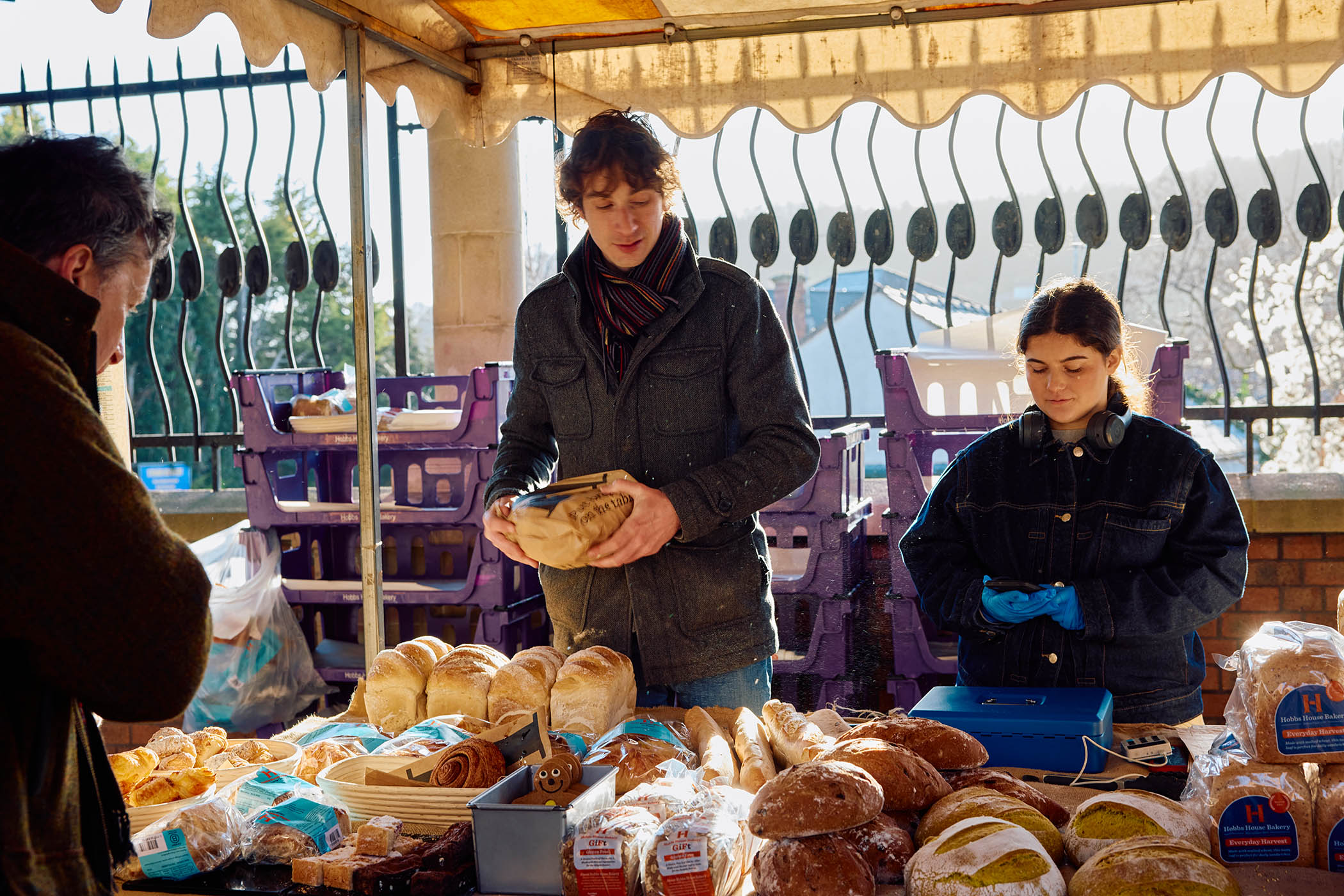
Local heroes: the weekly farmers' market
Chadwick’s soft spot for local institutions led to his second rescue mission: the space that was to become the home of Juliet. The building, once the Old Music Centre run by a much-loved figure known as Mr Smith, had been left derelict – its sign moss-covered (there’s a theme), trees growing through the floors and the front wall bulging on to the street. “We propped it up just to stop it collapsing,” Chadwick recalls. He wasn’t even planning to buy it, but Mr Smith insisted. “This place was a salvation story first, a vision second,” he says. Built almost entirely from reclaimed and gifted materials, Juliet was constructed by hand – Chadwick on his knees for months – with help from a small team of trusted friends, including hospitality hotshot Marie Jackson. “Everyone thought I was mad,” he laughs.
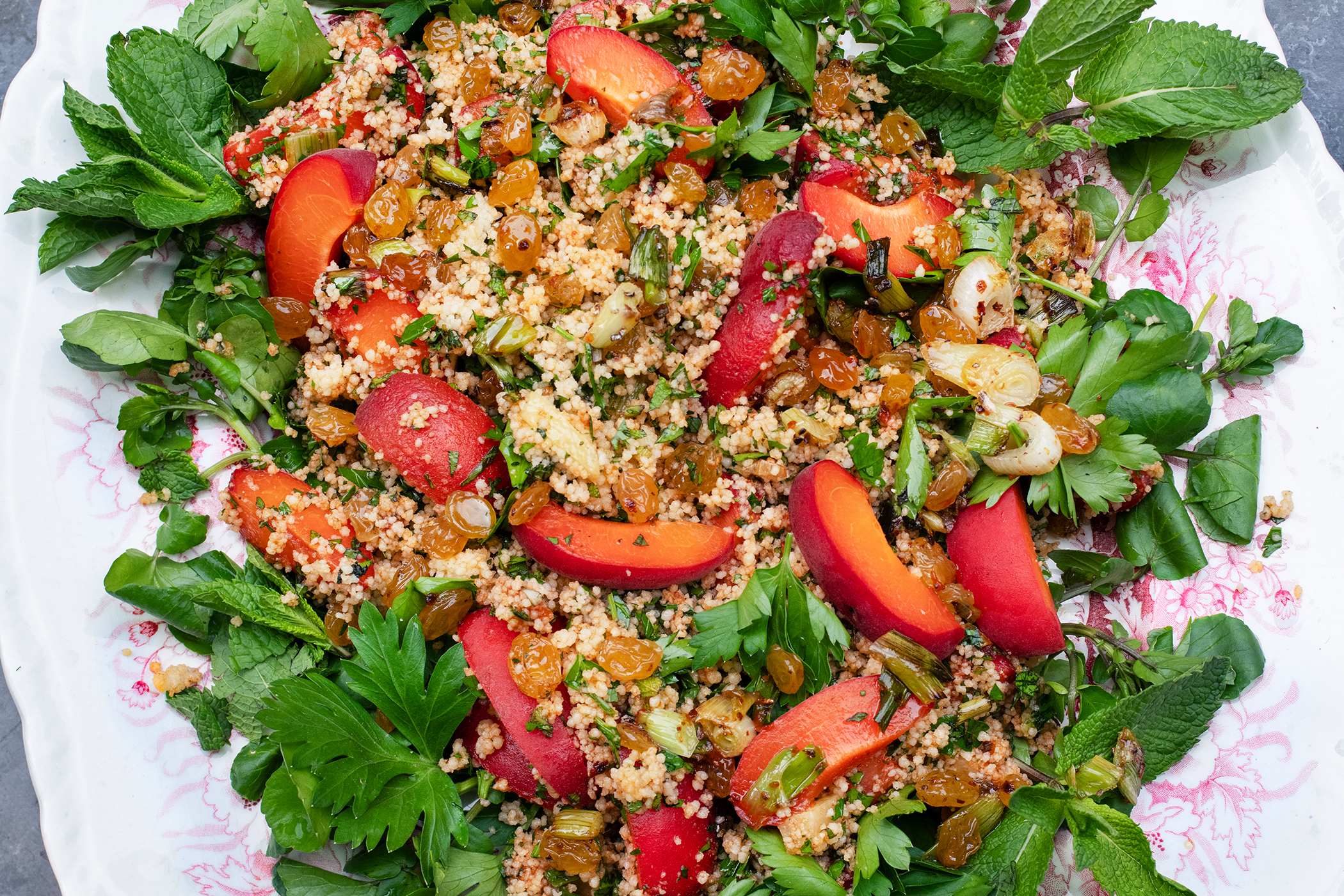
The kitchen at Juliet is led by Stroud-born Ollie Gyde – who returned home to bring his classical training to the menu – alongside Will Rees (formerly of Wilson’s in Bristol). Together, they use ingredients from the market garden at Lypiatt Park, which Chadwick has a loose plan to open as the third corner of his Stroud-based triangle. The result has been called a bistro but, says Chadwick, “I don’t even know what a bistro is. I just wanted it to feel like you’d walked into somewhere in Budapest, Vienna or Paris.” He shrugs. On the menu, there is vermouth and soda, panisse with thick salame rosa, steak frites, a ragù cavatelli, or the plat du jour, perhaps a ribollita with a glass of white wine for £17.50.
A couple of minutes away on the high street, Leola Bakery – which opened quietly last November inside one of the town’s oldest buildings – has also become a lively community hub. Run by husband-and-wife duo Andy Strang and Ruth Batham, the bakery is built on a deceptively simple premise: bread as a conversation starter. Their baguette is made using wheat grown at nearby Lower Hampen Farm and milled at Stanway Watermill, a restored 13th-century mill.
“If you buy bread and know who baked it and who grew it, that system carries real value,” says Batham. Inside, shared tables are arranged to encourage chitchat rather than just turnover. On the menu is coffee by Somerset’s Round Hill Roastery and flaky viennoiseries made with cultured British butter. The demographic is broad: young families with buggies, pensioners on daily walks and the pastry-obsessed grabbing a sticky cardamom bun. Art plays a part here, too, with a new show on rotation every three months.
‘Word of mouth matters, social media less so. You are known by what you do’
‘Word of mouth matters, social media less so. You are known by what you do’
The town draws a crowd each Saturday for its farmers’ market, which was first opened by Jasper Conran and the late Isabella Blow; Damien Hirst’s Formaldehyde Building was famously down the road on an industrial estate. And these days, contemporary spaces, such as the Stroud Valleys Artspace (SVA), fill up fast for talks by emerging artists, DJ sets and exhibitions by celebrated artists.
Despite the big artistic names associated, rents remain just about affordable. Garden shed studios still exist. People have room to try things. Sisters Katie and Natasha Johnston understand that intimately. Raised in Nailsworth, four miles south of Stroud, they left, returned, and now run This House Gallery – a holiday cottage that supports artist residencies – and, as of last summer, This House Gallery in the centre of town. “Art and craft are the biggest forces shaping this part of the country,” says Katie. She points to Good on Paper, Stroud’s print-only local magazine. “If you want to understand Stroud, that paper is it. It’s not online – deliberately. People are just busy living their lives, doing what they know, and doing it well.”
Change, she believes, is welcome here, but only when it feels rooted. “Places like Juliet and Leola work because they’re grounded. People want that. If what you’re doing is soulful and sensitive to the community, it works.”
Newsletters
Choose the newsletters you want to receive
View more
For information about how The Observer protects your data, read our Privacy Policy
That sensitivity does not mean softness. Stroud’s cooler undercurrent runs through places like the Prince Albert – still affectionately known as “the most Stroudy pub in Stroud”. Gigs are always crowded. “It’s like a Bristol pub dropped into Stroud,” Katie says. “A bit grungy, but in a good way.” Run by Lotte Lyster and Miles Connolly, respected figures in the local community, it is part of the town’s less polished, livelier side. Word of mouth matters. Social media, less so. You are known by what you do and whether you show up. “You can’t hide in Stroud,” says Katie, and that, perhaps, is its greatest strength.
In a town shaped by mills, markets and magic, the soul still lives in its community spaces: sleeves rolled up, quietly getting on with it.
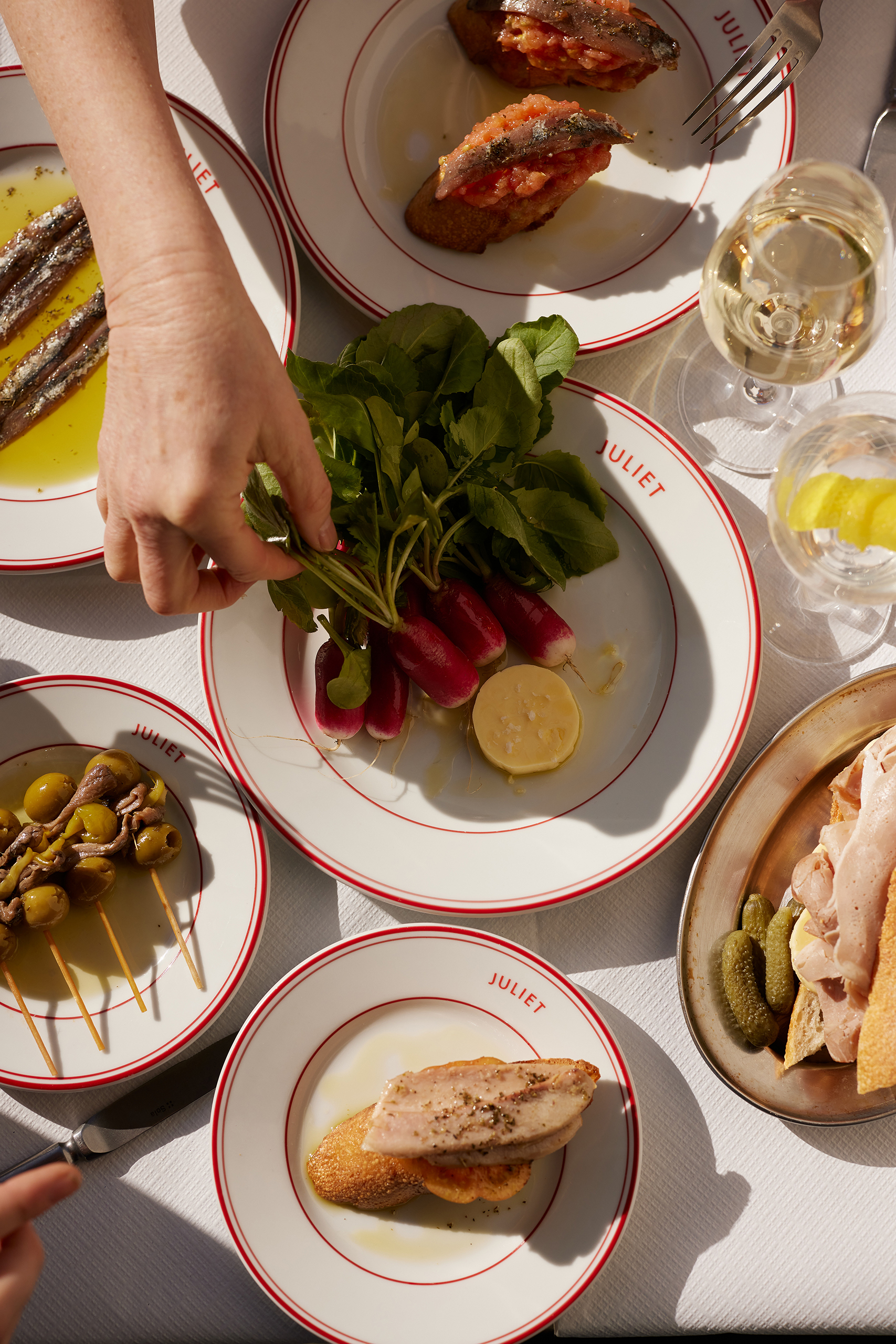
Juliet restaurant. Photograph by Ed Schofield
Change, she believes, is welcome here, but only when it feels rooted. “Places like Juliet and Leola work because they’re grounded. People want that. If what you’re doing is soulful and sensitive to the community, it works.”
That sensitivity does not mean softness. Stroud’s cooler undercurrent runs through places like the Prince Albert – still affectionately known as “the most Stroudy pub in Stroud”. Gigs are always crowded. “It’s like a Bristol pub dropped into Stroud,” Katie says. “A bit grungy, but in a good way.” Run by Lotte Lyster and Miles Connolly, respected figures in the local community, it is part of the town’s less polished, livelier side. Word of mouth matters. Social media, less so. You are known by what you do and whether you show up. “You can’t hide in Stroud,” says Katie, and that, perhaps, is its greatest strength.
In a town shaped by mills, markets and magic, the soul still lives in its community spaces: sleeves rolled up, quietly getting on with it.