
Off-season, the ocean air finds you somewhere between Ennis and Miltown Malbay, rolling inland from the Atlantic as you drive west towards County Clare’s coastline. By the time we reach Gate Lodge 1837, a former caretaker’s cottage that has, almost defiantly, outlived the big house it once served, the light has thinned to silver, and the sound of the sea drifts through the hedgerows. The old house lies decaying into farmland now, its sturdy walls turned over to hens and herbs.
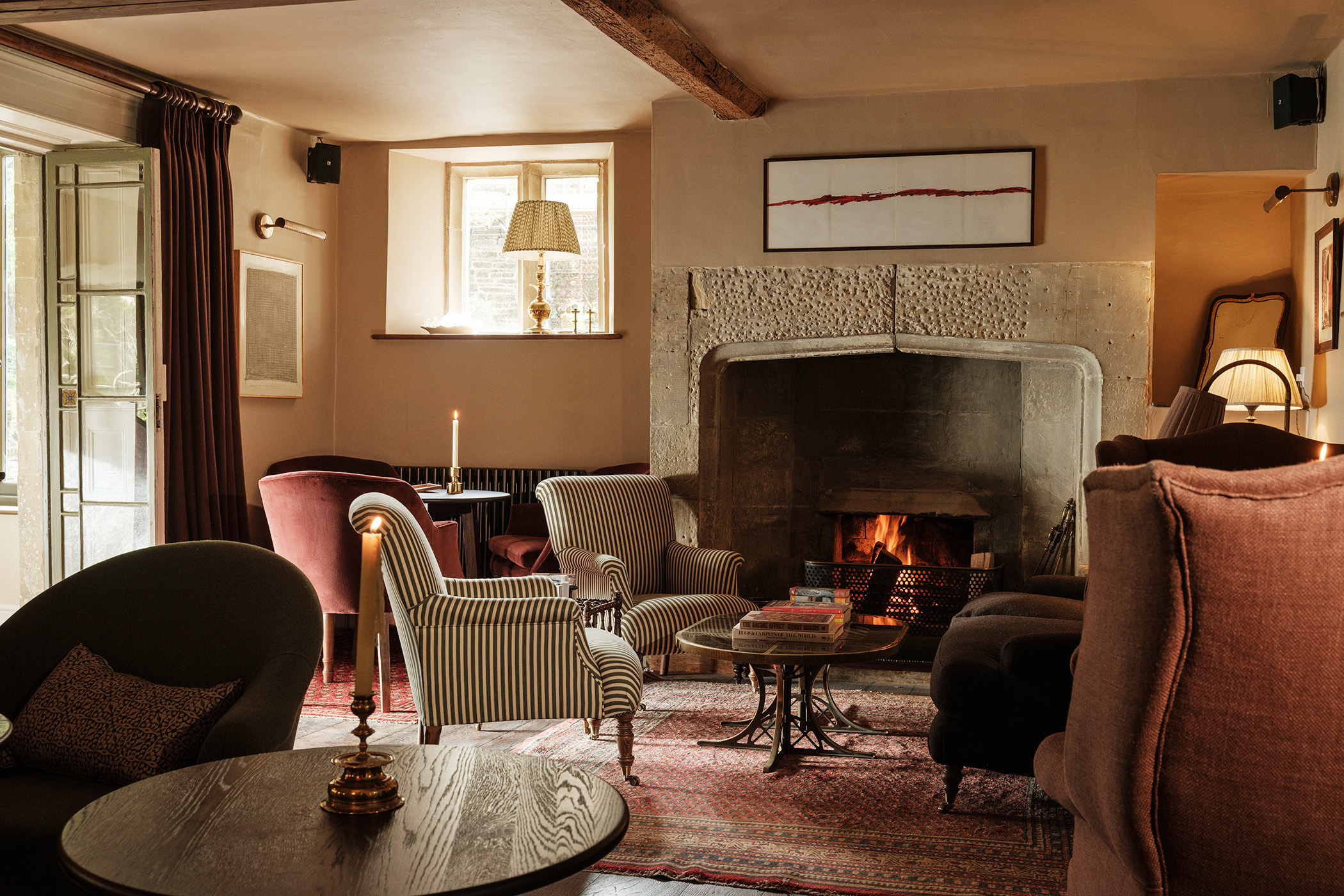
An alpaca in the adjacent field lifts its head to watch as the crunch of loose gravel follows our approach. Entering the half-door, I duck beneath the low lintel, not because I am especially tall (I’m not), but because this small house has kept its 19th-century proportions and sense of time. Inside, the sound of the outside world melts away and the space takes hold: limewashed walls, grey Liscannor flagstones, an old telephone on the shelving and willow-patterned crockery in the Shaker-style kitchen.
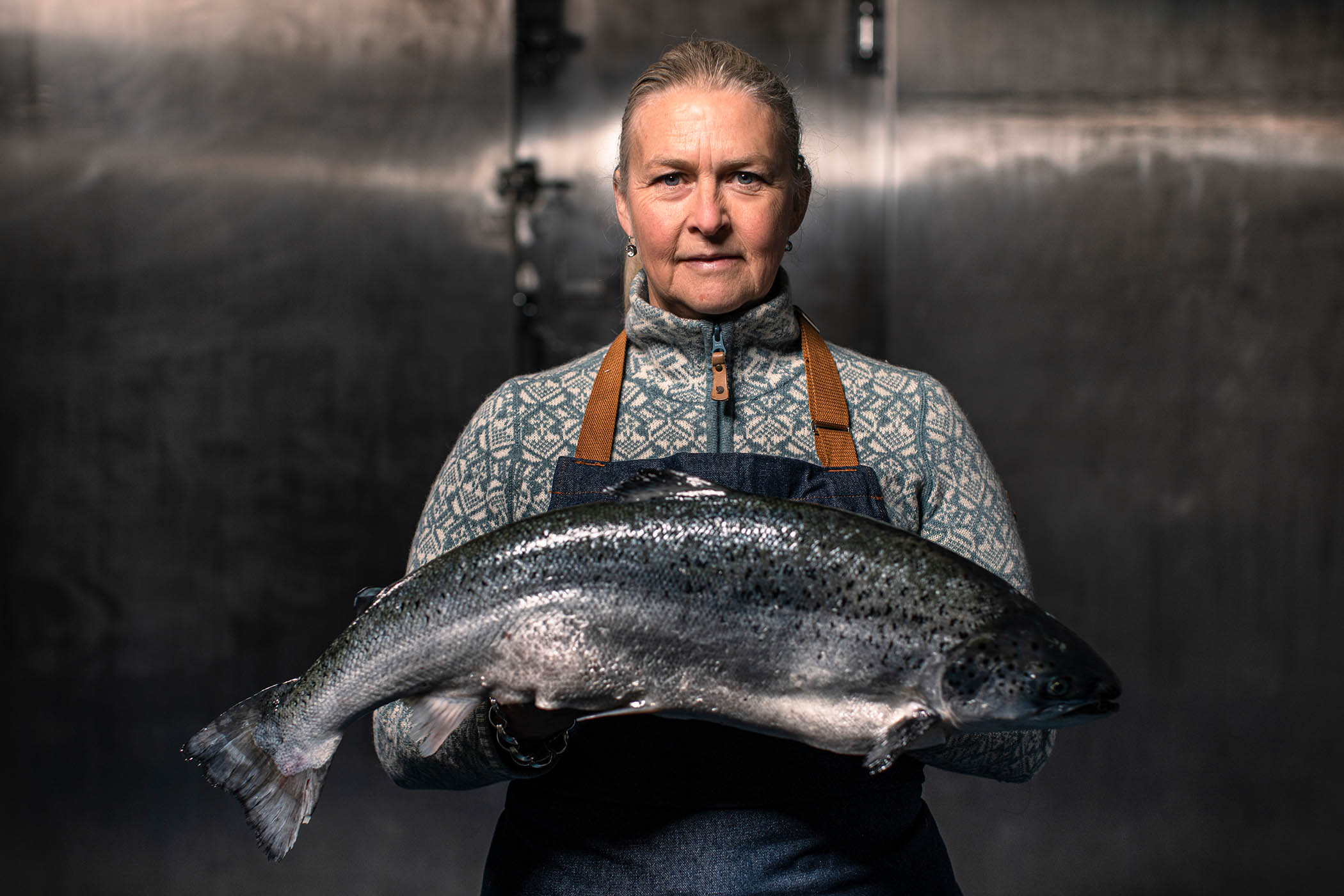
Birgitta Hedin-Curtin, who runs a County Clare smokehouse, with a wild salmon
This is a place for off-season travel, when the days are short and the sea air is sharp. A mile away is White Strand, where locals swim year-round, some as part of a new ocean therapy community centred on Sauna Suaimhneas, a wood-fired sauna above the tideline. Its name means “peaceful sauna”, and in this crisp late afternoon steam rises into the salt air as bathers step barefoot across stone and into the surf. An elderly man in togs emerges from the waves and says, “There’s no bad day for a swim.”
We push past, heading north. A cottage on a bluff lies crumbling into the sea, with its doorway and windows open to the howling wind and waves. With these wild elements, not all stories can be saved here as 1837’s has been. But still we discover that in many cases the connection between landscape, buildings and people continues to stretch back millennia in Clare. Below the glass roof of St Fachtna’s Cathedral in Kilfenora is the Doorty Cross. Illuminated against the gunmetal sky, it is one of Europe’s finest high crosses, a glowing landmark of memory in the dimness of early evening.
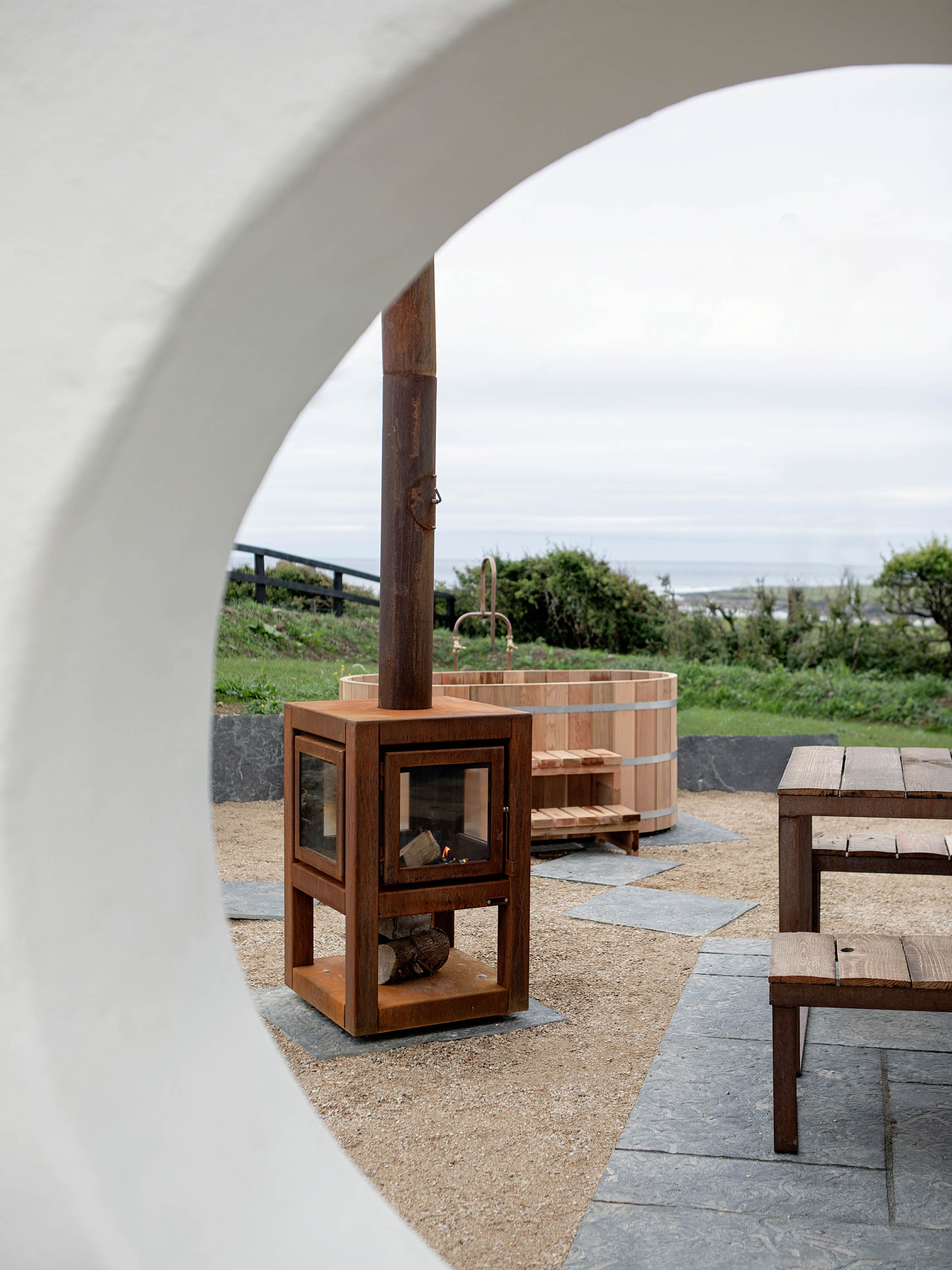
A hot tub and wood burner at Gate Lodge 1837
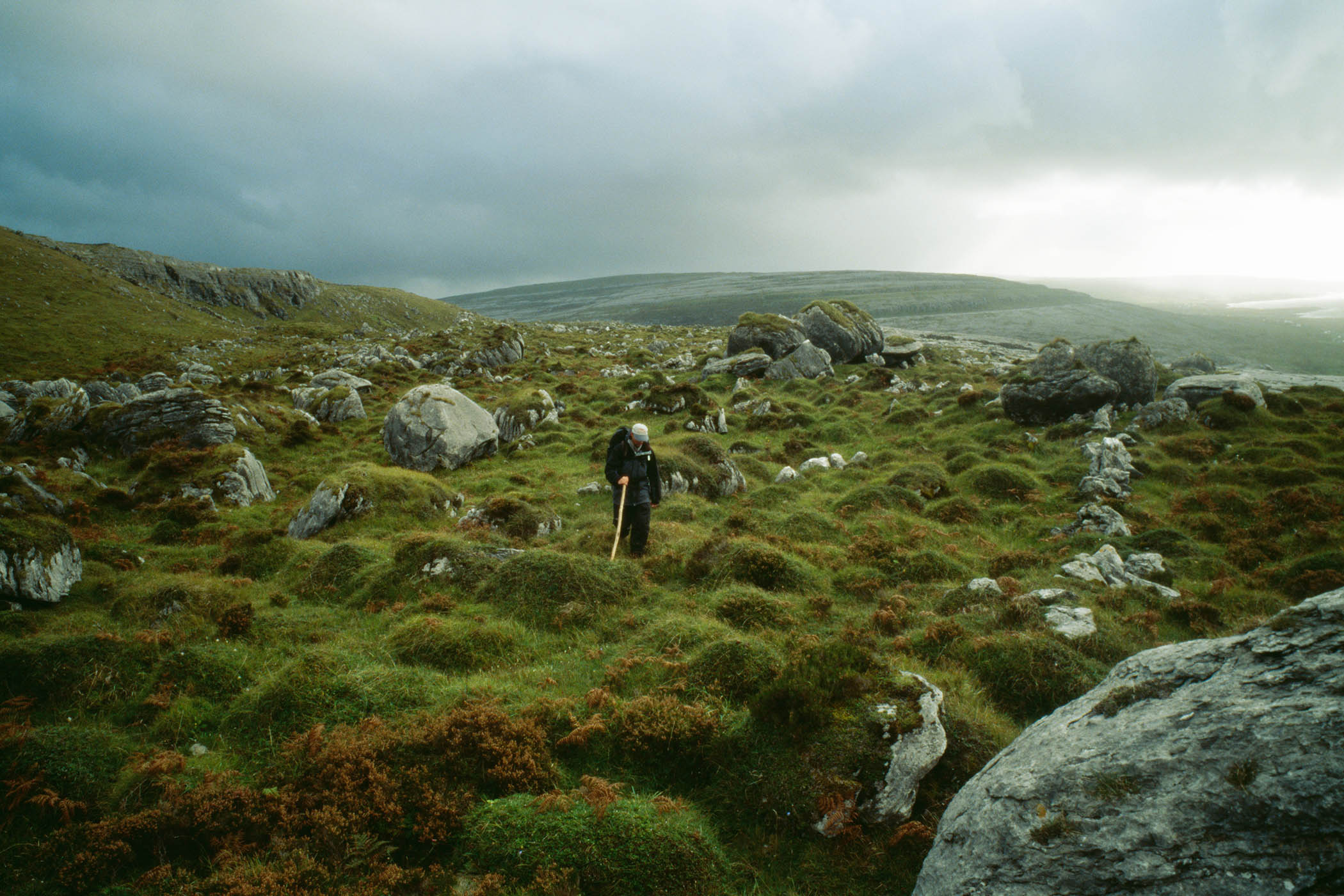
Further into the Burren’s silver karst landscape lies just one of the region’s paradoxes: fertility and stone, where thin soils yield unexpected abundance between limestone slabs. Cracks between the smooth, moisture-slicked surfaces of rock will soon be filled with wildflowers such as spring gentian or mountain avens, usually native to the Alps or Mediterranean. It is the only place in the world where they flourish side by side. We hop across these small ravines to the plateau where one of Ireland’s most iconic landmarks, the Poulnabrone Dolmen, stands against the twilight. This portal tomb proves that human life has endured here for more than 5,000 years, through every season and shift in the land.
The next day, we head some miles and many centuries later to the ruin of Corcomroe Abbey, where monks built their church beneath these same limestone hills and dedicated it to Mary of the Fertile Rock, a testament to how life thrives even in the most unlikely places. That spirit continues today in the food culture, where sustainability is woven into daily life. In the market town of Lisdoonvarna, Birgitta Hedin-Curtin’s Burren Slow Food movement has become a touchstone for sustainable gastronomy, encouraging restaurants and producers across the county to think seasonally, with a sense of their place. At her Burren Smokehouse in Lisdoonvarna, we discover that everything she offers is local: organic smoked salmon, St Tola goat cheese and Burren Gold gouda from Aillwee Caves.
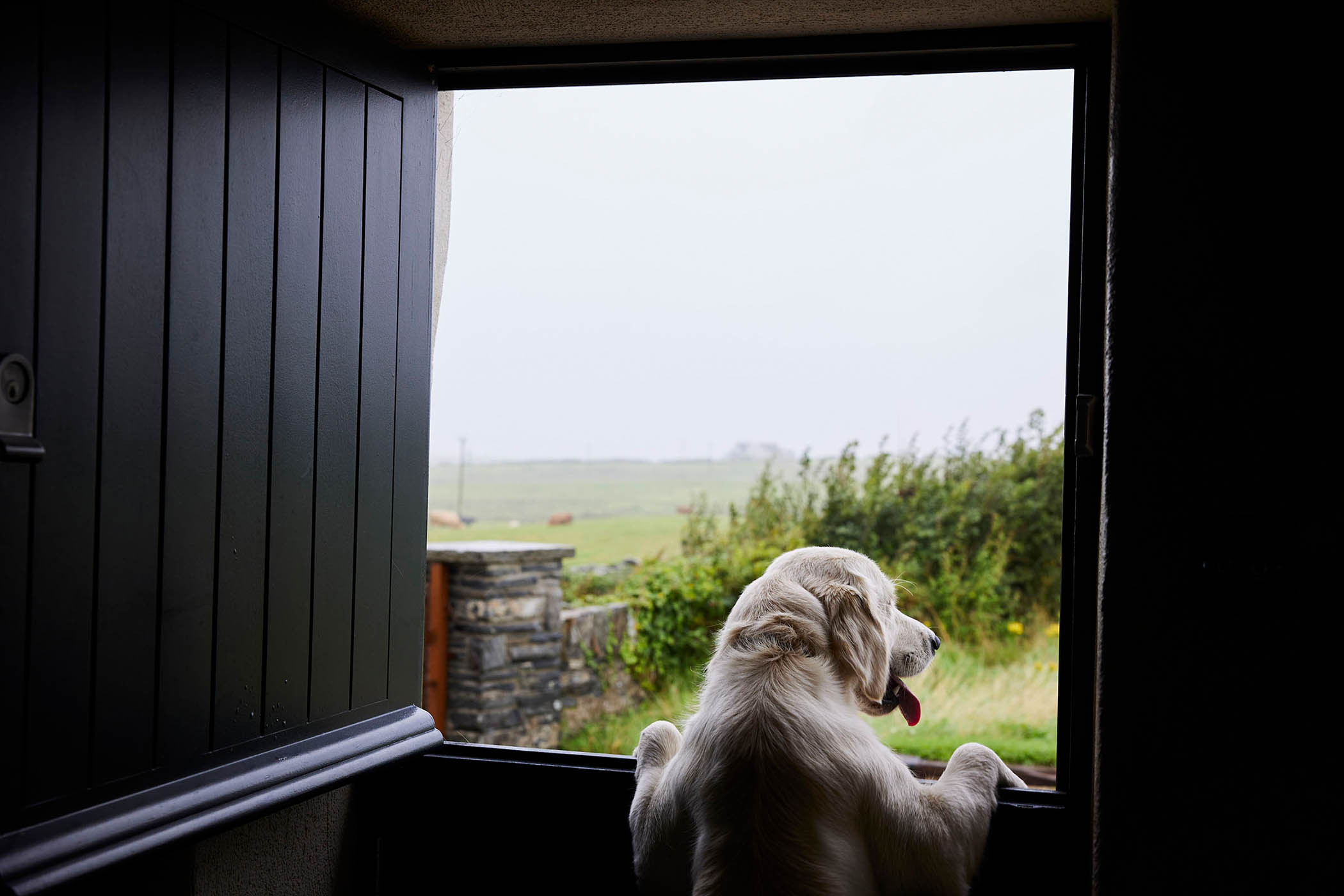
A local hound takes a keen interest in proceedings
Along the northern ridges of the Burren, on the Finavarra Peninsula, the Fahy family nurture their herd of shorthorn cattle on a diet of seaweed and grass, as they have for 200 years, in preparation for the spring opening of their Linnalla café, Europe’s most westerly ice-cream parlour. The place is modest, but the bond between land and food runs deep, carried in every bowl served there.
It’s that legacy of land, ocean, and food that lingers across the county. At Oar, in Doolin, our menu draws on the seashore and the changing seasons; at Barrtrá, the low-lit seafood restaurant overlooking the bay near Lahinch, the kitchen serves us the day’s fresh catch from Liscannor. We taste the region’s flavour again in the rich, locally produced hot chocolate at Hazel Mountain’s café.
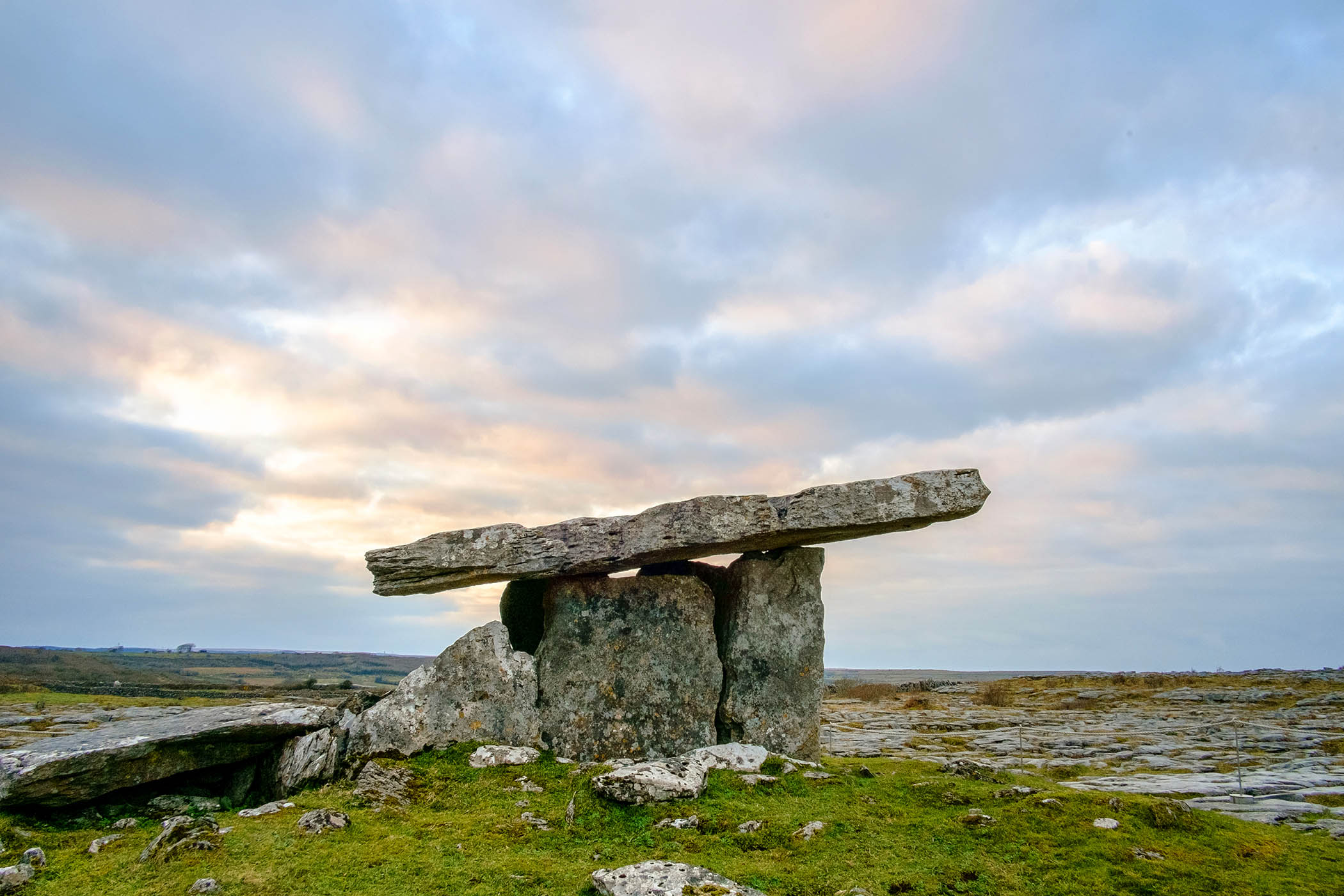
Poll na mBrón, or in English hole of the quern stones, a portal tomb in the Burren, County Clare
Back on the coast, the drive passes through towns that seem half asleep. Yet every so often, a café or gallery window spills light into the gloom: Unglert’s Bakery in Ennistymon, where strudel is still warm, or the lantern-lit O’Loclainn’s Irish Whiskey Bar in Ballyvaughan. This is exactly the sort of casual place you expect to find here, where the owners show up after a day on the farm to unlock the door, and you discover a honeycombed warren of Ireland’s best collection of whiskeys. The conversation inside follows the usual patterns: the weather, music or the result of a local hurling match.
In Miltown Malbay, the newly opened Design Bank is another example of life sprouting from an unexpected, harsh source. Housed in a restored former bank building, it now showcases the work of traditional artists and musicians. Inside, a weaver is using skills to create a tapestry while a painter is hanging up his vibrant landscapes. The initiative draws on circular-economy principles, where creatives reuse and shape how materials, skills, and ideas circulate through the region. Outside, on the building’s gable wall, is painted: “To Forget the Past is to Forgo the Future”. The message is evocatively true of this place.
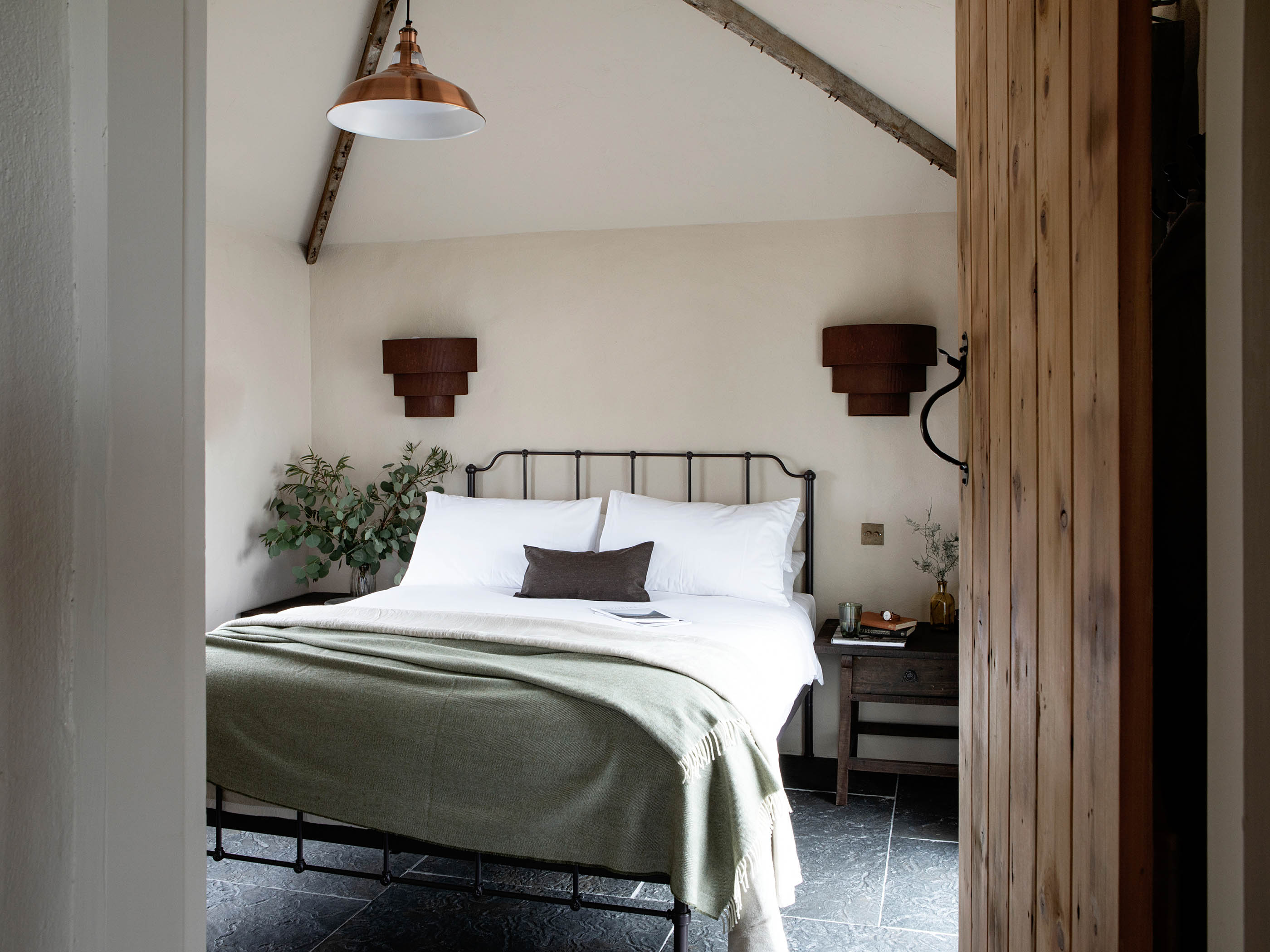
‘A place of much healing’: Gate Lodge 1837
We step next door to Friel’s Pub – or Lynch’s if you go by the sign over the door, a reminder of the passage of time and the fleeting curatorship of property and enterprise. Inside, Jack, the young barman, tends a small coal fire beneath a portrait of the musician Willie Clancy, who lends his name to one of Ireland’s best-known festivals, held annually in the town. Jack gestures towards his shelf of spirits and pauses at a bottle of JJ Corry. He explains that the whiskey is local, “from down the road in Cooraclare”, and part of keeping things close to home. Here in north-west Clare, the pride in local produce is palpable.
Back at Gate Lodge 1837, owner Aoife O’Malley meets us. “I’ve found this to be a place of much healing,” she says. “Guests seem to relax and reset here. I guess the people who lived here long ago had a deep connection to the land and animals; and for a short while, at least, those who stay now can sense that and be part of it.”
Photographs: Getty Images; Ruth Maria Murphy; Mike Mulcaire
Newsletters
Choose the newsletters you want to receive
View more
For information about how The Observer protects your data, read our Privacy Policy