
The squirrel: 20%
I work, in theory all the time and in practice some of the time, in a shed at the end of the garden. I don’t want to make this sound grander than it is. The shed is about 30ft away. It’s a welcome encounter with nature, in the form of a muddy, waterlogged urban lawn. It’s also an encounter with the squirrel. There were three of them in the summer, but now there’s only one. He’s big. When my wife goes out into the garden, he performs an elaborate threat display, standing up with his tail furious and making a weird sort of chinking semi-bark. When I go to my shed, he completely ignores me. No reaction at all.
Two theories. A: the squirrel is a misogynist. He’s a misogysquirrel. B: he has performed a threat assessment and realises that the garden is Miranda’s territory and I can be safely ignored. It’s a little insulting, but if that is what the squirrel is thinking, he is 100% correct. The squirrel and his cache of nuts, or whatever it is he is worrying about, are safe from me. He is interestingly bad at being a squirrel. He keeps trying to hide nuts in the lawn, but the holes he digs are no more than 1cm deep. You can still see the nut! It’s right there! I feel like asking: “Mate, is this the best you can do? Up your game! You’re going to be outcompeted by another species!” But the squirrel doesn’t understand English, which is also why it has no effect when Miranda tells him to fuck off.
A side note, however. I have of late witnessed what amounts to Miranda’s codependent relationship with the squirrel. She complained about him for months, but I recently learned that she has also been secretly feeding him, and she often expresses wonder at how good he is at climbing trees, etc.
The fox: 15%
The garden also has intermittent visits from a mangy fox. Not metaphorically mangy: actual mange. Sometimes the fox is on the lawn and sometimes he’s on the roof of my shed. On Googling, I learned that mange is a risk to other animals, and significantly reduces the fox’s life expectancy. That makes sense. The fox doesn’t look at all well. It was once sitting on the garden table, unmoving and looking very sick, so I called the RSPCA. They were amazingly efficient. An officer came in about 20 minutes. At which point, of course, the fox, which hadn’t moved in the previous two hours, immediately vamoosed. Google said that severe mange gives a fox a life expectancy of only a few months, but that was a few years ago, and this one is still hanging on in there.
Merlin/my mother: 15%
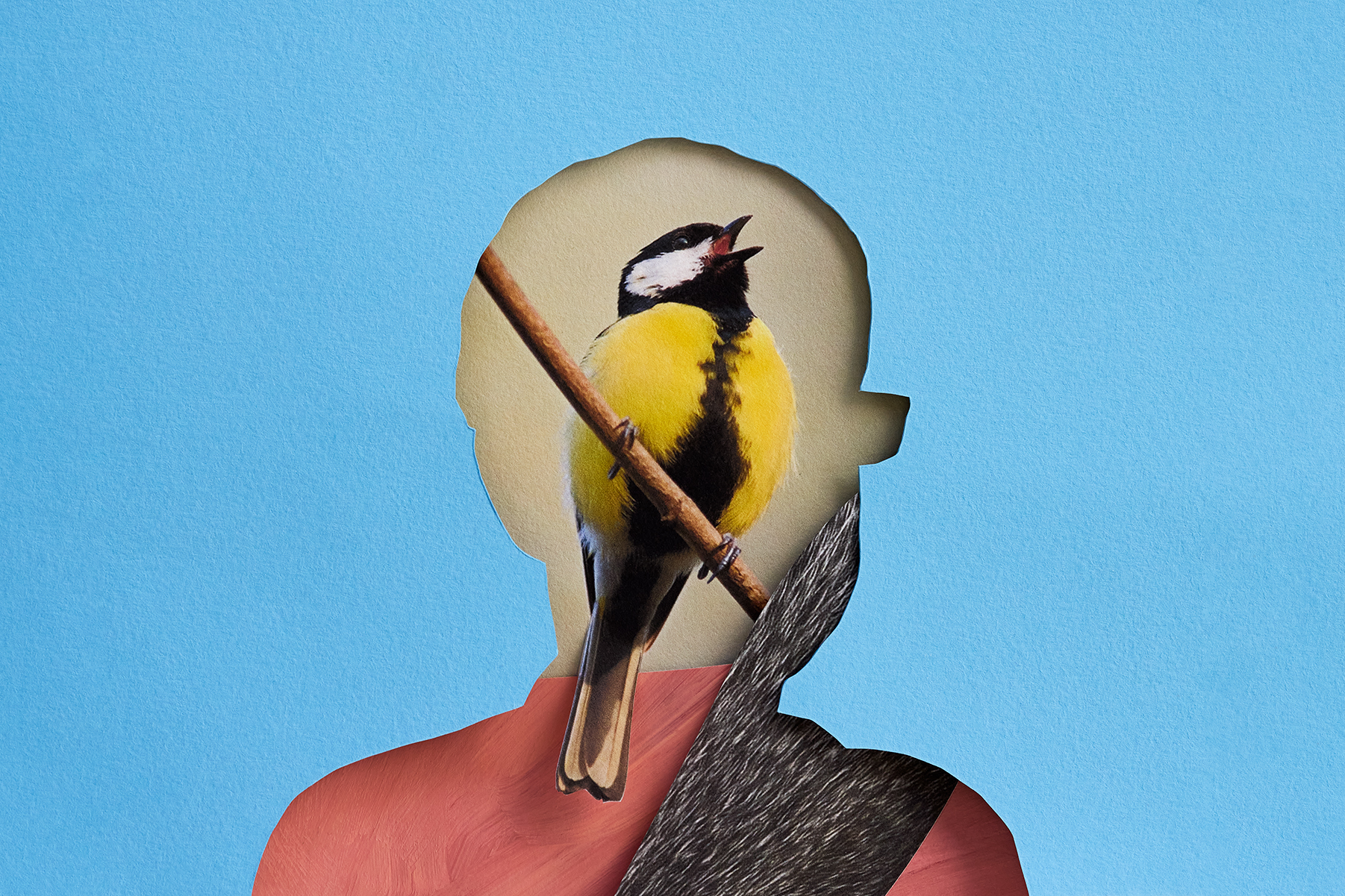
At this time of year, the nicest thing about the garden is the birdsong. Thanks to a wonderful app called Merlin, from Cornell University, it’s now easy to identify. We can hear rose-ringed parakeets, great tits and blue tits, blackbirds, robins, starlings, wood pigeons, magpies and this year, for the first time, a goldfinch. My mother loved birdsong and had a couple of LPs that she used to play to learn the sounds. She would have loved Merlin, and the birdsong makes me think of her.
What’s for dinner: 30%
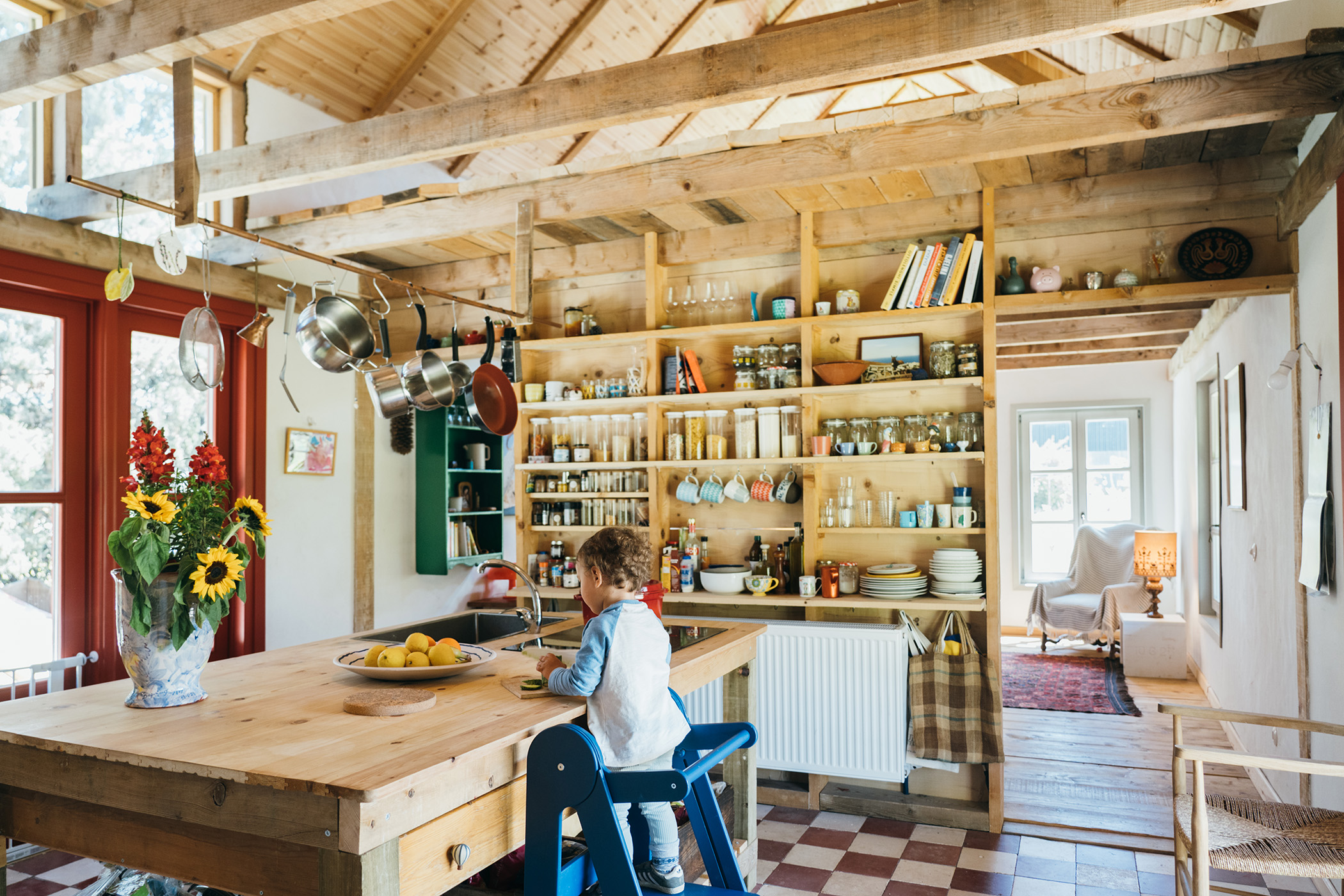
I cook most days. It helps me switch off, which I’ve noticed defines whether or not people enjoy cooking. If it allows you to immerse yourself in what you’re doing, you enjoy it; if it doesn’t, it’s just another chore. I’m also trying to eat more seasonally, and in a more veg-led way, without generating food waste. I plan, shop and cook on the day. At the moment, the great challenge is pumpkins. It’s the season. In the posh greengrocer’s they look so beautiful, and have these alluring names: Turban, Delica, Hokkaido. But I find them impossible to make interesting. Perhaps I’m biased because they feature in the classic Thanksgiving menu, which is basically an anthology of everything I don’t want to eat. Thai green curry pumpkin? Maybe. Or perhaps I should take Homer Simpson’s advice: “If at first you don’t succeed, give up.”
News: 20%
I try to avoid the firehose of current-affairs news, for reasons of cognitive self-protection, and keep my attention on subjects in which I have either some degree of agency or some particular interest. Example: the announcement, just before Christmas, that the oldest evidence of human-made fire has just been found in a village in Suffolk. It pushes the earliest confirmed use of human-made fire back by 350,000 years! Not the earliest use on this island: the earliest in the world. This is pre-homo sapiens’ fire use, probably Neanderthal. An amazing story and a great tribute to UK archaeology (with a shout-out to Neanderthal ingenuity, too). One odd aspect of paleo-archaeology is that, because the evidence base is small and fragile, discoveries can have big consequences. A single find can rewrite the entire history of humanity.
The oldest humans are brilliant at making news. It’s a bit like that thing where a writer dies with several books finished but unpublished, and the next few years create the impression that what you have here is an incredibly prolific dead person.
Illustration by Alma Haser
Newsletters
Choose the newsletters you want to receive
View more
For information about how The Observer protects your data, read our Privacy Policy