
Henry Moore, I’m told by employees of the foundation that bears his name, chose to live modestly. There’s evidence all around the Hertfordshire house, gardens and studios where he lived and worked from 1940, after he was bombed out of London, until his death in 1986. His success as an artist made him rich and famous, and attracted the likes of Lauren Bacall and chancellor Helmut Schmidt of Germany to this rural retreat, but he would still recycle planks and plastic sheets to make his places of work, or repurpose a pigsty or a shed, or make plinths for sculptures out of painted breezeblocks.
His best-known works, of course, were not so modest: great bronzes and stone carvings that weigh many tonnes and in some cases are as high as a house. Their casting and shipping were expensive, and they can now command eight-figure sums at auction. The buildings and 28 hectares (70 acres) of land he assembled exhibit both sides of his personality. Massive, gleaming works are dotted about the slopes and lawns, as are the flimsy ad hoc structures that served the different activities of his practice, such as drawing, carving, making maquettes and etching. This is a realm where the art, in pounds weight and pounds sterling, outguns the architecture.
Some of Moore’s inspirations are also present: the buildings contain vertebrae, skulls, curious stones and ancient sculptures; the fields contain sheep, which he loved to draw. The old house where he lived with his wife, Irina, and their daughter, Mary, is part of the ensemble, with its basic kitchen and 1970s furnishings respectfully preserved.
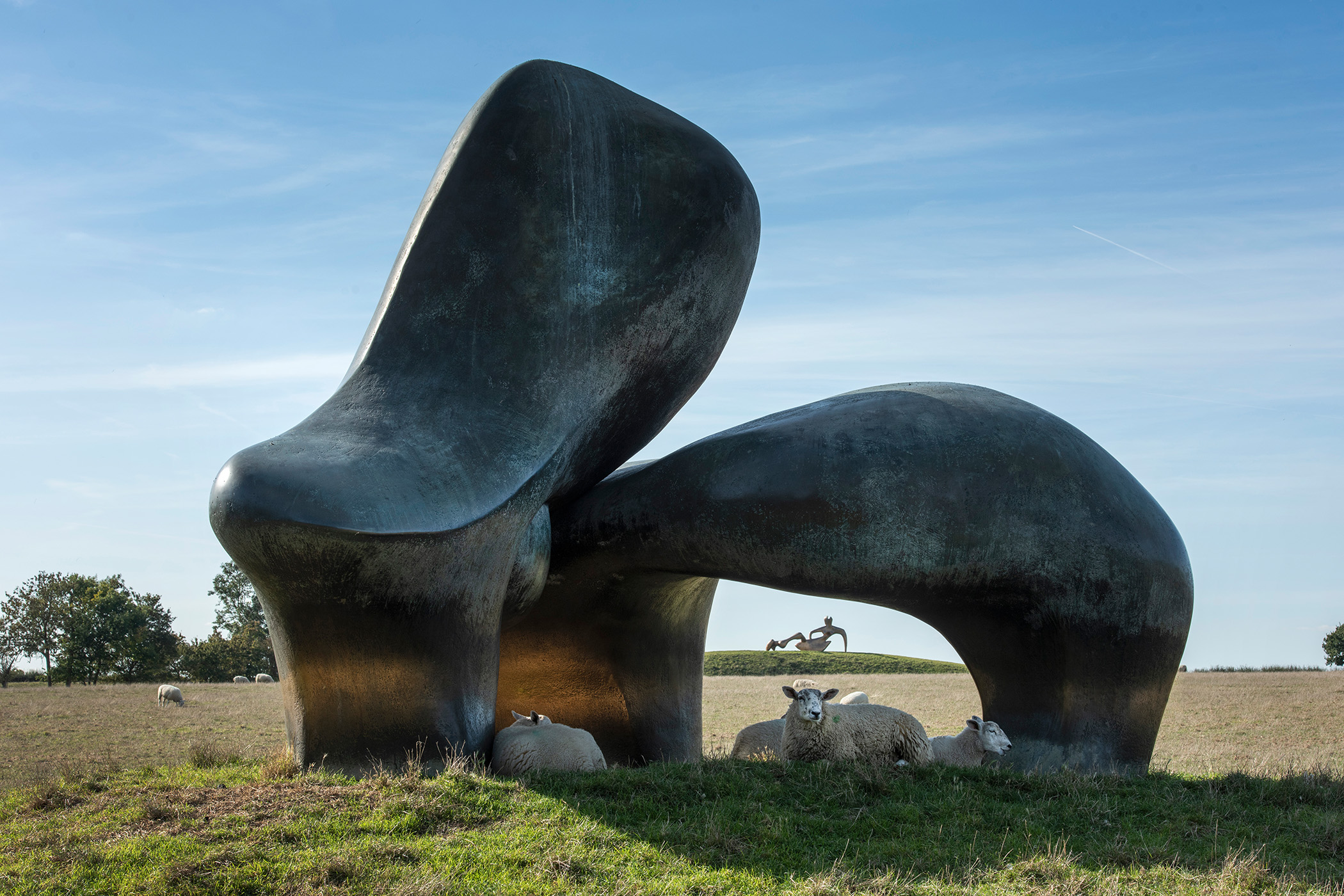
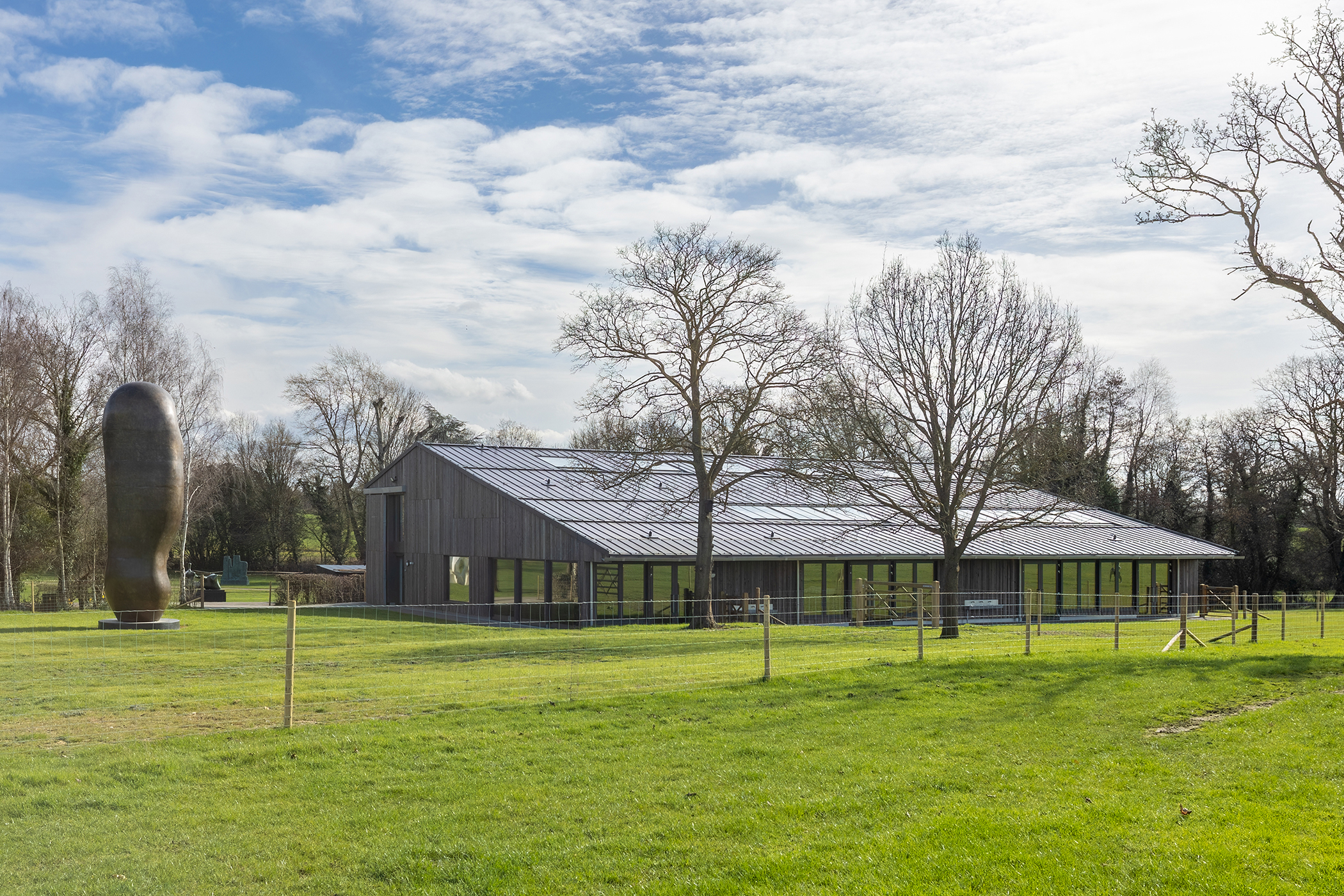
Henry Moore’s Sheep Piece, left, with his Large Reclining Figure ‘presiding over the scene’ behind. Main image: the remodelled Sheep Field Barn
Within this landscape of making are buildings put up since Moore’s death – a cafe, offices, an archive. And there is Sheep Field Barn, an agricultural building used by Moore for storage, remodelled in 1999 as an exhibition gallery and now doubled in size and renovated by the architects DSDHA and the builders Rooff. The new work is driven by a desire to honour Moore’s belief in education, to which he owed his own career, and it adds generous new rooms where schoolchildren and adults can both learn about art and try making it themselves. It also improves the older spaces in which his pieces are displayed.
This is a realm where art, in pounds weight and pounds sterling, outguns the architecture
This is a realm where art, in pounds weight and pounds sterling, outguns the architecture
It’s a makeover of a makeover that strives to honour that spirit of modesty, while also performing as a high-specification home for precious art. It remains barn-shaped, with the original roof both lengthened and extended sideways with a new lean-to. It has high sliding doors to admit visitors at one end and sculptures at the other. Material is recycled as much as possible, and everything new is as sustainable as can be.
So the Douglas fir boards that clad the 1999 version have been reused inside, turned around so that what was a dark stained outer face is hidden from view and you now get the warm natural colour of the wood. The exterior is wrapped in reclaimed silver spruce. Insulation is made of sheep wool (sadly, not from the local flock), the windows are triple-glazed, and heating comes from a ground source heat pump and solar panels on the roof. The character is a refined kind of rustic, its apparent simplicity painstakingly achieved.
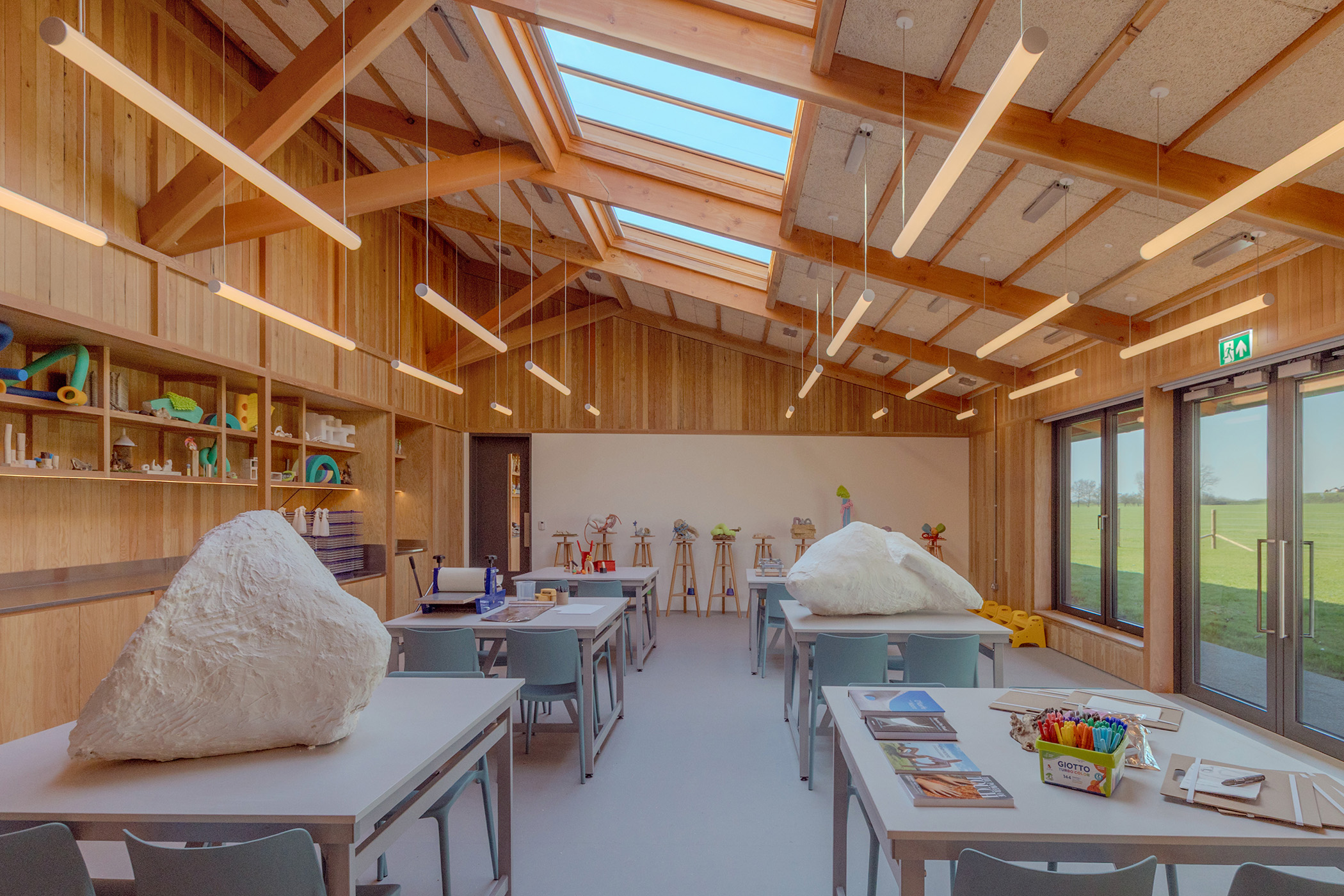
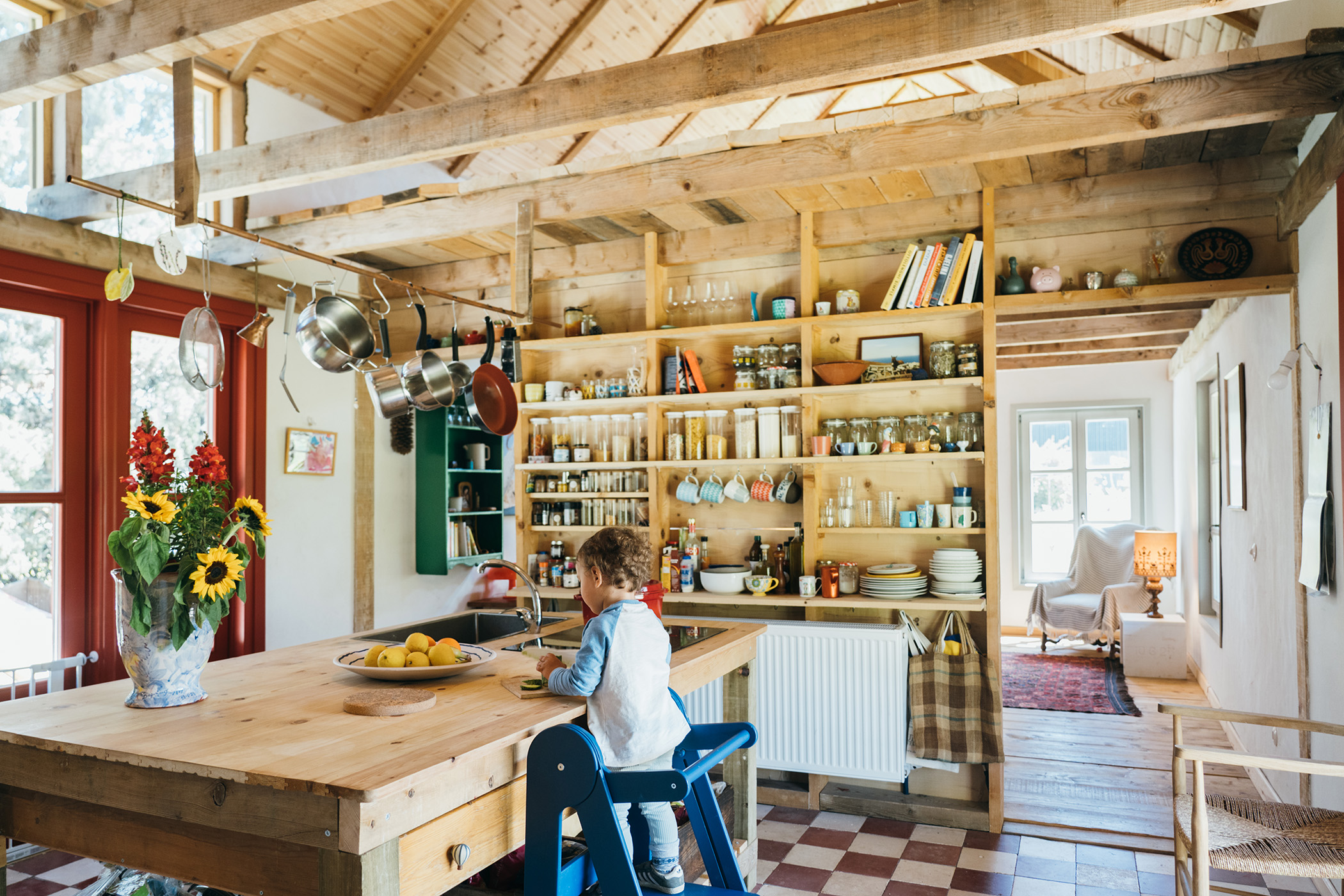
‘A makeover of a makeover’: one of the generous new rooms where children and adults can learn
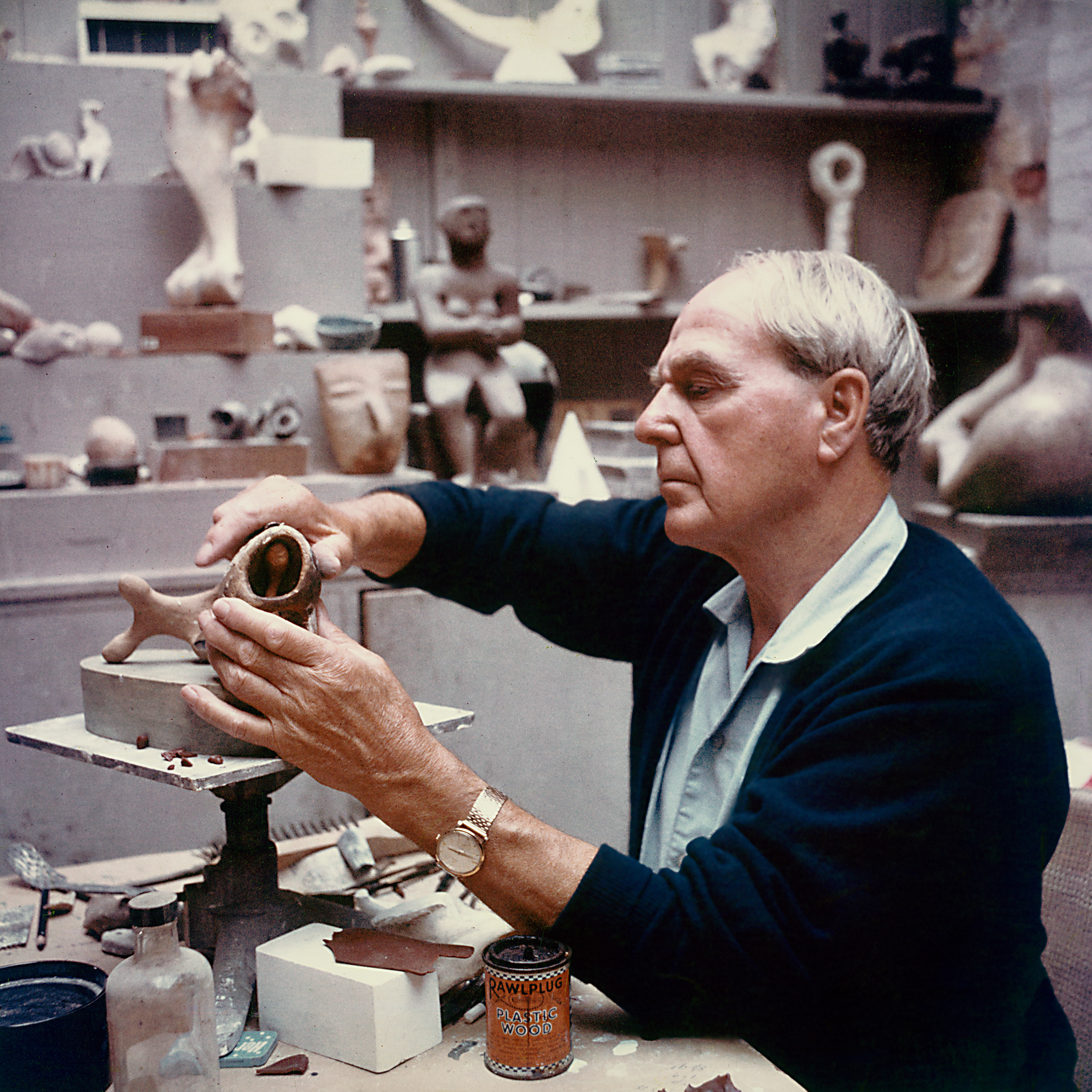
Moore working in his maquette studio in Perry Green, 1968
There’s another dimension to the project, which is its relationship to its surroundings. DSDHA’s portfolio includes not only buildings but also open spaces – they designed both the National Youth Theatre in north London and Exchange Square, which hovers above the tracks exiting Liverpool Street station. With Sheep Field Barn, they worked to make connections with the art, trees and hills around it, to consider it as part of the landscape as well as an architectural object. They opened up an area in front of the main entrance that allows you to look towards the horizon, and as you move about inside you catch views of sculptures framed by windows.
You can see straight ahead, as you enter, to the toplit white hall where a selection of sculptures from different stages of his life are exhibited. You can look upwards to a level with more gallery space, or right to the wood-lined education studios which in turn open up towards the landscape. These are warm, ample, calm rooms, with exposed roof structures, well equipped for making art. An overhanging section of roof provides shelter for working outside.
Your eye gets drawn, as you move about inside, to Large Reclining Figure, a nine-metre-long late work that presides over the scene from the skyline. Sheep Piece, a sturdy rounded composition beneath which the animals themselves usually like to shelter under, would occupy a vista from the interior, if it hadn’t been loaned to Kew Gardens for a big Henry Moore show coming up in May. Location, and the processes of making and finished objects, are nicely brought together.
The Sheep Field Barn doesn’t quite replicate the improvisatory spirit of the nearby sheds and farm buildings. It is too measured (as it has to be) for that, so it offers more an impression of the workaday than the real thing. It might indeed have benefited from a little more honest contrivance, more enjoyment of the fact it is a place for the public, for example by making what is a somewhat bare entrance more celebratory. But the studios are beautiful and, in making the building defer to the art, DSDHA did very much the right thing.
Newsletters
Choose the newsletters you want to receive
View more
For information about how The Observer protects your data, read our Privacy Policy
Photographs by ©Henry Moore Foundation/Rob Hill