David Kohn is an architect for whom form does not entirely follow function. His design of the recent Gradel Quadrangles at New College, Oxford, bends stone into molten expressionist shapes – gables, an arch, a tower, a bulbous and scaly metal roof – reminiscent of art nouveau. He designs, when the occasion allows, follies. He borrows from sometimes esoteric historical sources and mixes them up into previously unseen combinations. He does so with a certain measured calm, as if all this were the most ordinary thing in the world. Which in a way it is, as superfluity has always been a part of architecture.
So it is with a newly completed project for the faculty of architecture at Hasselt University, Belgium, designed in partnership with the Antwerp practice Bovenbouw Architectuur. At one level it is modest, the transformation and repair of historic buildings in a way that is level-headed, if with quirky touches. But it also features a 30-metre belvedere whose main purpose is to be seen and to see from, as well as a picturesque ruin formed out of a bombed church. There’s something refreshing about a project that exposes itself so fearlessly to value engineering: nothing could be more cuttable than the tower and the ruin, yet here they are – and they are essential to making the place what it is.
The site was originally a beguinage, a religious institution common in the Low Countries, where single women would live together without quite becoming nuns. It consists of a large, leafy courtyard formed by long and demurely charming terraces of the little houses where the beguines lived, built in the 18th century out of pinkish brick with pale stone trimmings. In the middle was the church, hit by misguided allied bombing in 1944.
On one side, there is a more modern institution, the Z33 art museum, with a refined recent expansion by the Italian architect Francesca Torzo. The complex is thus more public and less secluded than it was in the days of the beguines. It is also, beyond being a place for training architects, a civic and cultural centre for the city.
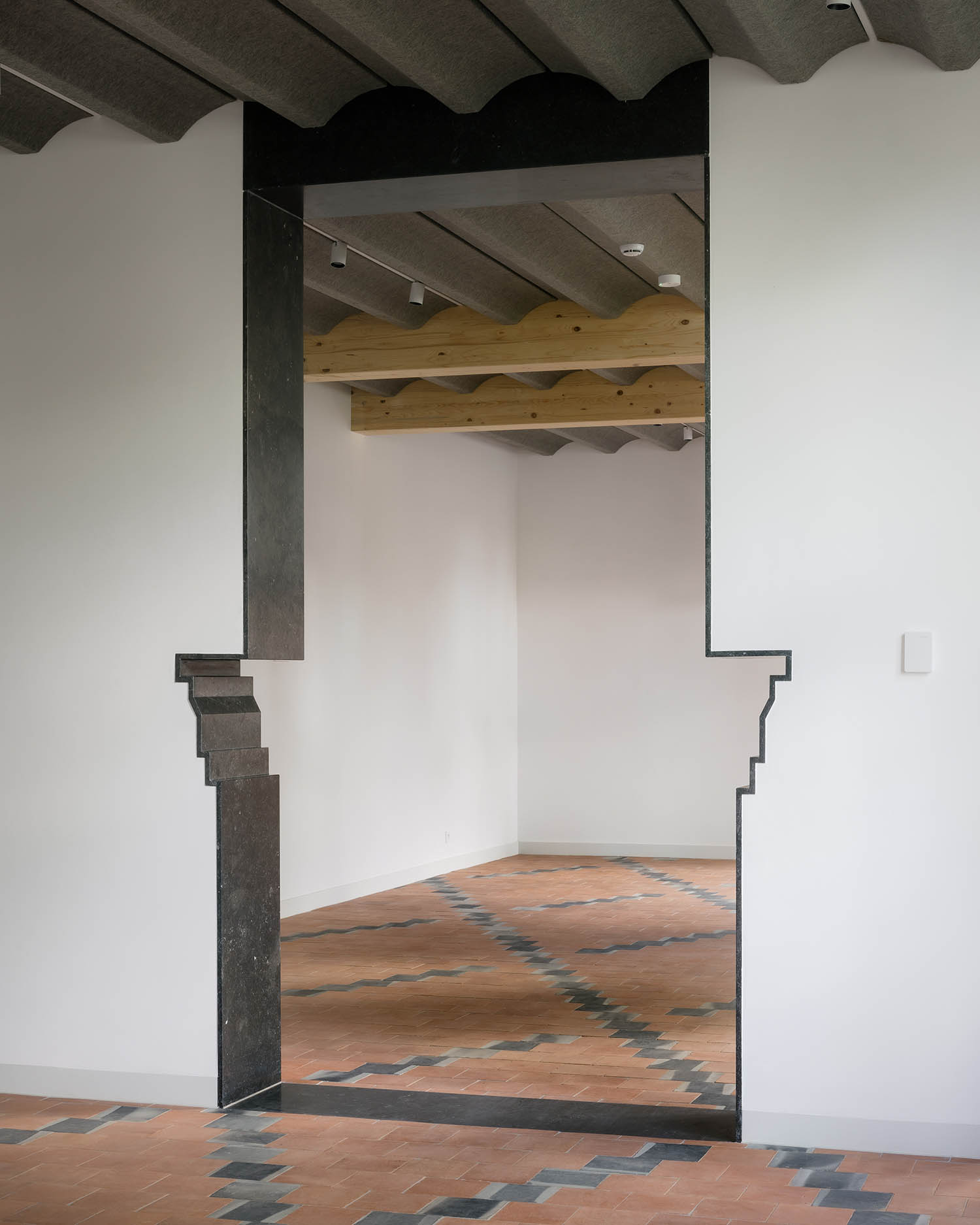
Inside the beguinage, a doorway now stands in place of an old mantelpiece
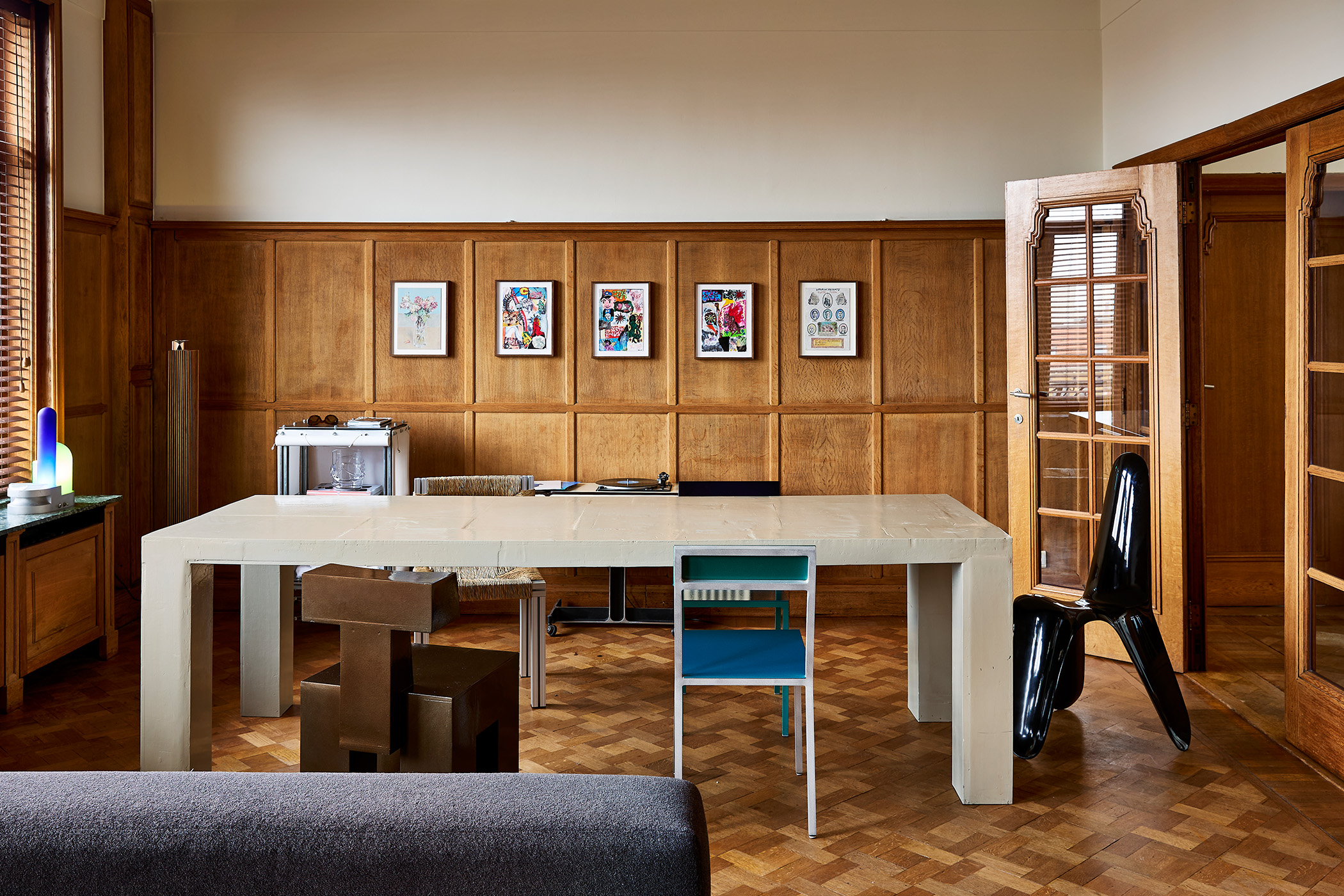
One part of the job was to turn the domestic, cellular, small-scale interiors into the more open spaces of an architecture school. Old materials were, wherever possible, reused and sympathetic new ones sourced locally. Here the idea was to make the building into a vehicle for teaching students how an old building might be creatively adapted, by making elegantly visible the repairs and alterations. The result, in the country of René Magritte, is a sort of subtle surrealism.
Pleasure is taken in the enigmatic cuts and angles with which fresh new timber is patched and filleted into the dark old stuff, and in the contrasts of grain and tone. Fireplaces become doorways, such that you walk through what would have been the hottest part, or else a chimney breast is replaced with the cutout silhouette of its former self, with the profiles of the mouldings of the ends of its mantelpiece making earlike excisions from the walls. Both old and new work pursue their own not entirely compatible logics, and the eccentricities that arise are relished.
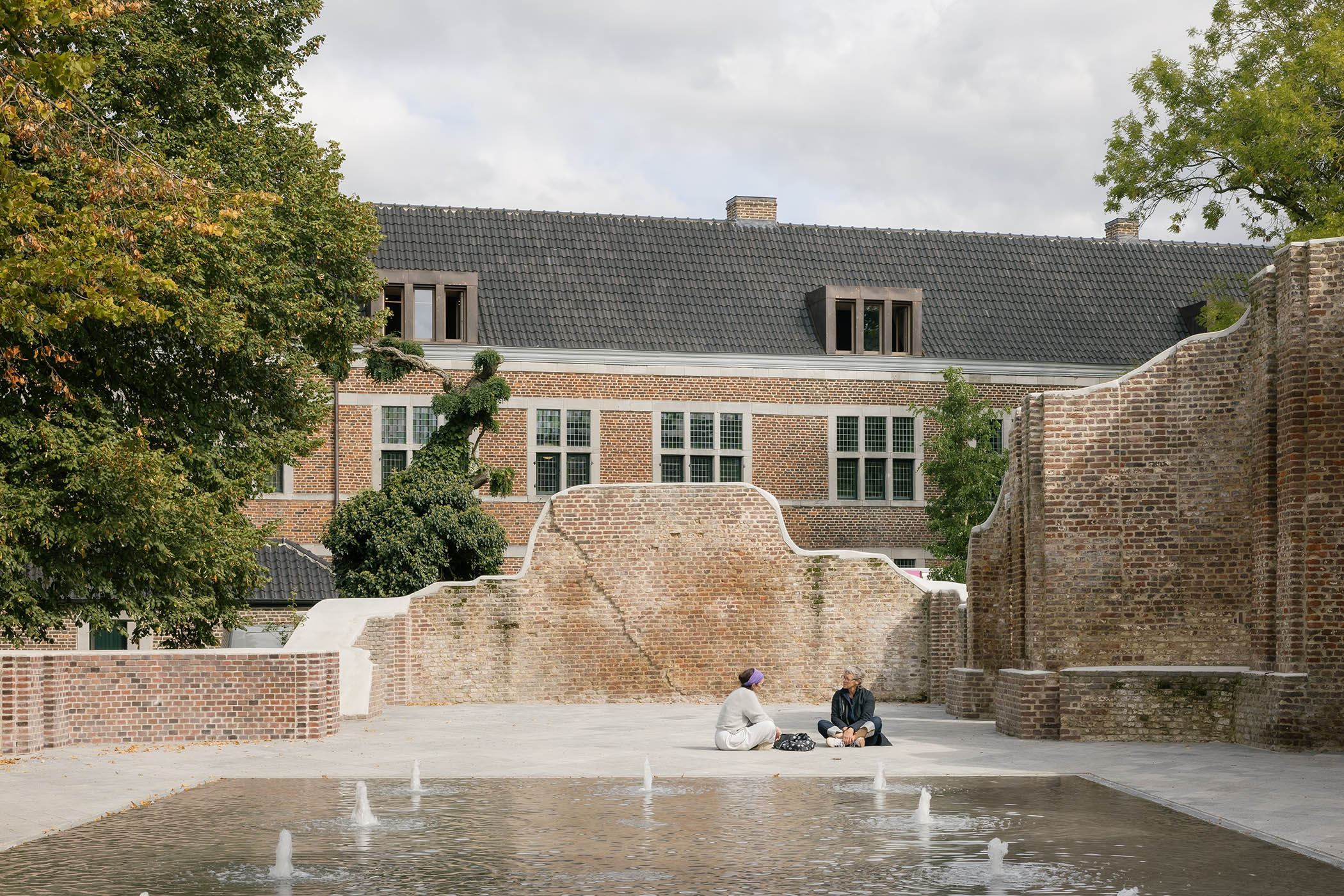
If the interiors are quiet, the exterior insertions are not. Here the task was to complete the site’s change in character into a cultural hub and what is, in the densely packed centre of Hasselt, the nearest it has to a park. So the church ruins are stabilised and tidied up and made into a paved outdoor room, with a pool in the middle that is sometimes animated by fountains, but can also be drained to allow events and performances to take place. A big circular opening, like one from a Chinese garden, makes a new entrance on one side, its confident geometry framing the happenstance of the city beyond.
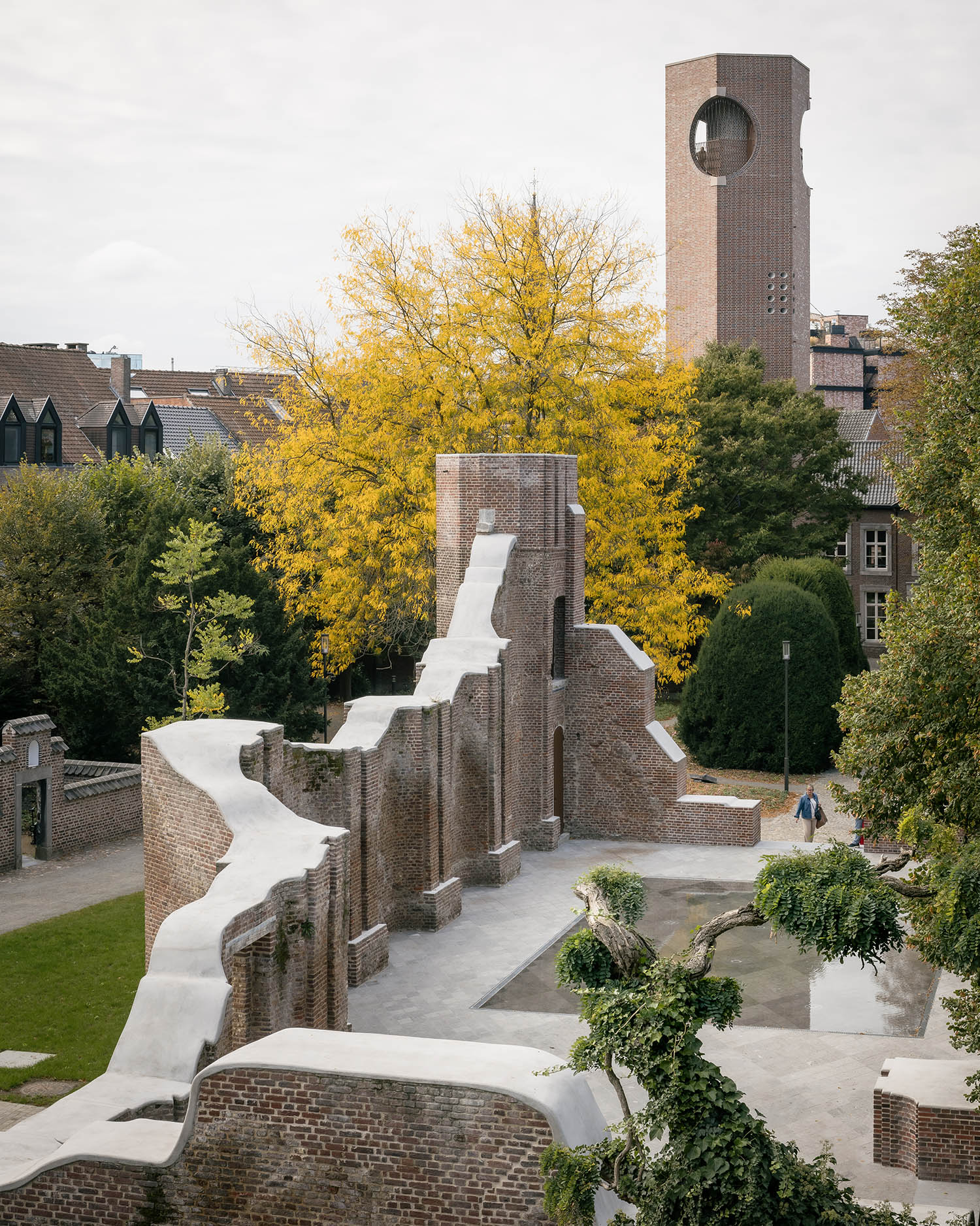
Then there is the tower, a work functionally speaking of pure redundancy, built in brick inside and outside to the same height as one that was once part of the church. It provides a viewing platform from which citizens can survey their city and creates a civic symbol; a statement of pride by the city and by the province of Limburg, which commissioned the project. It is, being a tower, direct and archetypal, but Kohn and Bovenbouw realise it with some obliqueness and mystery, a choice that is, in turn, part of a play of sophistication and ambiguity that runs through the whole site.
It is new and old, simple and complex, stable and fragile. “Non-architects,” says Kohn, “ask if the tower was always there, which I take to be a very nice compliment,” but it also has its own distinct personality. Its plan is a hexagon, a relatively unusual shape in architecture – also a touch inscrutable, as you’re not quite sure when you’ve seen all of it, or what is front and what back. There is a cylindrical lift shaft inside, with steps winding up the irregular space between the two shapes. The tower too has big circles, these ones at top and bottom, bent around the angles of walls. There are pepperings of smaller roundels on the shaft in between. Its shapes are childlike, as in infant games of pegs and holes, but their use is unexpected.
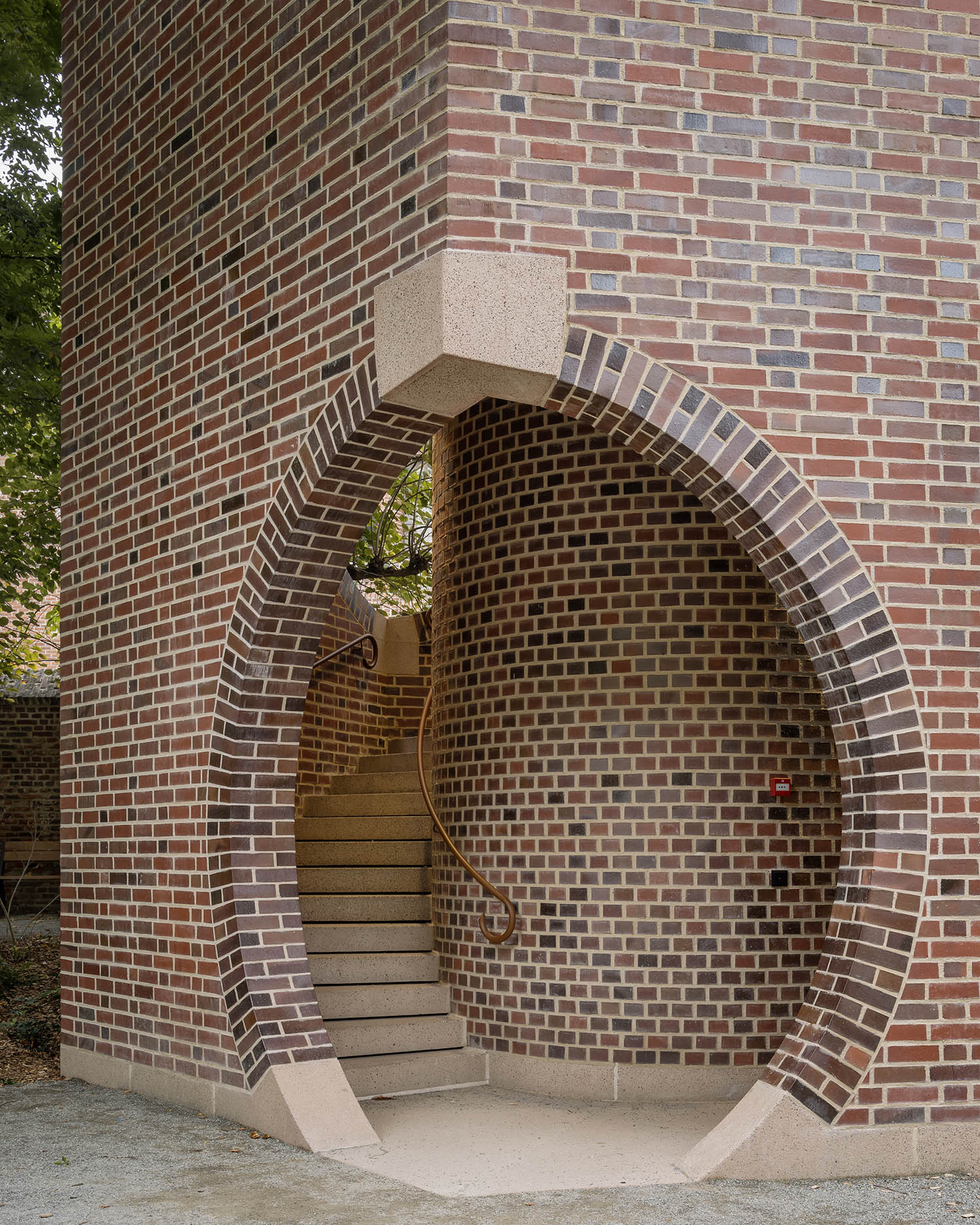
The opening to the tower is bent around the angles of walls
The fact that it is all made of one material gives it solidity, undercut by the placing of openings at corners, which is where you’d usually expect greatest strength. The outer layer, despite being made of brick, looks almost papery, while glimpses of the central cylinder restore a reassuring sense of gravity. The idea is to make it not too much like a castle, nor a church, even as it is suggestive of both. The tower’s location towards the edge of the site was a considered decision, such that it would belong both to the beguinage complex and also to the city beyond.
Newsletters
Choose the newsletters you want to receive
View more
For information about how The Observer protects your data, read our Privacy Policy
It is a work dealing with disparate conditions, from the tweaks to joinery and tile work inside the old houses to the city-wide gesture of the tower. It has layers of public and private, of past, present and future. It is what Dirk Somers of Bovenbouw calls “a subtle yet transformative rebalancing of the site”.
What holds it together is a consistent spirit, respectful of history but also insistent and mannered – the design doesn’t make everything smooth and easy. With its recurring cutouts and circles, the new work wants you to know it is there. This is architecture with a high degree of artfulness and craft, of a kind that you don’t often see.
Photographs by Stijn Bollaert