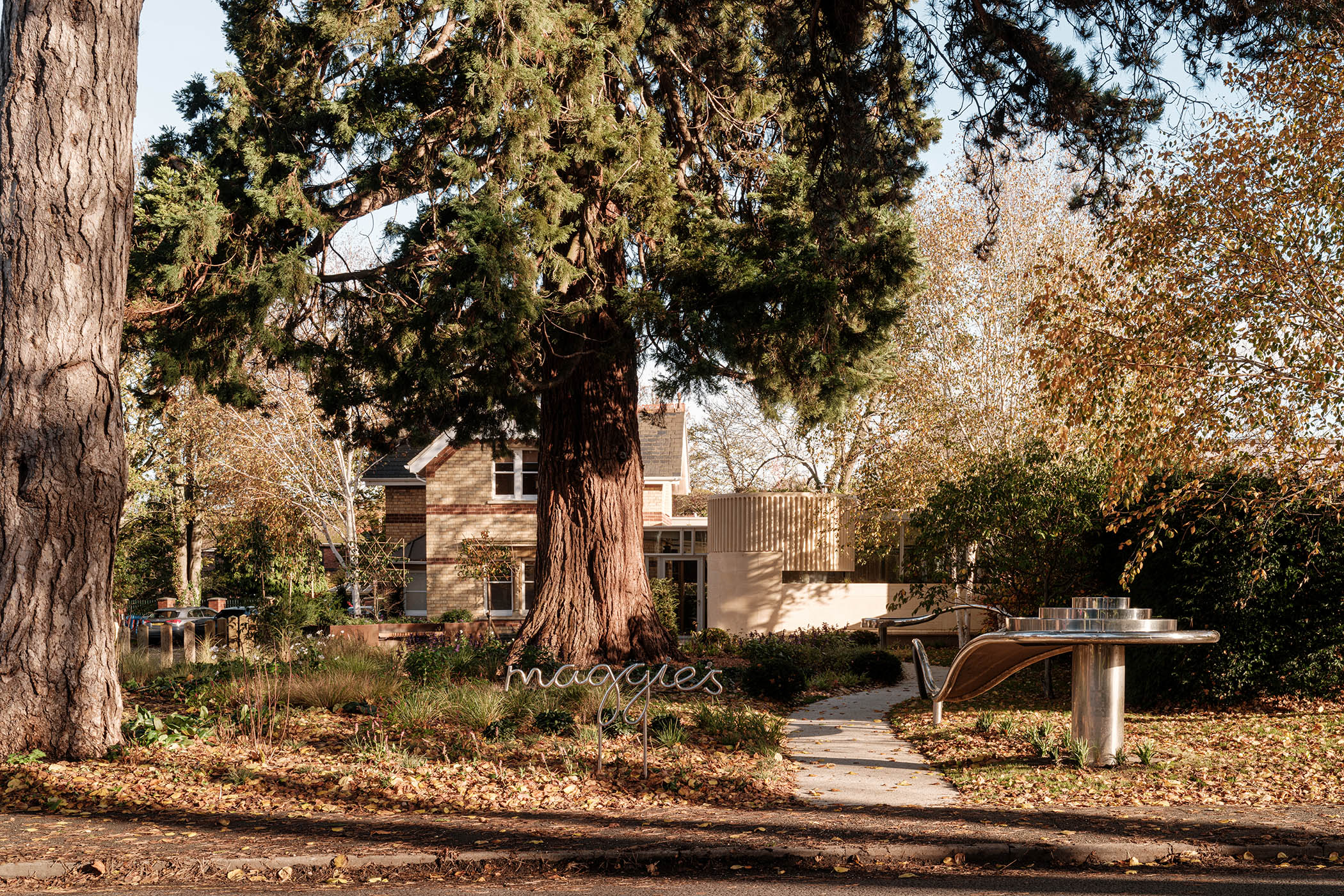
A path leads across a small garden and curves around a huge tree, a venerable Wellingtonia more imposing than any building. A squiggle of stainless steel with water flowing through it (usually, not today), by the sculptor William Pye, runs alongside. Ahead is a creamy stone half-cylinder, partly fluted like a fragment of a column of a vast temple, also echoing the trunk of the tree. A horizontal slit cuts across it, which makes it a touch forbidding, but glass walls on either side intimate an interior beyond. A long stone bench in front, populated in better weather, is another sign of life. To the left is a gabled two-storey Victorian lodge, in yellow brickwork with red stripes and white ornamental boarding, that forms part of the whole assembly.
This is the Maggie’s cancer centre in Cheltenham, one of 27 that have been built in the UK since the first opened in Edinburgh 30 years ago. Conceived by Maggie Keswick Jencks, a Scottish artist and garden designer who died of the disease in 1995, and by her husband, the architectural theorist Charles Jencks, the idea is to provide non-medical support to sufferers and their loved ones – advice, companionship, sympathy, therapies – in architecturally beautiful surroundings. To step on to that curving path, I’m told by the people who run the Cheltenham centre, is for many the first stage in coming to terms with having cancer.
Space flows between outside and in, at the same time that natural materials and soft colours create a sense of shelter
Space flows between outside and in, at the same time that natural materials and soft colours create a sense of shelter
The stone and glass structure is a sign of the concept’s success. It’s an extension to a centre that opened in 2010 that was quickly found to be too small to meet demand. The original was designed by Richard MacCormac, the architect of the £1bn rebuild of the BBC’s Broadcasting House, completed in 2011, albeit after a furious row about the dumbing down of his designs that saw him removed from the job. The Maggie’s extension is by Metropolitan Workshop, a practice founded by his former employees.
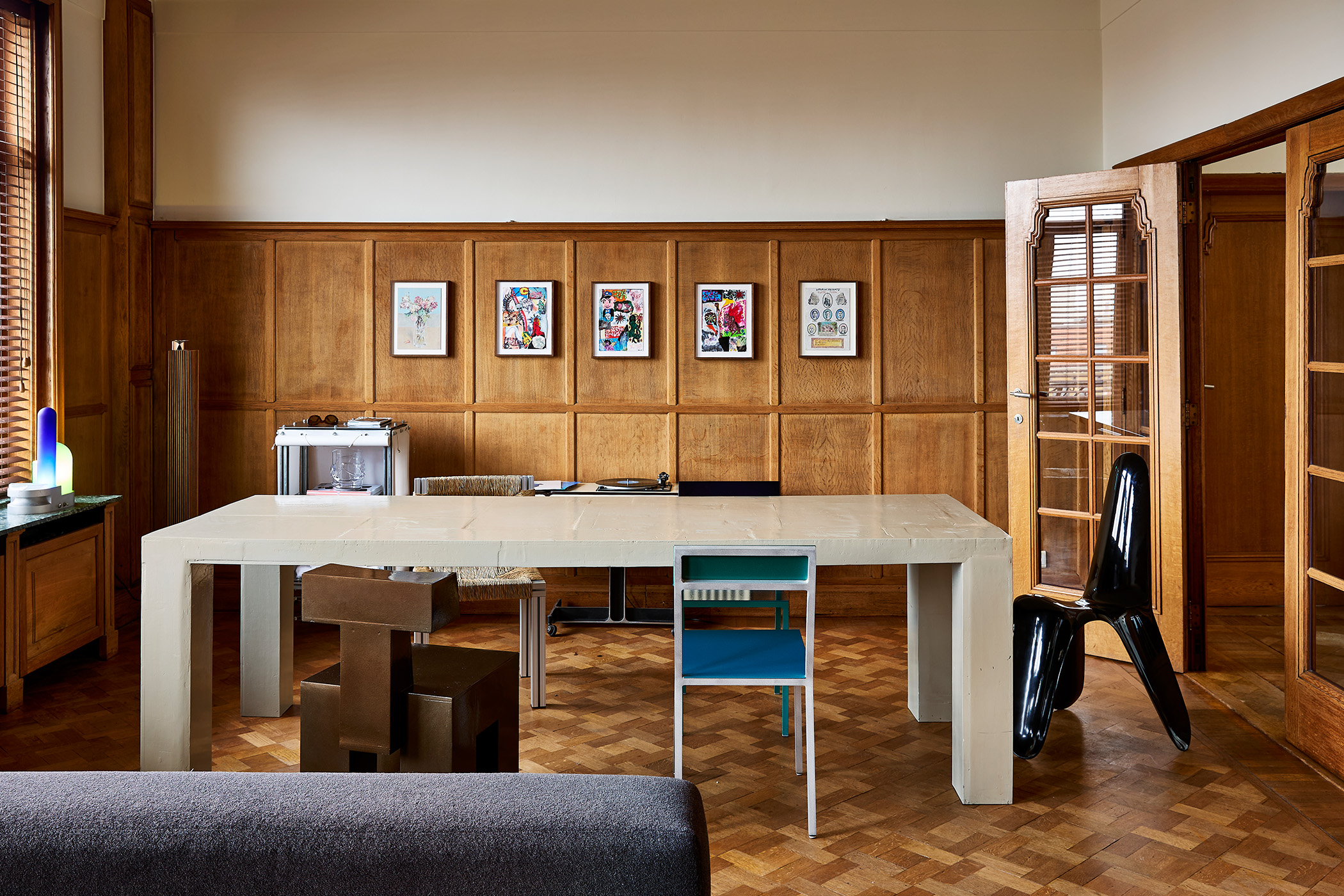
MacCormac, who died of cancer in 2014, was devoted to craft and detail. He was fascinated by the ways architects such as Frank Lloyd Wright and John Soane created layers of space, such that you simultaneously feel enclosed in an interior and conscious of worlds beyond it. His design for Cheltenham Maggie’s has this quality, with oak-framed niches and alcoves, shutters that can turn walls into screens, mirrors that make solid structure seem to dissolve, and glazing just beneath the ceiling so that the roof apparently floats.
Space flows between outside and in, at the same time that natural materials and soft colours create a sense of shelter. At times, with all its bespoke joinery, the building resembles a big piece of furniture; at others it feels like a miniaturised version of something monumental, with two steel beams fit to hold up a small bridge running along the ceiling. It gets a lot of architecture in.
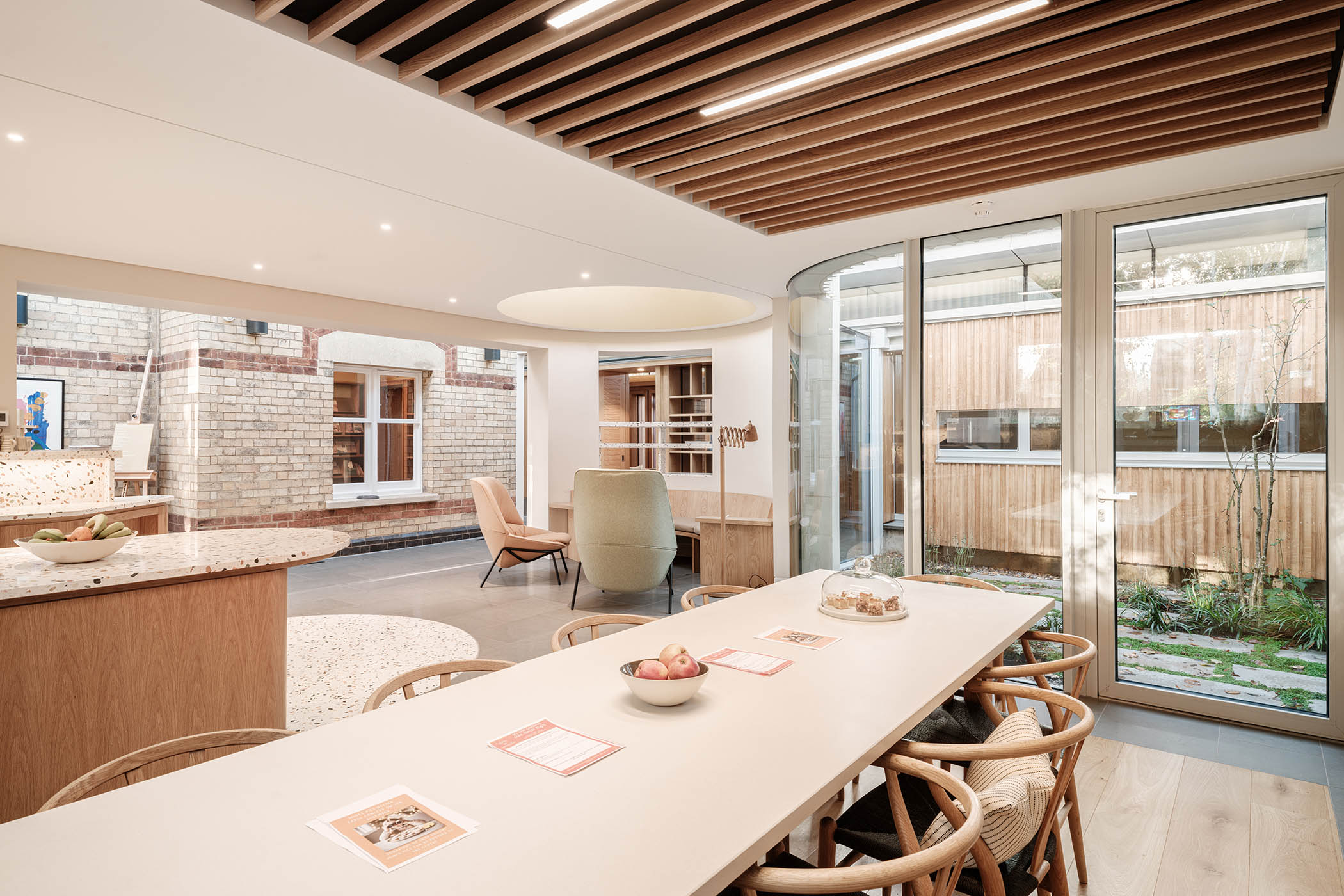
‘Natural materials and soft colours create a sense of shelter’: the new kitchen, main image, the Victorian lodge and imposing Wellingtonia
To this Metropolitan Workshop has added a welcoming room containing a kitchen and a group table, which are essential to Maggie’s centres. The new work is freer and less intricate, with curving walls in plaster and glass. The design is prompted partly by ideas MacCormac himself had for the extension before his death, which included more “organic” forms next to the largely right-angled structure he designed. A pocket garden sits between the extension and the older building.
It’s a touch more rambunctious than the original, with two big circular skylights perforating the ceiling. MacCormac’s tasteful palette of oak grey Tuscan sandstone is continued in the floors, but with the addition of worktops made of terrazzo with the tone and pattern of nougat. There’s more heft in the walls, their thickness emphasised by the deep openings made in them.
The totality is three solid structures – the Victorian lodge, MacCormac’s centre and the extension – with glass-roofed passages between them. There’s richness and complexity in a small area, unified by vistas through and across. Inside and outside overlap, and there are spaces for both private and shared experiences. Light enters from multiple directions and bounces off surfaces with different degrees of sheen. The interior unfolds by degrees, not showing itself all at once.
The Maggie’s centre concept is based on what should be an obvious truth that people facing serious illness, and their friends and families, benefit from doing so in calming and delightful surroundings. It’s also based on a more contestable theory, which is that the best way to achieve such surroundings is to employ architects famous for iconic art museums, concert halls and skyscrapers. Some of the biggest names in recent architecture have designed the centres – Richard Rogers, Zaha Hadid, Norman Foster, Frank Gehry, Daniel Libeskind – and while some quietened their vision down enough to suit the brief, others set their stylistic megaphones a few notches too high.
The basic requirements of a Maggie’s centre could be met by well-lit rooms with good finishes and furniture, views, well-made windows, thoughtful proportions and an intelligently planned array of spaces. The Cheltenham edition offers all these, plus a level of architectural art that is all to the good. This hybrid work of two generations of architects is a convincing fulfilment of the original dream.
Newsletters
Choose the newsletters you want to receive
View more
For information about how The Observer protects your data, read our Privacy Policy
Photographs by Fred Howarth