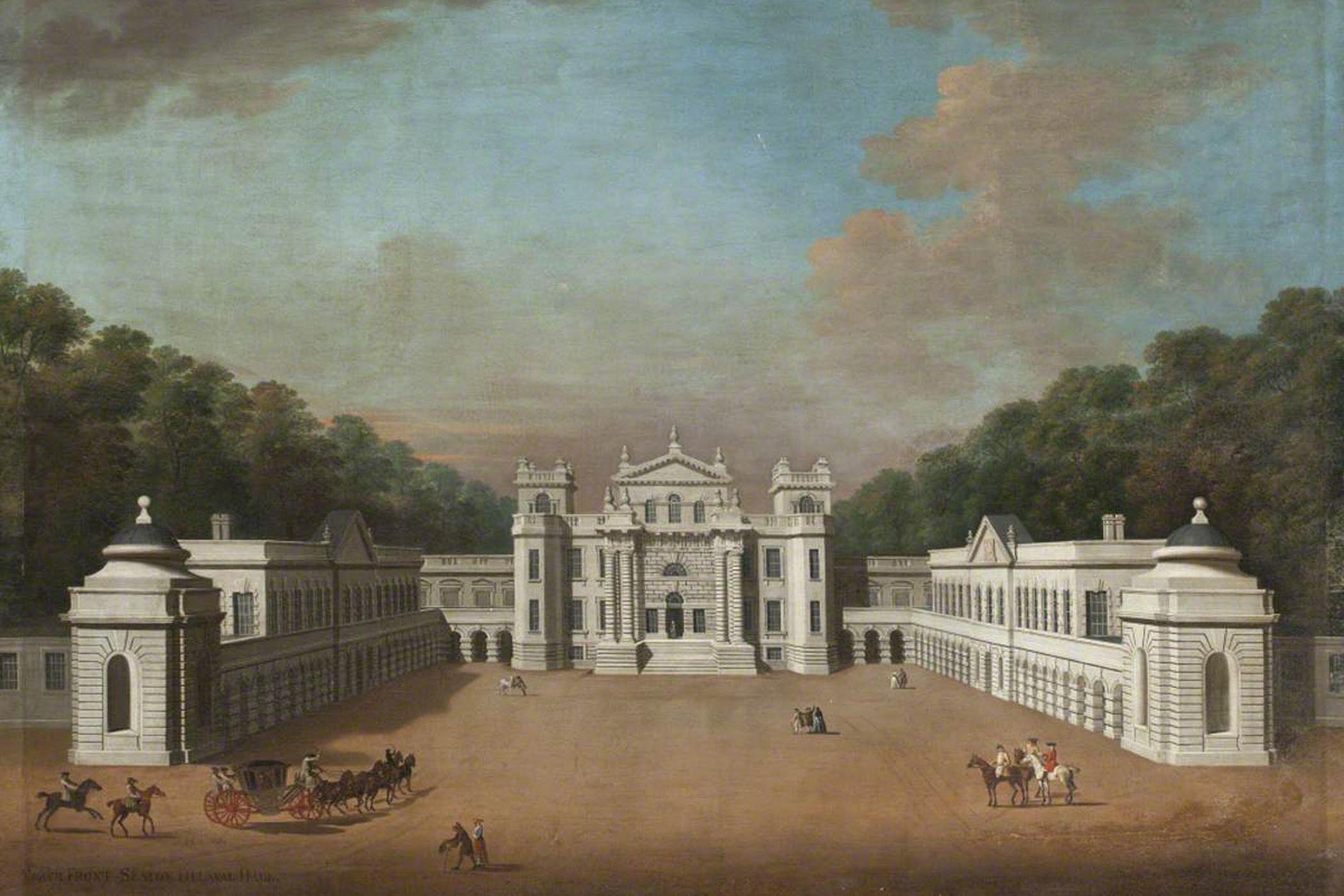

Near the coast of Northumberland, north of Newcastle in ex-coal country, stands a fire-blackened pile. It is a castle made with classical elements, with oversized Doric columns playing the part of towers, while rustication – deep-jointed stonework – climbs up the facade. Motifs nurtured in Italy find themselves enlisted, like Roman legions on Hadrian’s Wall, to serve under a northern sky. The design is centripetal and centrifugal at once, its elevations stretching and compressing and thrusting upwards and sideways, before they finish in a silhouette of turrets, chimneys and pediments. The building is petite as stately homes go, but brooding and pugnacious. It is a storm in stone.
This is Seaton Delaval Hall, designed in 1718, the last and most brilliant work of John Vanbrugh. Before becoming an architect, he was a playwright, and it’s easy to see something theatrical in his advancing and receding forms, in his architecture of contrasts and surprises, and in the ways he runs stairs and galleries behind big arches such that their users appear and disappear like actors. His buildings, along with the statues and pillars that populate them, are characters. “The Shakespeare of architects,” John Soane called him, about a century later.
On 26 March it will be the 300th anniversary of Vanbrugh’s death. It is marked with an exhibition at the museum that Soane built in London, curated by the historian and former museum director Charles Saumarez Smith and the architect Roz Barr. There will be events and shows at six of the houses Vanbrugh designed, including Castle Howard in North Yorkshire and Blenheim Palace in Oxfordshire. Saumarez Smith has also written a book about him that draws on letters and drawings to describe him more vividly than ever before. All of which, as someone who could mobilise stone and space like few others, he richly deserves. For sheer invention and for the emotional range of his masonry, he is almost peerless.
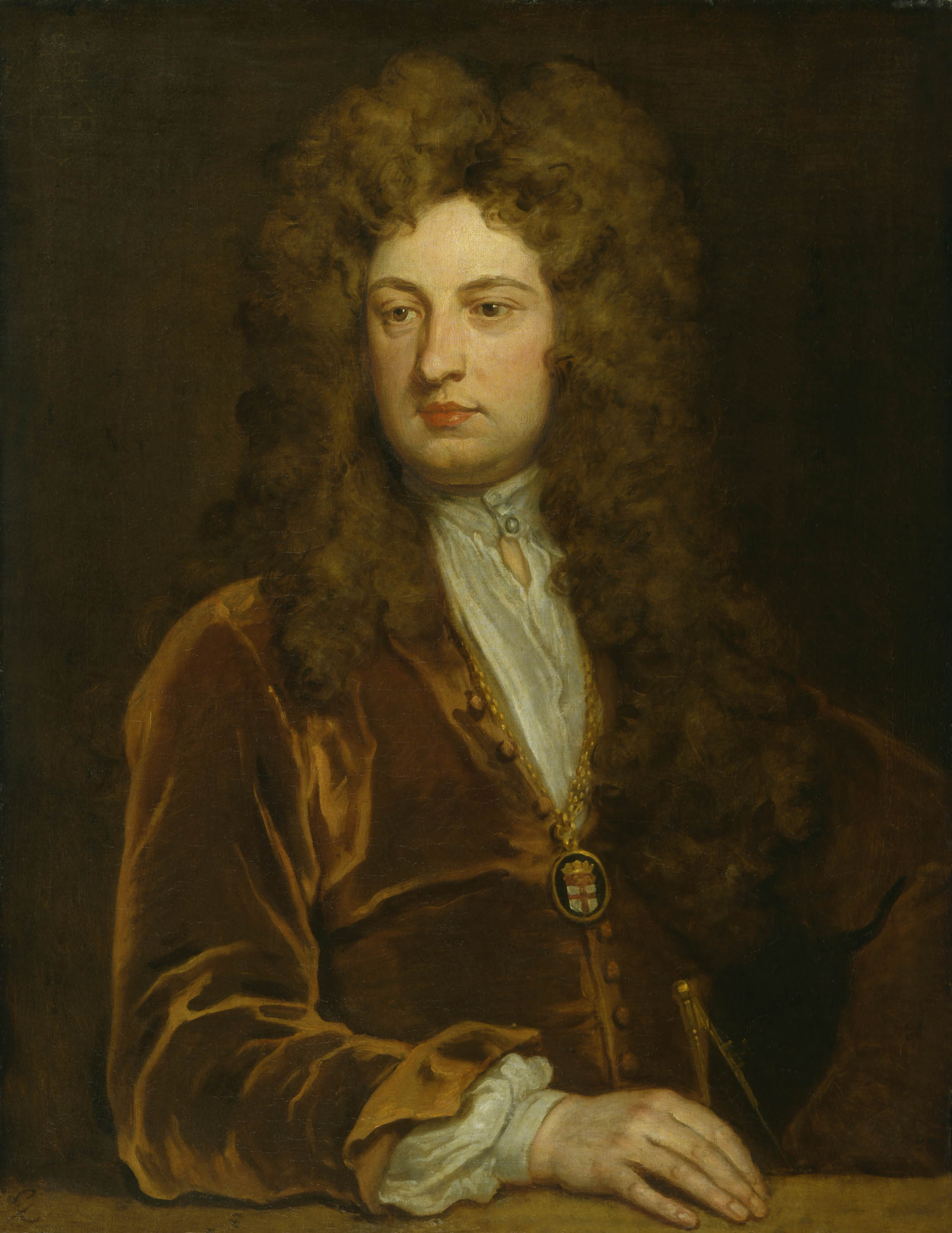
John Vanbrugh, inset, painted in c1705. Main image: the north entrance of Seaton Delaval Hall, left, painted by Arthur Pond
Vanbrugh’s life was as adventurous as his works. He was one of 19 children, born to a mother with aristocratic connections and a cloth-trader father of immigrant Flemish descent. He travelled to Surat in India, with a view to building a career in business there, but rapidly returned. He had stints as a soldier and a sailor, and spent four years in French prisons, including the Bastille, on suspicion of being a spy. He wrote comedies that championed, relative to the standards of the time, the freedoms of women. He was a theatrical impresario who launched the building of the theatre in London’s Haymarket where Handel’s operas would later be staged. He also, bizarrely, landed a senior post as a herald at the College of Arms, for which he had almost no qualifications or experience. He formed part of a delegation to Germany that helped establish the Hanoverian dynasty as the future monarchs of England.
And, “without thought or lecture”, as Jonathan Swift put it, he turned to architecture. His first commission seems to have been the sumptuous stately home of Castle Howard, and his first completed work was a house for himself built amid the ruins of the recently burned-out Whitehall Palace. He tried out enough careers for several lifetimes – businessman, soldier, sailor, (alleged) spy, convict, writer, producer, herald, architect – before the age of 40. He then won the commission to design Blenheim Palace, in Woodstock, the grandest house ever built in this country.
It’s unfortunate that his most famous work – Blenheim – is also his most problematic. It was built as a token of national gratitude to the 1st Duke of Marlborough for his victory in the battle of the same name over French-led armies, and its functions as a monument and as a home were in conflict from the start. The duke’s strong-willed wife Sarah (whose tumultuous friendship with Queen Anne is the basis of the 2018 film The Favourite), fought with Vanbrugh over the clash between his architectural ambition and her wish for something more domestic, until she fired him and barred him from the building. The palace has too often been a misery machine for those who live there: in 1895, for example, the high costs of maintaining its inhospitable fabric motivated the notoriously unhappy marriage of the 9th Duke to the American heiress Consuelo Vanderbilt.
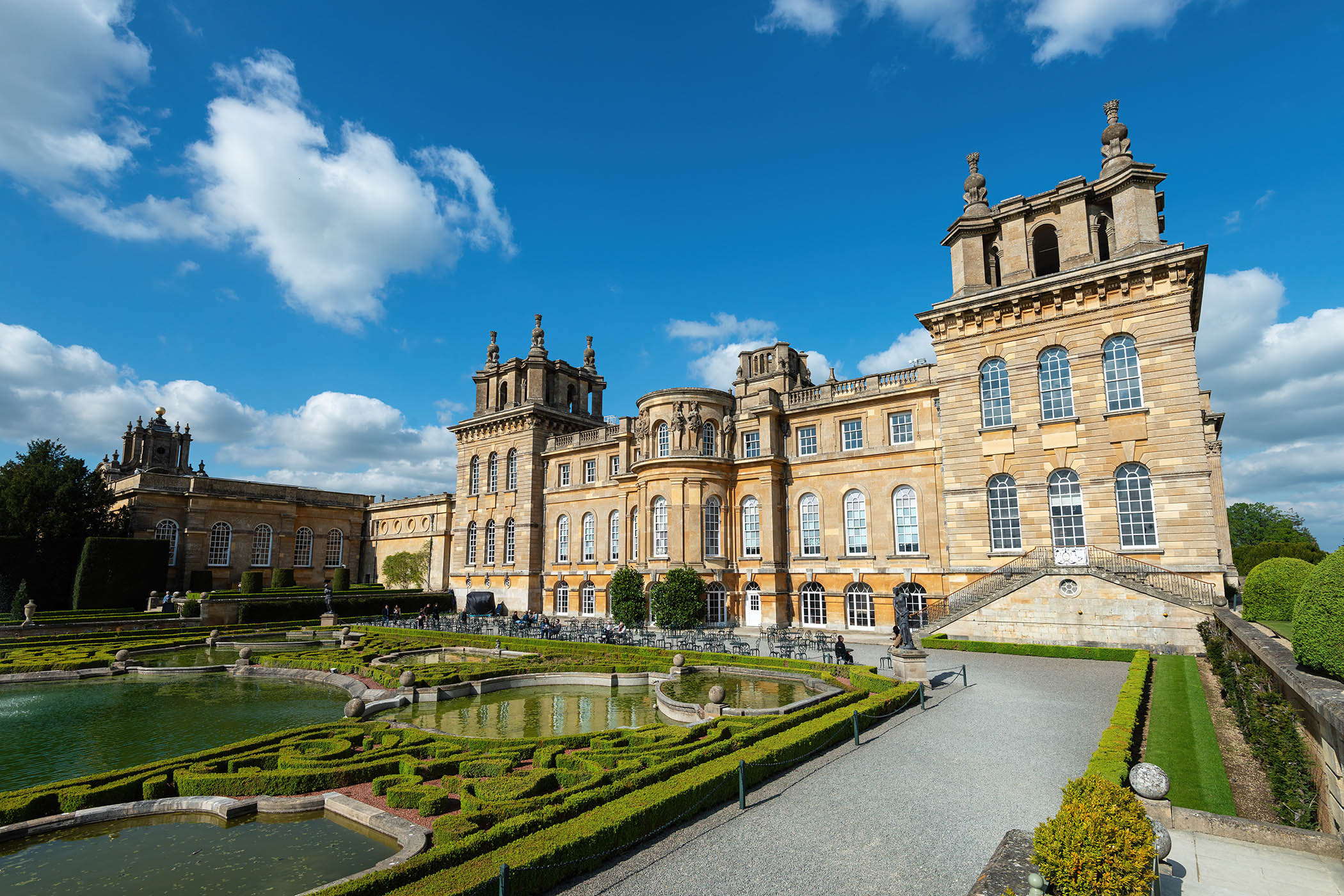
The classical gardens at Blenheim Palace in Woodstock
There’s something magnificent about the way that the building’s architectural manoeuvres are orchestrated at a colossal scale, and it has breathtaking moments – a water tower-cum-gateway of ancient Egyptian force, for example. A film clip in the Sir John Soane’s Museum shows the great Philadelphia-based architects Robert Venturi and Denise Scott Brown delighting in the “complexity of rhythm” of this “beautifully weird” building. But you can also see Voltaire’s point when he called it “a great heap of stone, without charm or taste”.
Castle Howard, while still huge, is a lighter, happier place. It also helps to look beyond Vanbrugh’s grandest works to understand the breadth of his imagination. He designed make-believe castles decades before this idea became fashionable, including a house for himself in Greenwich that presents a broad, high, battlemented facade – a kind of stage set – to the approaching visitor. He shaped landscapes as well as buildings, and distributed pyramids, temples and follies about the grounds of stately homes. At Grimsthorpe Castle, a country house in Lincolnshire, he plays with your perception of depth and distance, by designing windows, arches and columns that are in different places too big and too small.
His preferred registers were robust, dynamic and elemental – he liked to sketch smoking chimneys on his energetic drawings and carve deeply into the mass of his buildings’ walls – but he could also do grace, as with the Ionic porticoes on the garden front of Seaton Delaval Hall or on the Palladian Temple of the Four Winds at Castle Howard. He looked both back and forwards in time. He evoked Egypt, Rome, medieval castles and Tudor palaces. You could now call his work picturesque and sublime – words not applied to architecture while he was still alive. His buildings also tended to have eventful afterlives. Eastbury Park, a large house in Dorset, was blown up with gunpowder, leaving a stone arch with trees growing out of its top. Seaton Delaval caught fire in 1822 and, though its roof was reinstated, the house was never fully restored. It is now a shell inhabited by charred and amputated statues.
Vanbrugh was, to be sure, a creature of entitlement and privilege, brazen about exploiting his family connections. He owed much of his success to aristocratic friends at the Kit-Cat Club, something not wholly unlike Oxford University’s infamous Bullingdon. His optimistic approach to finance brought the Haymarket theatre project close to catastrophe. His designs, sometimes light on detail, required skilful collaborators for their realisation, including Nicholas Hawksmoor, a great architect in his own right. There’s a fine line, in some of his work, between originality and clumsiness. But he used his luck well. He was, in his architecture and his writing, free – from convention, expectation and inhibition.
Newsletters
Choose the newsletters you want to receive
View more
For information about how The Observer protects your data, read our Privacy Policy
If he mixed up architectural styles in ways that have driven historians to look for deep meanings, it was because he could. He was serious and fanciful at the same time. Playing was, for him, the thing.
Vanbrugh: The Drama of Architecture is at Sir John Soane’s Museum, London WC2; until 28 June
Photographs by National Portrait Gallery/Getty/Alamy