
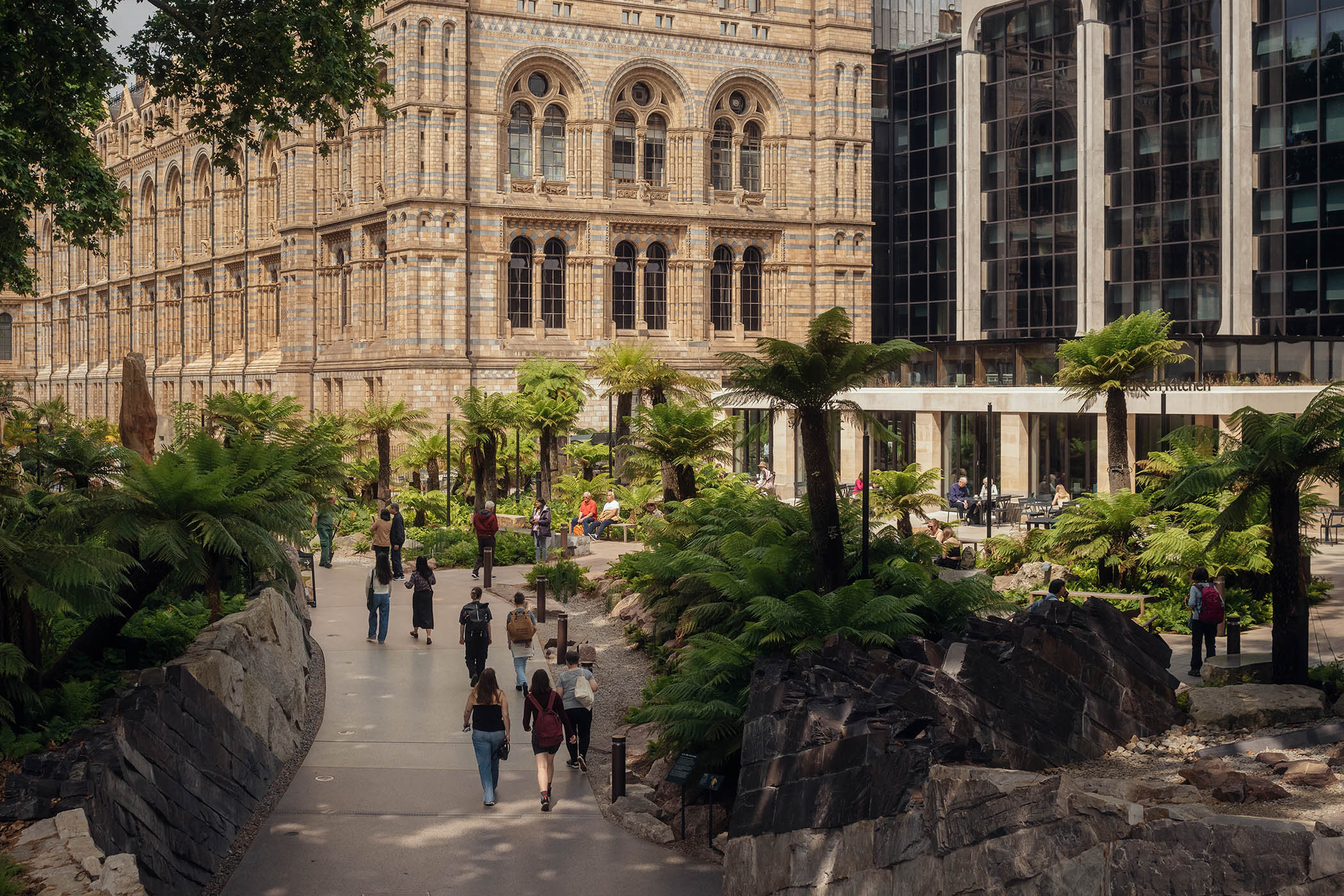
Next to the Victoria Embankment in Westminster, at the point where the hidden River Tyburn meets the Thames, sandbags cast in bronze are scattered about pristine new terraces. These terraces surmount a hidden concrete shaft falling to the Thames Tideway Tunnel, the £4.6bn, 15.5-mile, 7m wide “supersewer” built to stop London’s Victorian sewage system from overflowing in heavy rains. The bags are so plausible and so casual that one operative sent a concerned email to headquarters, complaining that they hadn’t been taken away. You can sit or climb on them if you like, look at them or ignore them.
On the other side of the river, a little upstream, in front of the MI6 headquarters, there’s another platform where another hidden river, the Effra, discharges. Here are more bronzes, this time large versions of Victorian toilet pans, as once made in the nearby Royal Doulton factory. Some stand alone, some are fused together. Like the sandbags, they are beautifully made by the Lockbund Sculpture Foundry, to the designs of Richard Wentworth, an artist intrigued by hidden lives. They are proffered in all seriousness, if with a little mischief, as tributes to what he believes are one of the transformative inventions of the 19th century.
The sculptures are part of a programme of public spaces formed on top of the tunnel’s necessary constructions – ventilation shafts, interceptors that join outlets near the surface to the deep sewer. The project is commissioned by Tideway, the company delivering the tunnel, led by their chief architect Clare Donnelly, and advised by the public art consultant Bridget Sawyers. It is, if you like, a modern version of the gardens and trees, and dolphin-wrapped lampposts and lion-faced mooring rings with which Joseph Bazalgette, legendary engineer of the original sewage system, made his embankments civic.
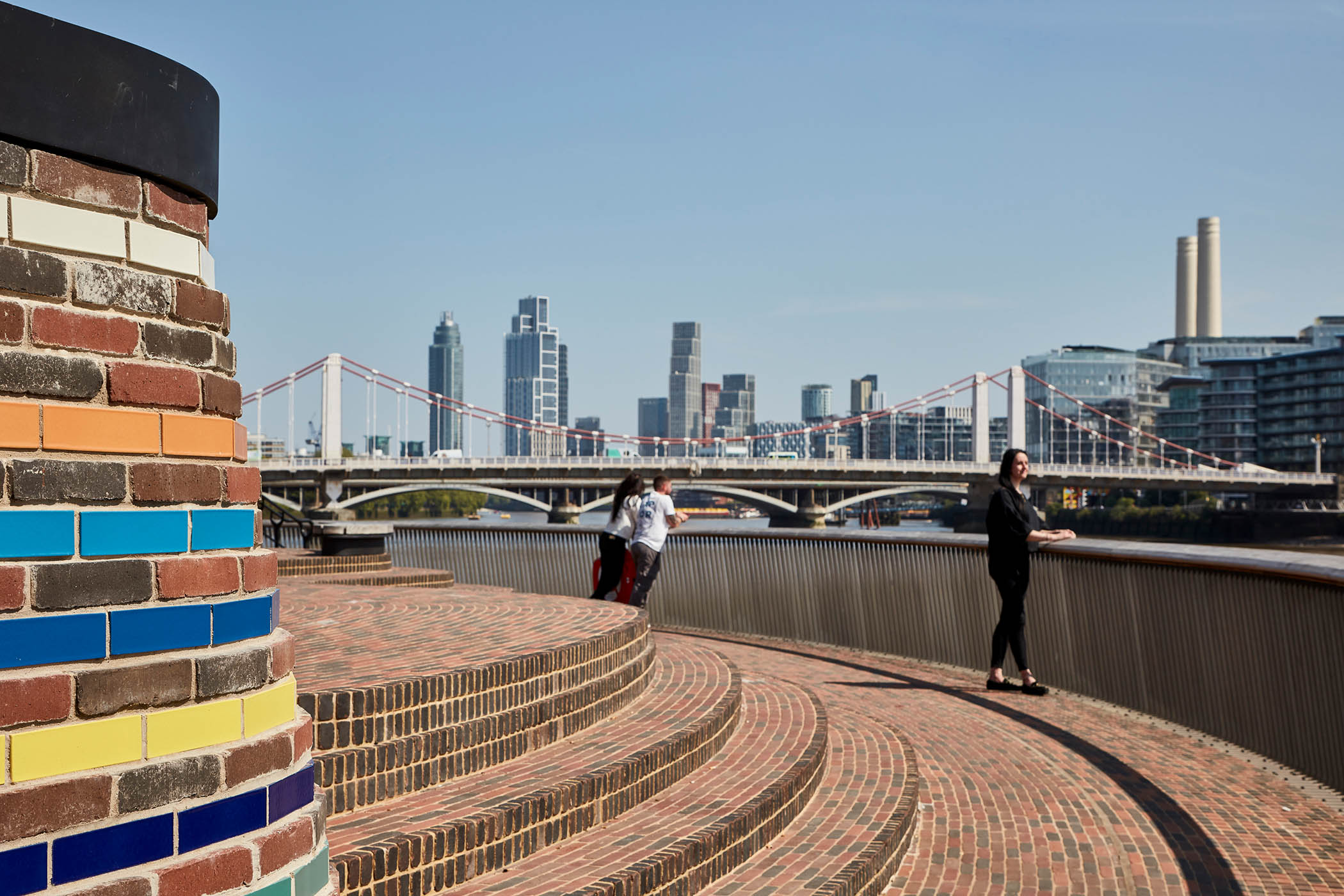
Sculptures at Chelsea Embankment Foreshore. Main image: Florian Roithmayr’s Moving In
The Thames has long been an object of desire for architects and planners, a body of water on which to project fantasies of new islands, piers, inhabited bridges, a garden bridge, a floating lido, floating parks. The Tideway’s new spaces, driven by function as much as vision, make some version of these ideas real. You can walk on to new projections formed over what was water, get away from busy roads, sit or stroll amid art and greenery and enjoy the experience of being on the river rather than by it. You can look upstream and downstream as well as across, and feel a kind of intimacy with the waves and currents, or watch the high tides wash over the lower levels of paving.
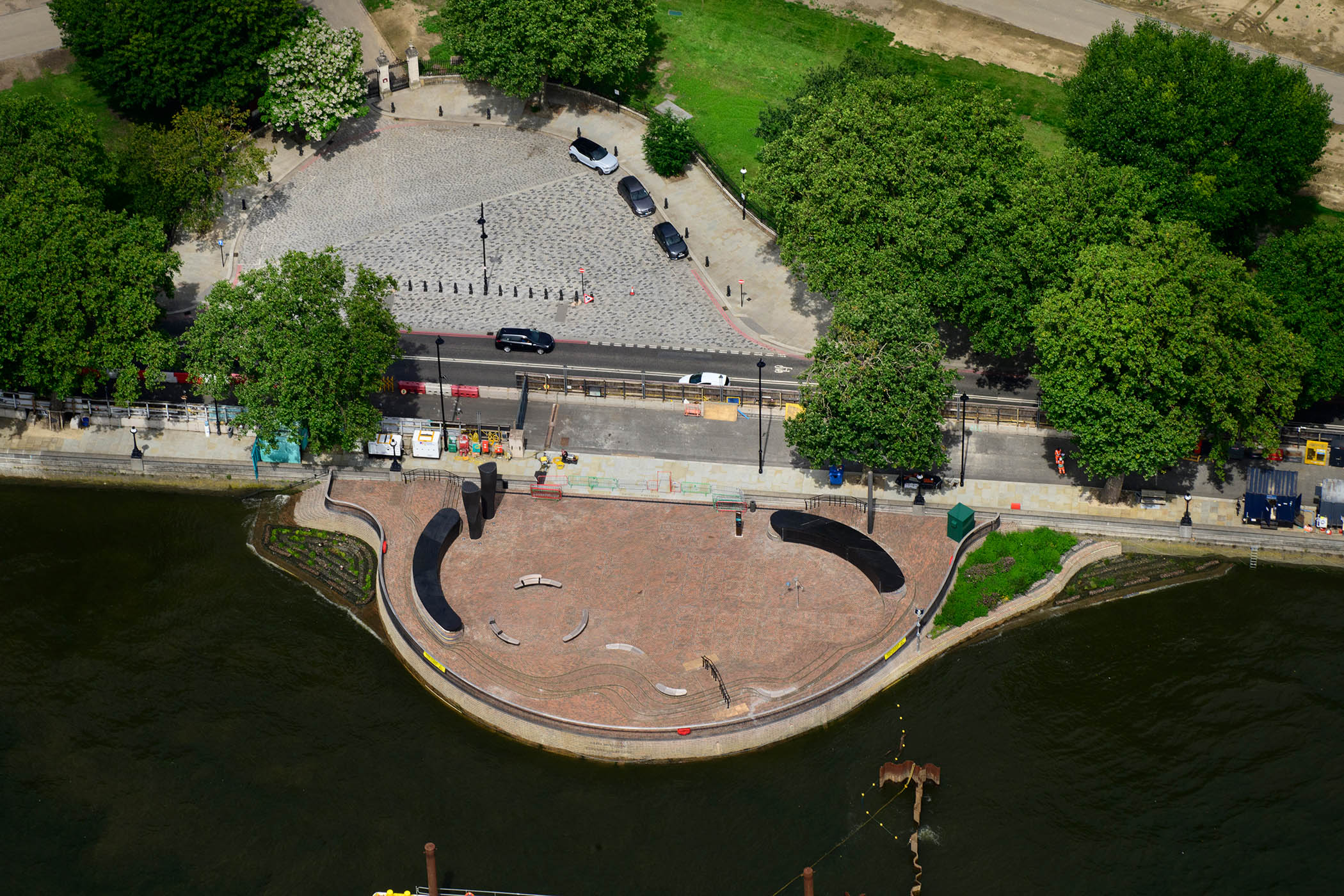
The biggest of these is a new park on Bazalgette Embankment, on the north side of the river next to Blackfriars Bridge, a short distance from St Paul’s Cathedral. Here the Fleet, another hidden river that has long served as a sewer, is diverted into a 100m culvert before discharging into a concrete shaft that descends 50m to the new tunnel below. This sanitary Niagara is encased in an artificial peninsula that extends the old embankment into the water.
You can look upstream, downstream and across, feeling an intimacy with the waves and currents
You can look upstream, downstream and across, feeling an intimacy with the waves and currents
You don’t immediately sense the turmoil under your feet. The space, designed by the architects Hawkins\Brown and the landscape architects Gillespies, is tranquil, with sheltered places to sit, screened from traffic noise. Ramps and paths weave between small trees and shrubs. On the radiant recent day when the Bazalgette Embankment first opened to the public, it was happily taken over by joggers and office workers, by book readers and sandwich eaters, as if it had always been there.
Amid this normality stands a henge of upright monoliths in almost-black concrete, given the shine of fresh tarmac with the help of anti-graffiti paint, scored and ribbed with enigmatic lines, one of them with a slow fall of water (albeit waiting to be switched on) down its concave surface. These palaeolithic-industrial slabs constitute Nathan Coley’s Stages, an installation intended to “reference the hidden yet heroic engineering” of the system underneath. They connect near and distant, large and small, being placed around the site to frame views and echo the City’s office towers. They catch angles of light and shade. At the same time, they unbend to the scale of the human body, providing places to sit and possibly perform.
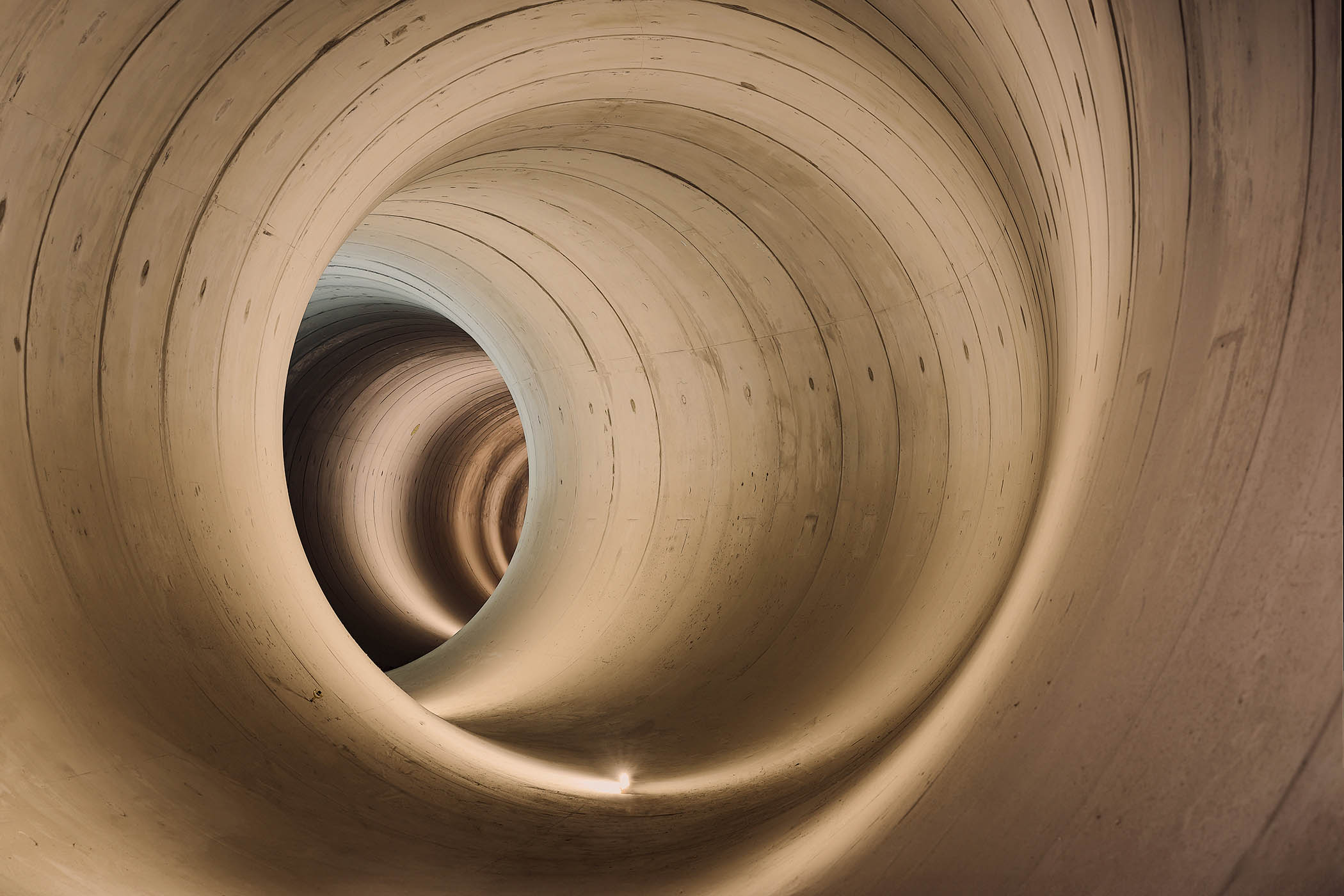
‘A piece of engineering that is a thing of wonder in both construction and use’: the Thames Tideway Tunnel
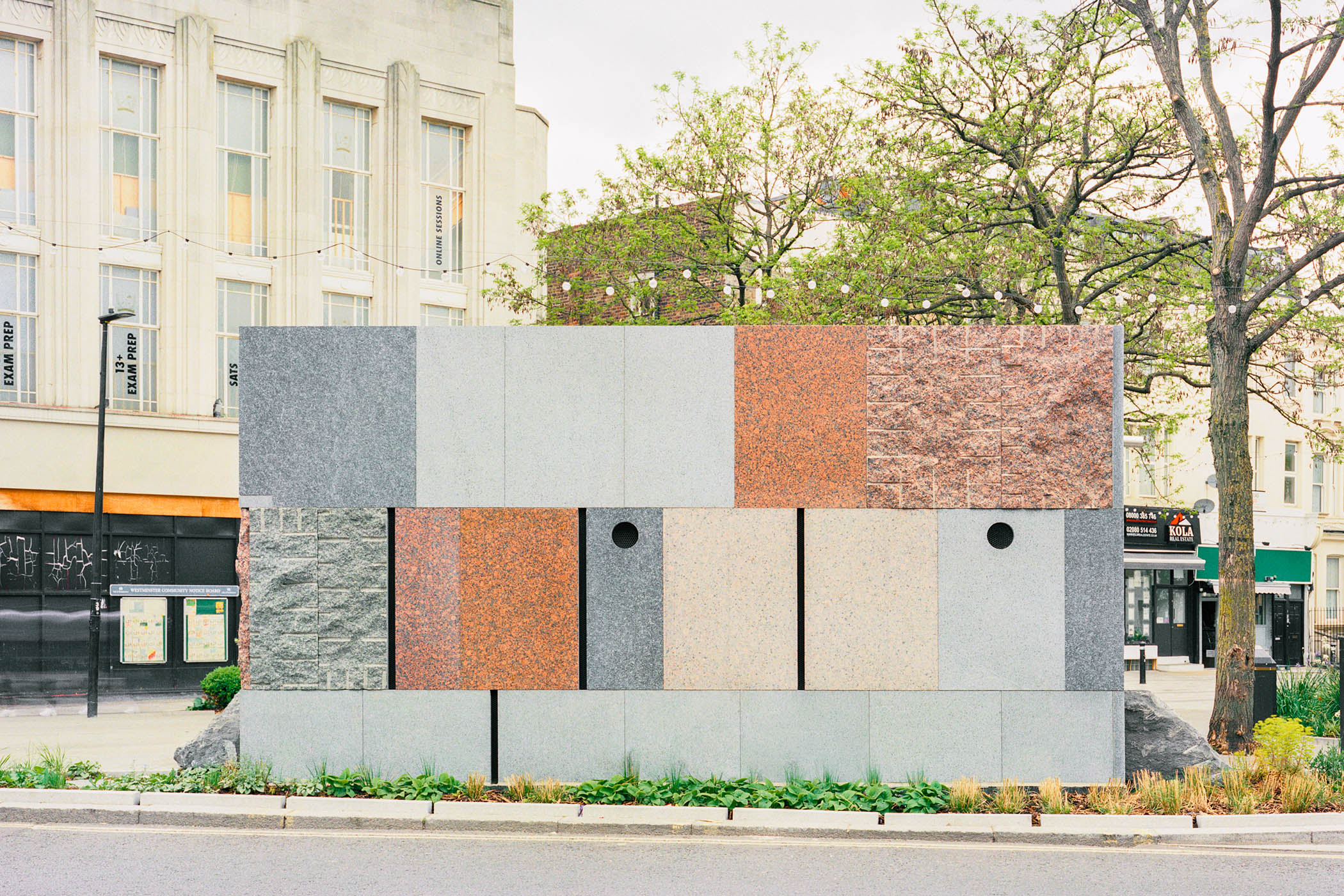
There are 17 other sites with permanent artwork, stretching from Acton in the west to Deptford in the east. Some , as at Blackfriars, are interceptors, places where an old river-turned-sewer empties in the new system. Some are a little way inland, works sites made into pieces of park. They include Florian Roithmayr’s Moving In, placed in front of Christopher Wren’s Royal Hospital Chelsea, a piece of contoured brickwork that seems to grow out of the Thames mud, its reddish-brown colour enriched with seams of brightly coloured glaze at its upper levels. At Surrey Quays in south-east London, Lubna Chowdhary has wrapped the Earl Pumping Station in pale ceramic panels, incised with waving dark lines intended to evoke scrimshaw, the art of carving designs out of whalebone.
So London has a welcome new public asset, achieved with care and thought. It sits on top of a piece of engineering that is a thing of wonder in both construction and use. Among the unsung heroes of the tunnel are the divers who, working by touch in the murky waters, and tugged by the tides, helped to float into position the 3,700-tonne prefabricated structure of the Bazalgette interceptor. One could only wish there was more sense of this subterranean drama above ground, and more of the engineering’s sense of purpose. Coley’s slabs do a good job of suggesting something big without saying what it is, but wouldn’t there be power in knowing that there’s an endless vortex beneath your feet? Some of the landscape seems too decorative for its situation: there’s some fiddling with paving patterns, and on the Bazalgette Embankment there are angular benches in steel and timber that look fussy and mannered for what otherwise feels like a place of substance.
Wentworth’s sandbags and toilets, for all the sniggers they might provoke, remind you what the multi-billion-pound endeavour is all about. They affirm the material and the made, and the skill that goes into practical manufacture. They bring you down to earth, even as they put a smile on your face.
Newsletters
Choose the newsletters you want to receive
View more
For information about how The Observer protects your data, read our Privacy Policy
Photographs by Rob Parrish/Patricia Rayner/Matthew Joseph