
A Parisian apartment block, a Cotswolds village, a row of Miami art deco facades or New Orleans iron balconies, an elegant tower, a lush garden suburb, a Georgian terrace: it’s easy to think of places to live that most people would consider desirable. The internet has plenty of helpful lists of the world’s most beautiful streets and towns. The hard part is to create them now, from scratch. As the communities secretary Steve Reed promises to “Build, Baby, Build”, what are the prospects that the 1.5m new homes pledged by his government will have some of the characteristics of these beloved places? Might we even get away from the prevailing assumption that new housing is ugly housing?
Homes built now will last for generations. They will be the settings in which children grow up and lives are lived. It should be fundamental that these places help people flourish, rather than exist as mere units of accommodation. And, if it is unrealistic to expect all new developments to become world famous, the basics of designing good communities are simple. It’s not rocket science and not utopian to hope they might be put into practice.
The issue is not just about the buildings themselves, but the ways in which they enhance the lives in and around them. It is, as the architect Peter Barber puts it, to do with “the shared public space of a street, and our relationship with one another”. To achieve which, a useful first step is to manage cars – not necessarily to banish them altogether, but to stop them dominating, for example with the minor inconvenience of parking them a short distance from homes.
It then becomes possible to achieve a quality much loved in Mediterranean villages and other holiday destinations, which is the ease with which open spaces can be shared and enjoyed. Something as simple as a balcony, a porch, an external seat or a well-made pavement can help to populate an outdoor place and to connect inside and out. If it’s pleasurable to walk outside your home there are likely to be benefits to health and sociability.
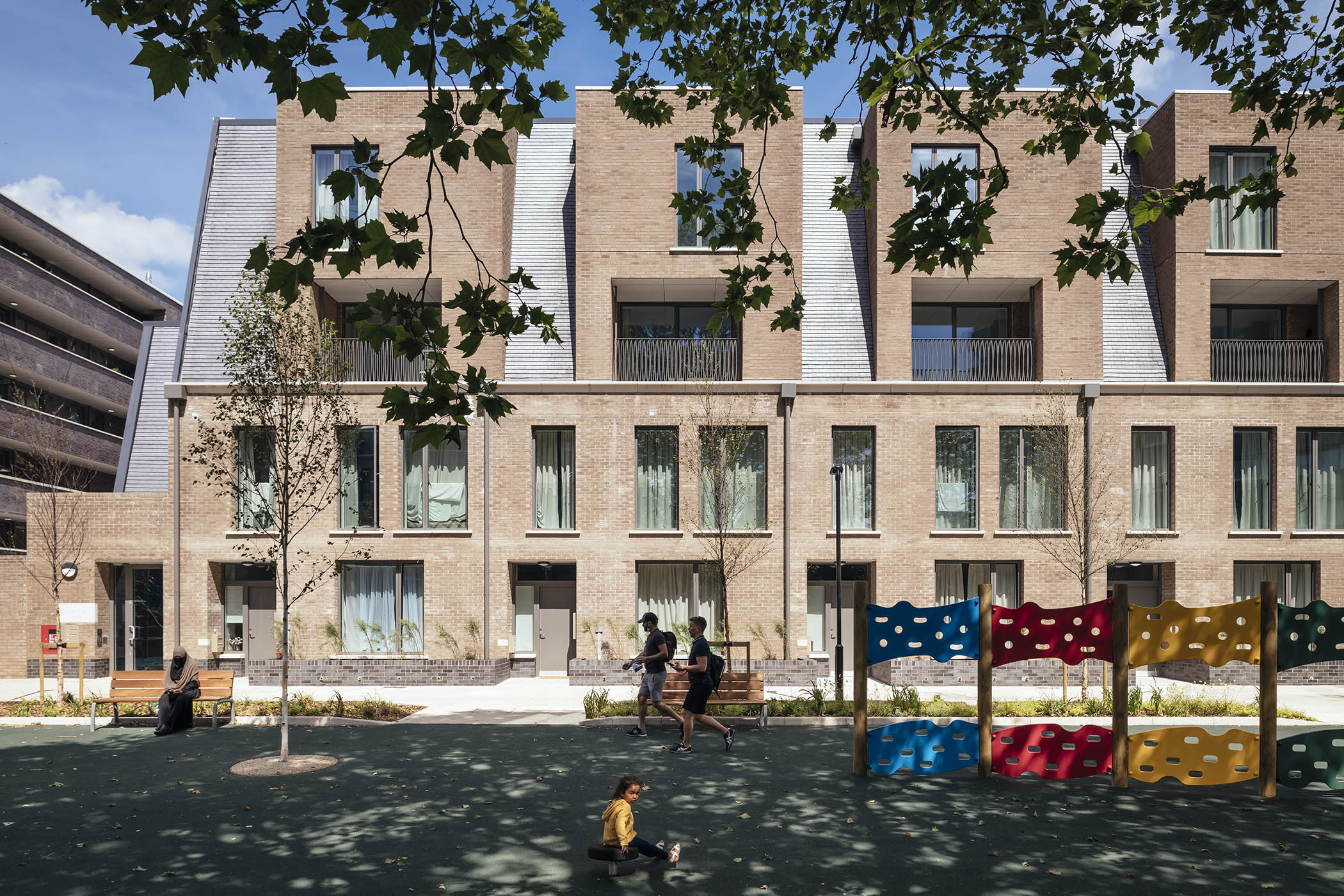
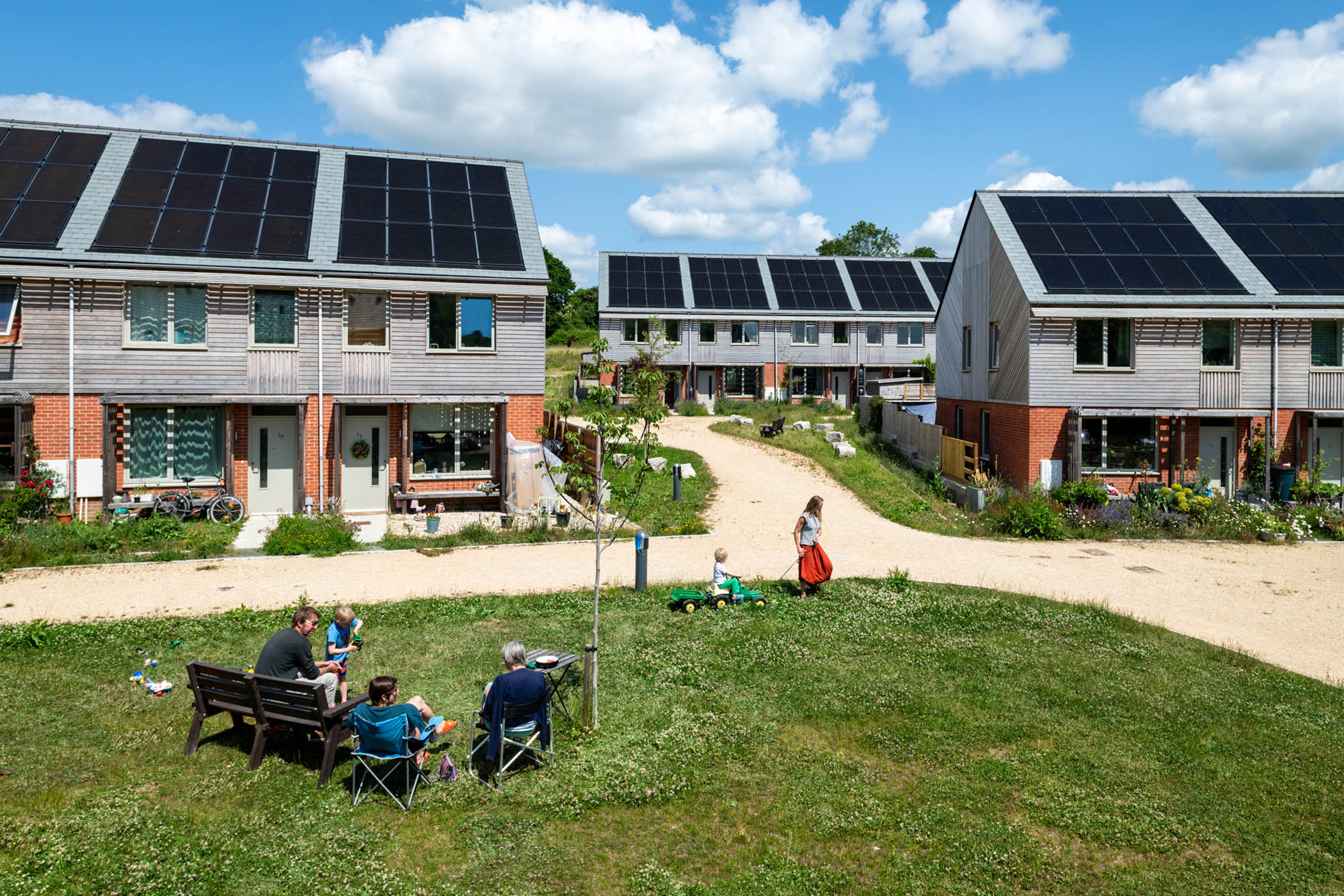
The playground at Agar Grove in Camden, north London. Main image: the Hazelmead co-housing scheme in Bridport, Dorset
It’s also a feature of much-loved places that they make the most of nature. This might be a view of landscape or the sky, the way buildings catch the fall of light and shade, incorporate still or running water, the retention of old trees or the planting of new ones. Favourites of those “most beautiful streets” lists include the Philosopher’s Walk in Kyoto, whose character is shaped by its cherry trees, and Herbert Baker Street in Pretoria, with its magnificent jacarandas. The Tower Gardens estate in Tottenham, north London – social housing designed more than a century ago on garden city principles – comes with the requirement that residents maintain hedges in their front gardens. Even though the rule is incompletely observed, it brings to a tough neighbourhood both living nature and evidence of human touch.
The design of individual buildings contributes to such places by creating a sense of wholeness and liveliness. They display a sense of scale that connects the dimensions of a street to those of the people who inhabit it. They are coherent enough to make the whole greater than the sum of its parts, but not so managed and orderly as to stifle expression. They show signs of life: painted shutters, flower boxes, generous windows, a range of styles, something particular in the way a brick is laid or a window shaped, contrasts of form and finish. They combine familiarity with freedom, forethought with the unpredicted. The internet loves places such as Recife in Brazil and Burano in Italy, where approximately similar houses are decorated with contrasting colours, and the internet may not be entirely wrong.
The best places are not identical to others. They express the personalities of their makers and inhabitants, or the ideals of local governments. They come in multiple styles, ancient and modern. They may be shaped by accidents of time or geography: the gradients of the land, the colour of local stone, the presence of a river or a canal, buildings surviving from the past. Design is sometimes less a question of making anything new, more of allowing what is already there to come to the surface.
All this is to speak of the exteriors. The design of interiors is partly a matter of achieving simple and tangible goods – daylight, views, ventilation, warmth, intelligent layout, dimensions, durability. It’s also about enabling, even in constrained circumstances, those moments that help residents make a home personal: a bay window, a place to pause on a landing.
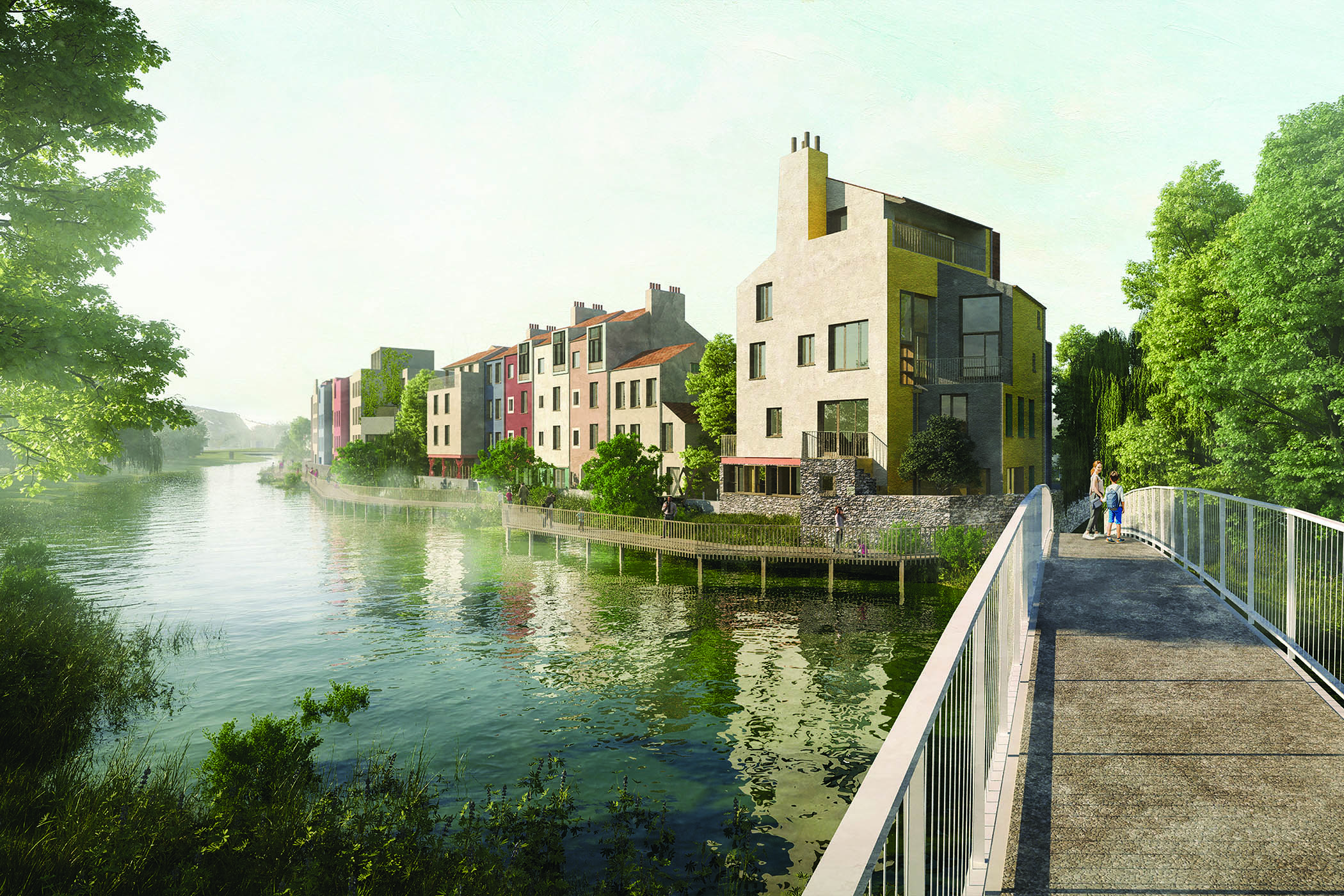
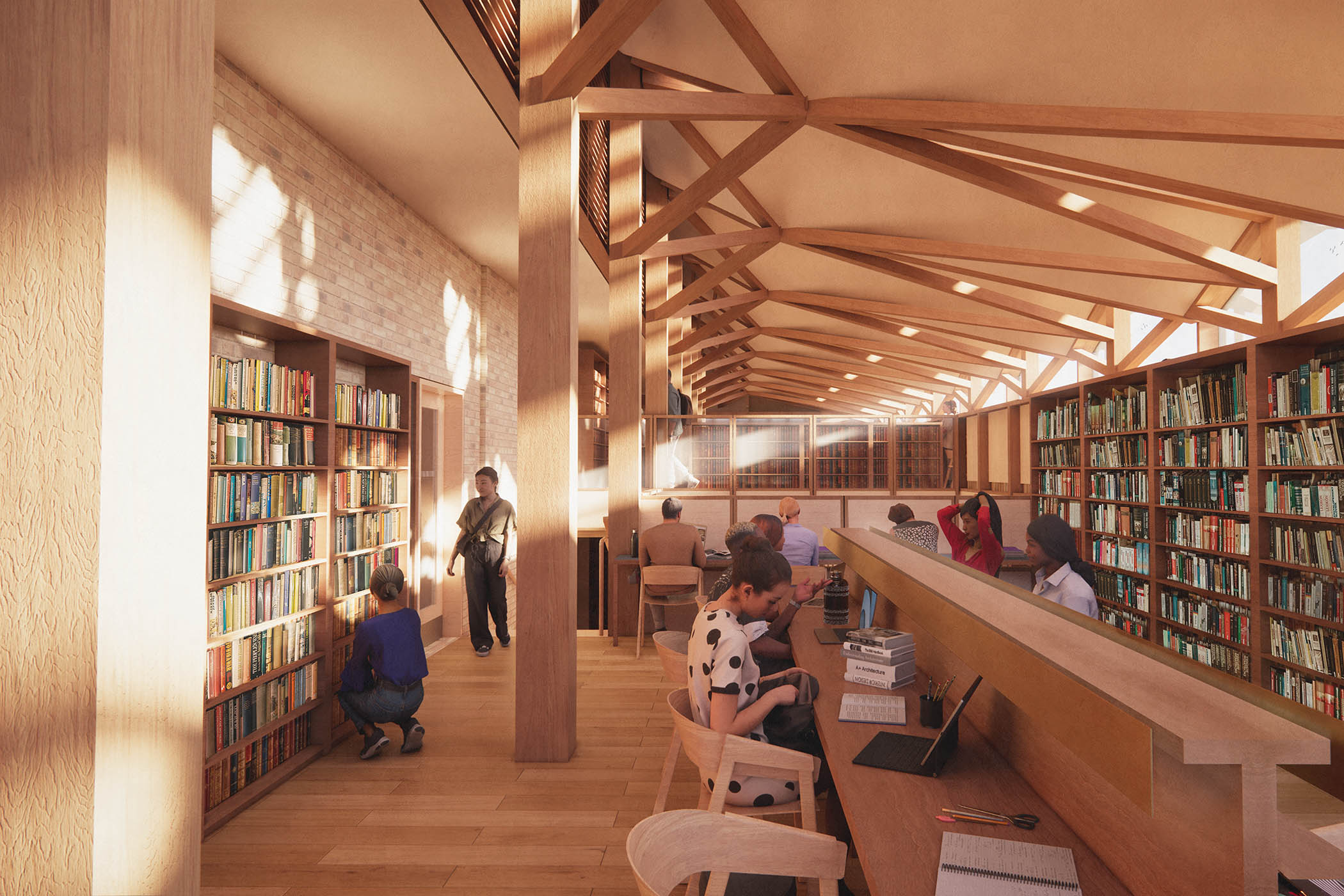
A CGI of the Phoenix project in Lewes, East Sussex
Many of the qualities that make a good place to live are obvious: they should hardly need pointing out, except that the estates put up by volume housebuilders conspicuously lack them. They typically offer two-storey detached houses, of generic, could-be-anywhere design, scattered about a terrain shaped by roads and parking. Tarmac hogs precious space. Gardens get squeezed, and the land between the houses is not where anyone would enjoyably walk or play.
Yet there are alternatives. The work of Peter Barber, including his celebrated Edgewood Mews in Barnet, shows how to create both sociable shared spaces and architecture with oomph and romance. The Hazelmead co-housing scheme in Bridport in Dorset achieves simple, well-designed homes and delightful car-free open spaces. The Phoenix promises to create a characterful and sustainable neighbourhood in Lewes, East Sussex. There are now several large-scale London projects, including Agar Grove in Camden, north London designed by a team that includes the Stirling prize-winning Mae Architects, where dignified buildings shape open space.
Newsletters
Choose the newsletters you want to receive
View more
For information about how The Observer protects your data, read our Privacy Policy
Outside Britain there is the remarkable social housing in the Balearic Islands, built by the regional government agency Ibavi, which uses stone from local quarries to beautiful and environmentally beneficial effect. In Paris there is a steady stream of thoughtful new apartment buildings, also social housing. The architectural skills and knowledge are there, but the incentives to put them to use are lacking. The big housebuilding companies churn out their standard product because it is the easiest thing for them to do. And a planning system that simply instructs them to build beautifully will not fundamentally change their ways. There was such a clause in the National Planning Policy Framework, inserted by the previous government, but removed in 2024.
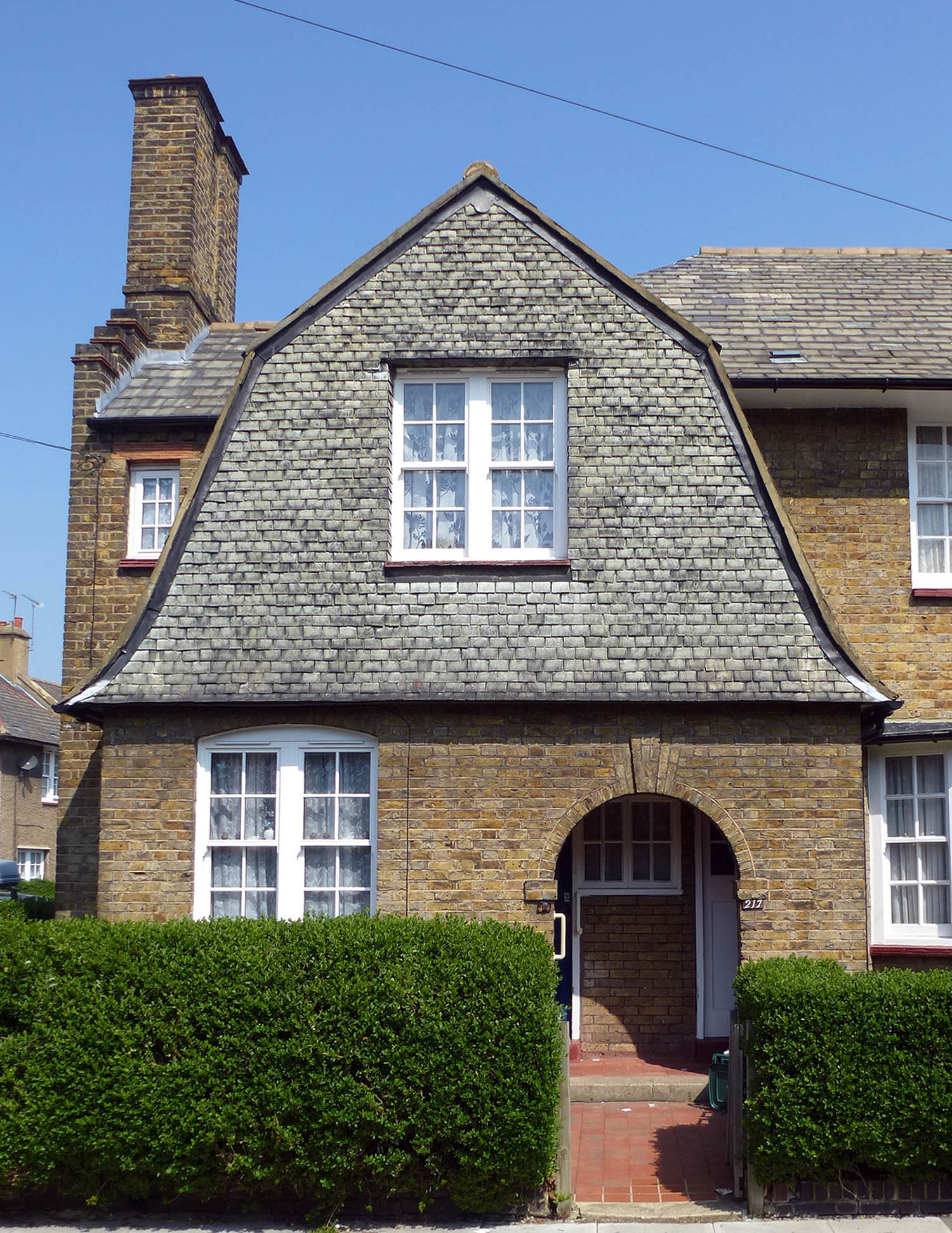
The Tower Gardens estate in Tottenham, north London comes with the requirement that residents maintain hedges in their front gardens
Russell Curtis, a director of the architectural practice RCKa, which designs new housing and researches ways to transform the use of land and planning, believes that the key to better housing is to insist on minimum densities – at a level that would create terraced houses interspersed with apartment blocks rather than estates of detached houses. This, he believes, will lead to “inherently better places”, that use land well and reduce dependency on cars, while also encouraging more creative, smaller developers. He also argues for a simpler, clearer, more certain planning system reducing the risks and costs builders currently face, such that they might have more resources to invest in design.
The fairly good news is that recent announcements on planning policy favour this increase in density, especially near to railway stations. The government has made clear its pursuit of quantity. We can only hope it pursues quality with comparable intent.
© Rebecca Noakes/Jim Stephenson/Human Nature with Ash Sakula + Tom Budd/Julian Osley/Creative Commons