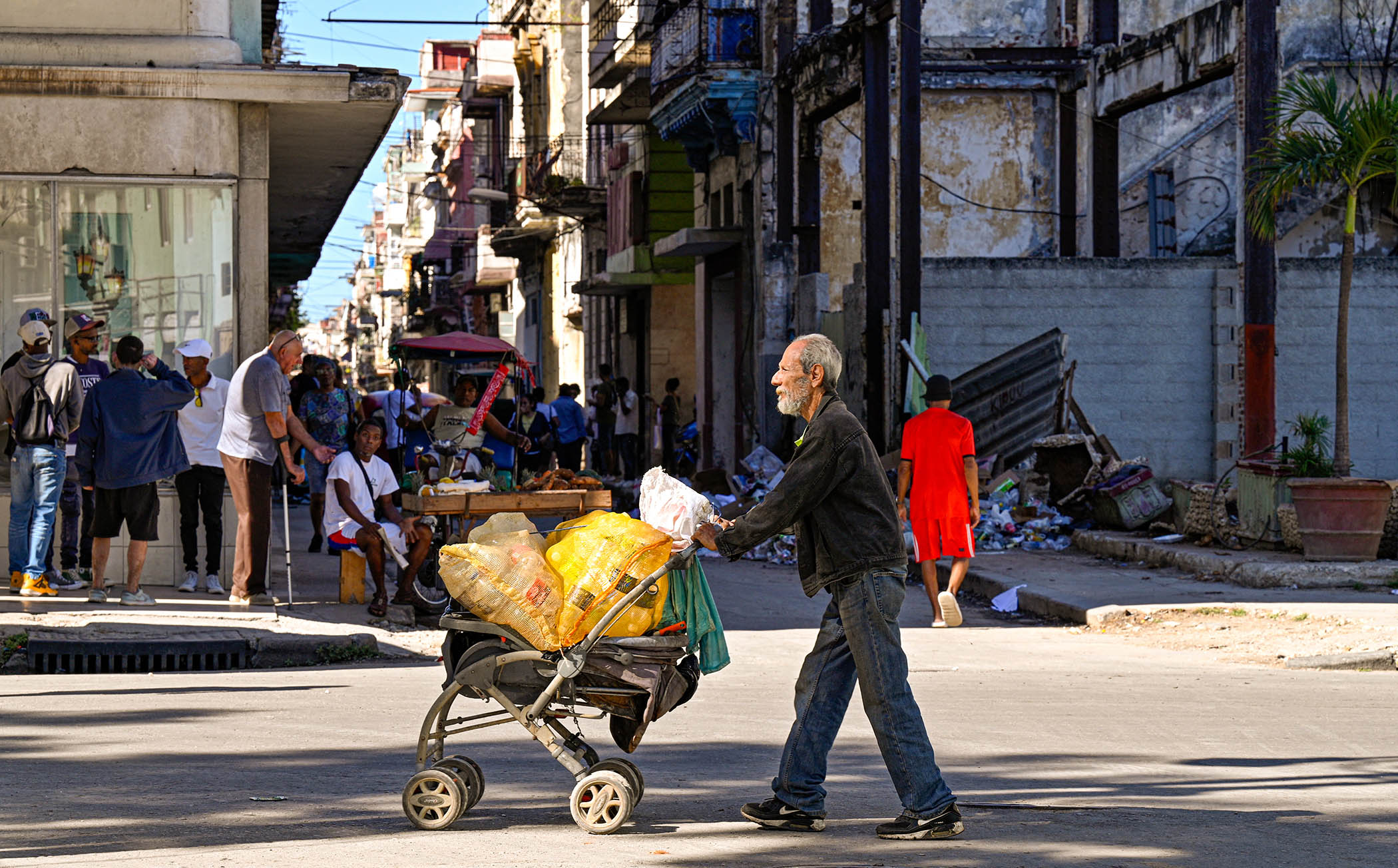
‘That was another Cuba,” says a citizen of Havana, recalling the light show that celebrated the restoration of the city’s magnificent Capitol building in 2019, “that was electric Cuba”. Now it is a land of 20-hour power cuts, of motorways populated by horse-drawn traffic and pedestrians as much as by occasional cars, of daily-mounting piles of rubbish as the official refuse vehicles appear to have given up. People scan the news for signs that help might be on its way – from Mexico, or Russia, or China. Priests lead anxious congregations in prayers for their country.
This is a country under a blockade by the United States that has aptly been called “medieval” and “economic terrorism”, laid on top of the sanctions imposed by Donald Trump in his first term, on top of the American embargo that has been enforced since the 1960s. With, depending on your ideology, as much blame as you choose to give to the economic policies of the country’s 67-year-old communist government.
But life goes on. The societal collapse predicted by some is not here yet. The Havana Jazz Festival has just been and gone, and bands of foreign musicians walk the streets with their double bass cases and violins. Strangers invite you into their homes, whether old palaces made into apartment blocks or rural farmsteads, without expecting gain. Courtesy, decency and hospitality prevail. You can go about Havana, or the colonial town of Trinidad, in the darkness of the blackout, without a sense of menace. Of how many cities in the Americas, north or south, can this be said?
To a degree, the current situation is not new. Travellers’ tales of Cuba have told of crumbling buildings, of shortages and failing infrastructure – and of splendour and music amid the ruins – for decades. One of the jokes of Graham Greene’s Our Man in Havana, set during the last gasps of President Batista’s pre-revolutionary regime, is that its hapless protagonist Jim Wormold tries to sell vacuum cleaners in a city of power outages. Heretics, by the leading Cuban writer Leonardo Padura, describes hard lives in overcrowded tenements from the 1930s to the 2000s. In his Dirty Havana Trilogy, written following the collapse of the Soviet Union and the withdrawal of its support for Cuba, Pedro Juan Gutiérrez tells of people selling sex for bottles of shampoo.
This crisis is certainly up there with the worst. The slogan “Socialism or death”, alongside ubiquitous roadside portraits of Che Guevara, seems grimly literal. The mood certainly feels different from my last visit 10 years ago, when the rapprochement between Raul Castro and Barack Obama gave rise to hope, symbolised by a Rolling Stones concert in Havana attended by hundreds of thousands.
I am here on holiday, cocooned by the fact that fuel is – just – still available for what is seen as the essential industry of tourism. I see, if from an obviously distorted viewpoint, what could be one of the most blessed places on Earth, one of natural and architectural beauty and of human creation and resilience. It has been made desperate by centuries of external interference, of which the current blockade is a brutal iteration.
One can guess that, in the train of Trump’s intended triumph, real estate ventures led by members of his family would extract all the wealth they could from Cuba’s wonders. It is a desolate prospect.
Photograph by Adalberto Roque/ AFP via Getty Images
Newsletters
Choose the newsletters you want to receive
View more
For information about how The Observer protects your data, read our Privacy Policy