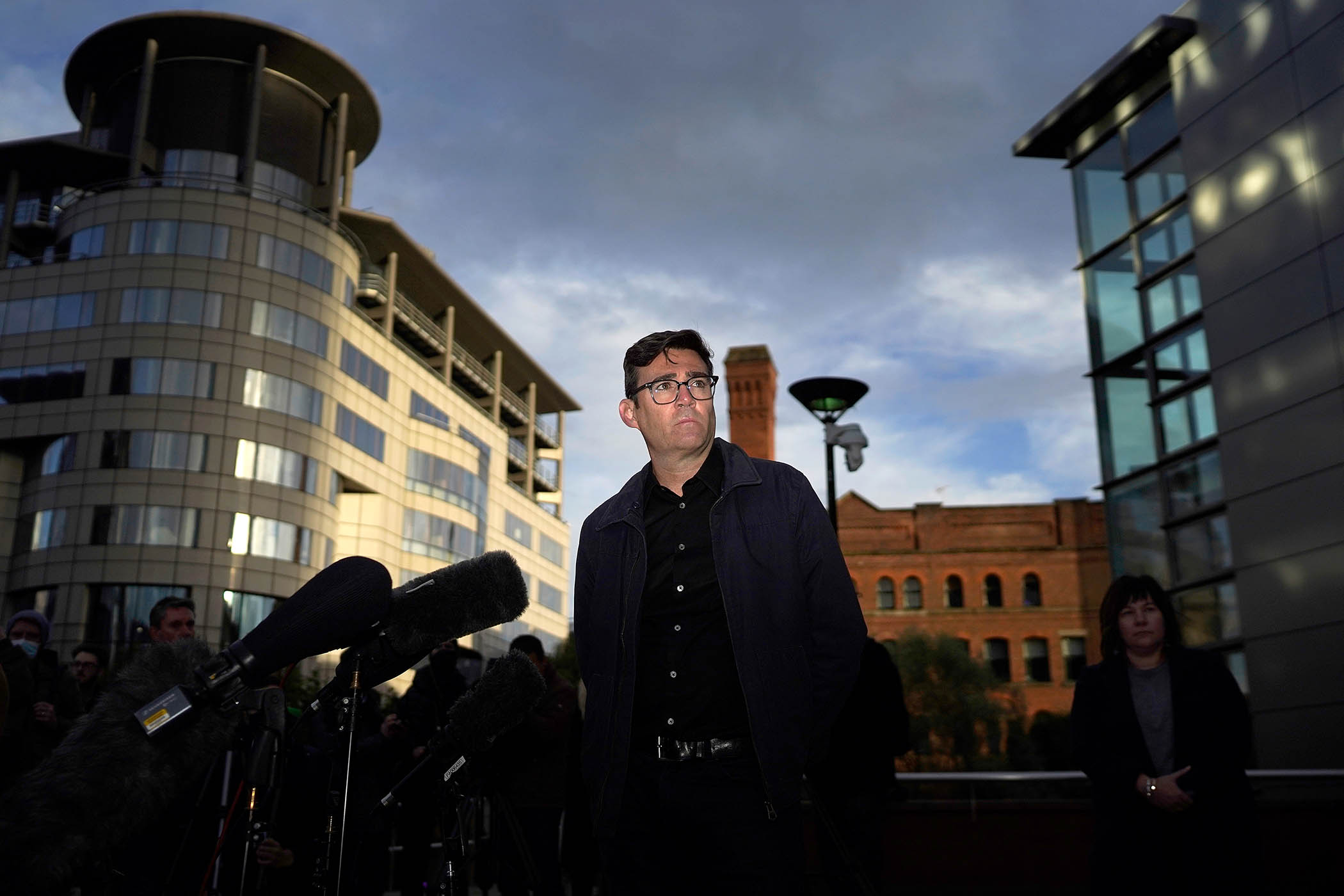
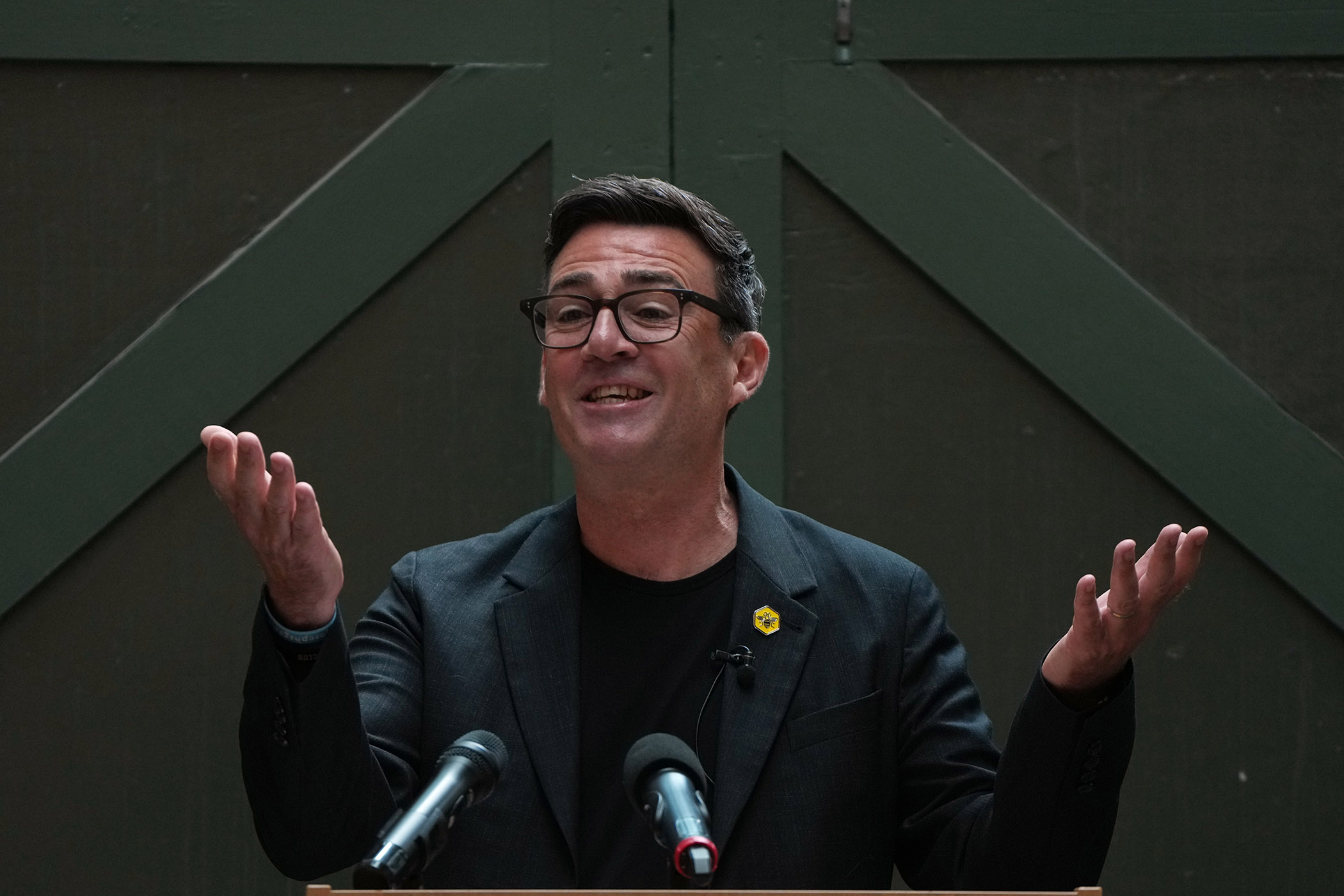
The idea of a “No 10 in the North” has not been greeted with universal bouquets. There are those who think it sounds like a gimmick, which will fade away once Andy Burnham has made crunching contact with the realities of power. The worldly-wise of Whitehall sigh that he will discover the job is too 24/7 for the prime minister to quit London for frequent “off-sites” subject to the vagaries of Avanti West Coast’s train service and wifi. To others, a northern Downing Street is a provocation. Some Labour MPs from other points of the compass chunter darkly about being ruled by “a Manchester mafia”.
I take the idea extremely seriously as an indicator of who Mr Burnham is and what kind of leader he aspires to be. For starters, he is a palpable product of the north in a way no prime minister has been for a very long time. While it is true that Margaret Thatcher grew up in Lincolnshire, and Tony Blair spent formative years in County Durham, neither presented as terribly northern, and both gave the impression of being people more interested in escaping their origins than celebrating them. “Our Andy”, who was born in Aintree and grew up in an area between Liverpool and Manchester, has put the north at the core of his identity from his taste in football (he’s an Everton season ticket holder) to music (the Smiths, the Stone Roses, New Order). He likes gravy with his chips and talks about “my Manchester clothes”. He is more consciously northern even than Harold Wilson, who spoke with a Yorkshire accent, drowned his food in HP sauce and puffed on a pipe when in public view, though preferred cigars and brandy when not on camera.
Success as mayor of Greater Manchester was the remaking of Mr Burnham after two failed attempts to become leader of his party. Had he not had that platform he almost certainly wouldn’t be getting third time lucky in his quest to be prime minister. I guess he ought to send a thank you note to George Osborne, the Tory chancellor who forced reluctant local councillors to accept the creation of a metro mayoralty in exchange for extra cash and powers.
In his first substantial speech as prime minister presumptive, there was authentic passion when he expressed the belief that our country needs a radical reset of how power is wielded. If you doubt the intensity of his conviction, I suggest reading the urtext of Burnhamism. Head North – the book he wrote with his friend, the metro mayor of Liverpool Steve Rotheram – is a manifesto for decentralisation.
Team Andy insists he means it when he declares that “No 10 North will be the nerve centre for a rewired Britain” and the “conduit through which we redistribute power and resources across the UK”. It is intended to be much more than a branch office of Downing Street. It will be run by Caroline Simpson, the chief executive of the Greater Manchester authority, who will get the title of deputy chief of staff. The remit will include taking water and other essential utilities under public control, regeneration, productivity, and the biggest programme of council house building in decades. That would create a power centre in its own right and one that sees the world from a very different perspective to politicians and civil servants operating in the capital city, or near it.
There’s fretting among Labour MPs that too much emphasis on the north risks leaving other electorally critical battlegrounds feeling resentful
There’s fretting among Labour MPs that too much emphasis on the north risks leaving other electorally critical battlegrounds feeling resentful
“He’s right that we need to rewire,” says one of Labour’s metro mayors before cautioning: “It needs to be realistic and it needs to be deliverable. I don’t think the country can cope with any more false starts.” There is potential here and there are pitfalls. The performance of the health service in Wales and schools in Scotland under devolved governments counsels against thinking that decentralisation is a magic potion that cures every ailment. There’s fretting among Labour MPs that too much emphasis on the north of England, and specifically Manchester, risks leaving other electorally critical battlegrounds feeling resentful. Mr Burnham seems alive to that peril. His speech was careful to name check all the nations of the UK and all the constituent parts of England – except one. Labour MPs from the south-east noted with chagrin that he forgot about their region.
There’s widespread agreement with his contention that “we are one of the most over-centralised countries in the world” and “the stark imbalance” between national and local government is holding back growth. One key challenge is to end what Andy Street, a two-term Tory mayor of the West Midlands, once called the “begging bowl” culture, which demeans and infantilises local leaders by making them bid for pots of pocket money controlled by London-based politicians and mandarins. Authentic decentralisation would mean giving councils and mayors much greater latitude over how they spend, and equipping them with substantial scope to raise local taxes – or to cut them.
This will meet serious resistance. The departmental baronies of SW1 won’t be relaxed about surrendering chunks of their realms. The Treasury has historically been reluctant to loosen its grip on tax, spending and borrowing. Mr Osborne may have pushed for more metro mayors, but he left them highly constrained. Boris Johnson’s “levelling-up” programme was top-down and, to many, reeked of the pork barrel. One Labour veteran who knows the place inside out remarks that the choice facing the incoming prime minister is between “smashing up the Treasury” or using it as “a battering ram to bash all this through.” He will need a chancellor who genuinely shares his philosophy if the future is not to be a bitter saga of triangular clashes over cash and control between the Treasury, Downing Street and No 10 North.
We will also discover how tolerant he is of other points of view. True devolution will require a willingness to allow local voters and leaders to make choices different from those he’d make himself. They may come up with smart innovations. They may make horrendous mistakes. Strong local governments that can tax, spend and make independent decisions will come in many different forms. These will include Reform and Conservative flavours that will be anathema to Labour people. Significant devolution will mean more heft for Tracy Brabin and Claire Ward, the Labour mayors of West Yorkshire and the East Midlands. It will also mean more clout for Andrea Jenkyns, the Farageist mayor of Greater Lincolnshire.
Andy Burnham will be an unusual prime minister if he gives power away. Doing this properly will mean handing it to some people he thoroughly dislikes.
Newsletters
Choose the newsletters you want to receive
View more
For information about how The Observer protects your data, read our Privacy Policy
Photograph by Christopher Furlong/Getty Images