

This article first appeared as part of the Ben Zaranko on the economy newsletter – the big economic ideas and forces shaping our world, and the policies put forward in response. To receive it in your inbox, featuring content exclusive to the newsletter, sign up here.
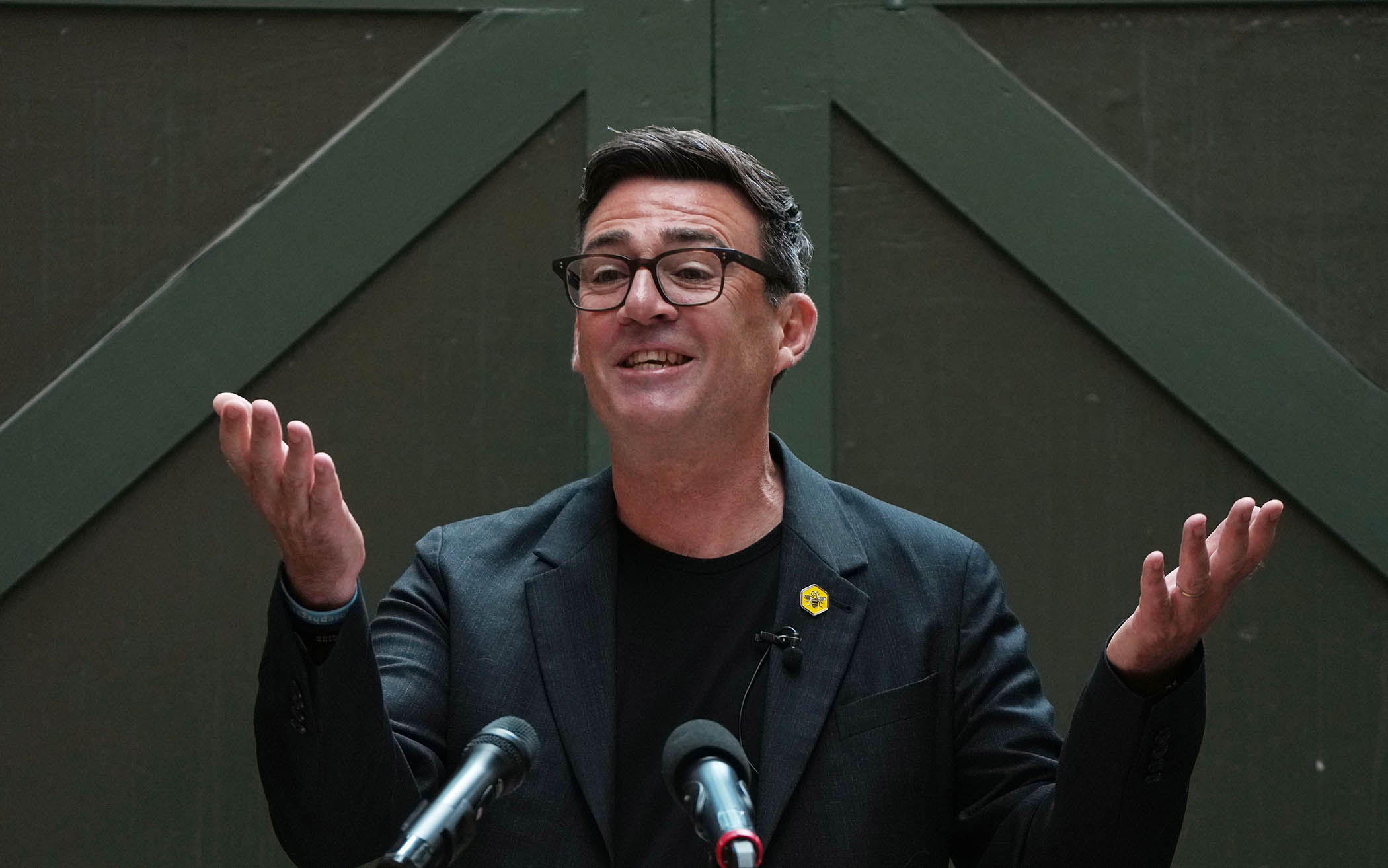
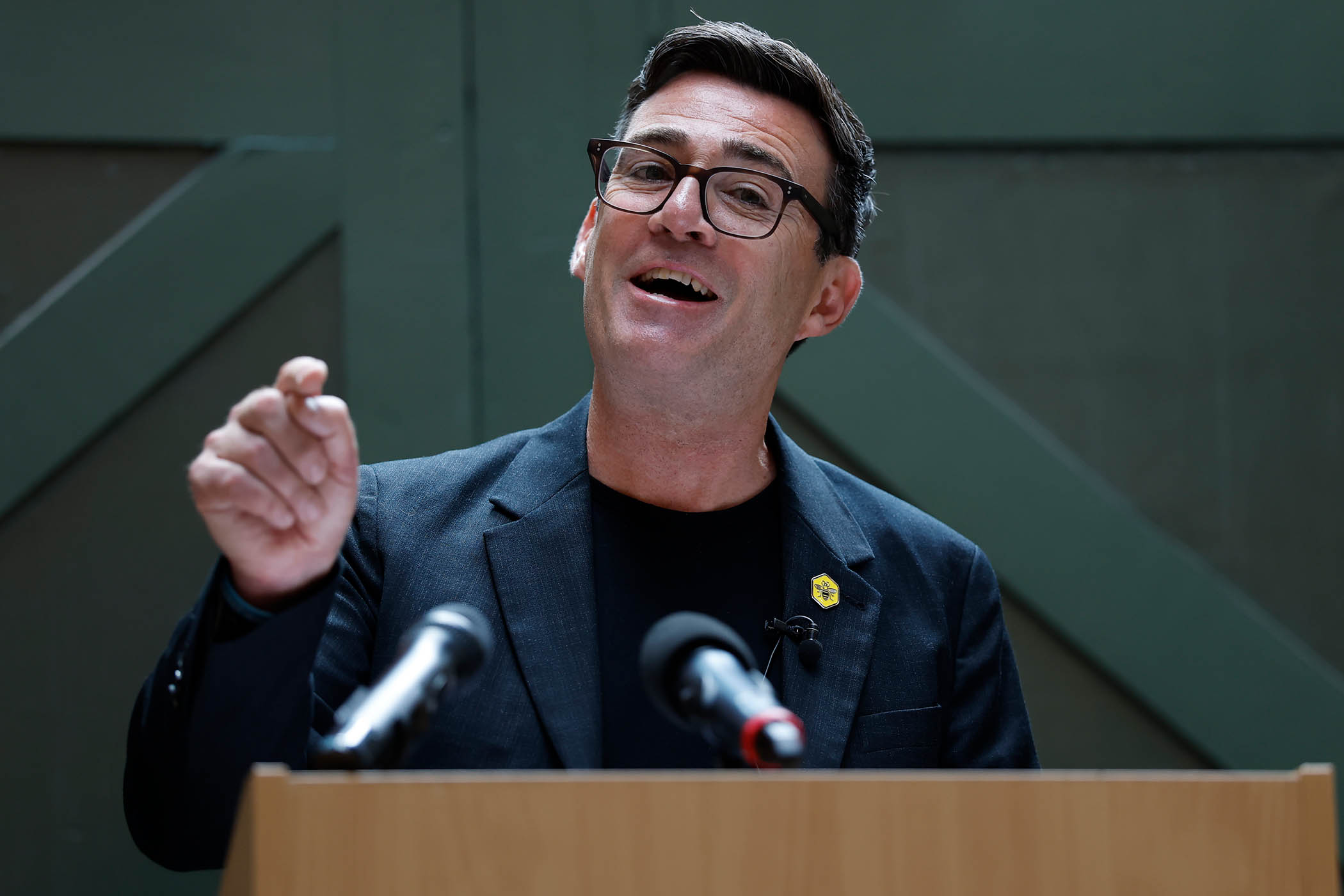
Andy Burnham gave his first big speech since becoming MP for Makerfield yesterday, to a room at the People’s History Museum in Manchester in which silver haired men wearing glasses were over-represented. On the economic front, the speech contained two arguments which distinguish it from the current government’s approach.
•
First, changing how we do politics is integral to turning around the country’s economic fortunes, with greater devolution to the cities, regions and nations at the core.
•
Second, there should be greater “public control” of sectors like water, energy and transport.
When Burnham talks about changing politics to change the economy, he means achieving a more collaborative approach to politics in Westminster (so that everyone is “pulling in the same direction”) and, more significantly, devolving powers out from the centre. He promised the “biggest transfer of power out of Whitehall in modern times”, facilitated by a new “Number 10 North to drive devolution and coordinate long-term economic renewal”.
The current government is already working on a roadmap for tax devolution, due to be published this autumn. But what I took from the speech is that we should expect a Burnham government to show (even) more radicalism and ambition on the devolution of tax, spending and borrowing powers. What that actually means in policy terms, we’re none the wiser. Burnham did not talk in specifics. But the specifics will matter, when they come to be filled in, because the right policy prescription will depend on what you think the mechanism is through which fiscal devolution leads to economic growth.
Is it about greater local control over how money is spent? Is it about giving greater certainty over revenue streams, so that mayors can plan on a longer-term basis, and borrow against that revenue? Is it about giving greater incentives for areas to grow, by letting them keep more of the gains from an expanding local economy? How is that to be balanced against a desire for “equivalent living standards” in all areas? Translating the high-level rhetoric into concrete policy will mean facing up to these and other questions.
As well as fiscal devomaxxing, the other distinctive part of Burnham’s economic agenda is the commitment to “essential reform” of public utilities. In particular, he wants to see local areas exert greater “public control” over areas like water, energy, transport and housing.
What he didn’t do is use the word “nationalisation”. That is deliberate. In The Productive State, an essay recently published by Mainstream (a Labour thinktank with ties to Burnham), Mathew Lawrence and Alex Williams argue that their model would not be a return to the past:
“Nationalisation” is not the right word for what this essay proposes. The postwar model placed industries under direct ministerial control, funded through the Treasury, accountable upward to central government. The Productive State operates through public corporations with commercial independence, arm’s-length governance, and their own balance sheets — closer to the interwar Central Electricity Board model or Scottish Water than to British Rail in its final years, or contemporary European state owned enterprises that balance commercial mandates against public service obligations. Public ownership with commercial mandate. The institutional form matters as much as the ownership change, with the form more pluralist and democratic than the post-war nationalisation model.
This distinction matters. In a full-fat, straight-up nationalisation model, the publicly owned water industry would be competing for cash against hospitals, the armed forces, schools, and the rest. And, politicians who wish to be re-elected are unlikely to increase water bills to fund investment in new reservoirs and sewerage systems. But local public corporations, sitting at arms length, might have enough independence to make sensible long-term decisions, but still be able to benefit from lower borrowing costs via some sort of central government guarantee, without having to make payouts to shareholders. This seems to be closer to what Burnham has in mind (he actually used the words “productive state” in his speech).
That’s all well and good. But even if you fully buy into the vision, it raises two sets of questions.
Newsletters
Choose the newsletters you want to receive
View more
For information about how The Observer protects your data, read our Privacy Policy
First, how do we get from here to there? Taking water as an example: the water infrastructure would still need acquiring from the current owners. The water companies have 25-year notice periods on their contracts, so you can’t just wait for them to expire like those of the train operators. Building up the expertise and local state capacity to run large, complicated utility companies would take time. This is why I think the decision about Thames Water is significant: it will be an early test of the government’s approach (even if Thames Water is something of a special case).
Second, how are these promises on public utilities and council housebuilding to be reconciled with Burnham’s explicit commitment to the existing fiscal rules? The plural – “rules” – is important: it’s a commitment not just to the borrowing rule, which constrains borrowing for day-to-day spending, but also to the debt rule, which constrains borrowing for investment. Whoever is chancellor will be working within the same tight constraints as Rachel Reeves. For that reason, it could be a short honeymoon.
Photograph by Alastair Grant/AP