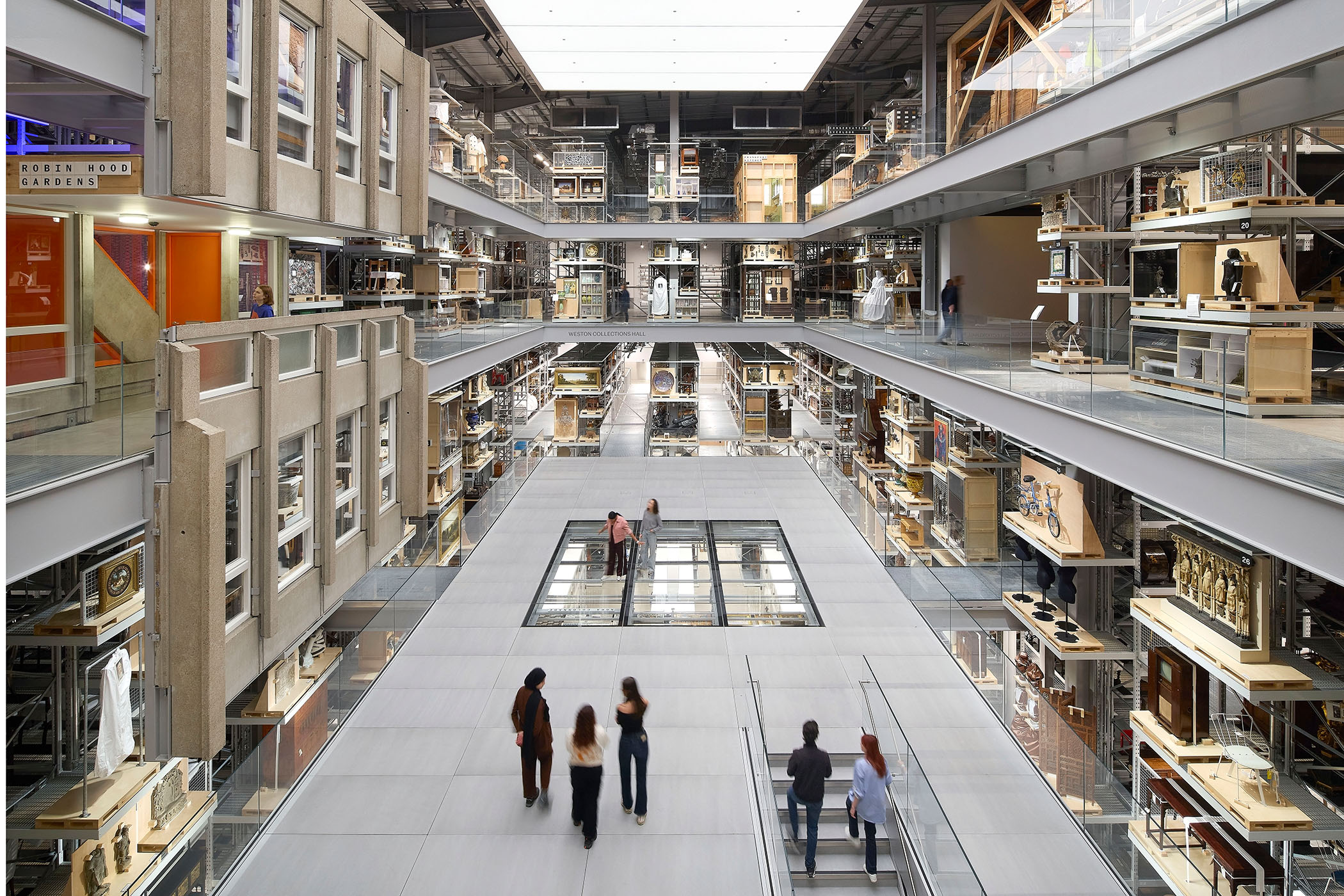

One of the most significant figures in the world of architecture in 2025 was the Grim Reaper. It was a shocking year for losses, among them Nicholas Grimshaw, designer of the Eden Project; David Childs, whose skyscrapers included the Burj Khalifa in Dubai, the tallest building in the world; and Ric Scofidio, of the New York practice Diller Scofidio + Renfro, whose V&A East Storehouse, in the former Olympic Park in east London, is for me Britain’s building of the year. Kongjian Yu, the Chinese landscape architect who developed the idea of the “sponge city”, whereby urban wetlands and permeable pavements are used to absorb and manage rainwater, died in a plane crash in Brazil age 62.
Each of these deserves more space than a few words to be remembered. But I’d like to pay particular tribute to the Toronto-born Angeleno Frank Gehry and the Newcastle-born Londoner Terry Farrell. Both were populists in the best sense, looking to engage with publics beyond the confines of the architectural world, and possessed of heroic imaginations and considerable nerve. Both tried to design buildings that were generous to their locations. Neither was overly troubled by considerations of conventional good taste.
In both cases, their most famous buildings – the 1997 Bilbao Guggenheim Museum for Gehry and (probably) the MI6 headquarters on the bank of the Thames (1992) for Farrell – were dramatic and imposing. But they also carried out less heralded projects that were about working with existing fabric to create sociable, shared places. With his Edgemar shopping centre in Santa Monica (1988), for example, Gehry made a townscape of small towers out of the relics of an old dairy – a little Italian hill town, in effect, reinvented in California. With the Comyn Ching Triangle in Covent Garden (also 1988), Farrell carved a courtyard out of a huddle of Georgian terraced houses, with playful new work inserted in the gaps between them.
To this company can be added the Japanese architect Hiroshi Hara, not so well known in the west, whose Kyoto Station (1997) and Umeda Sky Building in Osaka (1993) are works of Piranesian sci-fi, the latter with escalator tubes flying across a 40-storey-high void between two towers towards a huge oculus at the top. They make a direct, hard-to-ignore appeal to the gut.
The architects who died this year came from an era of big beasts, unafraid to pursue singular, emphatic visions. Behind many of them lay the influence of Archigram, the 1960s British movement and magazine, which dreamed up dynamic, colourful structures inspired by pop culture and technology. One of its leading protagonists, Dennis Crompton, died in January. An architect who shared their spirit was Helmut Swiczinsky, co-founder of the Austrian firm Co-op Himmelb(l)au, whose buildings appear to be fractured, shattering, exploding and levitating.

The 1997 Bilbao Guggenheim Museum by Frank Gehry, who died this year. Main image: the V&A East Storehouse in the former Olympic Park in London
By complete contrast, except that he had an equal strength of convictions, there was Léon Krier, the Luxembourgish guru to the prince now known as King Charles, whose ideas inspired the model village of Poundbury. Robert AM Stern, architect of the George W Bush Presidential Library in Dallas, Texas, who like Krier was a promoter and author of traditionally styled buildings, died last month.
Most of these architects, despite their divergent styles, shared the attitude that it was important to have a style – a visual signature that told you who they were and what, aesthetically speaking, they stood for. Now architects tend to be concerned with issues more than personalities. There is less faith in the power of individualistic form-making, more an interest in sustainability and housing. It’s characteristic that one of this year’s most impressive works is the V&A East Storehouse, the conversion of part of the 2012 Olympic media centre into a place for keeping and displaying the museum’s reserve collections. Its exterior and entrance are understated, but it achieves all its effect through the skilful and imaginative display of objects.
Hubris has not entirely gone away, especially in countries such as Saudi Arabia, although one of the stories of 2025 was that the Line, the 500 metre-high, 170km-long city proposed for the Neom area in the north-west of the country, may prove too much even for the petro-state’s vast coffers, and be realised only in a much-reduced form.
The move towards more thoughtful and less bombastic architecture is mostly a welcome response to the ever increasing environmental crisis, but it’s also clear, with the departure of so many big personalities from the recent past, that something significant has been lost. The world looks duller and plainer without their creative energy. Is it too much to ask for buildings that do right by the planet, but also raise the spirits?
Meanwhile, the British government continues to talk about building hundreds of thousands of new homes, and has announced plans to build 12 new towns. Here, you may hope, there is a role for architects in making these future communities in such a way that land is used well and people might want to live in them. In countries including Spain and France, beautiful and sustainable new housing is being built. It shouldn’t be hard to follow their example.
Newsletters
Choose the newsletters you want to receive
View more
For information about how The Observer protects your data, read our Privacy Policy
Photographs by V&A East Storehouse/Getty