
1. A Rake’s Progress 1961-63
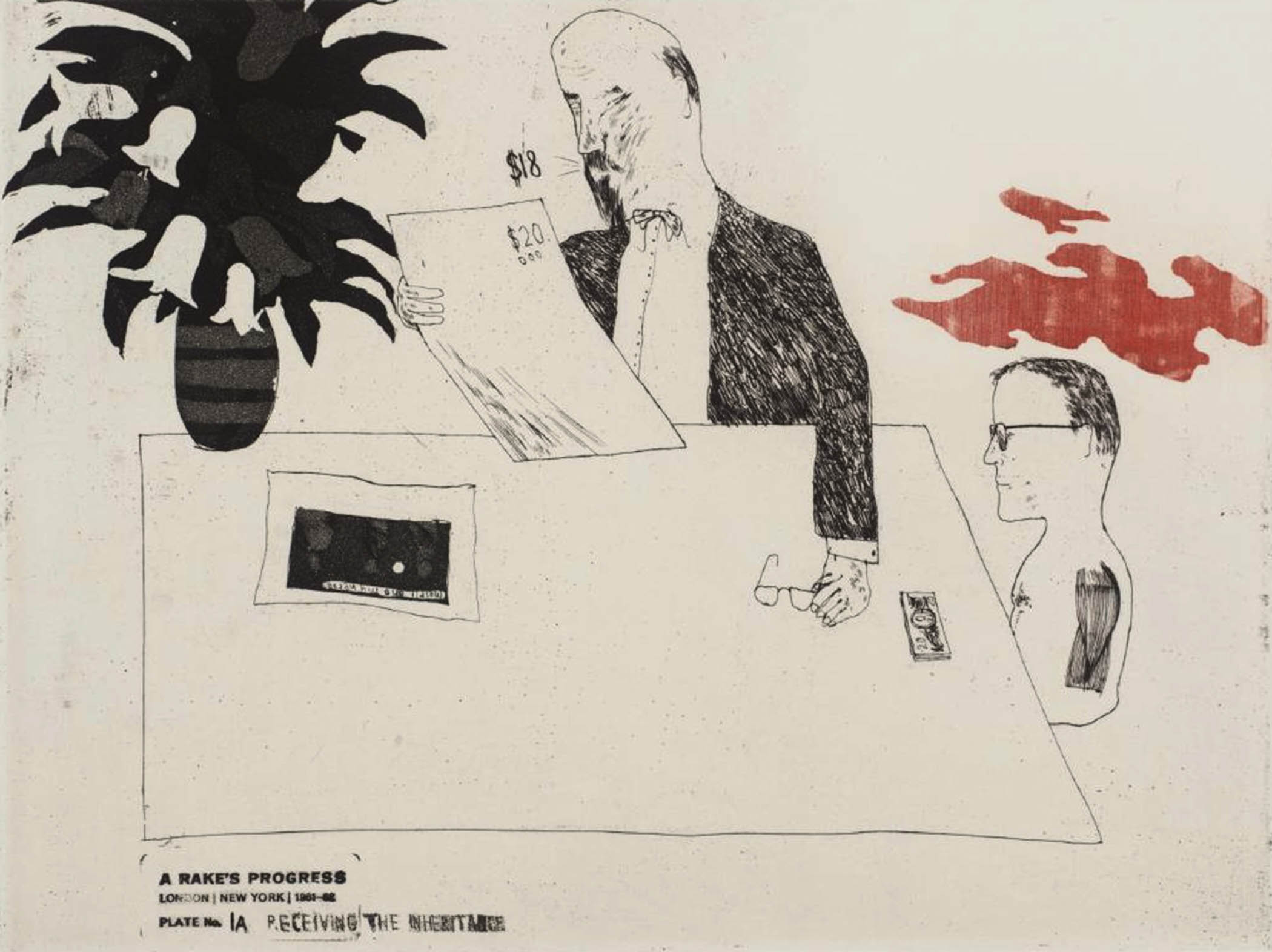
Hockney was still a student when he first visited America. Within hours of landing in New York he had fallen hopelessly in love with the city. He thought it was so sexy and dynamic and much less stuffy than boring old England. From this transformative visit came his first great work, A Rake’s Progress. It is a riff on Hogarth’s original series satirising a rich young man called Tom Rakewell making bad life decisions in London. Hockney relocates the story to New York, with him taking the role of the Rake. Brilliant.
2. My Parents 1977
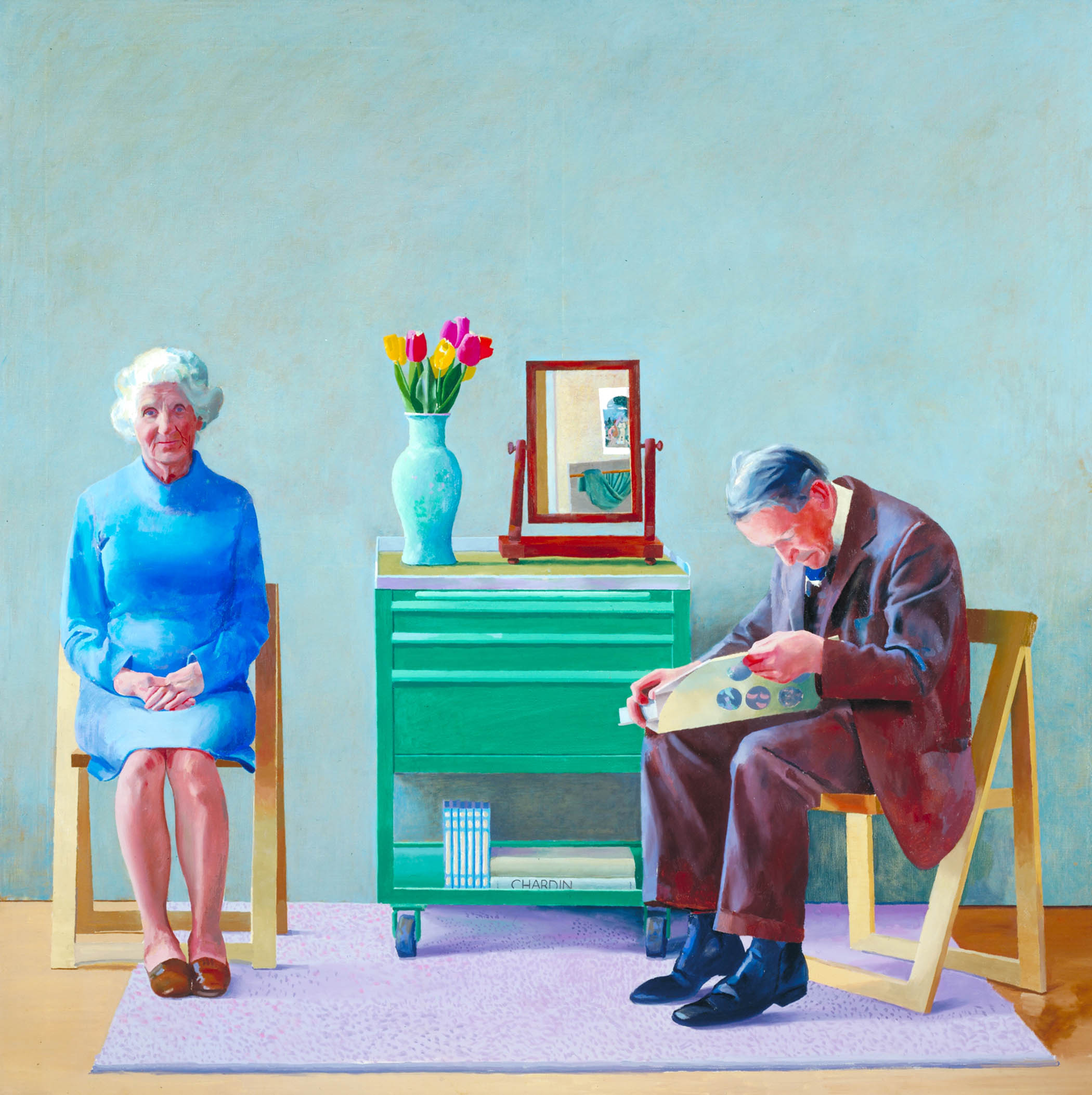
Kenneth and Laura Hockney lived in a small house in Bradford. David inherited his father’s contrarian nature and his mother’s fierce intellect. My Parents is one of his famous “double portraits” of the late 1960s and 70s. It depicts his now elderly mum and dad quietly inhabiting a spartan room with green walls and the sun pouring in. Father is hunched over his newspaper, while mother stares out affectionately towards her unseen son. Reflected in the mirror is a postcard of Piero della Francesca’s The Baptism of Christ which, like his parents, was a major influence on the painter.
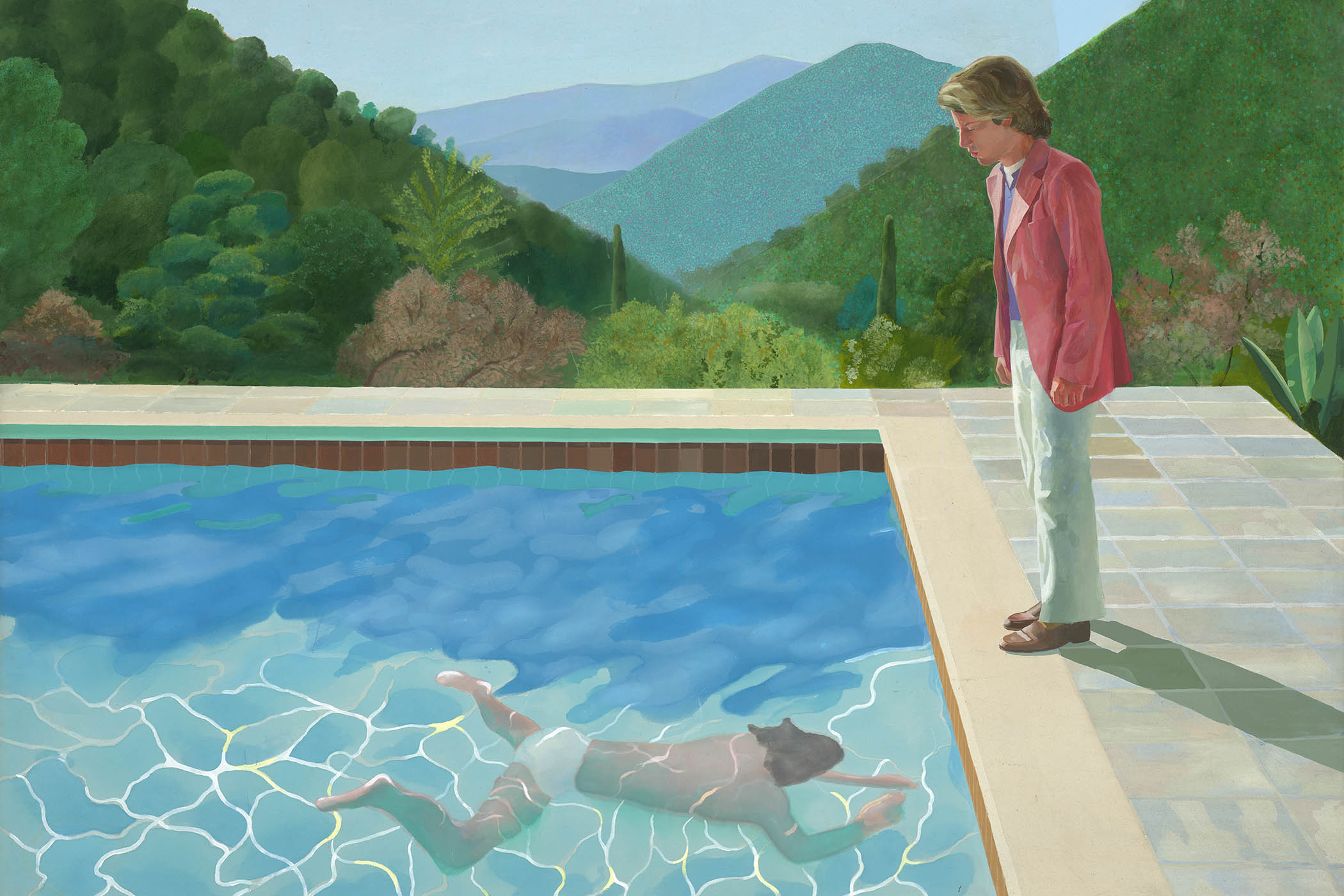
3. Portrait of an Artist (Pool with Two Figures) 1972
Another double portrait, but with none of the tranquillity of My Parents. Here we meet Hockney in a far more anxious state of mind. The painting was created by bringing together a series of sources – photographs, sketches, memories – that unite to tell the story of a love affair at its end. We see the two lovers existing in separate worlds, in different modes. One swims beneath the water seemingly oblivious to the other, who is standing at the pool’s edge watching, cut off and lost. It is touching and complex and expertly painted.
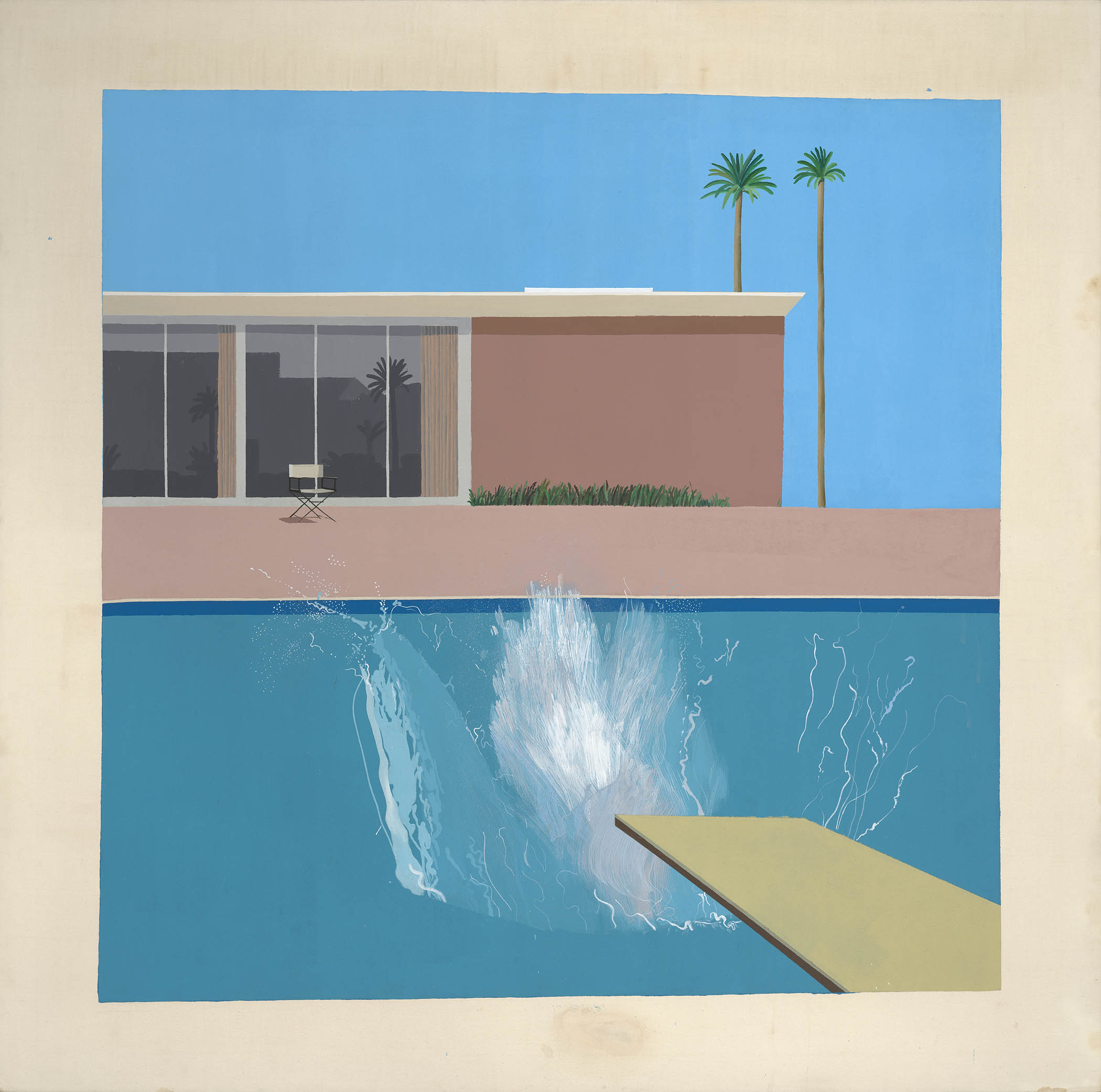
4. A Bigger Splash 1967
If you, like me, worked at the Tate, you would have no choice but to adore A Bigger Splash. It is one of the treasures of the Tate’s collection and almost always on view for the public and staff alike. To see it just about every day was to be given an art pick-me-up that put a spring in your step and a smile on your face. It is a celebration of the good times, of incredible light and a carefree culture. It is Hockney at his joyous best.
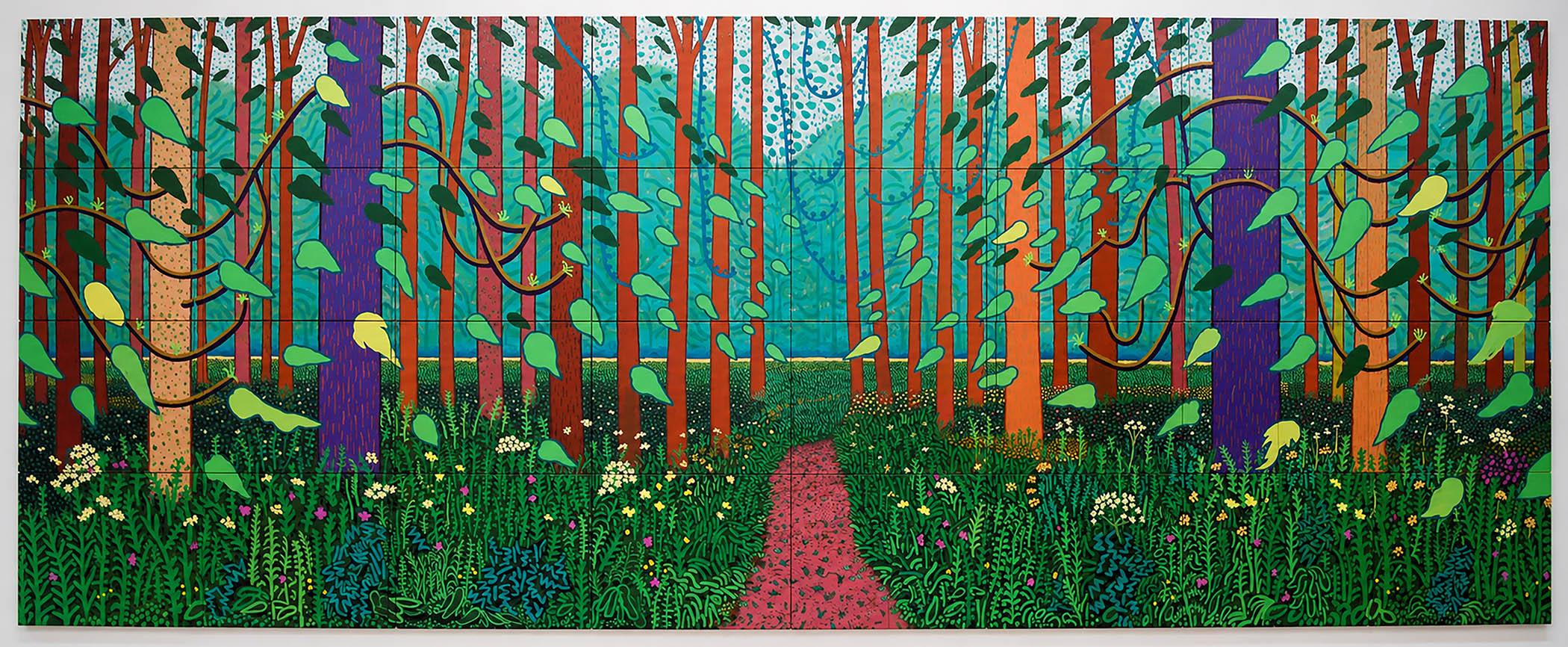
5. The Arrival of Spring in Woldgate, East Yorkshire 2011
It is not unreasonable to say that David Hockney reinvented landscape painting for the 21st century. He picks up where Cézanne left off, exploring colour, light, space, form and perspective. This huge painting offers an immersive experience as the artist transports us to the woods of East Yorkshire, where we learn that tree trunks are purple and footpaths are mosaics. I thought it was fanciful until Hockney dispatched me to “look properly” and, by golly, he was right!
Newsletters
Choose the newsletters you want to receive
View more
For information about how The Observer protects your data, read our Privacy Policy
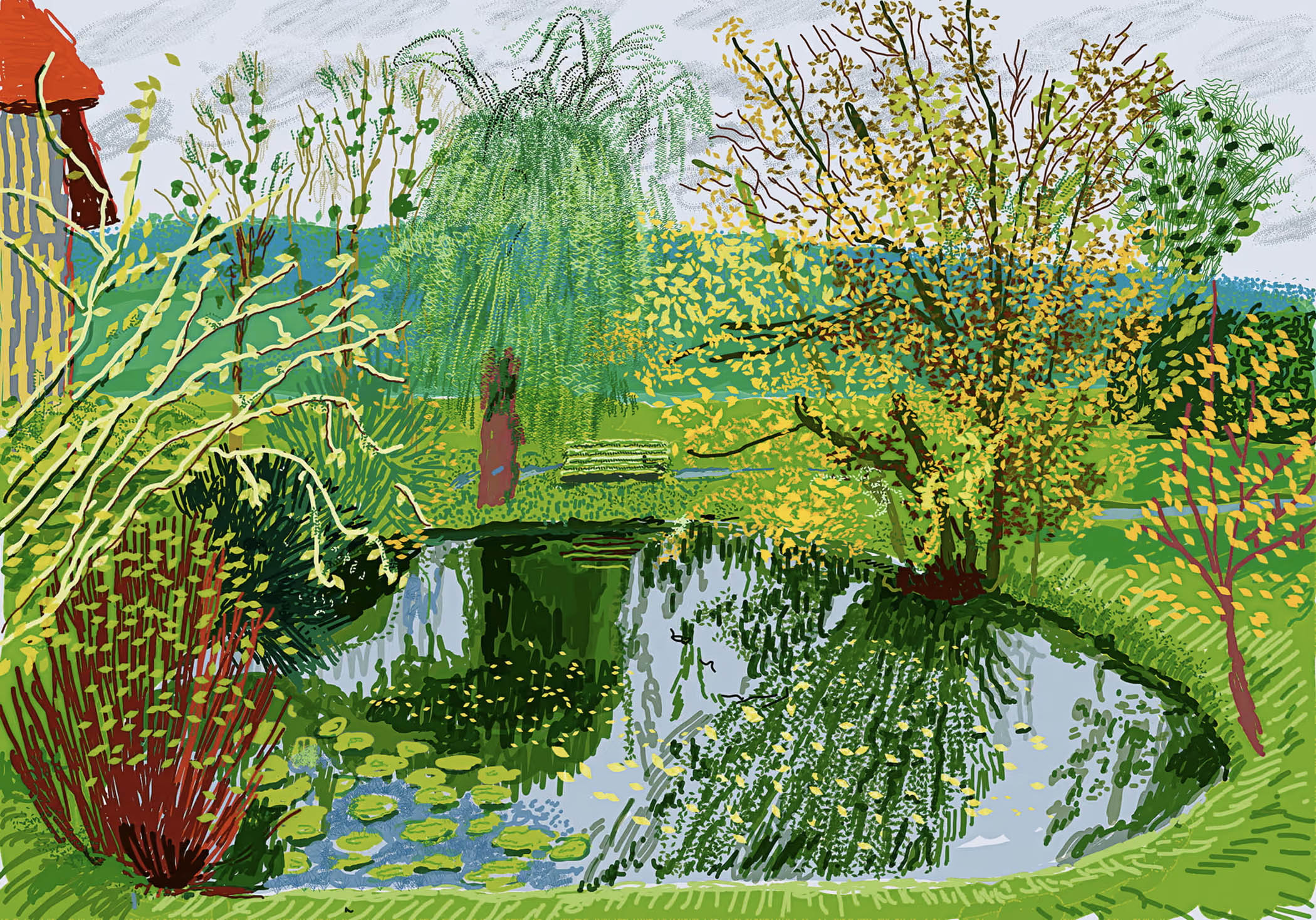
6. They Can’t Cancel Spring – No.180 April 2020
Covid was a miserable time for most but not so much for David, who holed up in his house in Normandy and reconnected us with nature. With his series of effervescent pictures, many of which were made on his iPad, he cheered us all up during a very bleak period. As always, his work comes with a narrative bite; here lamenting how we “have lost touch with nature, rather foolishly as we are part of it, not outside it”.
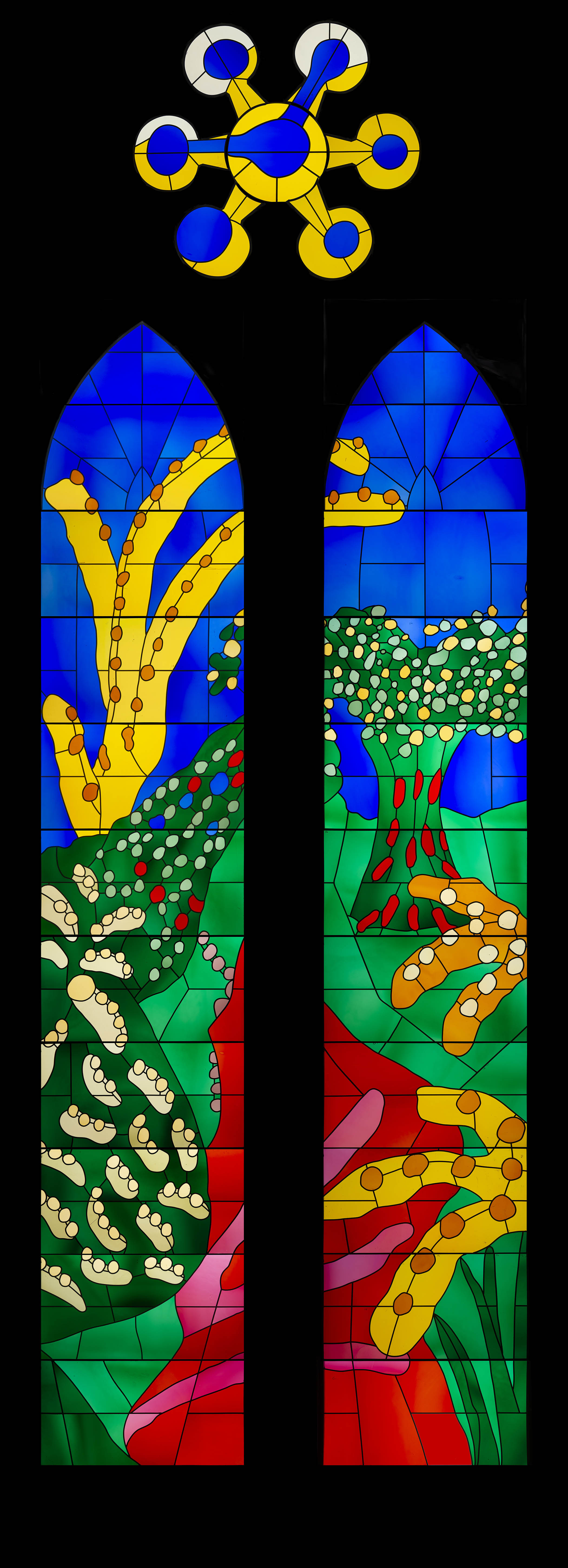
7. Westminster Abbey: The Queen Elizabeth II Window
I watched this window being made over several months with painstaking skill in a creative partnership between David Hockney and Barley Studio in York. I sat with him when it was installed in Westminster Abbey and watched his face break into the broadest smile as the daylight brought his image alive. We discussed the influence of Matisse, so evident in his design, featuring hawthorn blossom floating up into the sky and beyond, while being cheered on its way by a vibrant field of reds, yellows and greens.
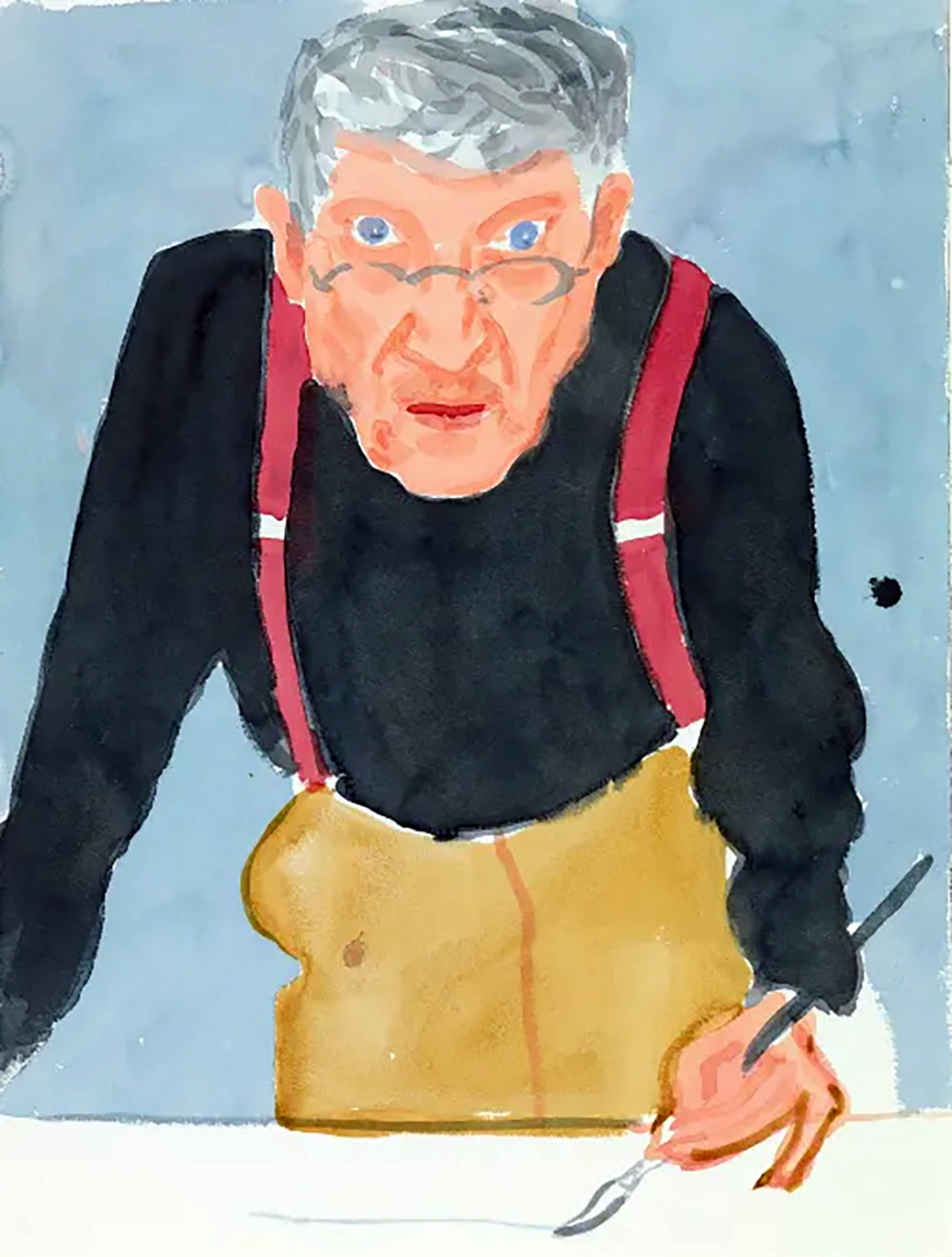
8. Self-Portrait with Red Braces 2003
This painting captures the artist perfectly. He is in his mid-60s and doing what he loves to do, paint and be with friends. His blue eyes pop as he studies his subject, looking ahead while drawing a horizontal mark in watercolour on paper. Note the position of his fingers, the delicacy with which he holds the brush, the command and fluidity he has over line and form. He is, as they say nowadays, “leaning in”, his whole being committed to the act of making a picture. It is an image of a great artist at work.
Photographs by David Hockney, Jonathan Wilkinson, Stephanie De Sakutin/Getty Images