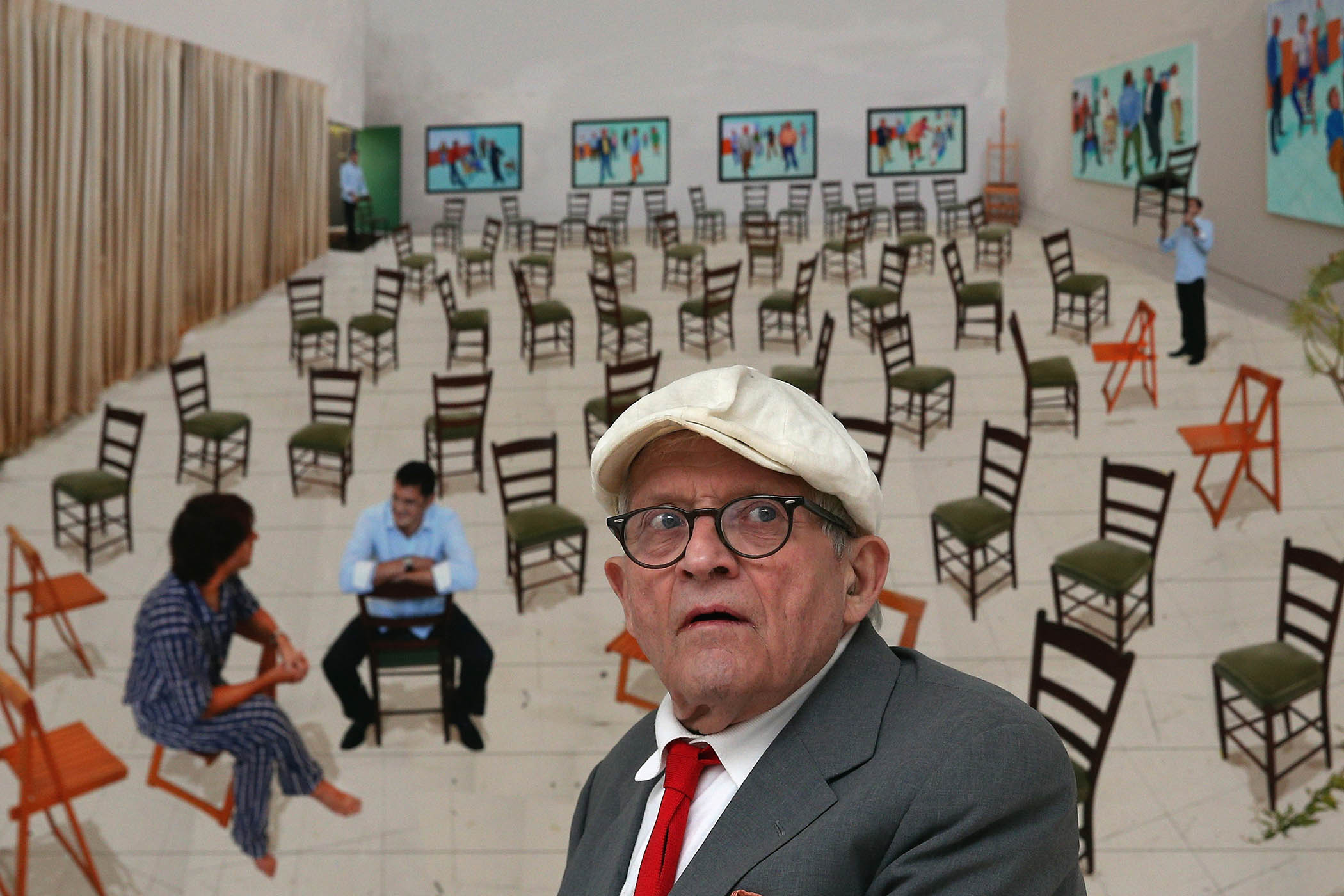
At the top of Mulholland Drive, eucalyptus groves suddenly open on to a sweeping view of Los Angeles. If you’re driving fast enough, it feels as if you’re flying. David Hockney loved that drive. After the artist moved from London to Hollywood in 1964, he took his red Mercedes for joyrides there. In 1979, he bought a house on Montcalm Avenue, just off Mulholland, where he lived and kept his studio until his death on Thursday at the age of 88. Montcalm, calm mountain: a perfect name for a gentle soul whose art soared to great heights.
The feeling of Mulholland’s hairpin turns is one of the first things I can remember – but when I think of the road, I picture a Hockney. His monumental 1980 landscape, Mulholland Drive: The Road to the Studio, is the first painting I can recall having seen. I was about four when my parents took me to visit it at the Los Angeles County Museum of Art (LACMA). More than six metres wide, the painting wrapped me in a warm embrace. My tiny index finger traced a dark blue line as it snaked through hills of bright orange and lavender. It would be many years before I studied art history at UCLA, where Hockney taught summer classes decades earlier, and learned that this British master was applying the skewed perspective of early Italian renaissance paintings to the canyons of California. I did not yet appreciate Hockney’s erudition, or understand that he had rescued figurative expression from the bin to which critics had consigned it after the Second World War. To my child’s eyes, his work just felt right.
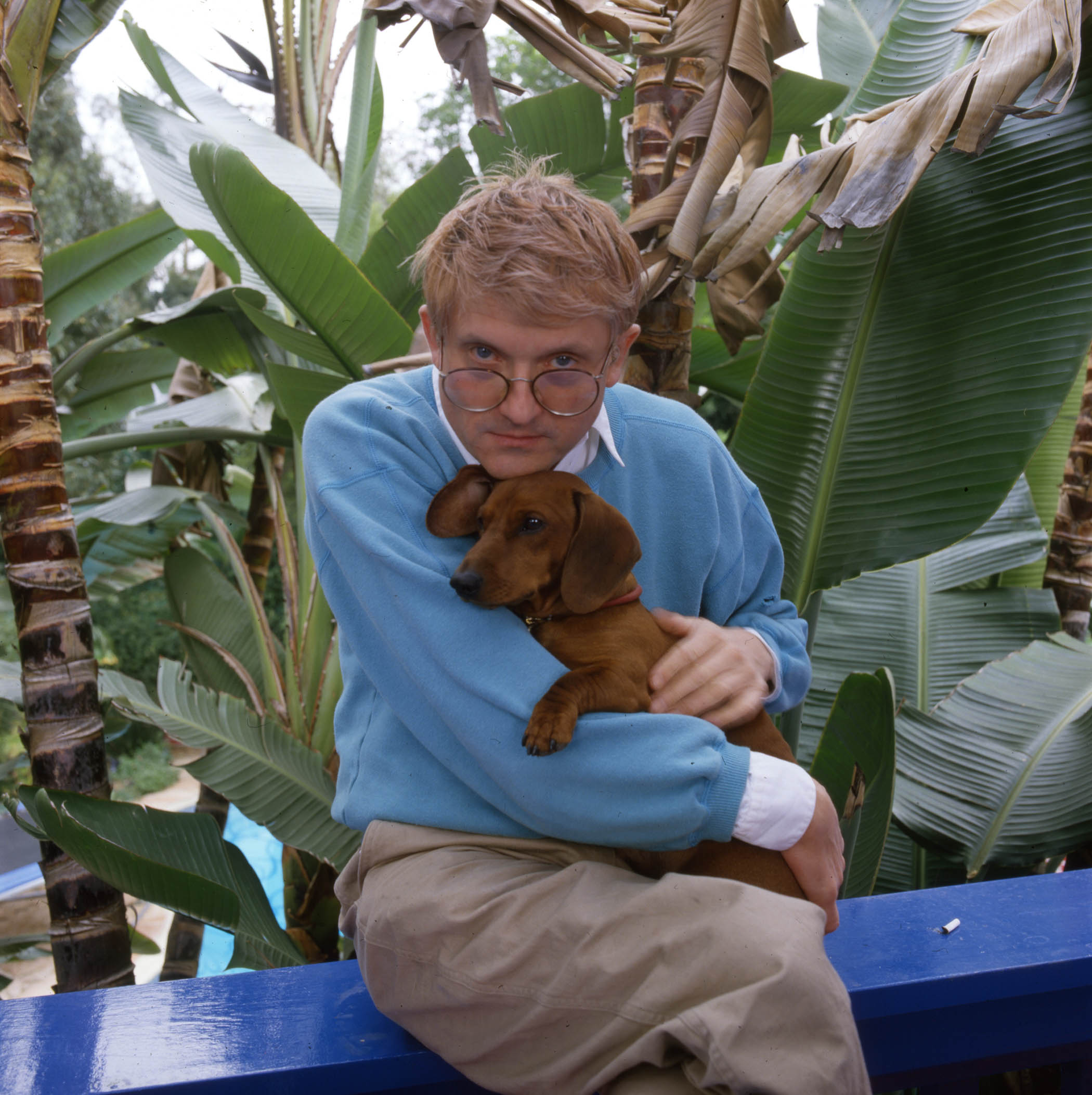
A working-class boy from Bradford, Hockney landed in surf city in his seersucker suit and perceived the place in ways few locals had before. It was a world apart from the muddy vistas of west Yorkshire – and he built his own social world around him on Montcalm Avenue. I studied the portraits Hockney made of that scene in my first job as an archivist at the LA print studio Gemini GEL, where he produced his lithographs: there was William Burroughs, Billy Wilder, Christopher Isherwood, Celia Birtwell, their faces as absorbing as landscapes. Hockney had left me a map to an LA art world that had long since vanished.
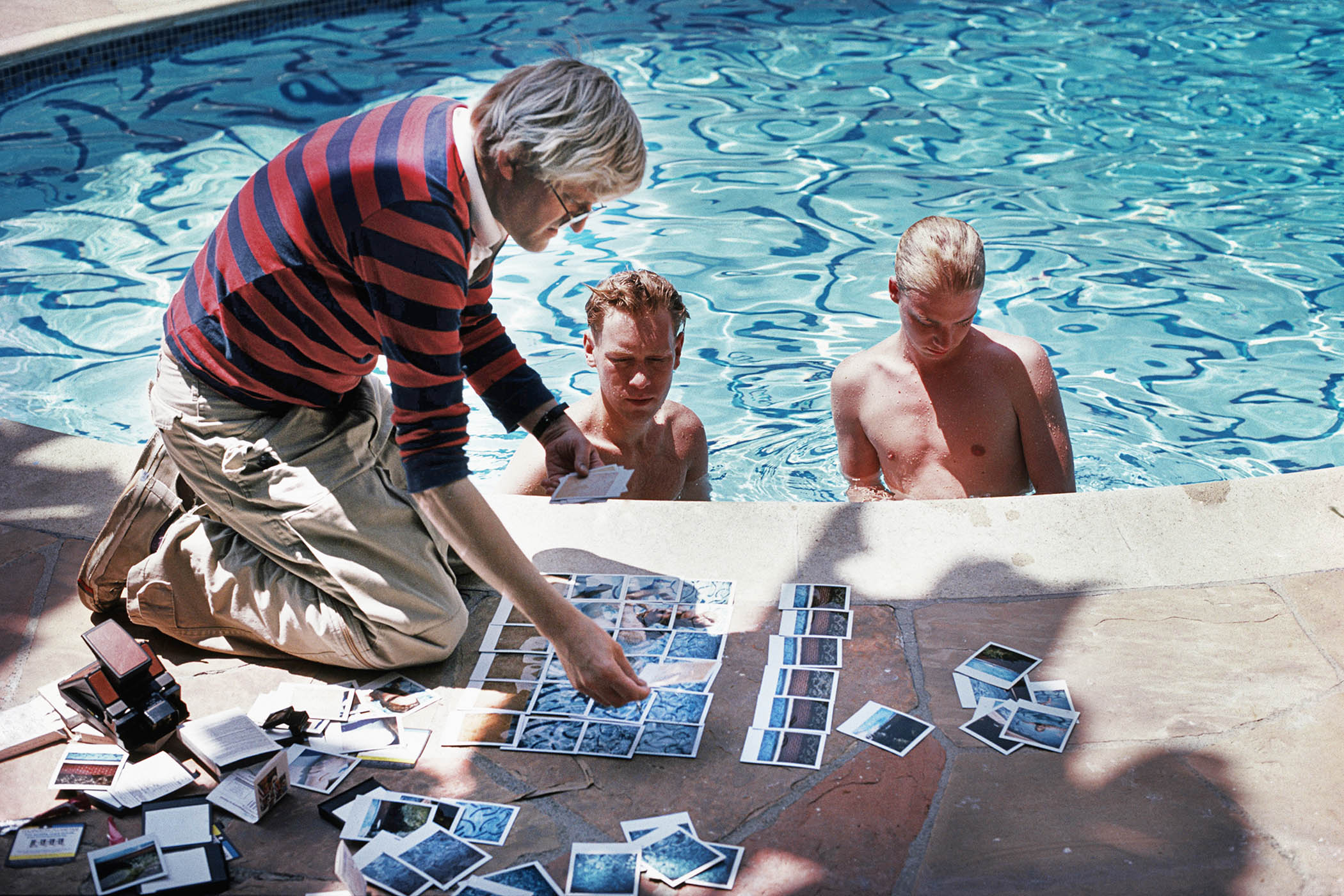
His was a city defined by its intimacy. No painting is more emblematic of Los Angeles than A Bigger Splash, Hockney’s 1967 depiction of a swimming pool after a dive, its white spray of water against still, solid blue. It is utterly singular, and a little erotic. More often, there are men in Hockney’s pools, such as his then-boyfriend and former UCLA student Peter Schlesinger. They are among the first works of art that made me feel hopeful about being gay. It’s easy to forget how daring such expressions were at the time, or how little Hockney seemed to mind. A photo collage of one of his lovers in a pool (a format he invented, called a “joiner”) even made it on to his poster design for the 1984 Los Angeles Olympics.
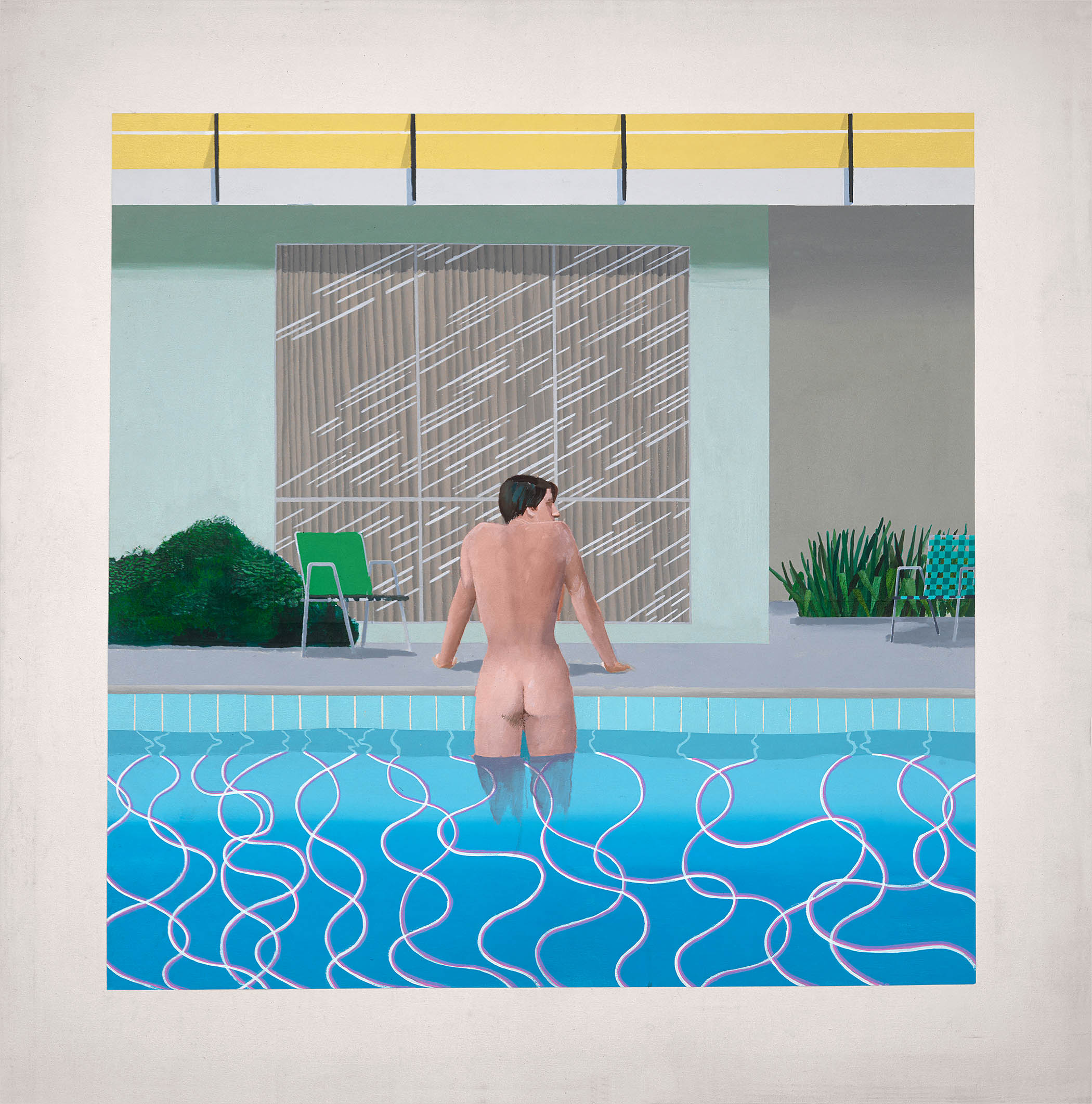
Those chlorinated oases eventually leapt from the canvas into real life. In 1988 Hockney brushed big, blue strokes on to the bottom of the Hollywood Roosevelt hotel pool, where they make a kaleidoscope of natural light. The artist left his mark on other city institutions too, designing riotous sets for LA Opera productions of Tristan und Isolde, Die Frau ohne Schatten and Turandot.
Hockney was preparing for his 1988 survey at LACMA when my sister Emily won a primary school competition to take an art class with him. She remembers they painted huge mountain landscapes that day. He grinned at students’ questions about how to paint, she said, “because clearly he didn’t believe there were rules”. He taught them about the idea of infinity, “about how mountains and the world around us never ends”. So too with art, Emily recalls: “He told me that what I was painting extends forever off the canvas.”
Years later, I would meet my own boy from Bradford. We have a reproduction of Mulholland Drive in our bedroom. On wintry days, it warms the room. If I look hard enough, I can just see Hockney’s red coupe up there, flying down that dark blue line.
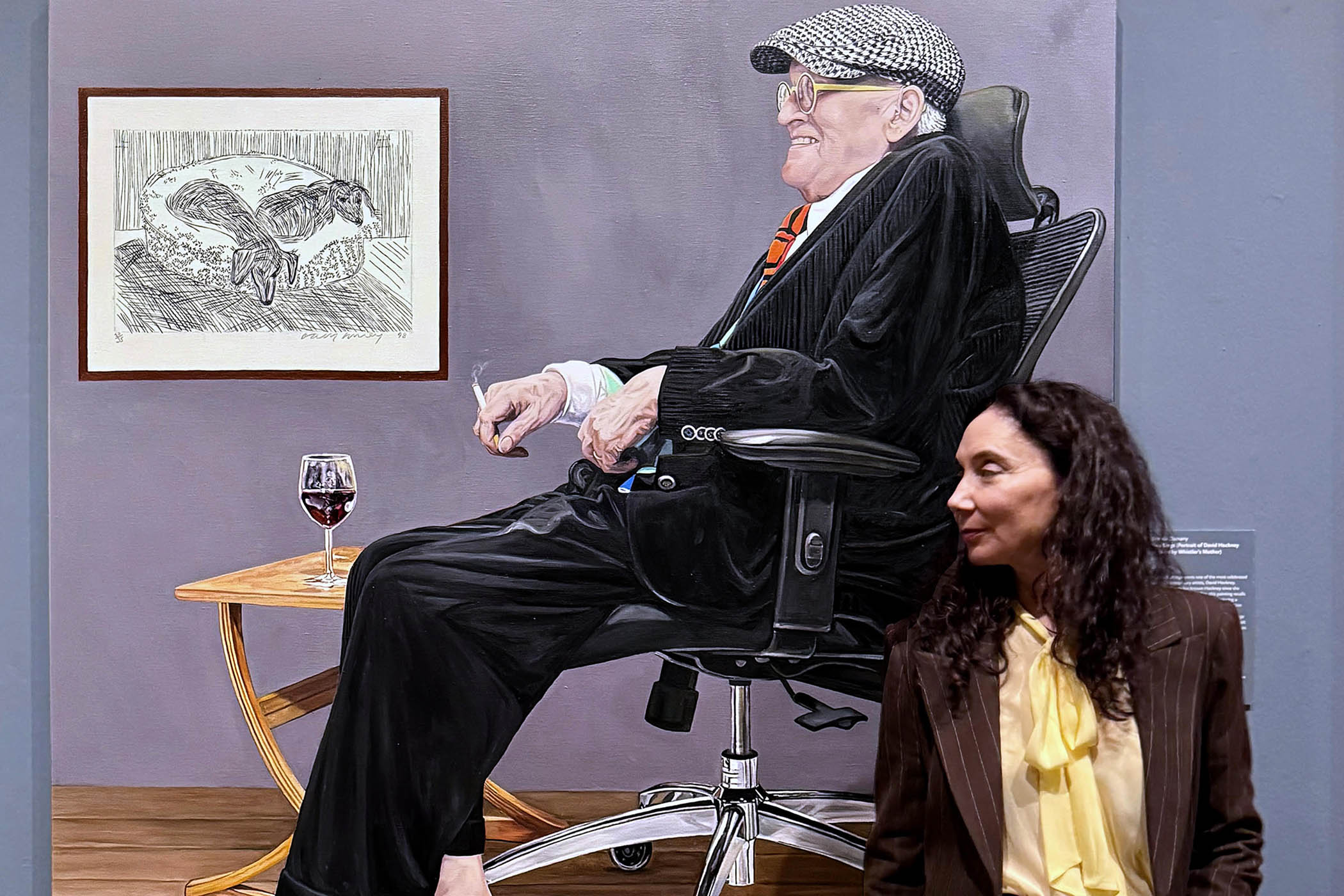
Photographs by Michael Childers/Getty Images, Anthony Barboza, Walker Art Gallery/National Museums Liverpool
Newsletters
Choose the newsletters you want to receive
View more
For information about how The Observer protects your data, read our Privacy Policy