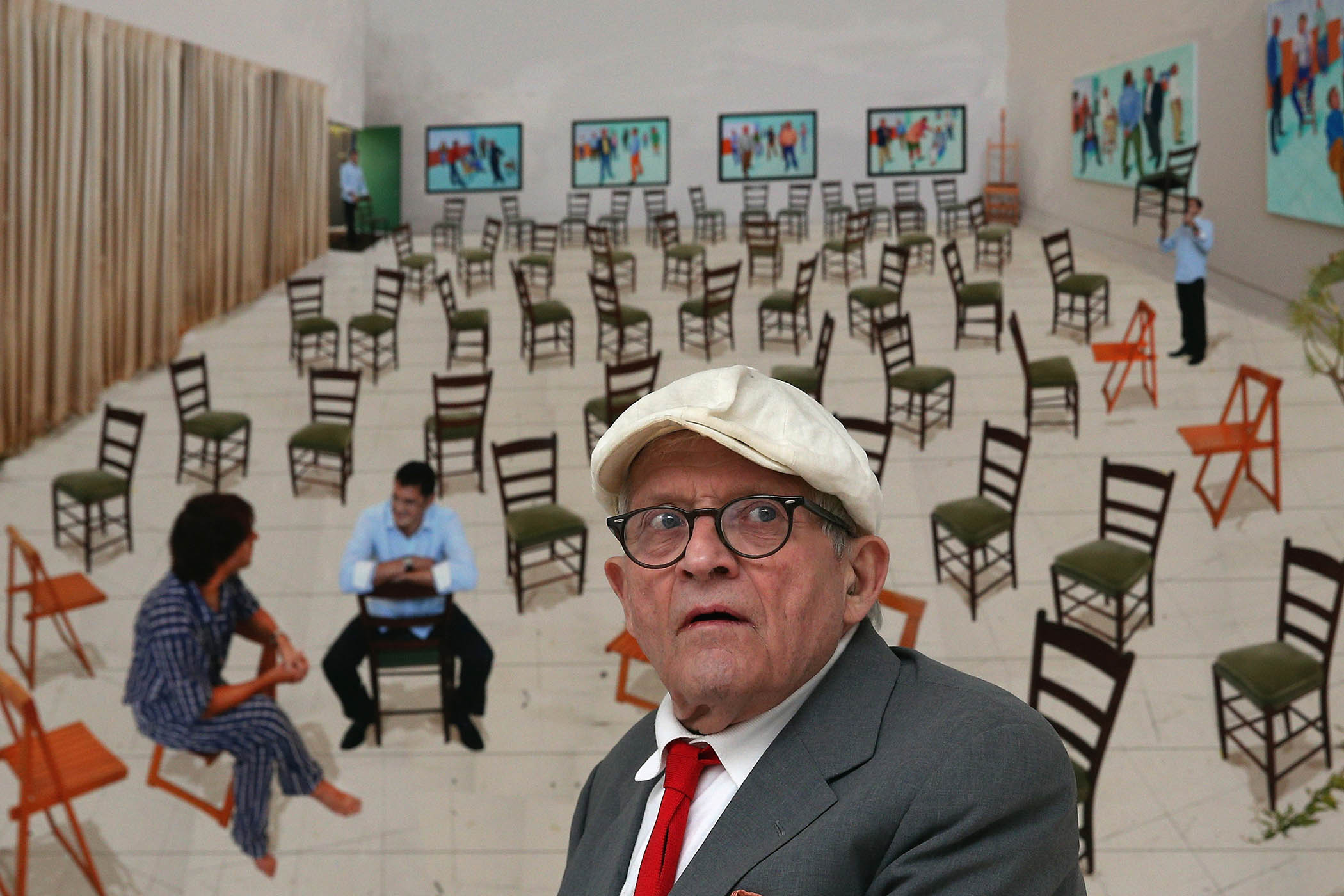
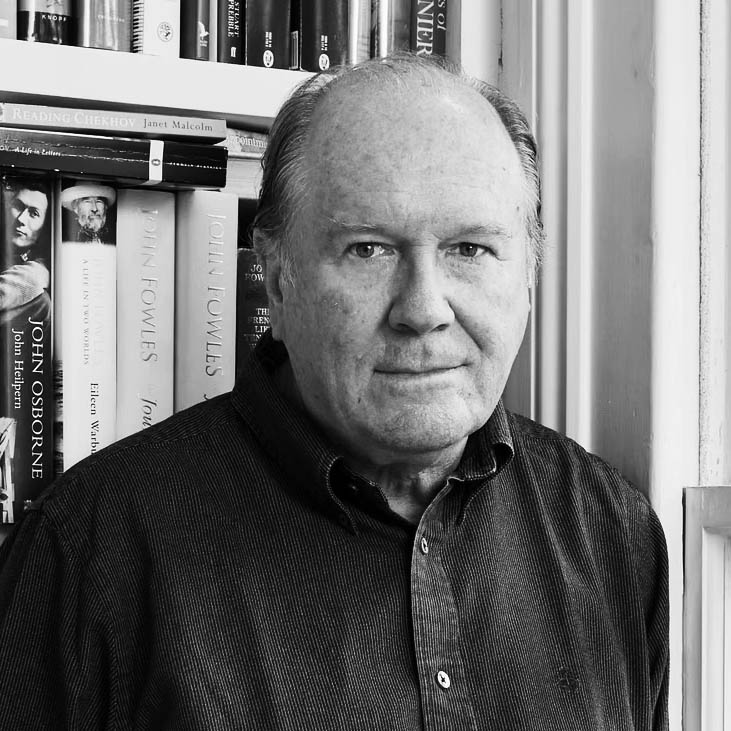
My meandering, faltering footpath through the hinterlands of the contemporary art world encountered, in 2007, the eight-lane superhighway that was David Hockney’s effortless progression through the same diverse realm. I had had the temerity to ask him to design a cover for the 100th issue of Granta magazine that I was guest-editing. Much to my astonishment, he telephoned me, accepted the commission and asked for some “feedback”. The cover he produced (duly ignoring my feedback) was absolutely perfect and thus began an acquaintance with him – I was never part of his inner circle – that endured almost 20 years.
Hockney was not only an exceptional, genius-level artist but he was also a polymath, an avid reader, an intellectual and an all-round really nice man: droll, interested in others, shrewd, self-deprecating but also absolutely, quietly sure of himself, aware of his multitude of artistic gifts and where he wanted those gifts to take him. He didn’t give a fig about art critics, art historians, movements, fashion – what was in, what was out – public perception, and so forth. For him it was all about working, seven days a week. Waking up and going to work.
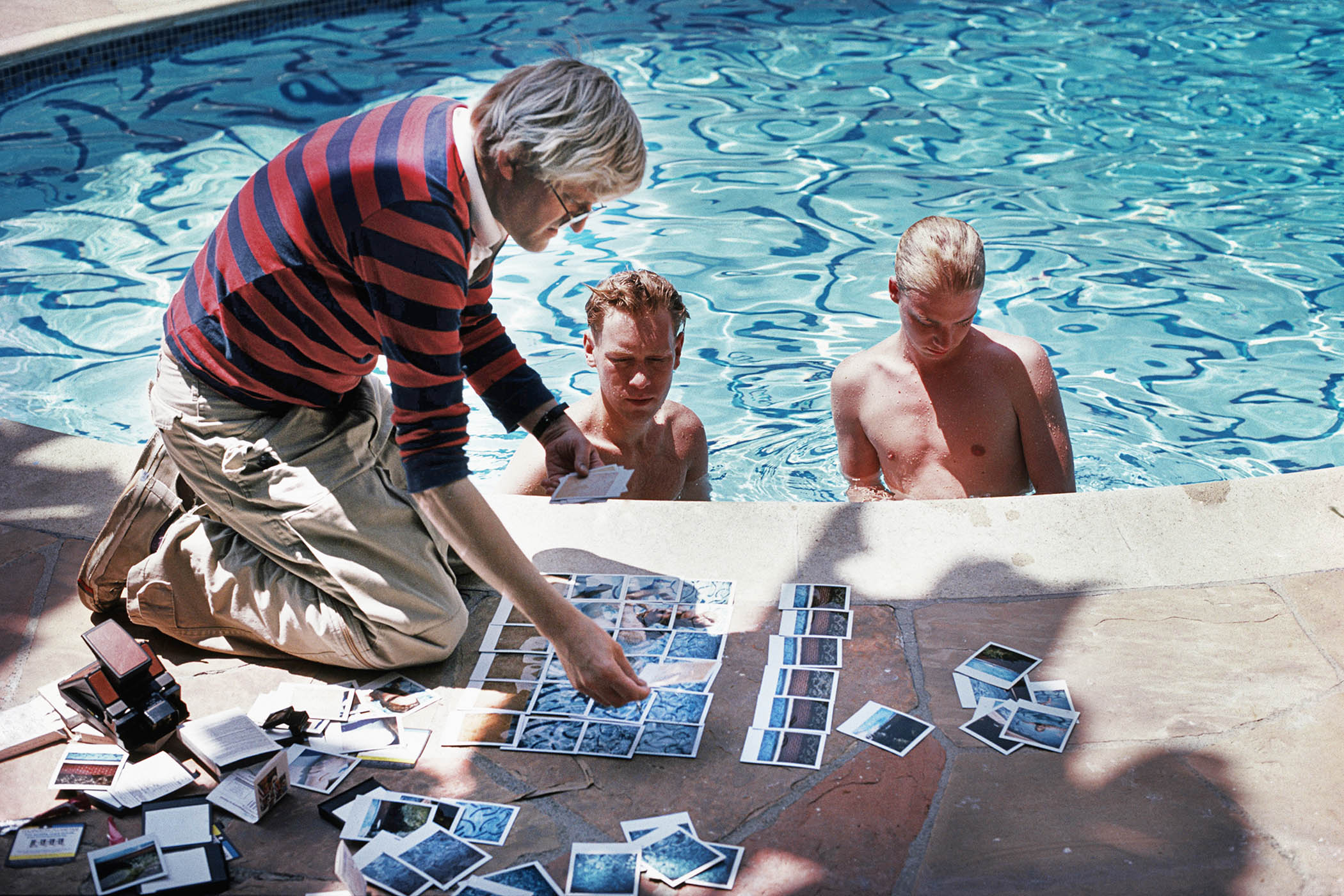
And the work is extraordinary, polyvalent, multifaceted. Not just the usual fine-art accomplishments – drawings, pastels, crayons, etchings, paintings – but also stage designs, faxes, polaroid photographs, iPhones and iPads, giclée prints. Hockney was a technophile and saw new developments in potential artistic expression as an enticing possibility to be explored and exploited. I was fortunate enough to be among a small circle of his friends and acquaintances to whom he sent his early iPhone sketches as he honed his skills in this new medium. I must have over 300 Hockney images in a file on my computer. Sculpture was perhaps the only art form he didn’t engage with but otherwise anything else that might serve his graphic purpose was to be enlisted.
I once invited him to lunch at the Chelsea Arts Club. Untypically, the unruffled insouciance of the members was disturbed: David Hockney was in the dining room. After the meal he asked if there was somewhere he could smoke, so we made our way to the club’s smoking tent in the garden and he held benign court there for an hour, chatting and signing autographs. He was a star, of course, but an unassuming, amenable one.
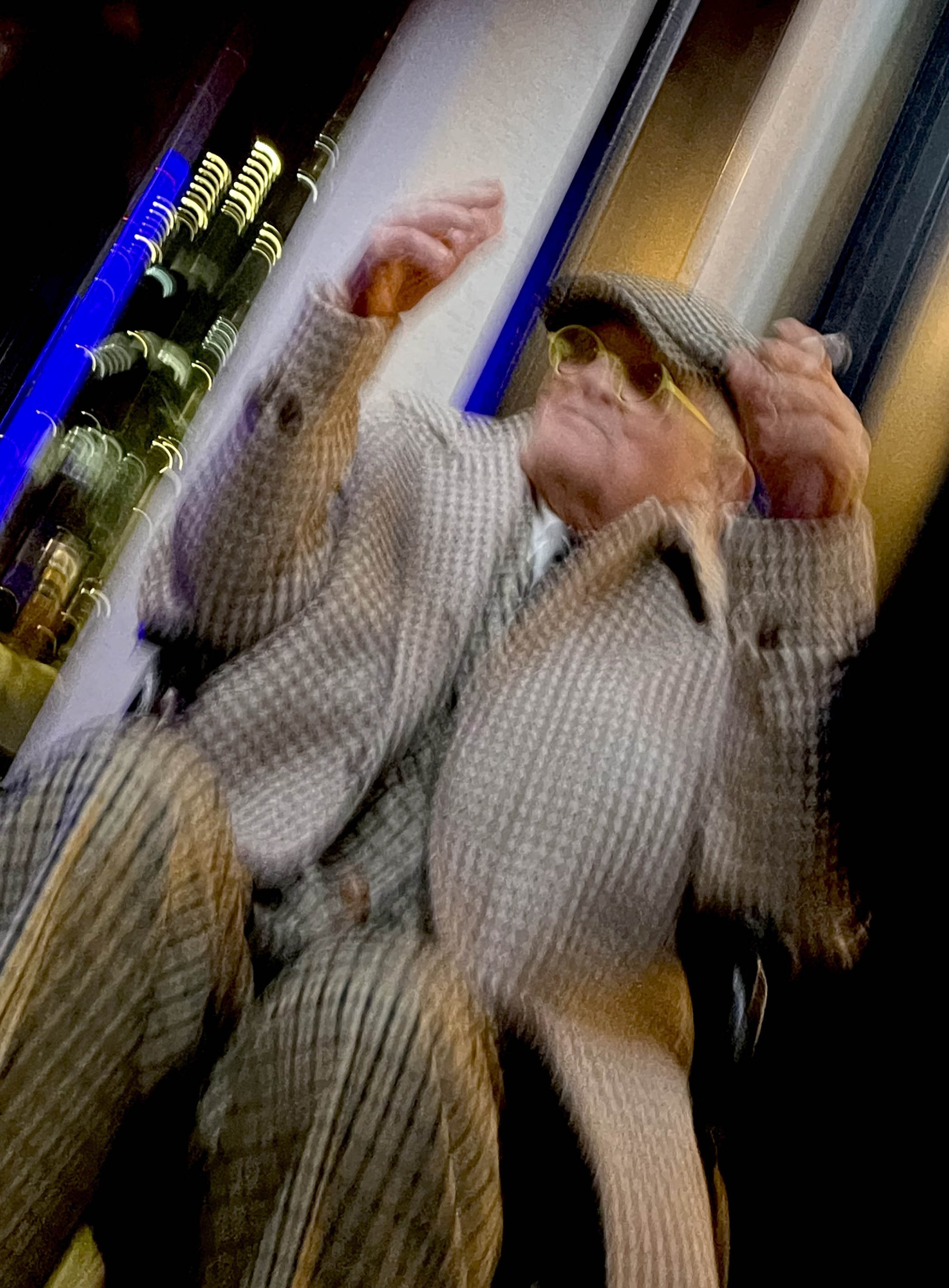
David Hockney in 2023 during a meeting with William and Susan Boyd.
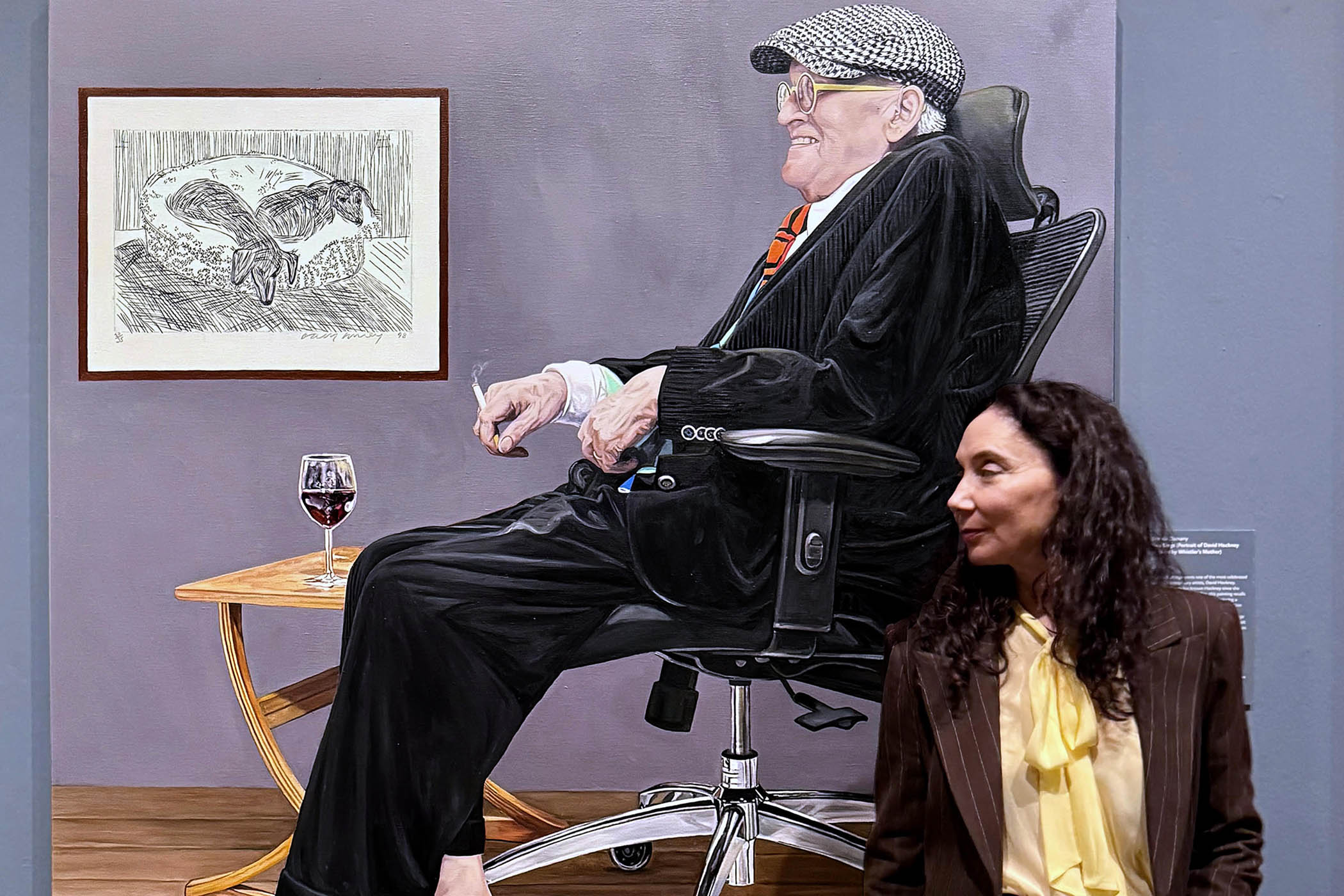
And, all the time, he was an unapologetic proselytiser for smoking. “It makes me relax,” was his explanation of his lifelong habit, he told me. At one of our encounters he informed me he was planning a trip to Noto, in the south of Sicily, and he planned to drive there from Bridlington in East Yorkshire where he was then living. Noto’s a long drive from Bridlington, I said. Yes, he admitted, “but you can smoke in the car”. When I last interviewed him for a newspaper article announcing his multimedia show David Hockney: Bigger & Closer in 2023 he was still puffing away. Six cigarettes in two hours, I counted. He famously said that four of his doctors over the years had urged him to quit. “And they’re all dead,” was his genial observation.
Hockney was also a natty dresser, almost a dandy. Clothes were a big part of his public image. I have a cherished photograph of the two of us – there I am in boring black and white; David is wearing a sky-blue cardigan, white shirt, a red tie, loudly checked orange tweed trousers and yellow Crocs.
His “look” made him recognisable – even in the 1960s with his round, black specs and peroxide hair – which is unusual among serious artists who can normally go anywhere unremarked – but that was only the sideshow. The prodigious work rate always dominated his waking life.
And the work is what he’ll be remembered for and will cement his reputation in posterity. I once asked him if, when looking at the work of a particular artist, he could tell if that artist was good or mediocre or bad at drawing. “Oh, yes,” he said. “Instantly.” We ran through a small gamut of currently famous artists. No names, no pack drill, but he was absolutely right. The ability to draw well is, I believe, and Hockney believed, the fundamental touchstone underlying all serious painterly achievement. If you can’t draw well something will be missing. Hockney was a superabundantly gifted drawer – a member of a small elite cohort that includes Leonardo da Vinci, Rembrandt, Ingres, Toulouse-Lautrec and Picasso.
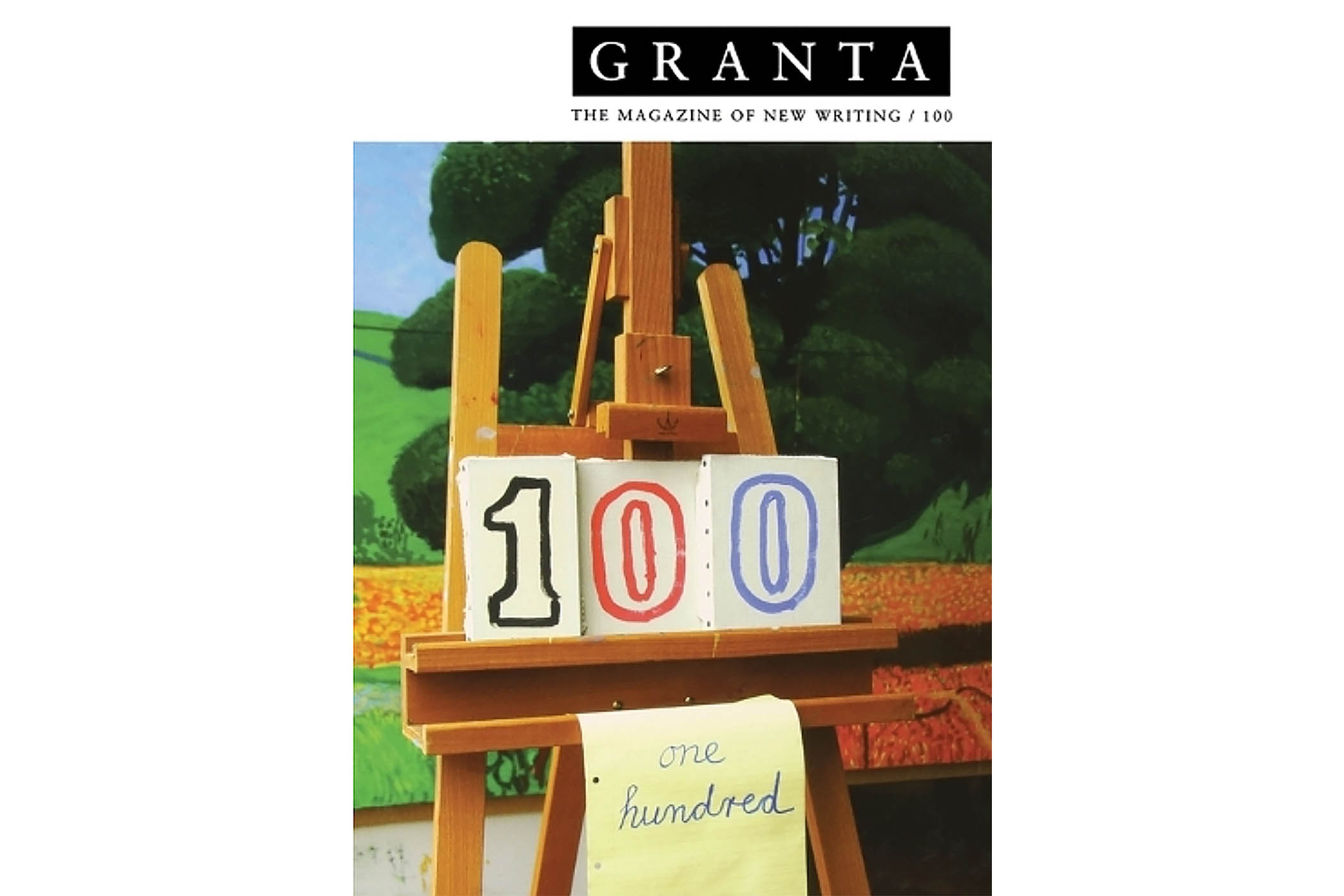
David Hockney’s cover for GRANTA Magazine’s 100th issue.
The late Robert Hughes, eminent art critic, once described Hockney as the “Cole Porter of contemporary art”. This is both unfair and untrue, though I assume Hughes was trying to put his finger on the effortless virtuosity, variety and playfulness of Hockney’s work. Others have compared him to Mozart, another artist who seemed able to excel in any musical form – opera, symphony, concerto, string quartet, requiem – just as Hockney triumphed in all the various art forms available to him. The Mozart comparison is more just but Mozart’s genius flourished within the musical conventions of the second half of the 18th century. Hockney’s gifts broke boundaries and technologies. No one had painted Los Angeles until he did, let alone swimming pools. He transformed the way we think about photography; the way perspective works; the way the human eye operates and differentiates. The only valid comparison that comes to mind is Picasso. Picasso also excelled at anything he turned his artistic hand to. Like Hockney, he was a superb draughtsman and painter, but, like Hockney again, he designed for the stage, he sculpted, he explored the possibilities of ceramics, etchings, lithographs, found objects. What would Picasso have done with an iPhone?
Hockney’s brilliant multifariousness shouldn’t count against him just as it shouldn’t count against Picasso. I’m reminded of the old, somewhat cryptic classical saying that is attributed to the Ancient Greek poet Archilochus. Namely: “A fox knows many things but a hedgehog knows only one big thing.” When you apply that concept to art then this binary division between artists becomes very apparent. There are fox artists and there are hedgehog artists. Lucian Freud is a hedgehog artist, for example. So is Francis Bacon. It’s an interesting thought experiment and one thing is abundantly clear. Pablo Picasso is a fox artist – and so is David Hockney. David Hockney is not an English Cole Porter or an English Mozart. He is our English Picasso. And we are incredibly lucky to be the beneficiaries of his astonishing, exhilarating, enduring artistic legacy.
Newsletters
Choose the newsletters you want to receive
View more
For information about how The Observer protects your data, read our Privacy Policy
Thank you for reading. Tell us what you think by writing to letters@observer.co.uk
Photographs by Dan Kitwood/Getty Images, Susan Boyd, GRANTA