
On Sunday evening, Peter Doig’s acclaimed exhibition, House of Music, ended in the most fitting way as Lisa Damberg, daughter of the late Florian Schneider, co-founder of Kraftwerk, played some of his favourite records and read from his memoirs before a rapt audience at the Serpentine Gallery. The invitation-only event was the culmination of an audacious experiment helmed by Doig and his collaborator, Laurence Passera, that, for the last four months, had transformed the gallery as visitors perused the art on the walls to the backdrop of a continuous ambient soundtrack.
Doig’s intention, as he told me in early October just before the exhibition opened, was to “create a deep listening environment” that, though “random and constantly changing”, would somehow complement his vivid paintings of Trinidad, where he had lived and worked for several years. The idea seemed courageous, but somehow it worked brilliantly, the gallery becoming a hub for music and art buffs of all ages as the word spread on social media that the aptly titled House of Music was something special.
Doig’s extensive record collection – mainly soul, blues, reggae and soca – was played daily by gallery assistants on a vintage Western Electric/Bell Labs sound system, which dated from the late 1920s, and was designed specifically for cinemas that were adapting to the advent of the “talkies”. Two huge Klangfilm cinema audio speakers from the 1950s filled the adjoining rooms with sound, becoming almost as big a talking point as the paintings.
Programmed Sunday sessions featured invited guests – musicians, artists, curators, record shop owners and label bosses – playing records of their choice. A scattering of evening events featured more stellar names doing the same, including Brian Eno, Linton Kwesi Johnson, Bobby Gillespie and Jarvis Cocker. The experience was by turns revelatory and reverent, the gallery becoming a communal meeting place, rather than a staid and silent temple to high art.
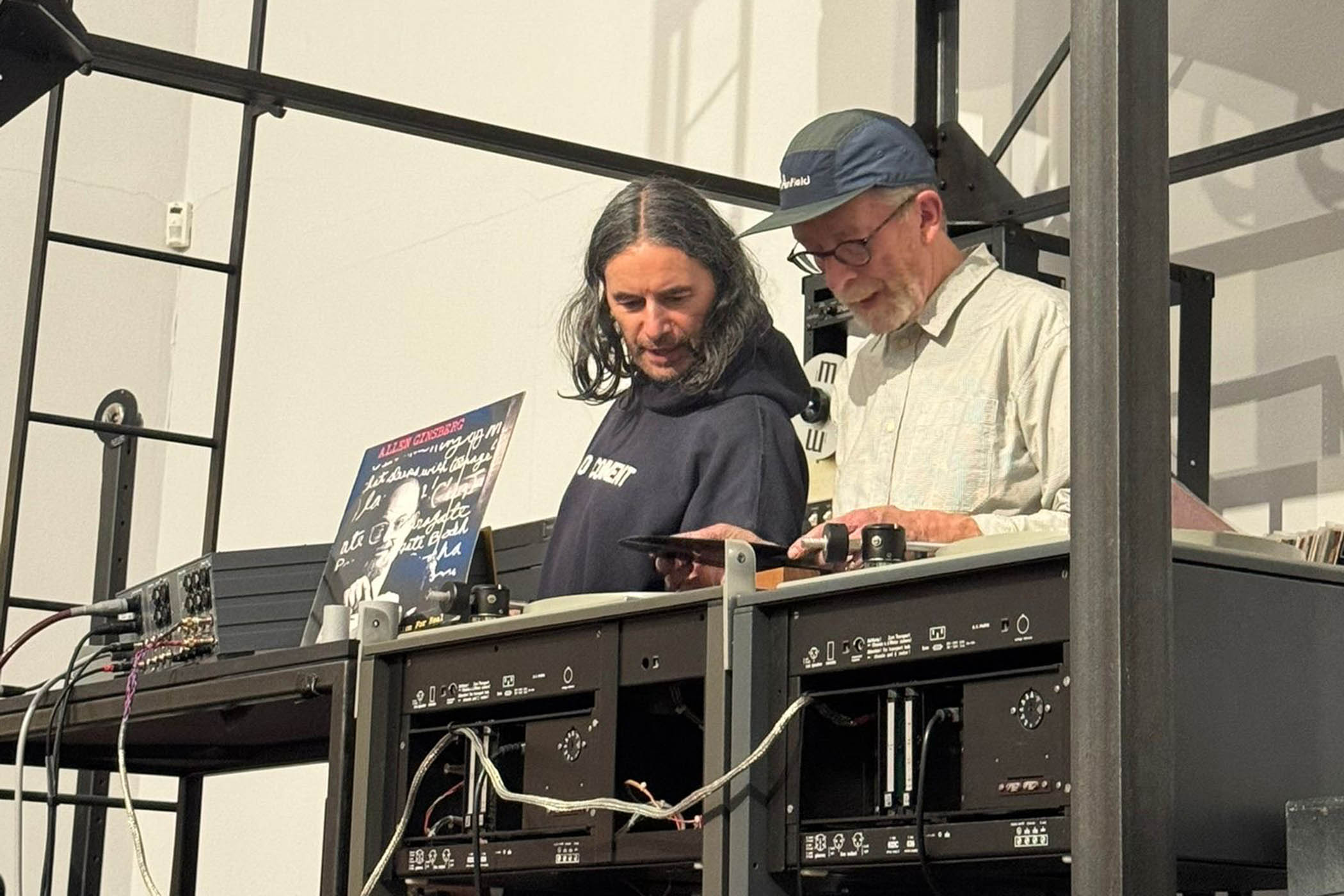
Sean O'Hagan with Laurence Passera, a collector of cinema audio systems
What surprised me, as both a participant and an audience member, was just how deeply people listened, while sitting, standing or lying on the floor of the main room for each two-hour session. For me, the experience of standing before them was both nerve-racking and revealing, but also rewarding and curiously surprising. The cluttered stage, all cables and cabinets, was situated beneath a giant speaker on a mini-scaffolding system, the sound levels and balance controlled by Passera, a collector of cinema audio systems who has an acute understanding of their complex power and fragility.
Up there, under the bright gallery lights, even allowing for the supportive presence of Passera by my side, constantly tweaking the sound, there was nowhere to hide. The system features a single record deck rather than the usual two, which meant there was what seemed like an eternity of time between the removal of one record and the placing and lining up of the next. Some guests were happy with the silences; but being Irish, I felt the need to fill them with meanderingly informative introductions, which seemed to go down well, though it was hard to tell from the daunting sea of strange and familiar faces staring back at me.
In the end, the music spoke for itself: heads nodded to my Lee Perry and Don Cherry selections, a spontaneous burst of applause followed a relatively obscure post-punk collaboration by Jah Wobble, Holger Czukay and Jaki Liebezeit, and a spoken-word interlude featuring actor Jack MacGowran speaking Beckett was met, somewhat fittingly, with perhaps the deepest silence of the afternoon. I think Sam would have approved.
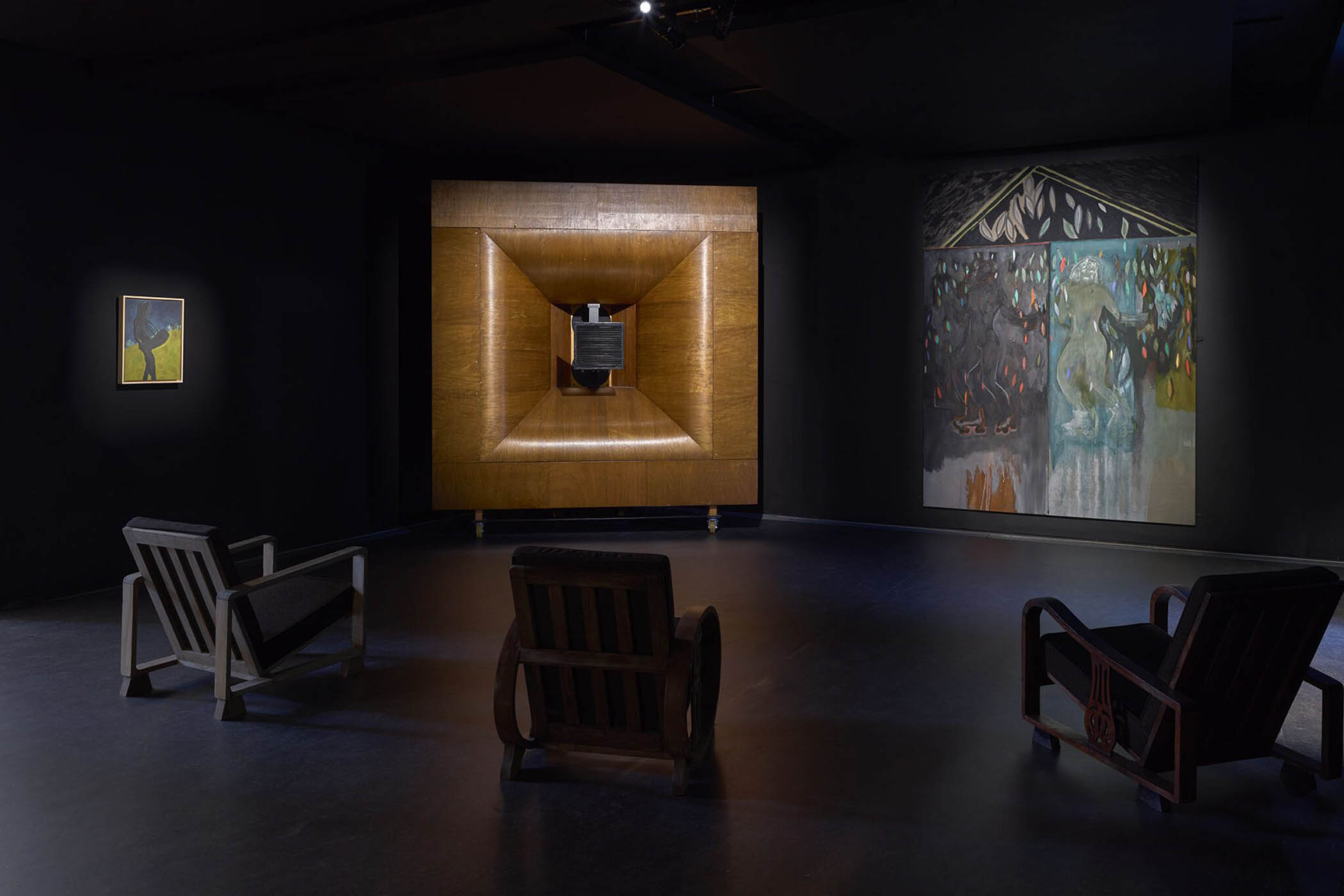
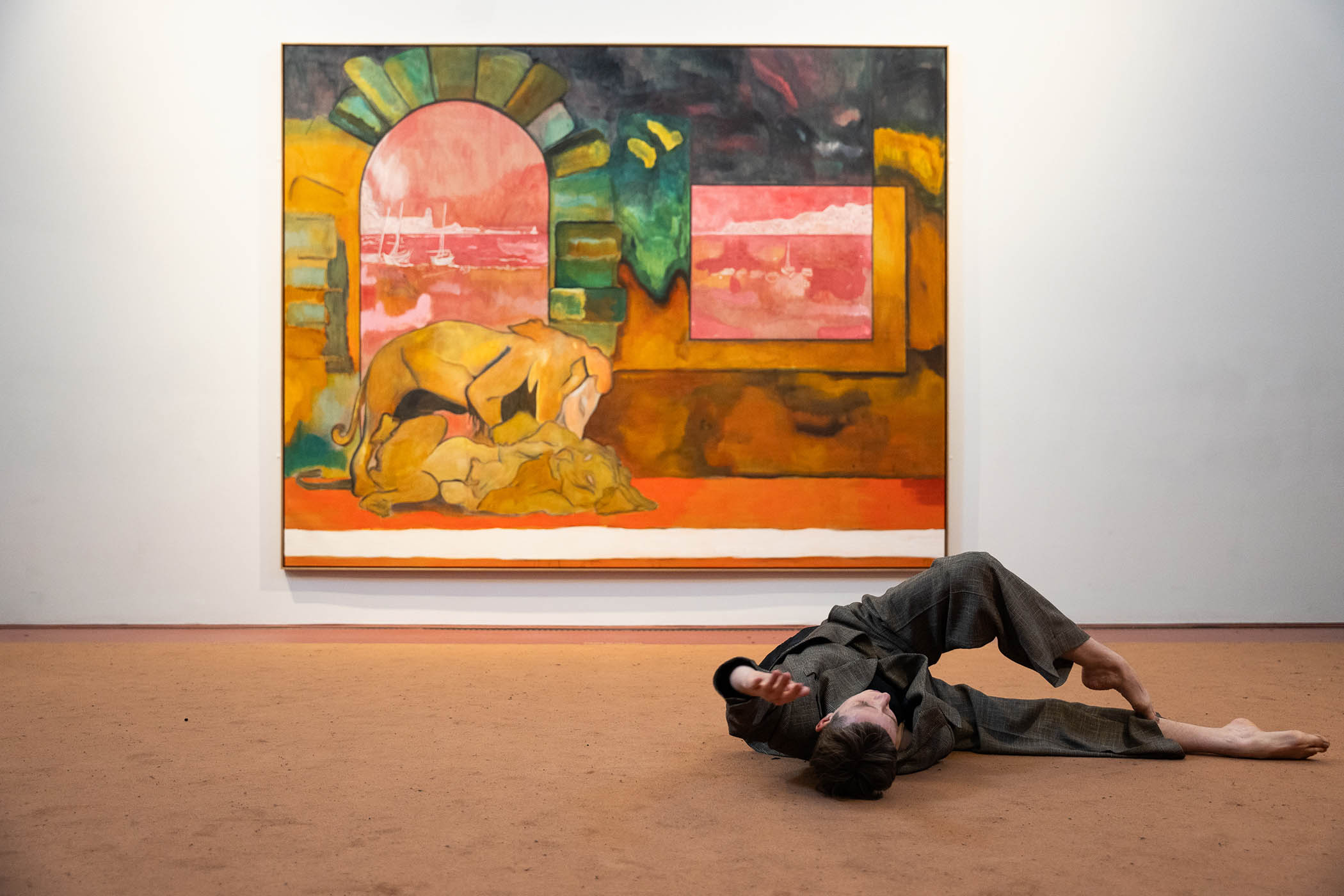
As Doig had hoped, the sound sessions gathered momentum as they progressed. Due to other commitments, I missed Eno’s evening spell, in which he held forth on the records that changed his life, but caught Bobby Gillespie’s selection of Bob Dylan songs, mainly from the singer’s blessedly short-lived born-again Christian era. On the giant speakers, tracks such as Gotta Serve Somebody and Slow Train sounded even more righteous, but in a good way. Again, the audience’s commitment to the communal but intimate listening experience was palpable. As Gillespie ended the session with the Heptones’ reggae cover of Dylan’s I Shall Be Released, my gaze was drawn to a large painting on the wall that featured a prowling lion – a recurring symbol of militancy in Rastafarian iconography. The canvas seemed to glow with a tonal intensity that echoed the song’s message of hope over oppression. Would I have had this kind of deep communion with the work without the musical prompt? I think not.
On the final Sunday, the legendary record producer Joe Boyd hosted the afternoon session, paying homage to the artists who inspire him – Big Joe Turner, Cab Calloway, Toots Hibbert and Mulatu Astatke. In the evening, dancer Jules Cunningham interpreted the music of Erik Satie in a performance curated by Michael Clark. The two events could not have been more different and, in a way, reflected the range of possibilities that Doig’s adventurism opened up.
The evening, however, belonged to the late Florian Schneider, not least because the towering Klangfilm speakers in adjacent rooms in the gallery once belonged to him. That the pioneering spirit of Kraftwerk was abroad in the Serpentine for the final few hours of the exhibition’s duration seemed the perfect coda to Doig and Passera’s great collaborative adventure in sound and vision. “We’ll have to work it out as we do it,” Doig told me last October. That they did; for many of us, Sundays will not be the same again for quite some time.
Newsletters
Choose the newsletters you want to receive
View more
For information about how The Observer protects your data, read our Privacy Policy
Photographs by Talie Rose Eigeland, Tony Bell, Prudence Cuming Associates courtesy of Serpentine