
The detective constable issues a warning: “It’s graphic,” he says. “It’s not going to be nice.” With me at the dining table are my brother and his girlfriend, there to support me. Because I’m about to watch the CCTV footage of the night I was shot.
It was November 2020 and I had been out having a drink in Hackney, east London, when I was, in the most unlikely twist of fate, caught in the crossfire of a gang dispute. Almost three years on I have no memory of what happened, and now I want to see it for myself. I want to know. The air in the room is charged as the detective sets up his laptop and we wait, patiently, for the file to load. Adrenaline surges through me; I feel oddly excited. The constable gives a final warning, then presses play.
A blurred black-and-white form flits across the screen, an image of my former self. From a distance I see her – wearing the fur-collared coat I remember selecting for that night. She makes small gestures; her movements familiar and uncanny. I am witnessing my last standing moments. Then the shot happens. We see me drop.
Ten seconds. That’s how long it takes. Just 10 seconds into the video I become paralysed from the chest down.
I had always imagined it a cinematically romantic fall, like a swooning Hollywood starlet. But the little figure on the screen slumps like a sack of spuds; a dancing puppet with its strings suddenly cut. The shock of that undignified drop extinguishes my sadness for a moment and we all burst out laughing – a shared release of pressure. The constable looks startled.
Sitting in my wheelchair I feel a pang of grief at the recognition of a body I no longer inhabit; sadness as I remember that life I once lived and the freedom – so often taken for granted – that came with that body on the screen. But in witnessing the footage I had reclaimed something crucial: a tether to the truth. Until then, this moment had existed only in the haze of hearsay and imagination but now I had a visual anchor. I could hold vigil for that moment in time, and silently say goodbye to the version of me that once was. To a body lost for good.
I could hold vigil for that moment in time, and silently say goodbye to the version of me that once was. To a body lost for good
I could hold vigil for that moment in time, and silently say goodbye to the version of me that once was. To a body lost for good
I'd actually been on a first date on that freezing cold evening, meeting them at the end of east London's lively Broadway Market. After a few minutes of inevitably awkward conversation, my nerves began to fade. I remember thinking, I like you – we get on well. As the evening went on, getting a little tipsy from a couple of cornershop cans, I was enjoying myself: flirting, swapping life stories, talking about my undergrad in contemporary textiles, and how I loved making art. Discovering the small, everyday things we had in common.
Having decided on one last drink, we stood huddled under the heat lamps outside the Cat and Mutton pub. I can hear music. It's the last thing I remember before a bullet went through my neck.
The shot was fired by the member of a gang, one of a group filming a drill music video on enemy turf – a provocative response to an earlier track released by their rivals. That night, they had travelled from Victoria Park to Broadway Market, crossing territory lines, and passing just meters from where I stood sipping my drink. The moment their adversaries appeared they fired shots, then fled the scene, leaving one person crumpled on the pavement.
The bullet severed my jugular artery and the delicate bundle of nerves connecting my brain to my spine. In that second I lost any movement and sensation in my hands, legs, and lower torso. According to the Air Ambulance team, who showed up within minutes, I had asked over and over: “Why can’t I feel my legs?” They comforted me but did not answer my question. They knew long before I did that, if I survived, I’d be paralysed.
Since that day I’ve heard so many accounts of what happened – from hospital staff, police, the court transcripts, my family; a string of whispers woven into a reconstructed reality. A distorted narrative formed of unlikely images and fuzzy logic: one version where a homeless ex-military man saved me by stemming the bleeding thanks to his First Aid training. One where I died and was revived with a defibrillator, to the disbelief of the medical team. One where, in intensive care and clouded in delirium, I was convinced the staff were trying to attack me, and mouthed “Run for your life” to my visiting family. In later weeks, once the surgeons had reinforced my shattered spine with metal rods, and I had slowly regained the power of speech, I explained to my sister that the medical team had, in fact, turned my legs into corrugated cardboard and that the mayor of London had been to visit me in my hospital bed.
My actual reality was that I woke up in hospital as someone I didn’t know how to be. Unable to move from the chest down. Straddling a line between enormous luck and immense misfortune – so unlucky to be caught in the path of a bullet, so lucky to be scooped up and saved.
It's 2025, five years on, and I am back on Broadway Market. The street is buzzing with life, just as I remember, the smell of artisan coffee filling the air, restaurants packed with creative freelancers at lunch. Now, I'm weaving through shoppers in my electric wheelchair.
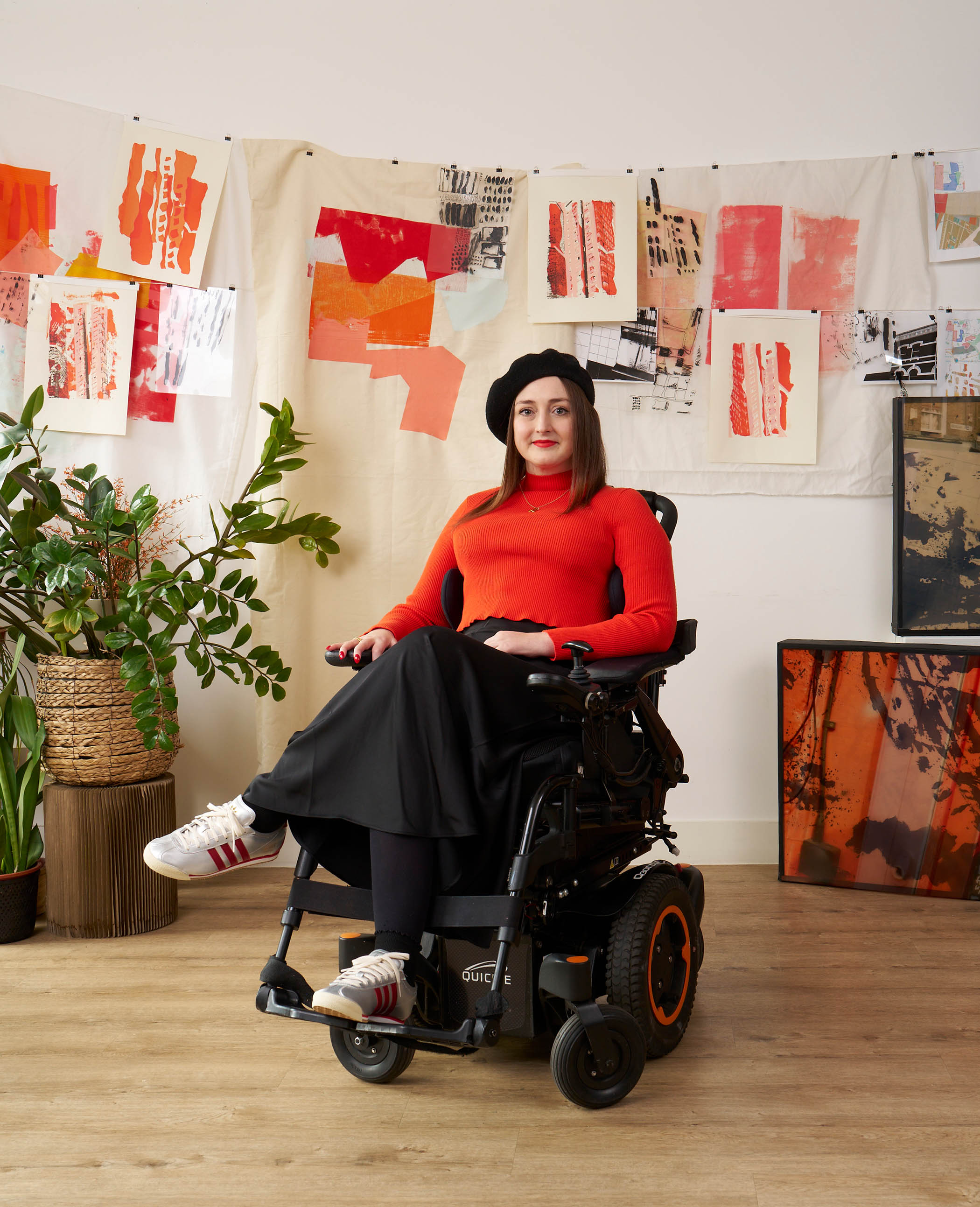
People seem to think that this place should make me feel afraid or sad. Instead, I have a curious sense of coming home again, reconnecting with how much I love this little pocket of London. Part of me is now embedded here; I am part of its history. Having very nearly died somewhere gives you a fragile sense of belonging in that place, a kinship with that landscape. I’m here to work on a new art project – about this street and how my life was changed here. I’m calling it Imprints.
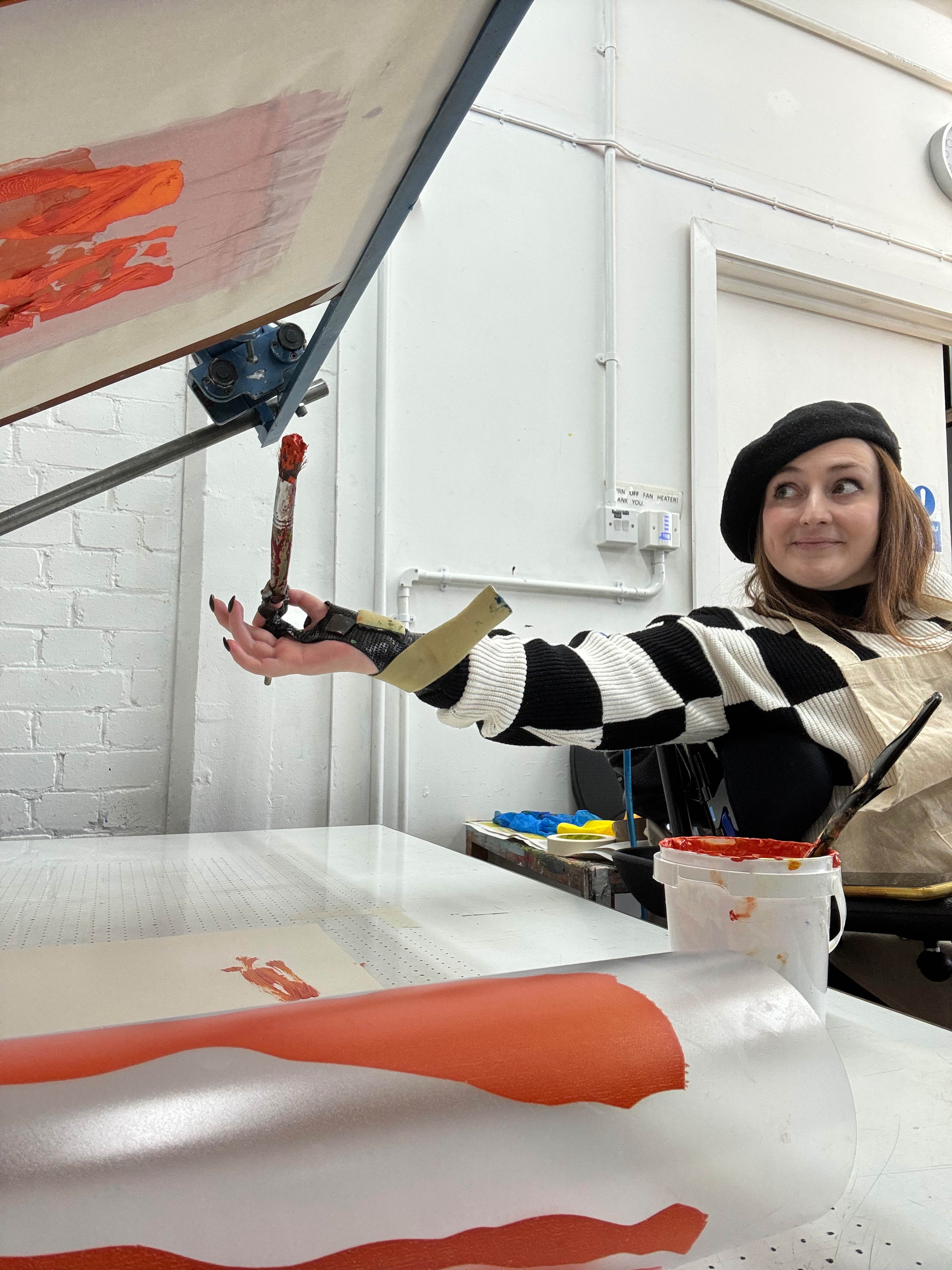
'I’m learning to make art without the mobility I once relied on': without the use of her hands, Natalie has found her own way to create
East London is a hidden map of historic territories, rubbing up against each other like tectonic plates. My shooting was a dramatic flare in a web of overlapping stories of violence, territory, austerity, and displacement. The past decades of gentrification have layered a glossy sheen over the cracks, while ripping at the fabric of long-standing communities. With Imprints I’m tracing those threads, and exploring how the brutal rupture of my spine intersects with broader social fractures. I’m fascinated by what it means to have a place etched into my flesh, and how I might reflect on that meaningfully, using marks made by my living, altered body.
My assistant, Joe Wild, is beside me. I have a 35mm camera at the ready, although I no longer have use of my hands. I can’t lift the viewfinder to my eye or press the shutter but I’ve become used to adapting. With Joe’s support, I compose, frame, focus: I take the role of directing. It’s a delicate collaboration, guided largely by intuition. I want the viewer of my artwork to experience disorientation – texture and colour without definition, blurred focus hooning in on small details. A sense of motion and softness and tension.
In my previous life, making art was a tactile, instinctive act, something born entirely from my hands. Now, living in a tetraplegic body, I create differently. I’m learning to make art without the mobility I once relied on. My body still shapes the work, but my limitations aren’t barriers; they’re entry points. They open up a process where collaboration, connection and trust sit at the heart of everything I make. The work is slow, often frustrating, but what it reveals speaks to the messiness of my lived experience.
Recovery procedure from traumatic injuries like mine is keenly focused on independence. People seem to feel that human dignity is characterised by how much I can do by myself; how closely my day resembles that of an able-bodied person. But in this new body, what has become important to me is not so much about increasing independence, but a deep sense of interconnectedness.
Being tetraplegic shatters the illusion of individualism that we have all been conditioned to aspire to. It has shown me that, while technological support makes my life easier, it is my connections with people and the creative working-it-out together that makes life meaningful and gives me the energy to move. To create art without using my hands. The process is slow, frustrating and revelatory. But it’s mine.
Additional photo: Natalie Bignell
Newsletters
Choose the newsletters you want to receive
View more
For information about how The Observer protects your data, read our Privacy Policy