A customer sits in a salon waiting for a haircut. Or so we assume. He is seen only from the rear. There is no barber, no mirror, no hair on the ground to show the cut is done, or under way, because there is no ground to speak of. The ceiling opens into nothing, the floor falls away and the only sign that this is a barbershop at all is the characteristic tilt of his head.
Peter’s Sitters II is one of Hurvin Anderson’s most famous serial artworks. The Salon paintings began in 2006 with memories of a barbershop run by a friend in a Midlands attic where West Indian men would congregate for conversation and a cut. Anderson has been returning to this scene ever since. There are half a dozen salons in Tate Britain’s lifetime survey, each progressively more minimal, until the customer vanishes and all that remains is a series of rectangles representing mirrors and posters. The salon is redacted, the painting swithers between figuration and abstraction.
Anderson was born in Handsworth in 1965, one of eight children born to Jamaican parents of the Windrush generation. His art looks constantly backwards and forwards, from the lush Caribbean homeland he never knew to his parents’ lives in the West Midlands, shifting between their memories and his own, between the green island and the grey, between imagination and reality.
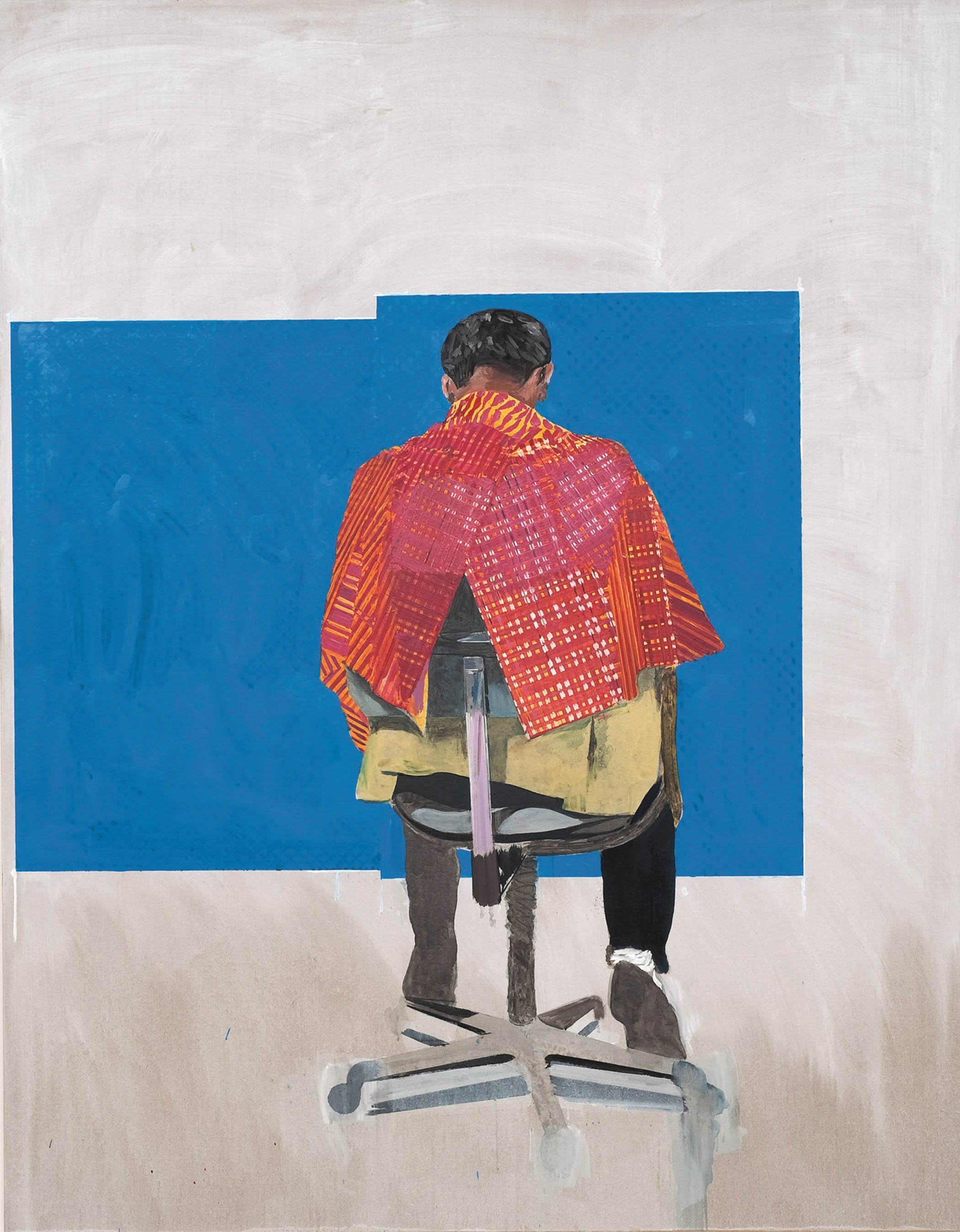
Peter’s Sitters II, 2009
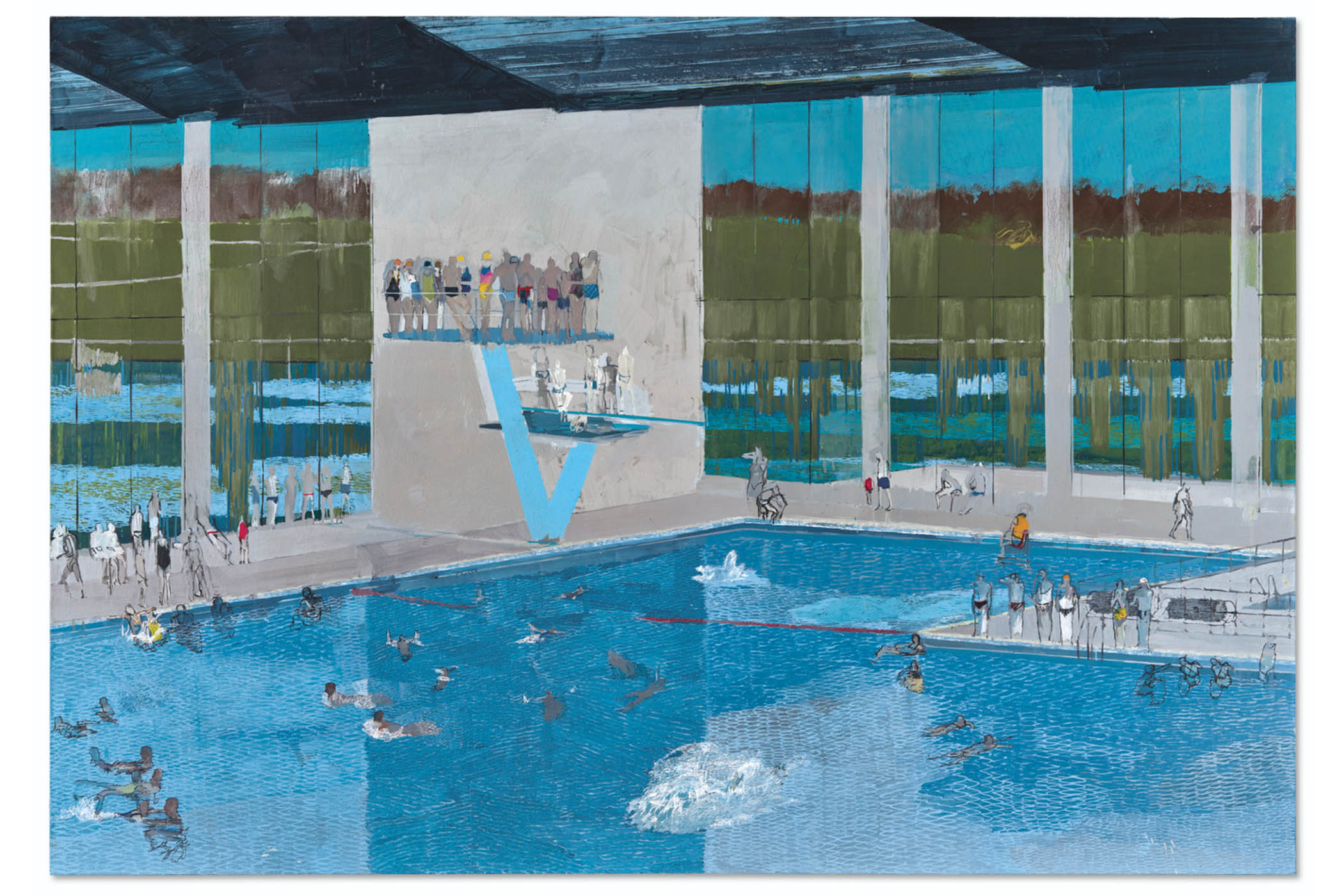
Lines of lads hang around in front of long walls at dusk, or watching floodlit five-a-side-football. They might be here, or they might be back there in Jamaica. Background jungles of dark foliage confuse both time and place. Swimmers hover on high diving boards above chlorinated water that could be anywhere, any year, except when the dreary blue through the windows suggests England.
A woman in a flowered minidress and patent leather boots, standing before blossom-patterned wallpaper, is reprised over and again. In one version, she appears in the black and white of the original snapshot from which she’s obviously derived: a 60s souvenir sent home to reassure relatives in Jamaica. In others, she’s titled Mrs S Keita in homage to the great Malian photographer Seydou Keïta, who transformed his sitters with cheap props and studio backdrops. In colour, she enters the present, a louder echo of her former self.
Verdant foliage bursts out between concrete slabs beneath burning skies. This time you know where you are, but why are the buildings so broken? In 2017, Anderson and his family travelled to the Caribbean, where they found old hotel complexes falling apart along the shores. There are too many of these paintings at Tate Britain, not least because brutalism overwhelmed by nature is a cliche of contemporary art, but also because this series shows so little variation.
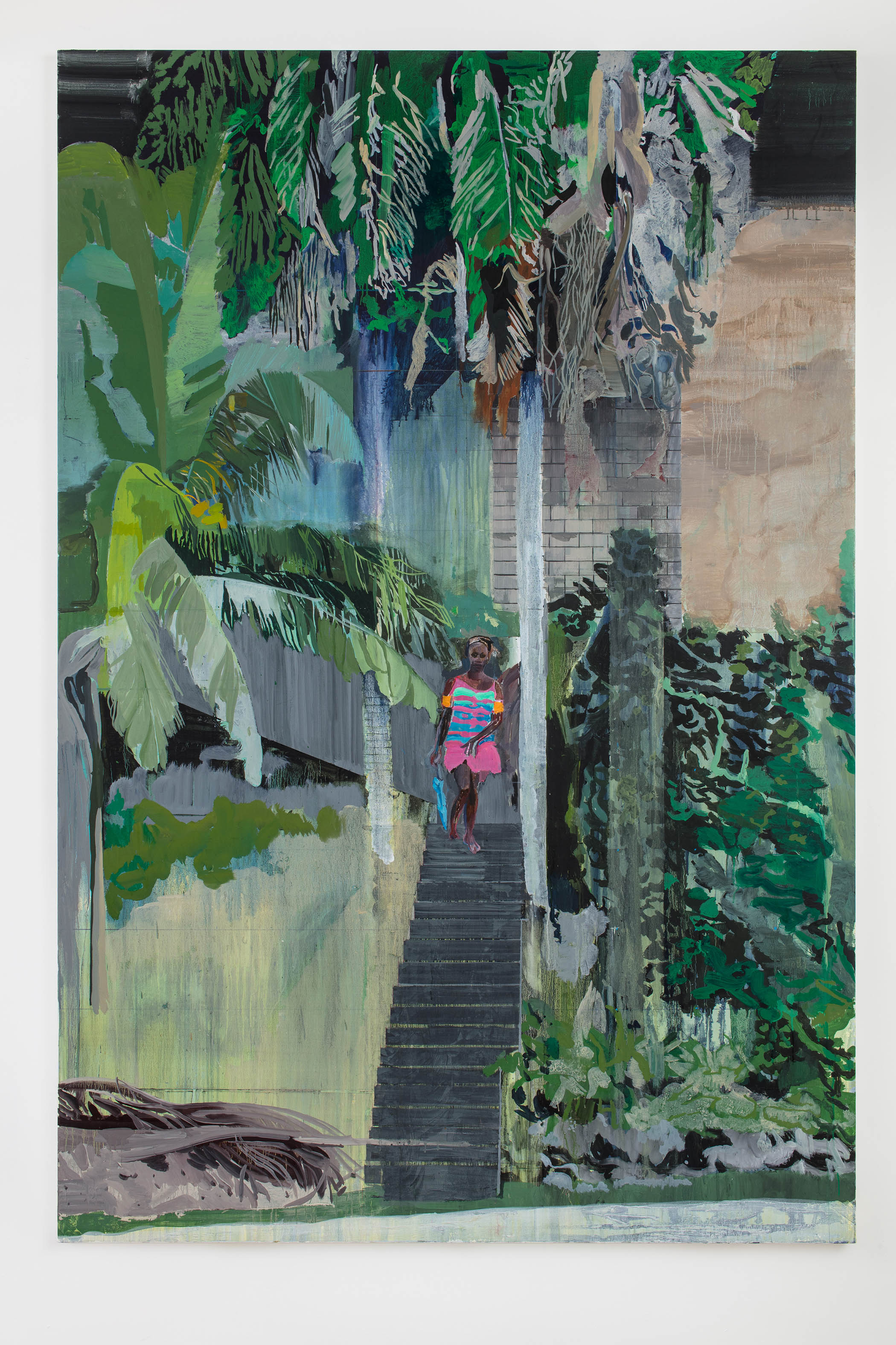
Verdant foliage depicted in Grace Jones, 2020
The characteristic mood and colour of Anderson’s painting is blue. The midnight blue of a wintry English dusk, the blue-greens of faraway jungles, the cerulean he uses for salon mirrors. The atmosphere is deliberately mysterious, objects eliminated or obscured. You don’t see an actual face, as opposed to a blurred oval, for the first third of this retrospective and, even then, it is not a portrait so much as a mask.
Perhaps this is how memory works. The sensation of a place arrives first, faces and figures are fitted in later? Audition, one of the high points of this show, is literally formed in this way, materialising like a memory. There is the original memory of a swimming pool – panels of cobalt and turquoise oil paint, framed by grey walkways and high plateglass windows. Crowds of swimmers are sketched into these washes of colour, splashes and ripples then added in brilliant notations. Costumes are scribbled on to some of the divers, here and there, like an afterthought.
The way Anderson’s paintings are made is as important as what they show. We are never to think that Anderson is painting anything directly. Everything is at one remove, worked up from photographs, filtered through recollection, imagination or nostalgia. It is important that we cannot quite make out the sign in The Banqueting Palace, finished this year, in which Anderson tries to recapture his daily journey home from school. The words are there, but dissolving in and out of focus, measuring the distance between past and present as well as the vagaries of memory.
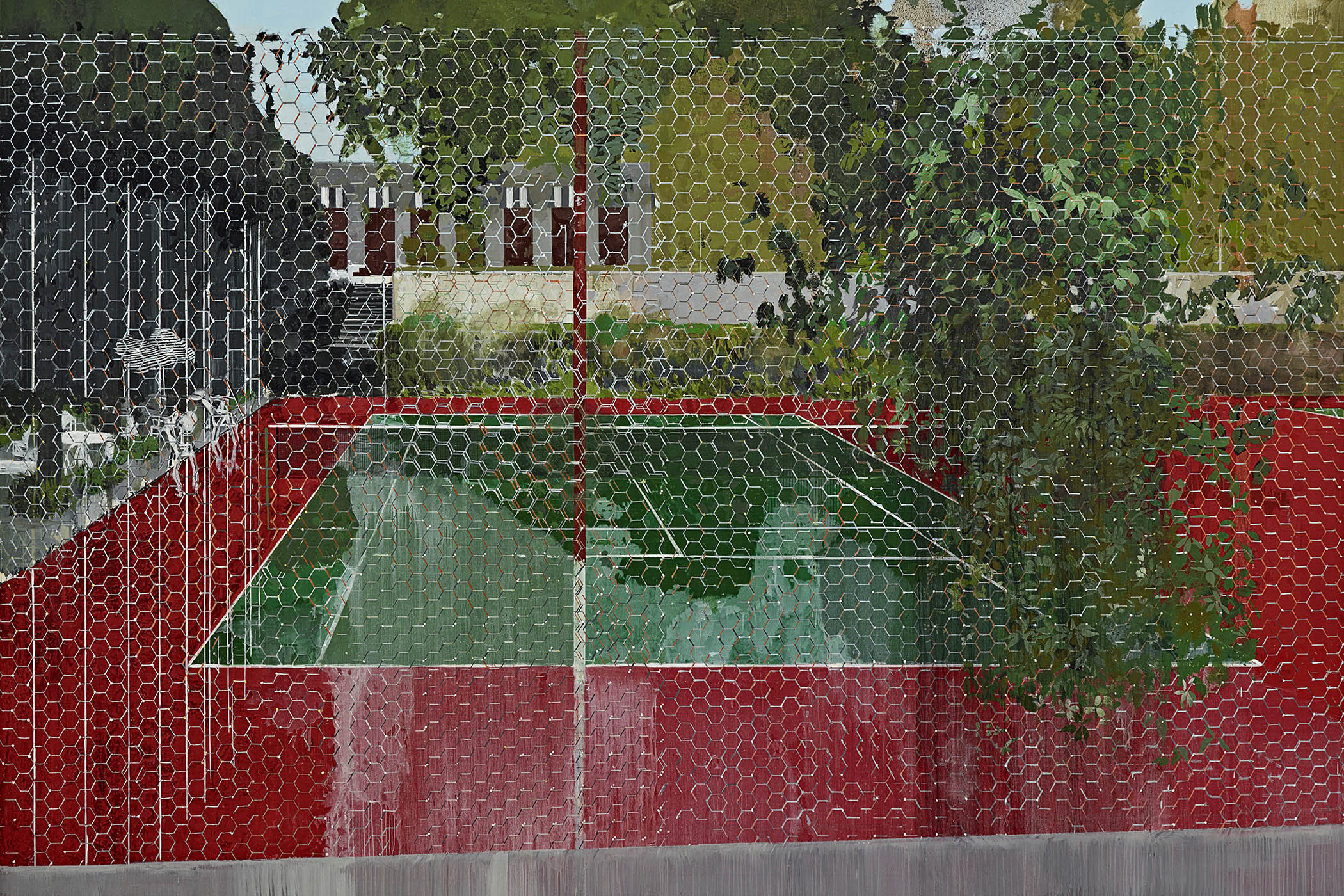
Country Club Chicken Wire, 2008
Anderson, shortlisted for the Turner prize in 2017, elected a Royal Academician in 2023, is represented by blue-chip galleries across the world. His paintings are pensive and meticulous, though there is always a sense of joy in the manipulation of colour and pigment. But an enormous survey such as this one can expose a serial programme as occasionally repetitive.
Newsletters
Choose the newsletters you want to receive
View more
For information about how The Observer protects your data, read our Privacy Policy
I’ve always liked the way one of his canvases can stop you in your tracks in a group show, quietening the surrounding buzz with its slow deliberations, making you think about how a picture is made. Anderson even shows his workings at Tate Britain, with revealing sketches and wonderful preliminary paintings.
But the curators could have given us many more of the ever-changing Salon series and far fewer of the Caribbean country clubs at further remove from the eye behind wire fences and security grilles. All that feels hidden there is money, not the dreams or memories or hopes of past lives that haunt the best of Anderson’s work.
Hurvin Anderson is at Tate Britain, London, until 23 August
Photographs courtesy of Christies, the artist and Thomas Dane Gallery