The most shocking sight at this year’s Venice Biennale turned out to be a no-show: the United States pavilion deserted in the sluicing grey rain. Nobody bothered to visit on press day. The usual spectacle is of milling crowds and black-clad publicists wrangling the world’s media while an expensively dressed artist is interviewed in arc lights before lengthening queues outside. But nobody came. For a time, I was the only one there.
This ostracism has very little to do with the art, mediocre as it undoubtedly is: 20 or so large biomorphic sculptures in various media, from marble to bronze, almost all of which resembled faecal matter. The artist, Alma Allen, is not exactly a name on people’s lips. He was chosen by the American Arts Conservancy (AAC), itself chosen by the state department, for which read Donald Trump. Allen’s own galleries promptly dropped him at the reputational taint and the pavilion’s usual backers – the Ford and Mellon foundations, Guggenheim – all withdrew. The crowdfunding button is still live on the AAC website.
But the 61st Biennale was mired in controversy long before the previews. The institution cannot keep up with continuous global crisis. The Russian pavilion, closed for the last two editions, was allowed to open once more, to intense protests from nations, their artists, the Italian government and the European Union, not least for breaking sanctions. With the resignation of the entire international jury, neither Russia nor any other country, for that matter, will receive its traditional awards. And what is more, Russia can only be seen by the press. By the time the Biennale opened to the public yesterday, the pavilion had to be closed.
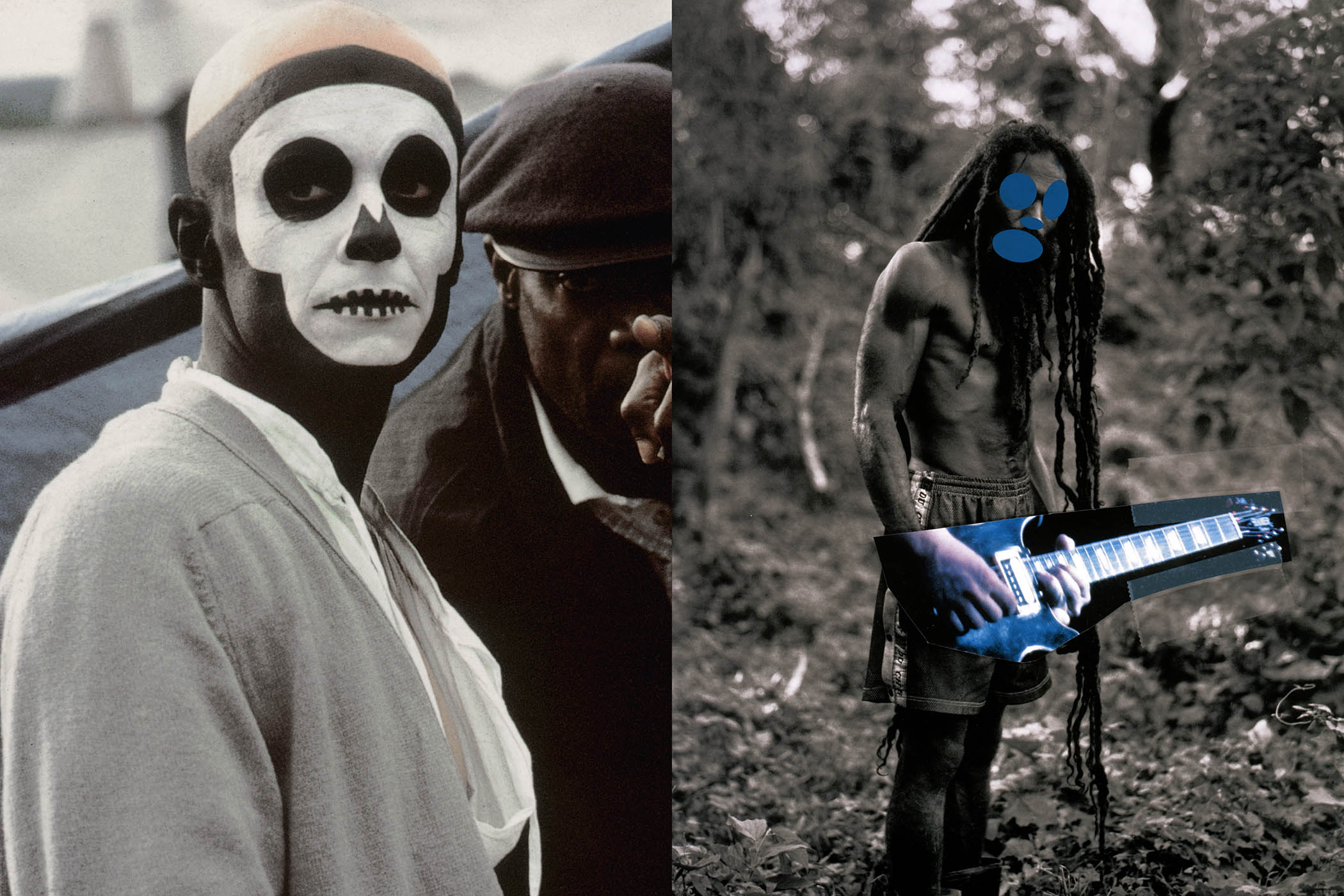
‘The high point of Venice’: right, Arthur Jafa’s Mickey Mouse was a Scorpio, 2017, and far right, Richard Prince’s man holding a guitar at the Fondazione Prada
So here is what we could see, but you cannot. Russia has an artist who scarcely seems to be real. A young film-maker of Siberian origin, returning to her native Buryatia, she appears on screen in deep snow, trying to record an interview with a local pony and a fisherman sitting over an ice hole. A tree (there are whole woods of them in this Biennale) blossoms into a huge bouquet clearly supplied by some Venetian florist. It could all be AI-generated, like the outsize video games pulsating through the Chinese pavilion. At any rate, it is hard to see how this picturesque innocence is anything other than a whitewash.
And so it seems with Israel, sidestepping the headlines with Belu-Simion Fainaru’s gentle installation of rain dripping on water, causing lovely patterns of radiating ripples, as if little fish were plucking at the surface. The ripples gradually slow, then repeat, and so on. The artist was present, relentlessly interviewed, patiently repeating his statement that we should leave art out of politics. But it is far too late in Venice.
Politics consumes the Biennale to such a degree that you enter the national pavilions forewarned if not wary; at least those that are open. Iran pulled out last week. South Africa withdrew in January, refusing to back its artist Gabrielle Goliath for commemorating the female dead of Gaza. Goliath lost her court action against the government and is now showing her video installation Elegy in the ancient Chiesa di Sant’Antonin church in the Castello district. A single harmonic note is sustained by one female singer after another, stepping up to a plinth before ceding to the next. The femicide – in Africa as well as Gaza, not incidentally, according to the artist’s text – never ends. But incessancy, alas, is also the work’s abiding trait, the monotone turning monotonous.
The biggest crowd was, regrettably, the Austrian pavilion, featuring three naked women clambering slowly, and revealingly, up and down a pole
The biggest crowd was, regrettably, the Austrian pavilion, featuring three naked women clambering slowly, and revealingly, up and down a pole
Back in the Giardini, Lubaina Himid represents Britain with the enticing prospect of glorious colour and a soundscape of birdsong and summer spilling out of the pavilion doors. Her lifesize paintings of black tailors, gardeners and chefs, working in pairs, are enacted on multipart canvases that include marvellous high-chrome abstractions of the figurative elements: bright lattices, amorphous blooms, the viscous yellow drips of a lemon tart.
Brightly painted oars carry the timeless emblems of Venice: birds, seashells, fish. Yet all is not as it seems in paradise. A giant fly dominates a scarlet canvas; a prickly cactus blocks the foreground in another. Two architects appear at odds across history, one with an elegant cylinder, the other with a hut on wheels. Perhaps Himid’s vivid figures, so sharp in their animated friezes, are not quite sure of their positions. That uncertainty is spelled out on the wall: is water always useful? Can poison taste delicious? Questions (as well as answers) that are too obvious. But Himid’s art is old-world painterly compared with just about everything around it.
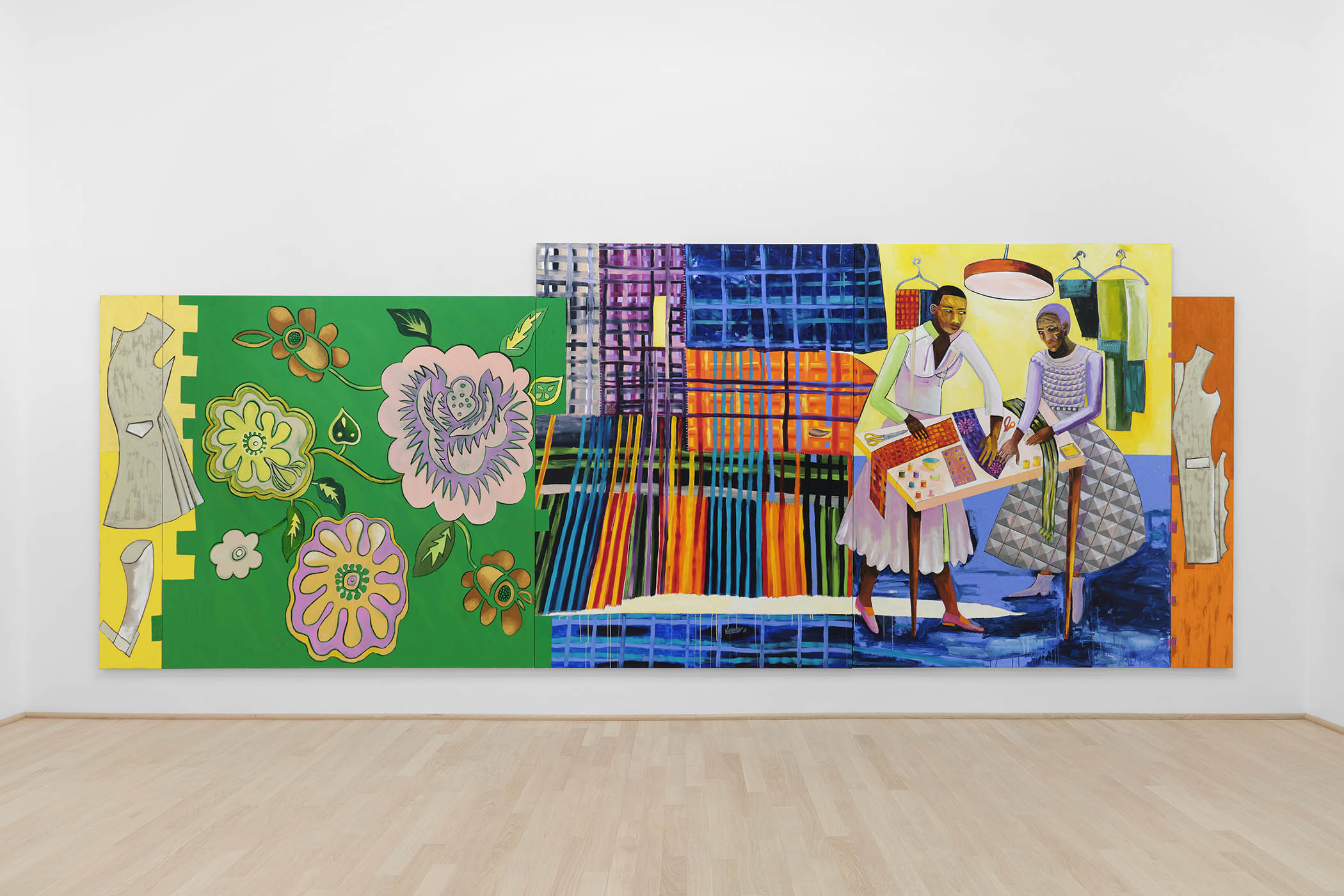
Lubaina Himid represents Britain ‘with the enticing prospect of glorious colour’
Japan has 208 baby dolls in mirrored sun specs quirkily posted all over the pavilion, without and within, just asking to be picked up (each weighing 6kg, to the surprise of art-worlders into whose arms they were thrust). Germany had Henrike Naumann’s Ruin, where the furniture, keys, chairs, shoes and even weapons of East Germany are set into the wall in startling reliefs that appear half in some bygone age and half in our present, in some cases literally bisected. Naumann died in February, aged 41, so this vision carries a deeper sense of mortality.
France has the Moroccan artist Yto Barrada, with a fetching but vacant show of dyed fabrics, intended to represent years of colonialism. Arrayed in colour-coordinated grids of wool, silk and velvet, they look more like immaculate abstractions, or decorous wall hangings. Barrada was one of the artists proposing all kinds of action if Israel was included. She has yet to take up her pavilion and walk.
Newsletters
Choose the newsletters you want to receive
View more
For information about how The Observer protects your data, read our Privacy Policy
Would banning Israel be the equivalent of excluding the TV series Tehran from the Emmys? Everyone here disagrees about whether art (or at least the national pavilion) should be banned or censured. Speaking of which, the biggest crowd on the first preview day was, regrettably, the Austrian pavilion, featuring three naked women clambering slowly, and revealingly, up and down the nautical equivalent of a pole, in the shape of giant mast. A fourth is submerged in a tank of urine (allegedly), while sewage appears to explode in a glass gallery. Not that anybody was looking at that.
Finland had cloud forms, all whirling downpour and gathering mist, somehow created out of silvery hair, each with its own force of personality: the climate bodied forth in larky figures. Abbas Akhavan has transformed the Canadian pavilion into an ultraviolet hothouse, where Queen Victoria’s favourite lilies are growing on a mirror-bright pond throughout the Biennale. I saw the bottom of the Black Sea, literally, in films of barnacled shipwrecks in the Romanian pavilion and the whole world classified in floor-to-ceiling postcards, from urns to mountains, kings to kittens, in the Spanish pavilion.
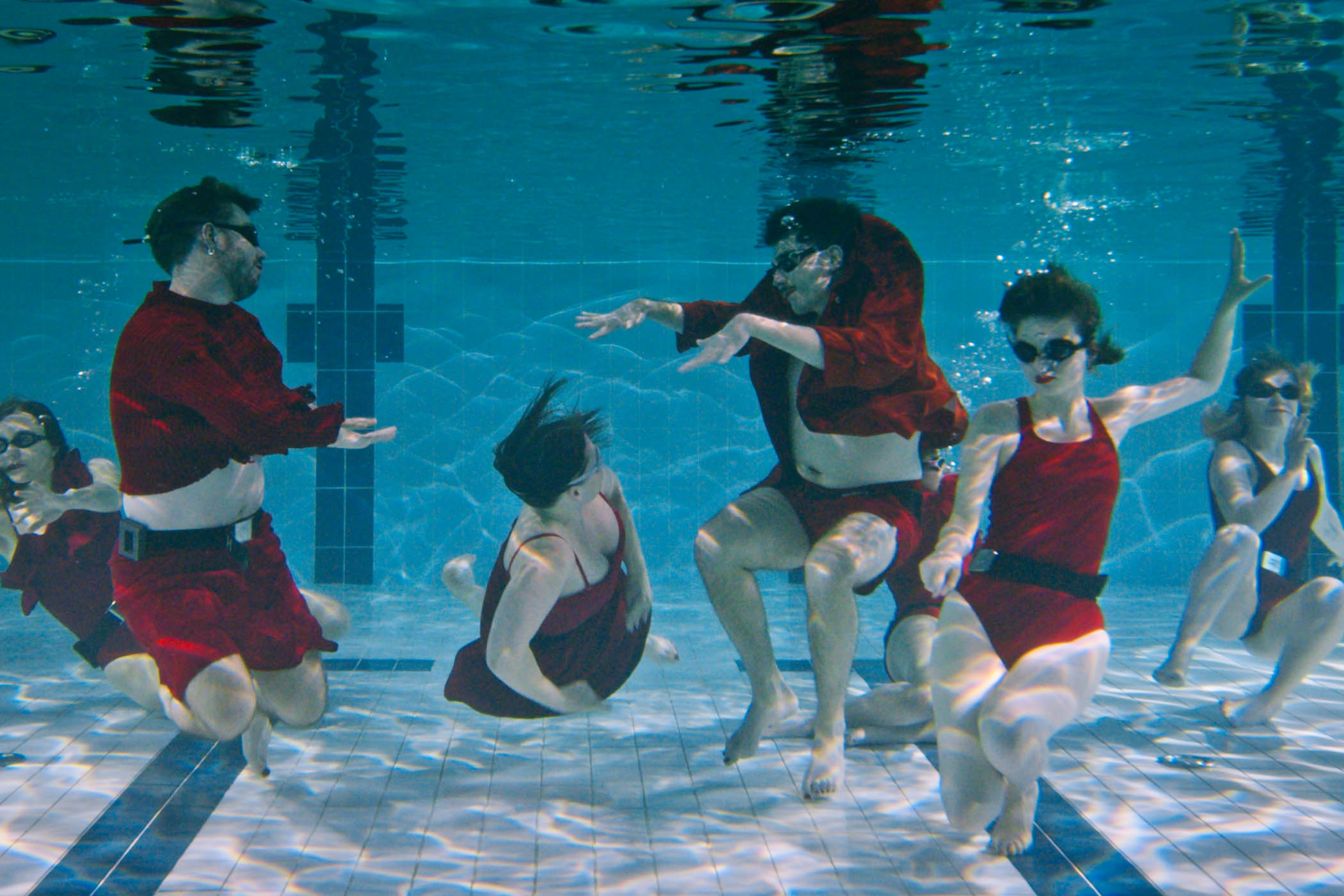
Venice is like this. Out of the great art wave flooding the city (500 and more participants this year), you must hook your own shining fish. The Barbadan sharecropper hacking at a beet while explaining the way the landscape depicts society in Annalee Davis’s enthralling Arsenale exhibit. The children in the Saudi animation who scream so loudly they accidentally disturb the bees, who pollinate the wrong plants, and so forth. The Filipino mariner trying to speak to someone across time whose voice he cannot make out, as on a broken Zoom call. This inability to hear anything back has a terrific parallel in the deaf choir in the Polish pavilion, signing underwater, where they can talk to each other, but the rest of the world cannot hear.
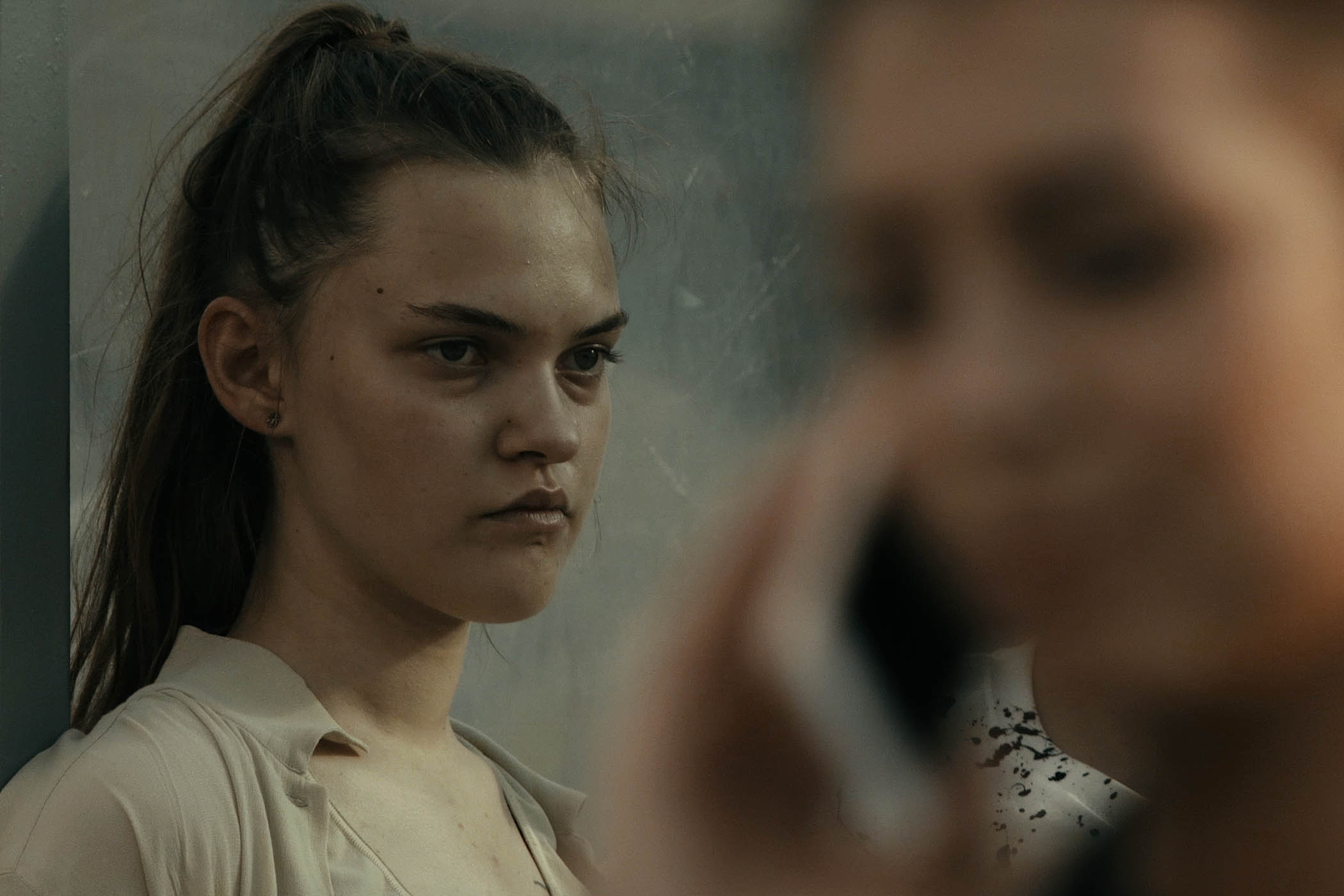
‘Worn down by war’: Malashchuk and Khimei’s film about Ukrainian youths
By general consent, the best shows are outside the Giardini this year (where Qatar is about to enlarge the increasing Gulf state presence with a new pavilion, the first in 30 years). The subtle paintings of Lorna Simpson at the Punta della Dogana, the serene music inspired by Hildegard of Bingen in the mystical gardens of the Discalced Carmelites in Cannaregio.
I loved the Ukrainian duo Malashchuk and Khimei’s two-film installation down an alley in Dorsoduro. Each shows a night-long rave, the dancers stumbling into the streets of Kyiv at dawn. In the first, they are exhausted with joy, in the second worn down by war. Russia has invaded, and the difference between elation and fear is revealed in their young faces.
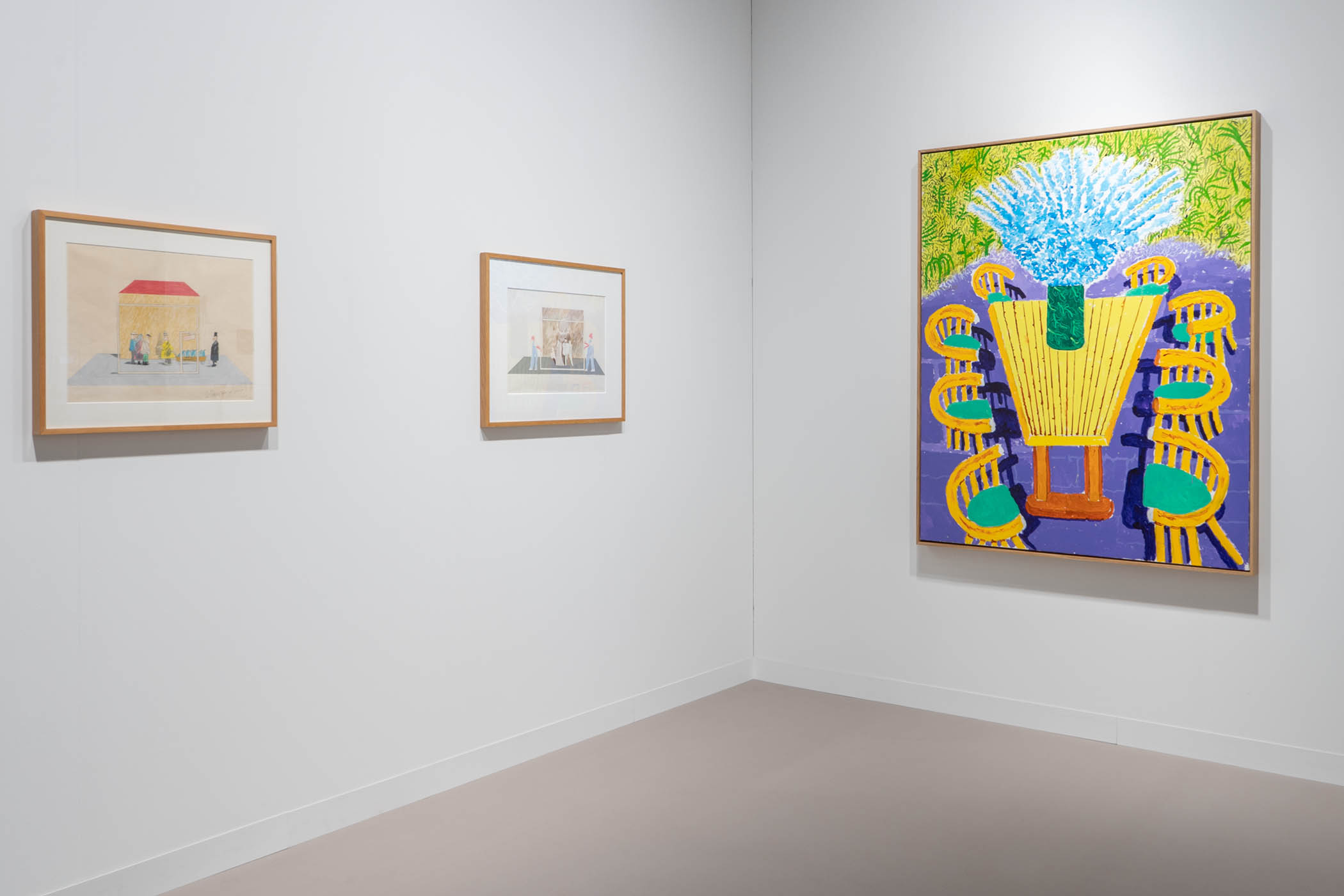
But for me, the high point of Venice is Arthur Jafa and Richard Prince at the Fondazione Prada. The pairing shows both American artists adapting images for the most sardonic purposes; Prince’s black man holding a guitar in his (now) white hands, condensing one history of US music; and Jafa juxtaposing Mickey Mouse with a black face painted with a white skull, exactly the weird combination of Mickey’s minstrel face.
In the vast show, the latest work is best. This is Jafa’s beautiful elegy for a friend. The screen is black but for a shimmer of white dots, shifting and swirling like a murmuration, coming in and out of focus before dissolving, then partially reappearing. The soundtrack also hovers on the edge of dissolution. The effect is mesmerising and sorrowful: you want the twinkling energy to return, you want to see it again even as it slips from sight and memory. It is the most universal elegy, from this great and profound artist, for all the beloved dead.
Photograph by Zachęta Archive, Arthur Jafa/ Midnight Robber, Collection of Larry Gagosian, Richard Prince