To find out more about the investigation, listen to this week’s episode of The Slow Newscast here
In John le Carré’s 1963 thriller The Spy Who Came in from the Cold, secret agent Alec Leamas, on his way to a stage-managed defection to East Germany, is led through the “interminable corridors” of Tempelhof airport. The terminal is mothballed now, but its old buildings, which were designed by Hitler’s architects, have been commandeered by Berlin’s police force.
These days, the interminable corridors are finished in eau de nil and milky blue. The potted plants look cared for and sunlight penetrates the grimy windows, but the visitor doesn’t forget that those who work here are in the business of finding out other people’s secrets. Three men go by in jeans and hoodies. “The watchers,” smiles my host, detective René Allonge – a surveillance team.
Allonge shows me into Room 4212. The walls are lined with paintings: a Chagall, Romantic landscapes. They were once offered at saleroom prices before Allonge and his team exposed them as fakes and put the vendors before the courts. This is Allonge’s interview room and the canvases are his “icebreakers”, he says. Allonge is 52 and softly spoken, with grey hair and stubble.
As the head of the Berlin police art crimes unit, he has a reputation for tenacity – a doggedness in getting his man. We are here, however, to talk about a case he describes as the strangest of his career: one of the most notorious and baffling art crimes of the 20th century. It concerns a painting by one of Britain’s greatest postwar artists and featuring another: Portrait of Francis Bacon, by Bacon’s old friend Lucian Freud. It’s worth £20m, perhaps more. It disappeared from the walls of a Berlin gallery almost 40 years ago and has not been seen since.
Now, though, Allonge is opening up about a breakthrough in the case. He and his team have identified a prime suspect. The suspect is a man who came to Berlin from the old East Germany many years ago. He considers himself an artist in his own right, says Allonge. The detective tells me: “We believe it’s more likely that this man is the thief than not. Over all these years, there’s never, ever been any other suspect – the focus is on him.”
But because of a quirk of German law, it’s very unlikely that this man – or indeed anyone else – will ever face justice for taking the Freud painting. And although Allonge believes his man knows what happened to it, he’s refused to reveal its whereabouts – so far. He is like a ghost; that rare figure in 2026: someone with no trace on the internet.
The suspect, who is in his 70s, has never been charged over the Portrait of Francis Bacon, and The Observer cannot identify him for legal reasons. Allonge has visited the suspect at his home, the pair of them making small talk, but always circling back to the missing artwork. They make an odd couple, but so did Freud and Bacon. As much as anything, this is a story of two precarious, obsessive relationships.
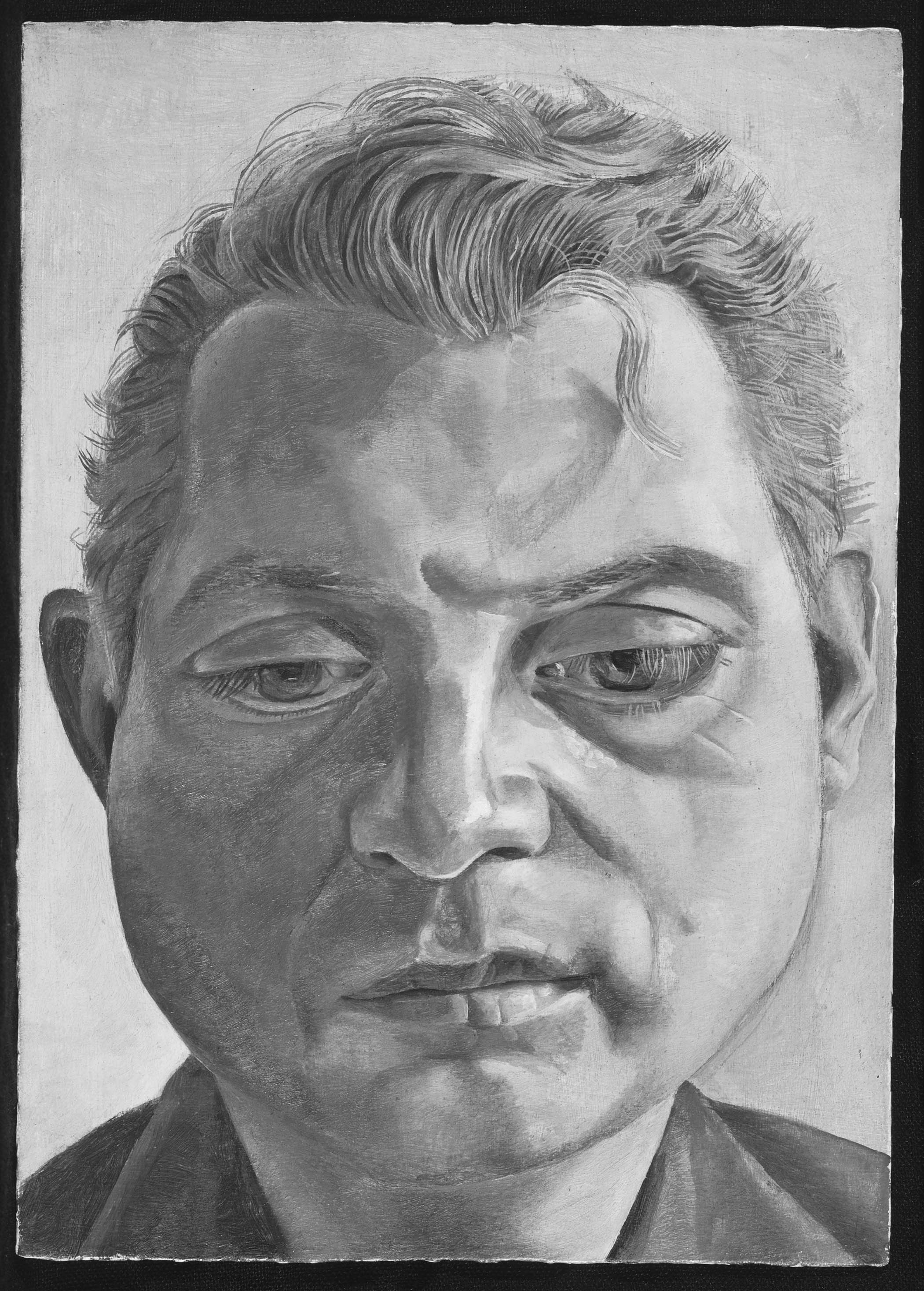
A black and white photograph of Lucian Freud’s Portrait of Francis Bacon
On a bright spring afternoon, the glazed pavilion of the Neue Nationalgalerie in Berlin’s museum quarter sends back dazzling reflections of sunlight. Designed by Ludwig Mies van der Rohe, it opened in 1968 at the height of the cold war. Today, a crocodile of schoolchildren files through an exhibition called Extreme Tension. It features a large canvas in the unmistakable hand of Bacon: Portrait of Isabel Rawsthorne Standing in a Street in Soho. In 1988, a year before the Berlin Wall came down, the work displayed here included the study of Bacon by Freud. The picture, oil on copper, was made in 1952. Freud told the art historian Martin Gayford. “I always take a long time but I don’t remember the picture of Francis taking all that long. He complained a lot about sitting – which he always did about anything – but not to me at all. I heard from people in the pub.” The work was modestly sized: almost 18cm by 13cm (7in by 5in) – about as big as a hardback book.
Three weeks into the exhibition, on the morning of Friday 27 May 1988, seven of the security guards at the Neue Nationalgalerie called in sick; a further nine were on holiday. There was only one member of staff, who normally worked in the cloakroom, on duty in the room where the Freud was on view. Not only would the work fit comfortably into a pocket, but the screws securing it to the wall wouldn’t detain a thief for long. During the afternoon, the cloakroom janitor spotted that the wall was bare. Dieter Honisch, director of the gallery at the time, ordered the main doors closed and called the police.
Newsletters
Choose the newsletters you want to receive
View more
For information about how The Observer protects your data, read our Privacy Policy
Allonge sympathises with the officers who were assigned to the case in the 1980s. He tells me: “The old investigators hadn’t any chance. There was no CCTV in the gallery. No one saw the criminal. They checked the visitors and took their names. But they had hardly noticed the painting in the first place.”
The disappearance of the Bacon portrait caused consternation in the then West Germany as well as in London. The Tate, which owned the work and had loaned it for the exhibition, had set indemnity (the risk covered by the UK Treasury) at £75,000. After the theft, a more realistic estimate of its value was £1.4m: it could now be worth 14 times that. The British Council, acting for Freud and the two chief lenders, put pressure on Honisch to close the exhibition early.
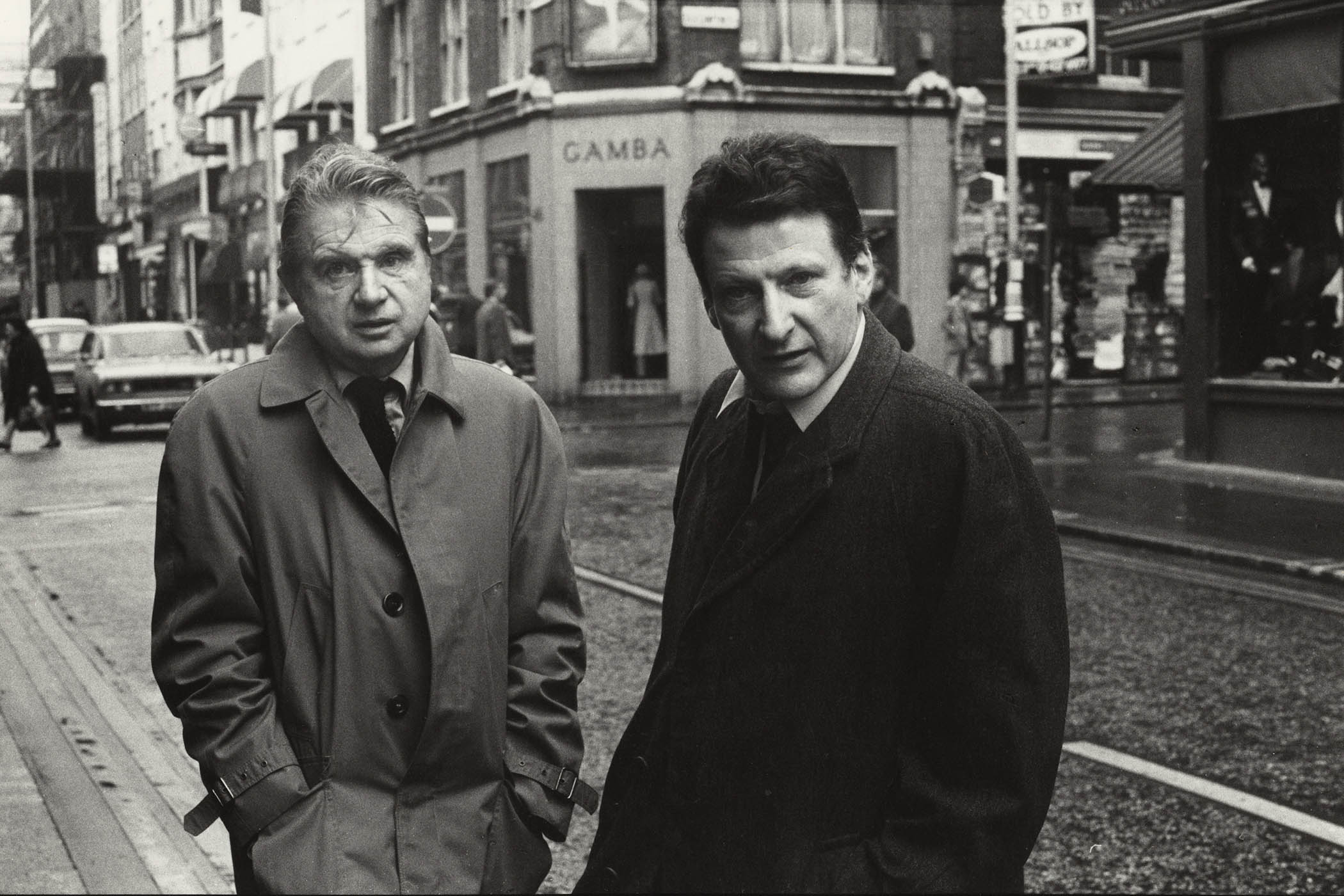
Rumours soon circulated about the possible culprits. Perhaps the most outlandish explanation was that Bacon himself had put someone up to it. He and Freud, once firm friends, had long since fallen out. No one’s entirely clear why, though an aggravating factor was that Freud owned a painting of Bacon’s, Two Figures, which he bought for £100, and refused Bacon’s request to lend it back to him for an exhibition. The conspiracy theory goes that Bacon got his own back by arranging for Freud’s portrait of him to be snatched and so sabotage his Berlin show. I heard this from a figure with impeccable art world credentials, who told it to me straight-faced, though they admitted it was highly dubious. Bacon died in 1992, four years after the theft, and left no indication that he’d had anything to do with it.
Several museum guards taking sick leave on the same morning was a red flag. Some suspected that the Stasi, the East German secret police, were involved. It had been linked to the disappearance of art treasures, to be sold on the black market for hard western currency. But the police were confident that the Freud wouldn’t be taken out of the country. For one thing, the copperplate would trigger checkpoint scanners. Wolfgang Fischer, a leading figure in the London art world in that period, went to see Honisch the weekend after the robbery. He pointed out that Freud’s work was then not well known in Germany and urged him and others to consider a possible psychological motive for the theft: prophetic remarks, given the way the investigation has unfolded.
They checked the visitors and took names. But they had hardly noticed the painting in the first place
They checked the visitors and took names. But they had hardly noticed the painting in the first place
Detectives became interested in someone who had arrived in Berlin from East Germany in 1987, a year before the crime. The man, who was deported from the German Democratic Republic (GDR), settled in Berlin and considered himself an artist. He came to the attention of the police when an informant claimed that he had seen Freud’s painting in the man’s home the day after it went missing. But, under German law, this eyewitness account was insufficient grounds for a magistrate to issue a search warrant for the suspect’s flat.
The suspect was also known to George Girardet, a former diplomat of the old West Germany – another figure who is like a character from a le Carré novel. Girardet, 83, used to operate out of the shadows on the eastern side of the wall, with a brief to foster cultural relationships with the GDR. He smuggled art across the border in both directions, in an effort to develop ties through culture. There’s no suggestion that this was for his personal gain. He was a familiar presence at the Invalidenstrasse crossing, where guards on both sides of the city were content to wave him through because of his ID card and the diplomatic plates on his Volvo estate.
Girardet tells me about his dramatic experience of running art over the border on behalf of the man police have linked to the missing Freud painting. “I only met him once and can hardly remember him. He had been living in the east as a freelance artist. That was allowed, if you were a member of the Verband bildender Künstler der DDR [Association of Visual Artists of the GDR]. But he was not a member of the verband. That was the reason they deported him.”
Girardet agreed to move a shipment of art for him to West Berlin. To make the pickup, he drove into a backyard in Prenzlauer Berg, a bohemian quarter behind the wall. He says: “It was raining and gloomy – almost spooky. Two figures broke free from the darkness of an entrance, and I was shocked to see that they were carrying a box like a child’s coffin to my car.” Girardet wondered how he could smuggle this ominous-looking consignment across the border. Fortunately, it was so wet that night that the car windows fogged up as soon as he turned on the heating, and he drove west untroubled in the special diplomatic lane.
For Freud, the exhibition in Germany had marked a homecoming: he had spent his early years in Berlin before fleeing the Nazis for Britain while still a child. According to his biographer William Feaver, the Neue Nationalgalerie had gone up on a patch of bomb-damaged Berlin where Freud once played as a boy. His feelings about his home city were complex. He thought “the theft was the culminating slight on him in what had once been his very own part of Berlin”, wrote Feaver.
Andrea Rose, who was director of visual arts at the British Council when the painting disappeared, had to break the news to Freud. She says: “He was so nice. But he said: ‘You know the Germans have always had it in for the Freuds.’”
The art historian Robert Hughes had described the lost artwork, with “that smooth pallid pear of a face like a hand grenade on the point of detonation” as “one of the key images of modernity”. Hughes offered Freud the cold consolation that at least there was someone so fanatical about his work that they would steal it. “Oh, do you think so?” Freud replied. “Not a bit of it. He must have been crazy about Francis. That would have justified the risk.”
This was a shrewd insight on Freud’s part. Allonge says that the man who is suspected of the robbery was indeed intensely interested in the artist depicted in the painting and made many artworks of his own after Bacon.
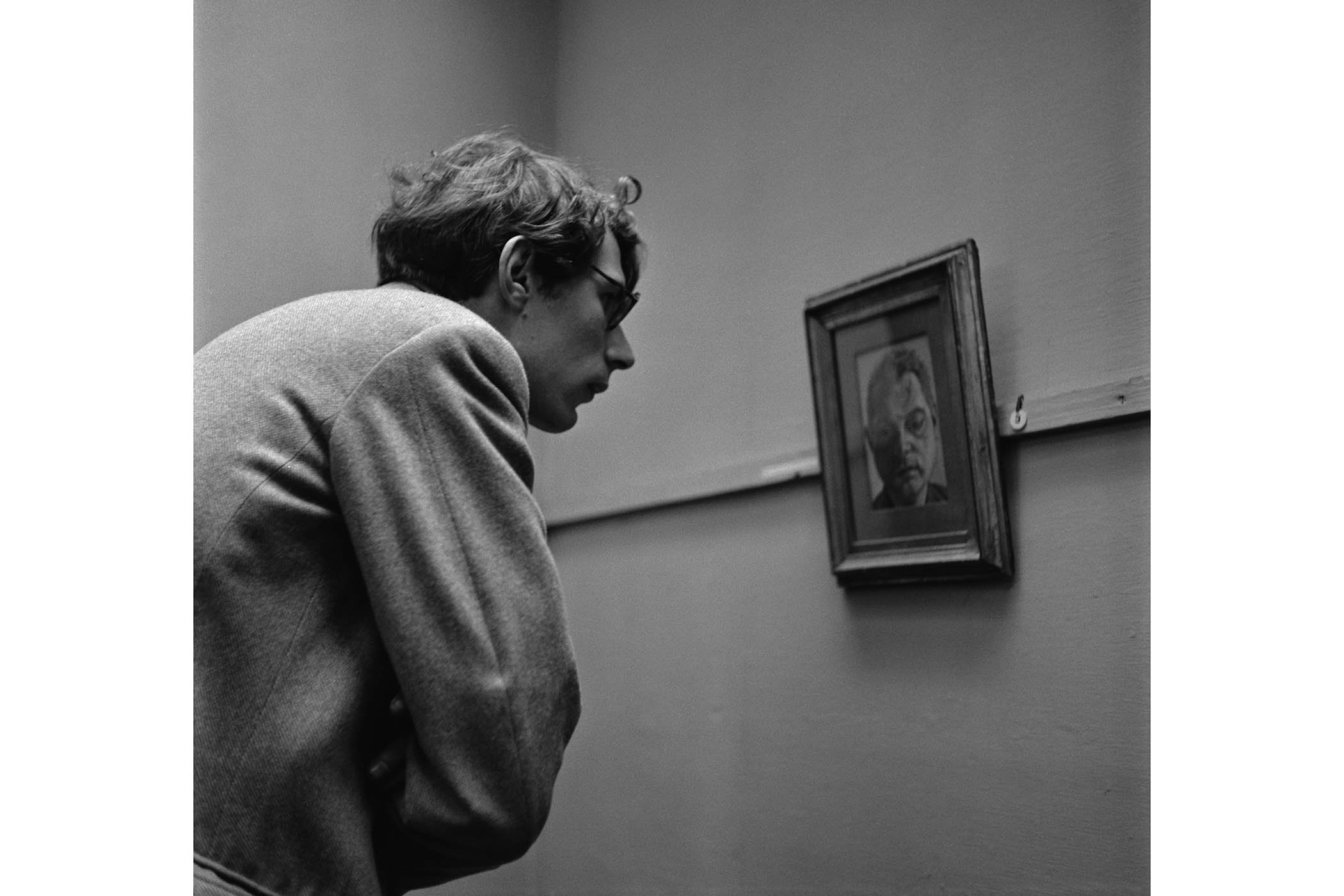
Freud’s Portrait of Francis Bacon on display in London in 1952
In London, Freud tried to resign himself to the loss, opening a bottle of champagne with friends. He recited a monologue performed by Stanley Holloway for them about the parents of a child who is eaten by a lion and a magistrate who tries to cheer them up by suggesting they could always have further sons.
“At that Mother got proper blazing, / And ‘Thank you, sir, kindly,’ said she. / ‘What waste all our lives raising children / To feed ruddy lions? Not me!’”
Freud said he felt the same way as “Mother”. Feaver wrote: “Recriminations were futile and he was pretty certain that the picture would be returned.” Besides, Freud wasn’t just drowning his sorrows: he was celebrating after he’d been approached by the keeper of the queen’s pictures to paint a portrait of Elizabeth II.
The incoming director of the Tate at the time was Nicholas Serota. He says: “Freud made a very small number of portraits to begin with, and this is one of the key paintings of the early part of his career.” Serota, who is now chair of Arts Council England, decided that the Tate would hold back from claiming for the painting from the state indemnity fund. He recalls: “We were waiting to see what happened. The matter was in the hands of the German police.”
Freud’s vexation over the missing work never quite left him. He insisted that, whenever a photograph of it was reproduced, it must be in black and white. “Partly because there was no decent colour reproduction, partly as a kind of mourning,” he explained. “The painting is quite near monochrome, so it comes out quite well, and I thought it was a rather jokey equivalent to a black armband.”
One night, while he was having dinner at Moro, a smart restaurant in London’s Exmouth Market, he drew the portrait again from memory, “the face more injured than the original and – since the disappearance of the original – more morose”, according to Feaver, who was sitting next to him.
Freud’s dinner companions suggested it should be made into a “wanted” poster. With the help of the British Council, the poster duly went up on the streets of Berlin in 2001. A reward of 300,000 German marks, the equivalent of about £100,000, was offered by an anonymous donor, payable on recovery of the picture. It was hoped that it could be found in time for a Freud exhibition to be held at the Tate in London the following year. The posters failed to have the desired effect; ironically, they were spirited away by art lovers and trophy hunters.
The Observer has learned of a secret operation involving British diplomats and art world figures to mount one last attempt to recover the missing portrait in 2017 – six years after Freud’s death in 2011 – because 12 months later, 30 years would have elapsed since the original theft, meaning it would no longer be possible to bring a civil case because of Germany’s statute of limitations.
Graham Holliday, who was then part of the legal team at the British embassy in Berlin, says: “The thinking at the time was that, if we were going to prosecute anyone, we had to do it quickly. Or else the person might come out of the shadows with the painting and we wouldn’t be able to touch them.”
The case was investigated by experts, including Jurek Rokoszynski, known as “Rocky”, a former detective sergeant in the Metropolitan police specialising in art cases, who was now working freelance. Rocky had been born in a displaced persons camp in Paris at the end of the war, and his successes included tracking down a brace of stolen Turner paintings after they were removed from a gallery in Frankfurt in 1994 and returning them to a grateful Tate.
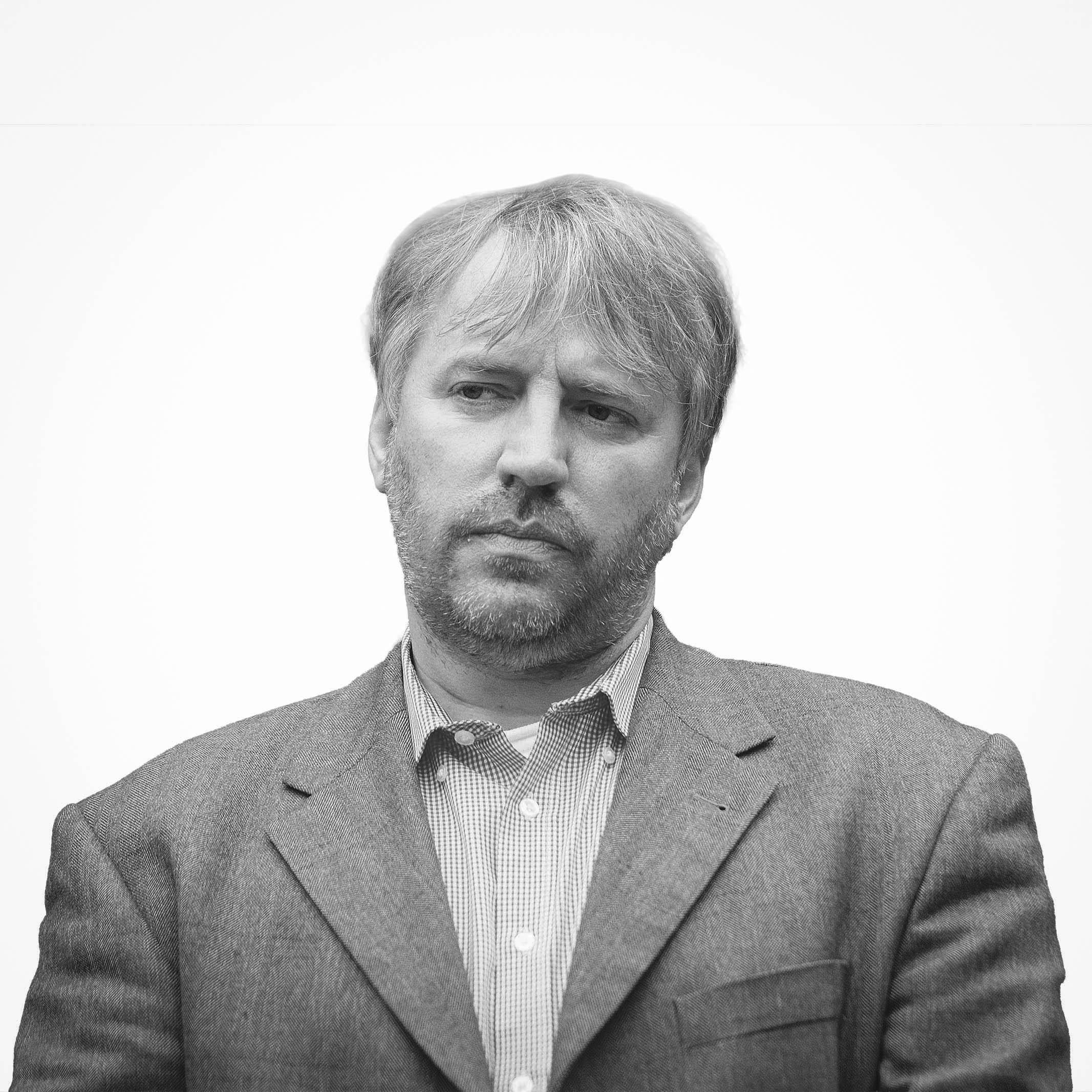
René Allonge believes he knows who stole it
Holliday says the trail, once again, led back to the original suspect and to the eyewitness who told police about seeing the painting in his flat. There were claims that the eyewitness was one of three men who had attacked the suspect, tying him up and beating him, in the hope that he would reveal the whereabouts of the painting so that they could claim the reward. But the police couldn’t make a solid case against their man. “There was no compelling evidence – but so much circumstantial evidence,” is how Holliday recalls the investigation.
Like his suspect, Allonge grew up in the former East Germany. In his first job, he went to sea as a trawlerman in the state fishing fleet. After the GDR collapsed, he became a detective in 1997, and has served in the art crime unit since 2009. In 2010, his team foiled the sale of a fake Fernand Léger painting that was about to change hands for $5.8m, and put the criminals in jail. In 2015, Allonge smashed a ring of ageing Nazi sympathisers who had hidden monumental statues commissioned by Hitler and were selling them on the black market.
In Room 4212 of the police offices at Templehof airport, Allonge keeps a copy of Freud’s “wanted poster” of Bacon on the wall behind his desk. He first heard about the stolen Freud from an older colleague in 2012 and decided to reopen the case. He went to meet the prime suspect. “I have been in touch with this man and spent a lot of time talking to him. We talk for hours on the phone. He thinks I’m his friend; he trusts me.”
What evidence do you have that he is the culprit?
“He has told us that he visited the Freud exhibition. His friends have said that he was obsessed with Francis Bacon. We have a witness, an artists’ model, who told us that the suspect drew his hands and then made paintings of the hands in the style of Bacon.
“Friends of his have told us that, when he visited them, things would go missing, and when they challenged him about it, he would return the missing items, which indicates that he has some disturbed relationship to property.
“But the best evidence in this case was the word of the eyewitness, who told us: ‘I saw the stolen painting on the day after the theft in the flat of the suspect.’ The witness later assaulted him to try to get him to hand it over for the reward. He wouldn’t have done that unless he thought the suspect had the painting, because he was putting himself at high risk of imprisonment for that attack.”
Has Allonge asked him outright if he stole the painting?
“Yes, of course. We can talk about everything else, but when I ask him for the painting, he becomes crazy. He says. ‘No, no, no, I haven’t done it!’ He’s a good actor.”
He adds: “In the history of art theft here, including the most well-known works, there are only two cases when the paintings haven’t been found. One is the Freud. And we think there’s a connection to the other case.”
That concerned a number of paintings, including The Poor Poet by German artist Carl Spitzweg, which was taken as part of a haul from another Berlin gallery a year after the Freud went missing.
There are only two cases here in which the paintings haven’t been found. One is the Freud
There are only two cases here in which the paintings haven’t been found. One is the Freud
The police theory goes like this: their main suspect was also linked to the Spitzweg haul. His friend – the witness mentioned above – took some of these artworks with him to Turkey. Allonge says: “We know this because Rocky was able to buy back some of these stolen pieces from a lawyer who was acting for the man in Turkey.”
The lawyer claimed that he was also in a position to return the missing Freud painting. When he was challenged to provide proof of this, he offered a photograph of the painting that the art crime unit exposed as simply a copy of an image in a catalogue. The lawyer was charged with attempting to extort money from the Tate and was ordered to pay a fine.
Allonge acknowledges that Portrait of Francis Bacon may be irrecoverable. “It could be that the suspect has had it destroyed. He may even have incorporated it into his own artworks.”
For all his candour, Allonge will not tell me the whereabouts of the suspect. He points out: “This is an ongoing police investigation.”
So why was he willing to talk to me about it?
“It’s a British painting and I see it as my duty to return it to Britain, and talking to a British journalist is part of that process.”
I did some detective work of my own. The man whom Allonge suspects of involvement in the case is now living in the north of Germany, not far from the Baltic coast. He grew up there, in the days when it was part of the old GDR. The place he lives in was the playground of the Nazis and their wives, and later a resort for senior officials in the old communist GDR. Out of season, it’s a beautiful but lonely riviera, where ice settles over the sea.
This area was the birthplace of Caspar David Friedrich, who created Wanderer Above the Sea of Fog, Germany’s most celebrated painting. Although the suspect fancies himself an artist too, none of the local art dealers I spoke to claimed to know him. Journalists working for a local public radio station encountered him a few years ago. He told them: “If you want to help the Tate gallery, as I do, you’re in the wrong place. I could just as easily say you did it. You can call the police right now and search my place.” The man complained that he had suffered “stigmatisation and slander”.
Great artists live twice. First, in the here and now; later as famous ghosts, while their reputations wax and wane. However, posterity can also play tricks, and that’s what’s happened to Freud and Bacon. They would perhaps be amused. A painting that was once a testament of their closeness has been lost, perhaps for good. The Portrait of Francis Bacon has become like a painting in a ghost story.
I ask Allonge if there was any point in continuing to talk to his suspect.
He says: “The reason why I’m in contact with him is because, otherwise, nobody will be able to find the Freud painting when he dies. I can’t tell 100% if it’s still in one piece but I have to hope that the painting is somewhere – that it exists.”
But isn’t it possible that the man is simply stringing him along?
Allonge smiles. “It could be, but I have a lot of time to play. I only want to find the painting and bring it back to London. If I had lost hope, I wouldn’t still be talking to him.”
To find out more about the investigation, listen to this week’s episode of The Slow Newscast here
Photographs by Harry Diamond/National Portrait Gallery London, Daniel Farson/Picture Post/Hulton Archive/Getty Images, Stefanie Loos/AFP via Getty Images