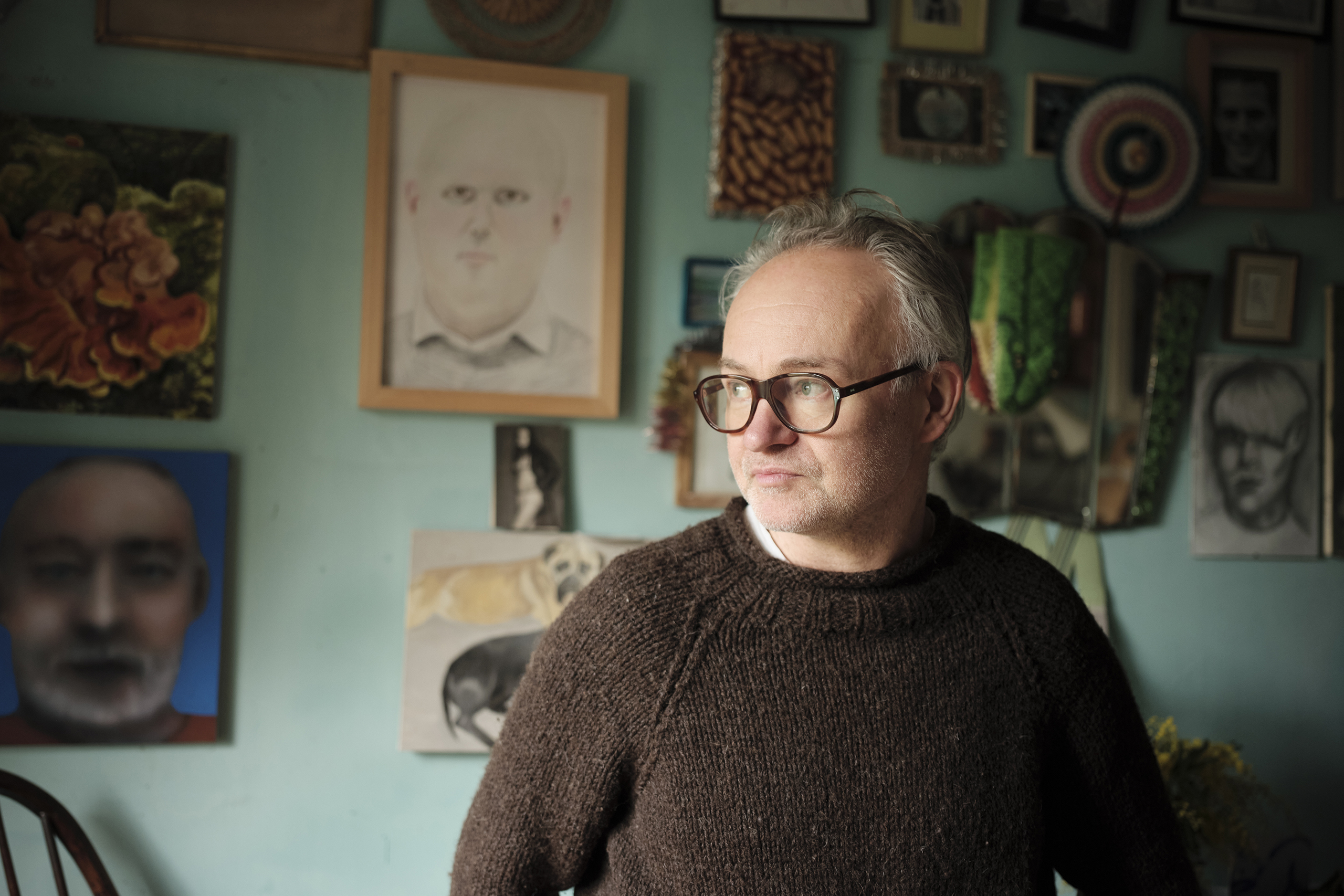



Fanny, fanny, cock. Sort of cock-fanny.” Wilfrid Wood is standing in the hallway of his home in Hackney, east London, in front of a painting by the artist Rod Harman, his former tutor. Wood, an artist himself, is appraising the work, jabbing a finger at what initially appeared to be simply a collection of abstract shapes, but which on closer inspection, well, he’s right: it’s altogether more anatomical. The flat, which spans the top two floors of a Victorian terraced house, is full to the brim with art – every inch of wall, some of the floor space, too, is taken up with paintings, pen drawings and small sculptures. There’s not actually space for much else. “I hate gadgets,” Wood says. “I don’t have a TV or an air fryer. I wouldn’t have the toaster if somebody hadn’t given it to me. I’m only really interested in art things.”
Wood is best known for his often-savage plasticine portraits of celebrities and politicians, caricaturish busts that glare from the covers of magazines and from gallery windows. These days, most of his time is spent painting portraits, which can be similarly brutal. “My portraits aren’t very flattering,” he concedes. Surely, anyone who commissions him must know his style already, though? “Well, more fool them if they don’t. I usually pick on the things that people are a bit doubtful about. But it’s also a celebration of big noses and sticking-out ears.”
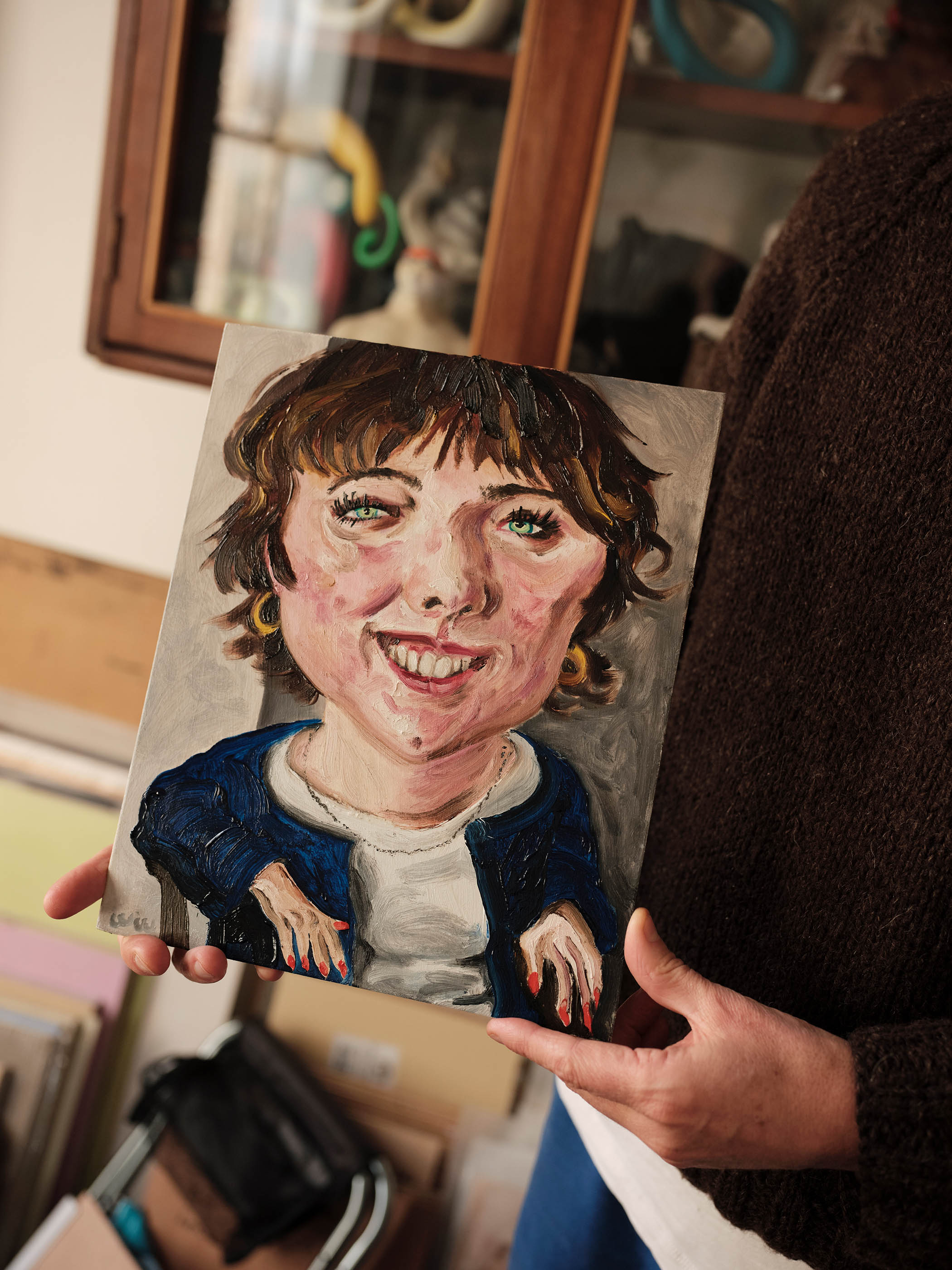
All smiles: one of Wood’s distinctive portraits, of his friend Laura
The artworks that surround him at home are there to inspire and challenge his own work. “I’m often worried my work is too conventional and tame,” he says, “so I like to have pieces on the walls that I might one day aspire to do myself.” He scrunches his face in anger. “Some people talk about putting art up just to fill a space,” he adds. “What the fuck are they talking about? I’ve got about 300 drawings just in drawers that are screaming out to be seen!”
Among the dozen or so works hanging untidily on the kitchen wall is a detailed illustration of a terrapin, one of those pictures drawn with a fine-nibbed pen that you might find in an old textbook with “fig. 03” next to it. “That’s my dad’s,” Wood says. Elsewhere in the flat, where he has lived for 17 years, are similar illustrations of Nile monitors and other scaly creatures, all by his father, who was a natural history illustrator who taught at the Royal College of Art. “He mainly did reptiles and amphibians,” Wood says. “He had lots of frogs, snakes, lizards and about 50 tortoises in a room in the house. My early life was populated with them.”
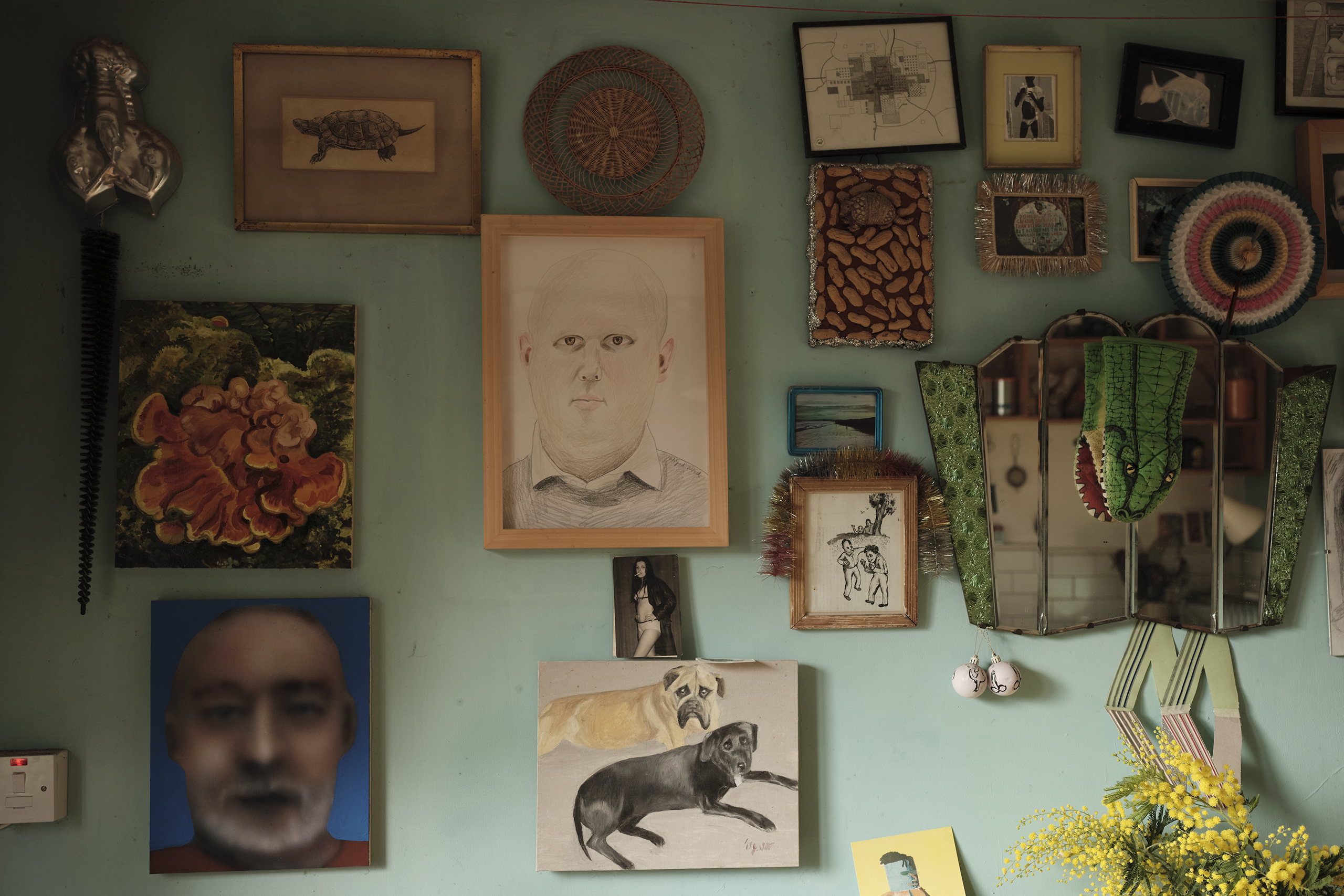
‘I like to have pieces on the walls that I might one day aspire to do myself’: every wall in Wood’s home is covered in art – the terrapin, top left, was drawn by his father
Growing up in Sussex, Wood was surrounded by creativity. His mother was a painter and both her parents were artists, too. You can see this ancestry throughout his home. Jostling for wall space with his father’s illustrations are paintings by his mother, including a bucolic scene depicting a tractor; upstairs in the room where he stores his art supplies are an old clock and a guitar, both family heirlooms; and there’s a mug that his graphic designer grandfather created for Wedgwood for Queen Elizabeth II’s coronation. Each Wednesday, when he goes to paint en plein air, Wood still uses his mother’s foldable easel. “It must be 80 or 90 years old,” he says, “but it still works.”
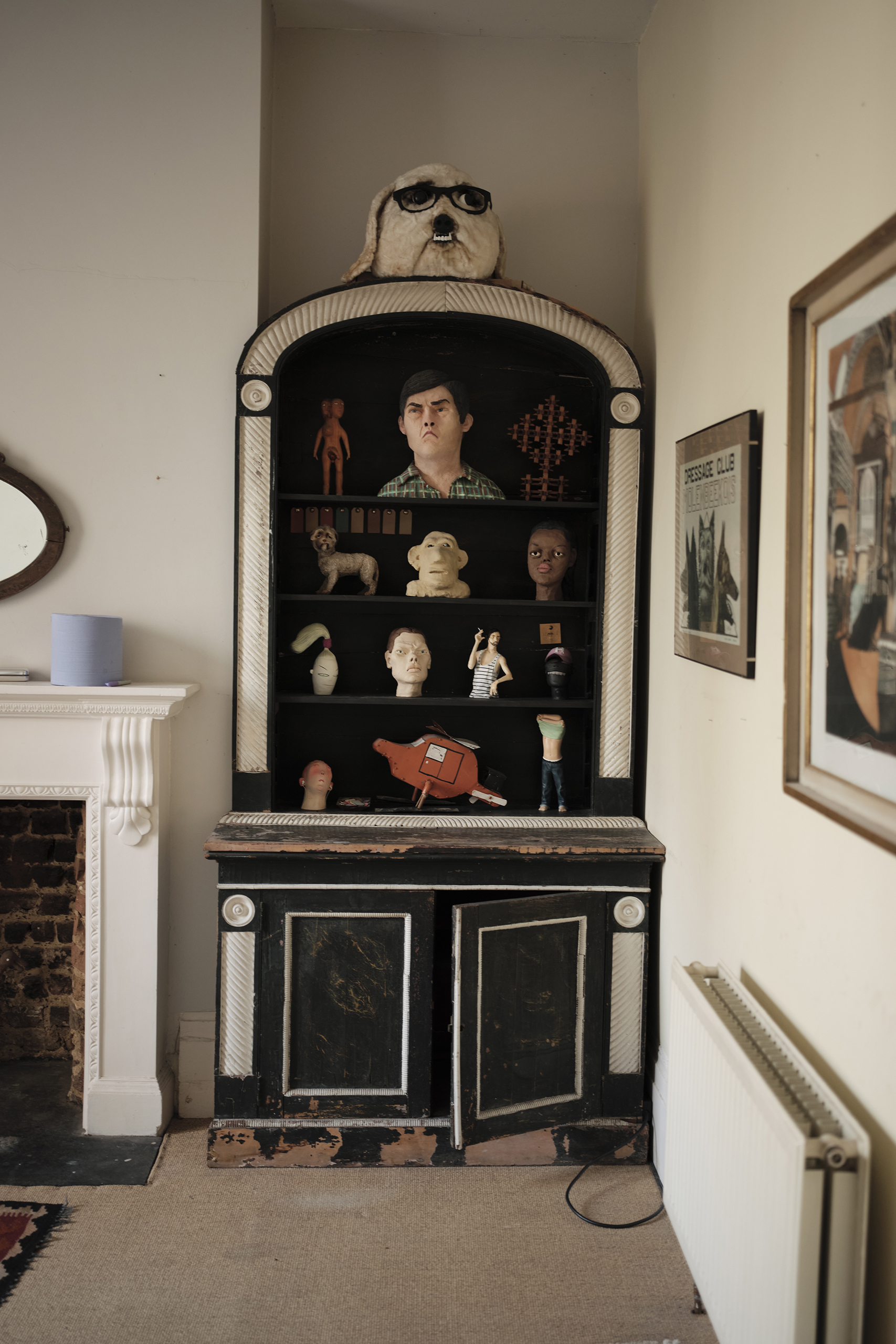
Shelf life: some of Wilfrid Wood’s sculptural pieces on display in his London flat
Despite this ancestry, Wood had a halting start to his creative career. He did an art foundation and then studied Graphic Design at Central Saint Martins, but always felt “a bit cramped up, embarrassed and awkward,” because his creative education to that point had been “very conservative, not at all radical or conceptual”. After graduating, he had various “boring graphic-design jobs” in publishing, which he appreciates, on reflection, were good for some things: “earning money, getting up, not getting too stoned the night before”. But everything changed for him, when, “by a miracle, Spitting Image turned up”.
It was through “a friend of a friend of a friend” that Wood got a job on the original series of the satirical TV show, which ran from 1984 to 1996 (it also had an ill-fated return in 2020 on BritBox, and was revived again last year on YouTube). Known for its caricature puppets, the show led to a kind of awakening for Wood. “I did things like the eyeball and blink mechanisms for the puppets, so it wasn’t particularly creative. The only head I made all by myself was Rolf Harris,” he says, laughing. “But the whole atmosphere was the opposite of uptight. I saw all these creative things going on and it planted a seed.” That seed was that he wanted to become an artist in his own right. “And I’ve just been trundling along with that until now.”
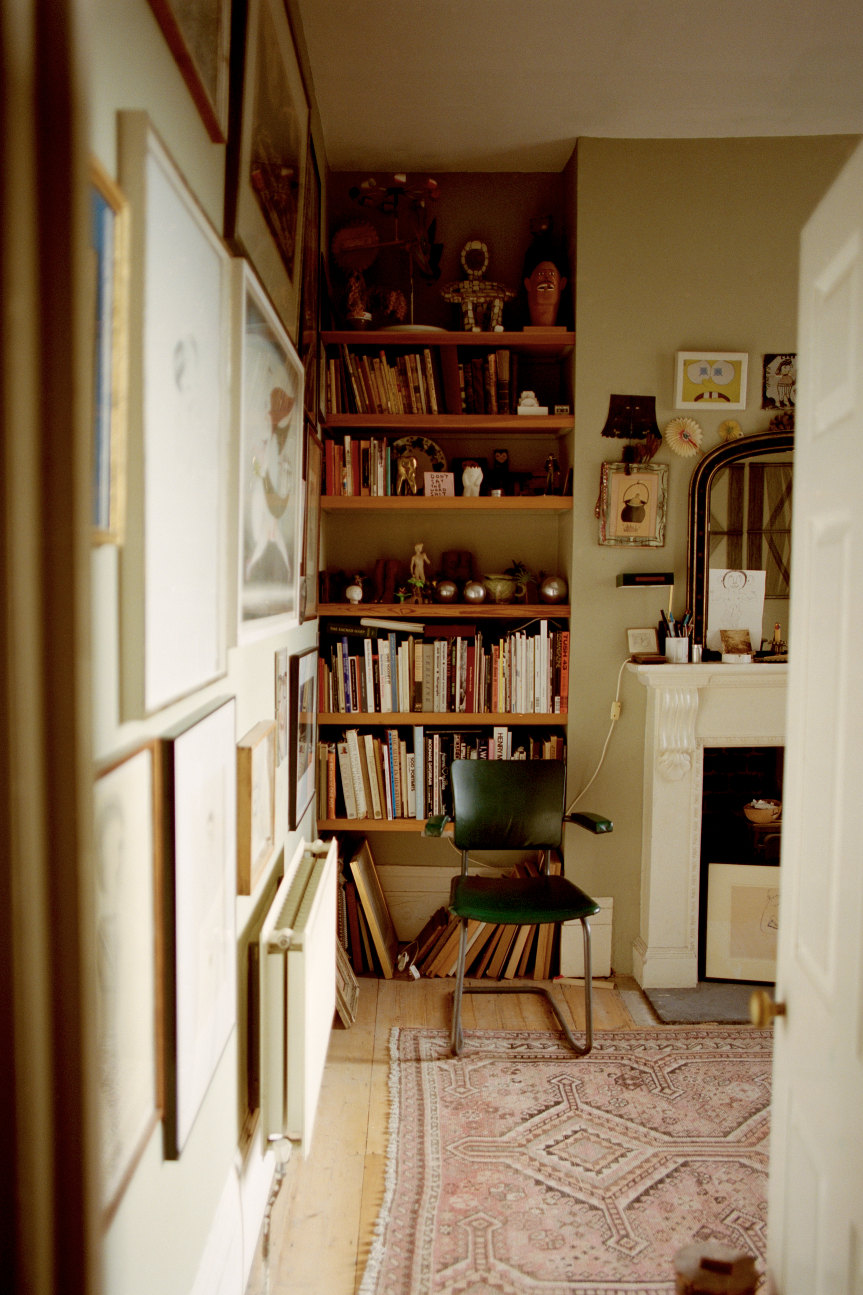
In the frame: the artist’s studio
In the front room upstairs are all the fruits of that trundling along: paintings on wooden boards stacked up to dry; reams of pencil and pastel drawings on paper; and dozens of well-used paintbrushes and pens. Among the paintings is a tender portrait of a bedridden 96-year-old woman, which Wood painted recently and submitted to the National Portrait Gallery’s annual award. “I get endless people in their 20s and 30s, which is great, but it’s all young and beautiful,” he says. “It’s nice to paint the occasional oldie.”
Anyone who has followed Wood’s work for a while will recognise his inimitable style in this painting: the slightly over-large eyes, the vivid colours, the exaggerated facial expressions that land just the right side of caricature. “It’s good to know that if I keep banging on with this year after year, eventually something that is mine and identifiable will emerge,” he says. It’s the main reason he always gravitates back to oil paint. “There’s a lifetime’s understanding in it,” he says. “You have to just do it, and through endlessly doing it, and getting bored and fed up and disappointed and annoyed, eventually you start to find a little world that you inhabit.”
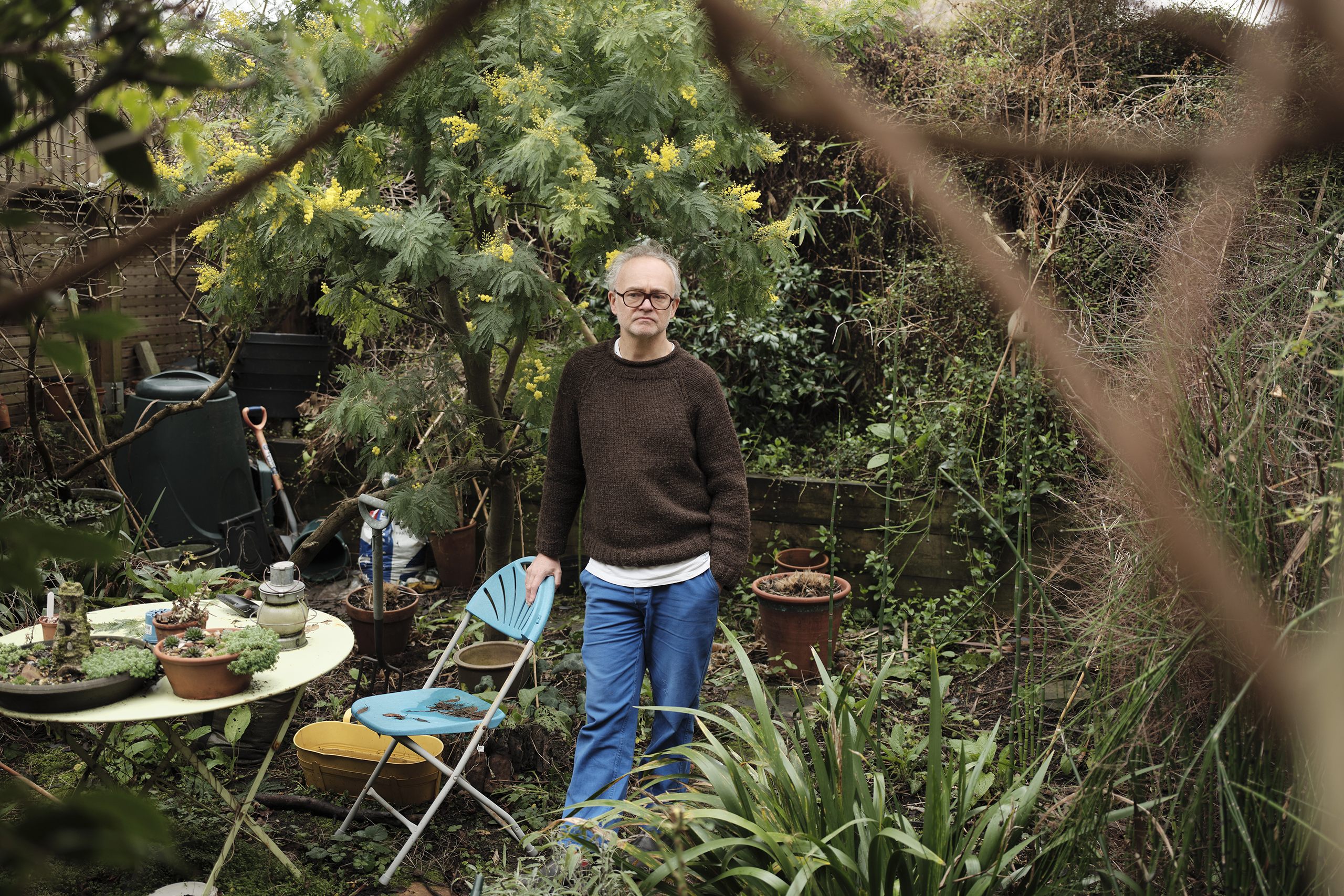
Wild ideas: Wilfrid Wood in his garden
Newsletters
Choose the newsletters you want to receive
View more
For information about how The Observer protects your data, read our Privacy Policy