The morning after pill works for three days post sex. Take a second one fast if you throw up the first. Boots does a good deal on pregnancy tests but get your blood checked too, to be sure. If you need an abortion, and you have the cash, go private. The NHS can keep you waiting for weeks.
The most practical advice ever dispensed in a gallery is handwritten on little scraps of fabric appliqued to a large blanket on the wall. Tracey Emin stitches a brightly coloured alphabet across the top. But the real learning experience is passed below, like notes between desks in a classroom. Emin was almost 40 when she made this work: a woman speaking to her younger self, as to all girls.
Dame Tracey Emin RA will be 63 this summer. She has seen off virulent cancer, abusive men, the art world, her critics. Tate Modern’s capacious survey is only one of many from New York to Paris and Oslo, with a huge event in Florence last year. Her first exhibitions at White Cube, in 1993, was sardonically titled My Major Retrospective and in a sense all her shows are: the latest outpourings of accumulating experience, chronicles of a life retold.
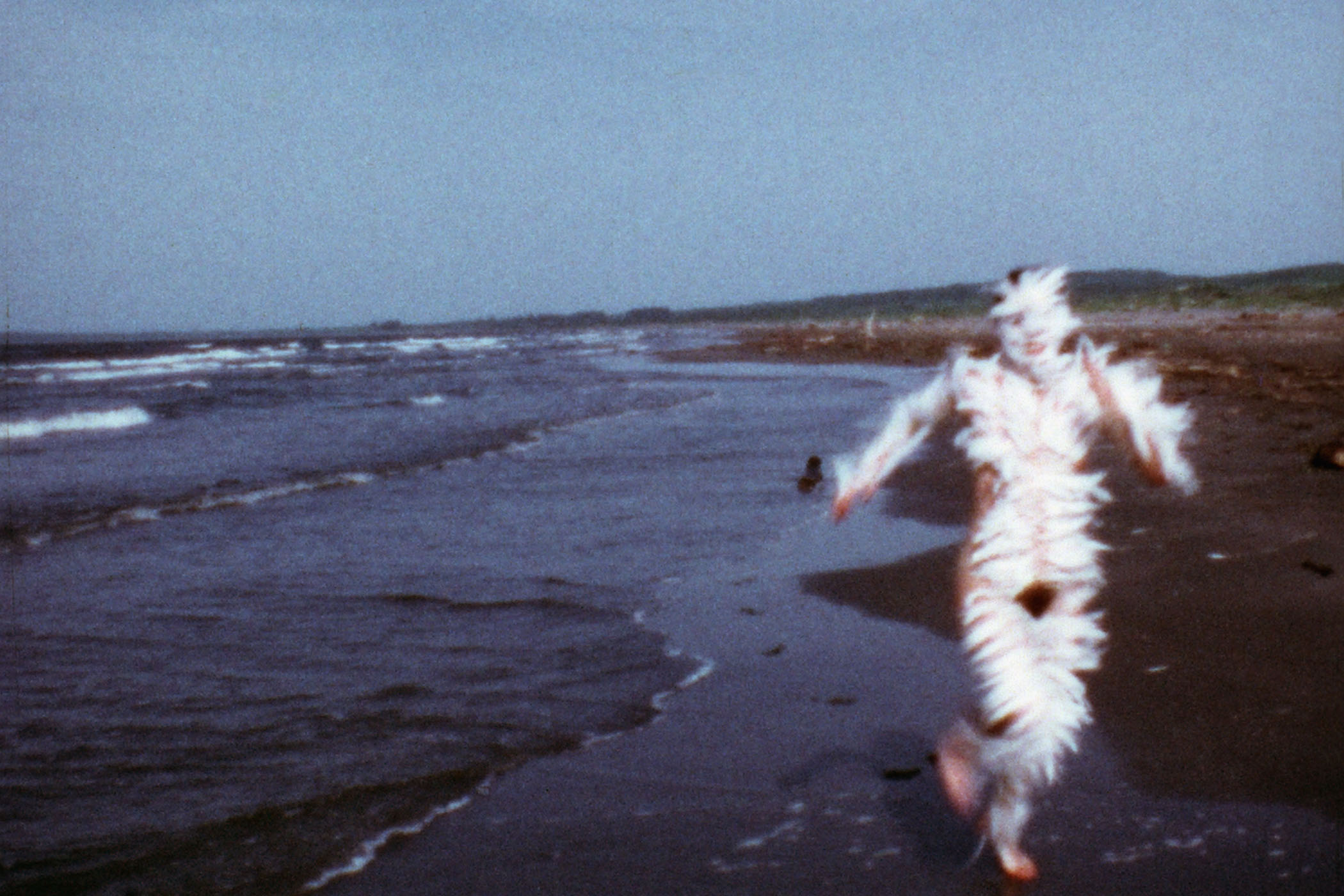
This one has everything you would expect from a grand Tate Modern homage: the blankets, the bed, the mordant early writings, the spindly monoprints and spidery paintings of sexual distress – and sporadic ecstasy. It has the films of Emin roaming through Margate and childhood memories; interviewing her mother (about herself); describing her botched and nearly forestalled abortion.
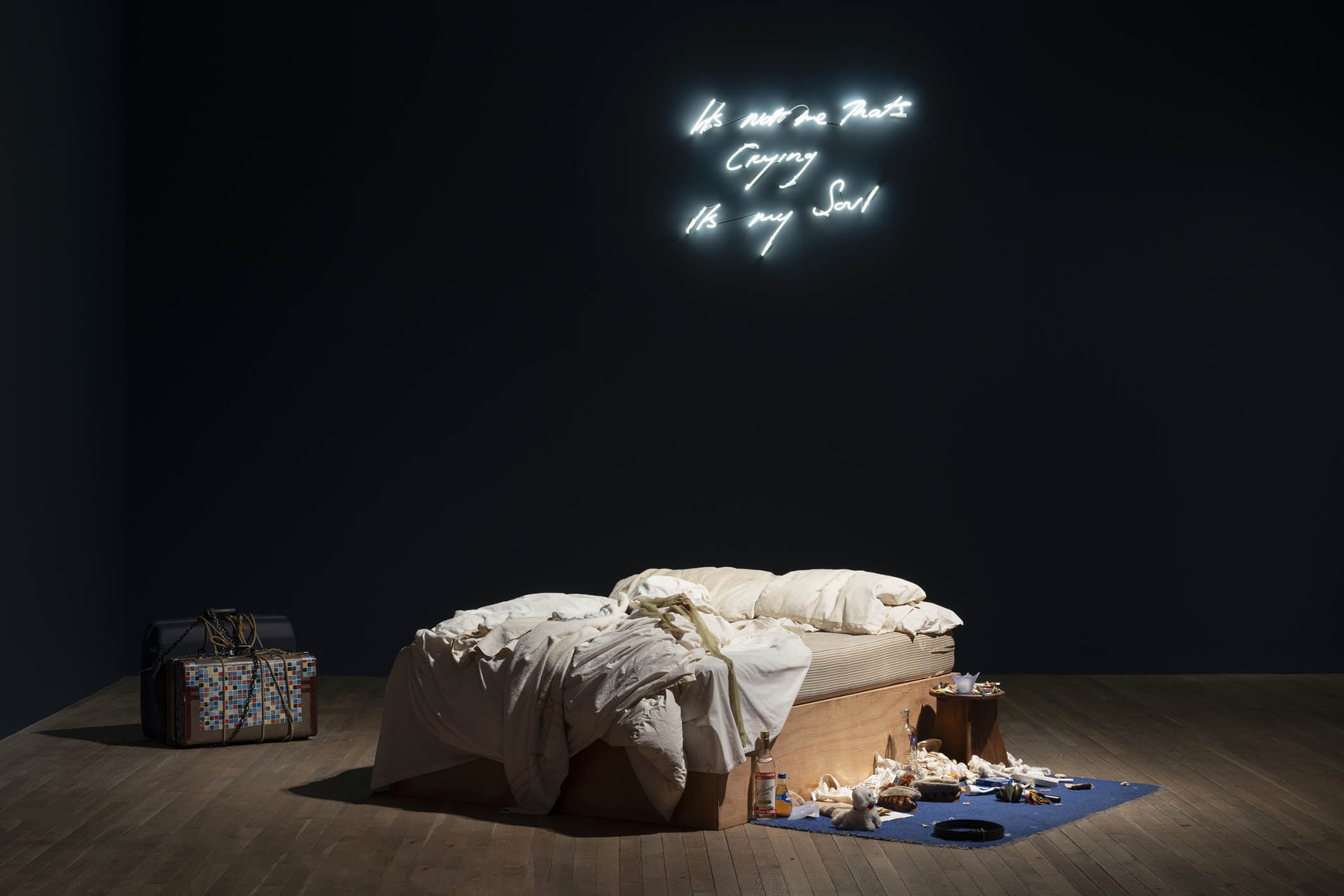
One of Tracey Emin’s ‘neon laments’ hangs above her world-famous bed. Main image: Tracey Emin’s 1995 film Why I Never Became a Dancer is so ‘exhilarating you want every girl to see it’
Neon laments – I Could Have Loved My Innocence, I Whisper to My Past Do I have Another Choice – continue a story punctuated with the relics of heartbreak. Tiny baby shoes, hospital wristbands, bloody plasters, painkillers, a dead tooth extracted by a dentist in the 1990s. The show pivots around the world-famous bed, as it must, surrounded by stale Tampax, stained knickers and different types of contraceptive. Like her hero Edvard Munch, another energetic miserabilist, Emin favours exaggeration in the service of truth.
Everything may be displayed, from emotional and physical wounds to love’s stigmata. A brilliant monologue, written out in Emin’s italic hand, recalls the bewildering names they called her as the child of a Turkish Cypriot father (Tate Modern prints an absurd disclaimer alongside, as pathetic as she was brave). She appears sick, forlorn and abandoned in scratchy drawings and embroideries. Photographs show her painting night and day during a breakdown, naked beneath a line of drying underwear. And here are the paintings themselves: yearning for sex in wonky block capitals.
You can’t deny Emin’s reality, the authenticity of her anguish. How could you possibly know what went on in her life – except that she tells you. This is the curious feedback loop of her art: you must believe in it, just as you must believe in her. The force of it depends upon unquestioning faith.
But it also depends upon words to an exceptional degree. Emin avoids painting hands, feet or faces. Her figures, such as they are, have no corporeal substance: they are skeins of lines suggesting anatomical poses. Legs spread, body awry, on hands and knees, hunched in pain on a bed or an operating table: these are tableaux of abjection. You recognise the female figure mainly through the familiar depiction of a nipple or crotch, and assume it is Emin because of the title, or the words written on the canvas. At their strongest they make a point of absolute weakness: I loved you, you left, it is all your fault.
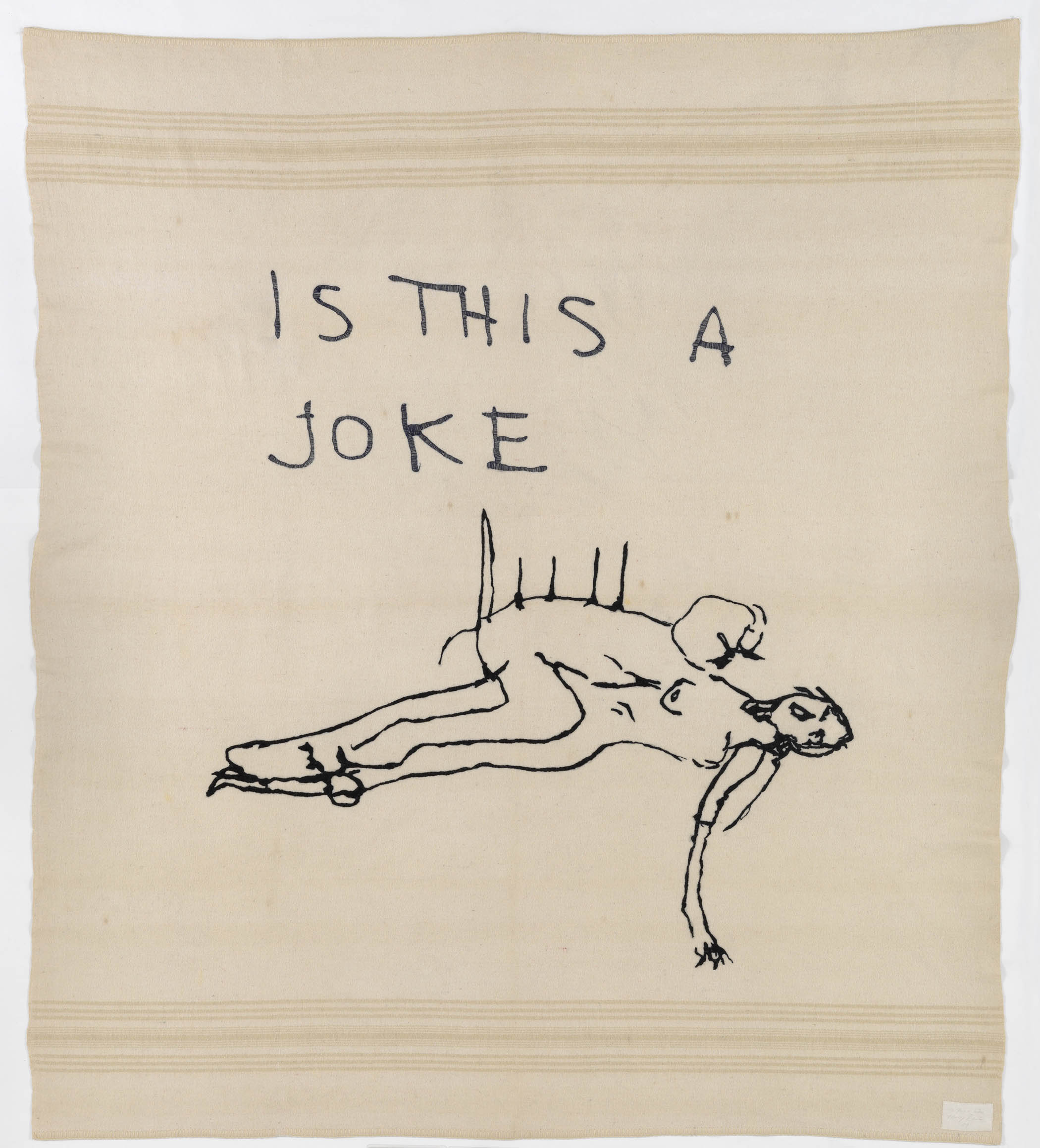
‘Her figures, such as they are, have no corporeal substance’: right, Is This a Joke, 2009, embroidered blanket
Time passes, people change. The Emin who was so appalled by the doctor who would not sign off her abortion comes to mourn the lost infant whose shoes she might have bought. Outrage turns to fear, vanity to courage. Photographic self-portraits, separated by 20 years, face each other down a corridor. On one side, Emin snaps herself like a porn star, breasts tumbling from black bra. Later, she appears naked, bleeding and post-operative before a hospital mirror.
Young viewers today must surely see the artist differently to those in the 1990s. The queen of candour is a majestic figure, no longer a riotous YBA. And as the catalogue shows, so much life and art have intervened. Which is perhaps why this show – curated by Maria Balshaw in her last season as Tate director – seems to peter out towards the end with the decision to show very little but paintings.
Newsletters
Choose the newsletters you want to receive
View more
For information about how The Observer protects your data, read our Privacy Policy
The final rooms are wan and sorrowful, the debt to Philip Guston, Willem de Kooning and Munch, for instance, increasingly apparent. The defiance appears to be all gone. Yet Emin was making fiery works even quite recently, so the choices seem odd, not least because the words on the canvas are fading away, leaving nothing but nostalgic titles: The End of Love, I Followed You to the End.
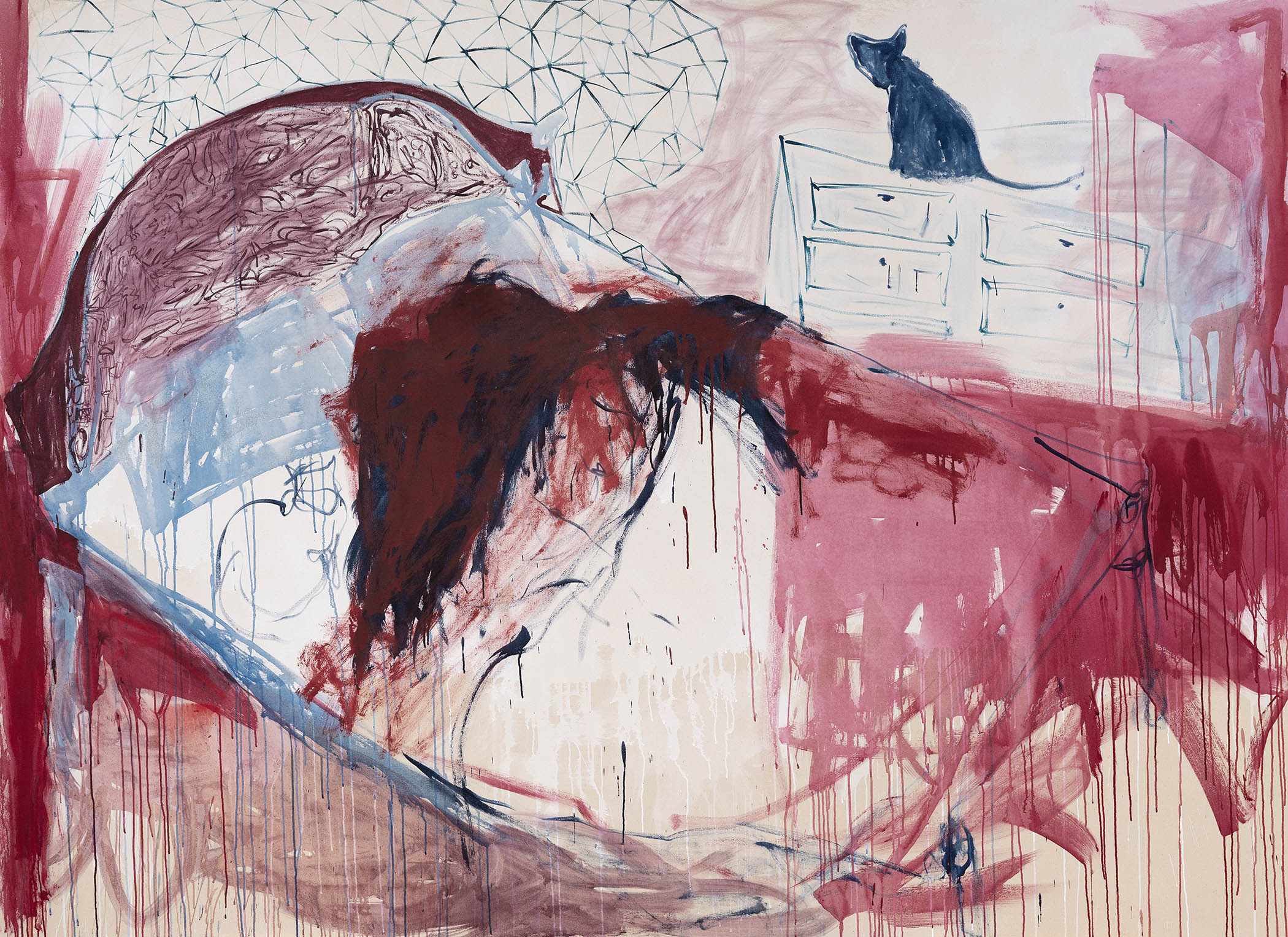
‘The defiance appears to be gone’: The End of Love, 2024, above, is one of the ‘wan and sorrowful’ canvases that appears in the final rooms
All this feels outdated, especially now that Emin is in her 60s and has survived cancer as well as the removal of many organs. The promised Second Life never quite arrives. It is as if there wasn’t enough art to round (patently untrue) or everyone decided this had to turn into a painting show, reflecting the glory of old traditions.
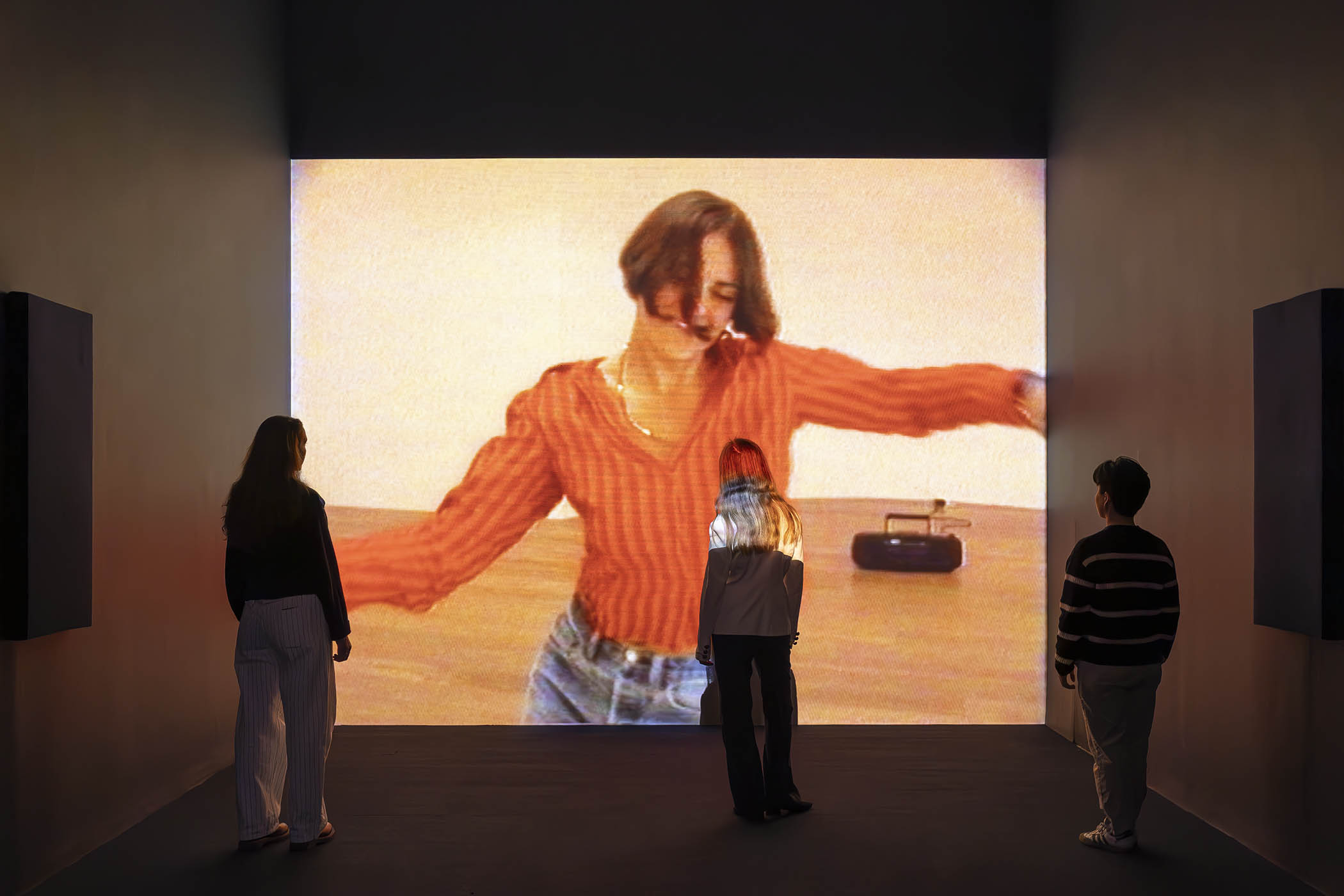
What stays in the head throughout is a video from the beginning in which Emin is wandering through Margate recollecting all the lousy boys and men who assaulted her as a teenager. The film is slow, ruminative in its shocking revelations, until it begins to gather speed. All of sudden, Emin breaks free of the past, bursting into a wild disco dance to Sylvester’s You Make Me Feel (Mighty Real). “Shane, Eddy, Tony, Doug,” she shouts, breaking into a fabulous grin, “This one’s for you!”
Seeing it now, in the context of all the success to come, is so exhilarating you want every girl to see it too. Mad Tracey from Margate, as she used to sign herself, shows more than flamboyance in this film. This is how you do it, she signals with her dancing spirit: I am not a victim and neither are you.
Tracey Emin: A Second Life is at Tate Modern, until 31 August
Photographs by © Tracey Emin/Tate (Jai Monaghan, Yili Liu)