Veronica Ryan, OBE, RA, won the Turner prize in 2022. She did so without drawing clamorous attention either to herself or her art. Ryan works with ill-considered trifles – doilies, teabags, cotton buds, avocado trays – to create mainly small and intimate sculptures. She makes tower blocks out of matchboxes and shallow reliefs from hospital pill cups flattened and arranged in frames. No household rubbish is beneath her.
The Whitechapel Gallery has some well-known works – if that isn’t an overstatement – in its enormous Ryan survey. Plastered House is (what else?) a small house covered with sticking plasters, all carefully overlapping, neatness being one of her distinctive traits. It stands on a plinth with what appears to be a door below, though it leads nowhere. The tiny windows give on to nothing but darkness.
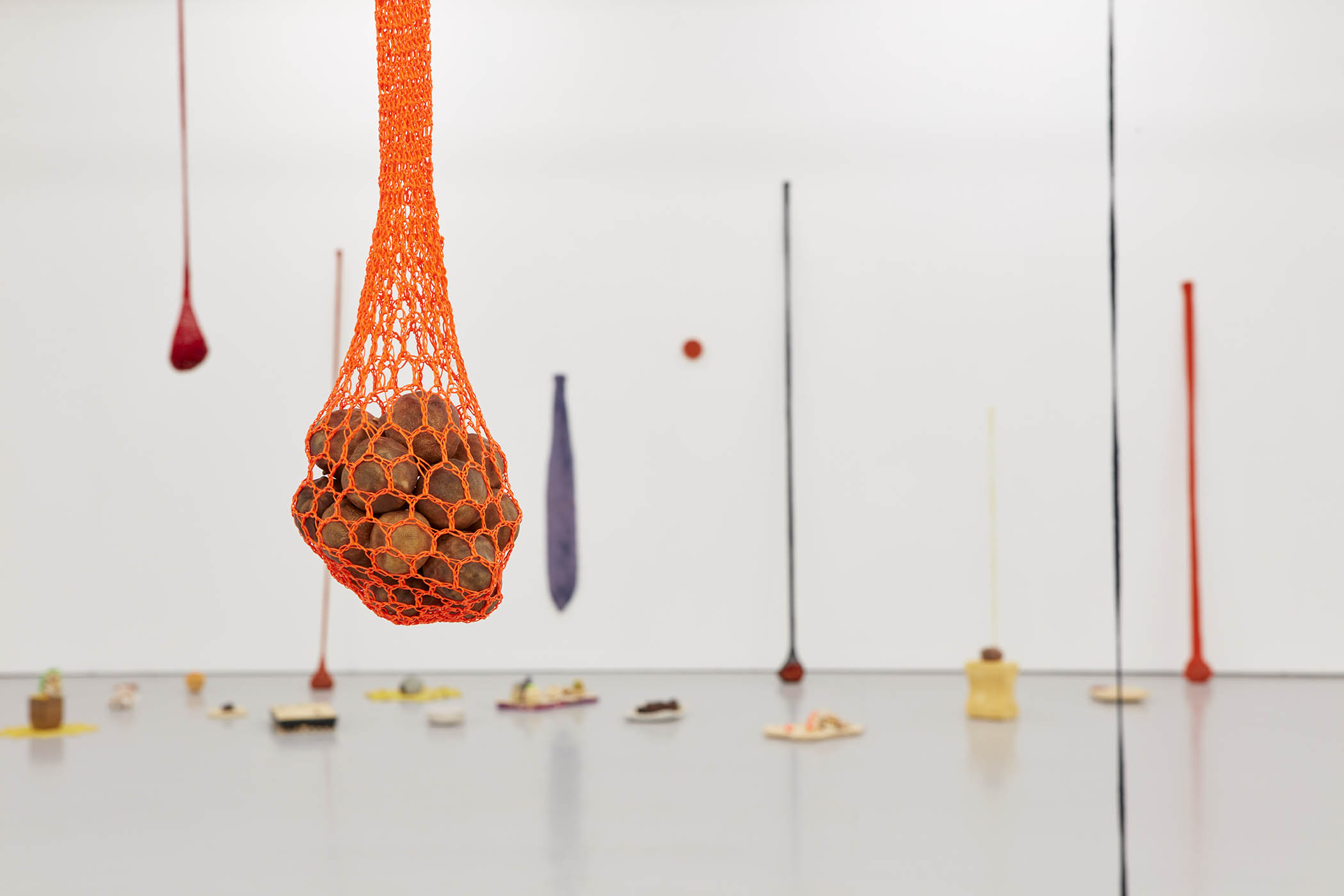
A bronze cast of a mango stone is one of a series, all caught up in brightly coloured nets like fish, or string grocery bags. Given that you can barely see them at all, still less lift them, you might wonder why they are cast in heavy bronze.
And dangling from the ceiling are more nets and crocheted bags, each containing something small and overlooked – nutshells, seeds, fruit – mementoes of the food her Montserratian mother gave her during a London childhood.
The day I visited, the ground floor galleries were so deserted I could hear an invigilator breathe
The day I visited, the ground floor galleries were so deserted I could hear an invigilator breathe
Clearly that is one answer to the question of meaning that hovers over almost everything in this show. Tiny objects, partial images, phrases written here and there in Ryan’s elegant italic hand over the past quarter century: what do they amount to? Why has she tie-dyed a pillowcase in deep indigo and then plucked it into tufts with multicoloured scrunchies, or netted a dozen plastic water bottles in black twine so that they form a misshapen knot? Why does she keep doing so? The significance is obscure, the reasons private and all too often withheld.
Every now and again it feels as if an object is on its way to poetry or epigram. A pillow losing its stuffing a little is titled Feathers in Her Head. But next to it lies a clay sphere bound in muzzy pink net that seems to be some kind of late-flowering surrealism yet remains entirely dumb and inert. A lot of works in this show are very delicately hand-stitched even when they do not seem to need repair. Four teabags are immaculately sewn together, the words Associate and Dissociate embroidered upon two of them. Why? Neither mind nor eye can make a connection between the words and the objects, here, and it falls to the gallery’s printed guide to make a dark allusion to the dissociation “sometimes experienced during traumatic events”.
Are these traumas personal or political? Tea, mango stones, avocado trays: global trade is obliquely invoked, along with slave labour. But so are dozens of earlier sculptors. You can’t walk round the Whitechapel without noticing the homage to Eva Hesse, Ernesto Neto and Louise Bourgeois, for instance, in every second work and wishing very much that they were all represented here.
Aluminium crates are stacked with pillows cast in plaster (light/hard, heavy/soft). Shelves are laid with trussed, bound or knotted objects. Sculptures dangle from the ceiling, spread on cloths and carpets across the floor, or garland the Whitechapel’s pillars. One entire wall is hung with what other artists working with trash – and there are so many of them – tend to call assemblages but which seem more like relics. Sellotape, glass beads, sardine cans: Ryan does very little other than group, stack or bind them together as part of her private mythology.
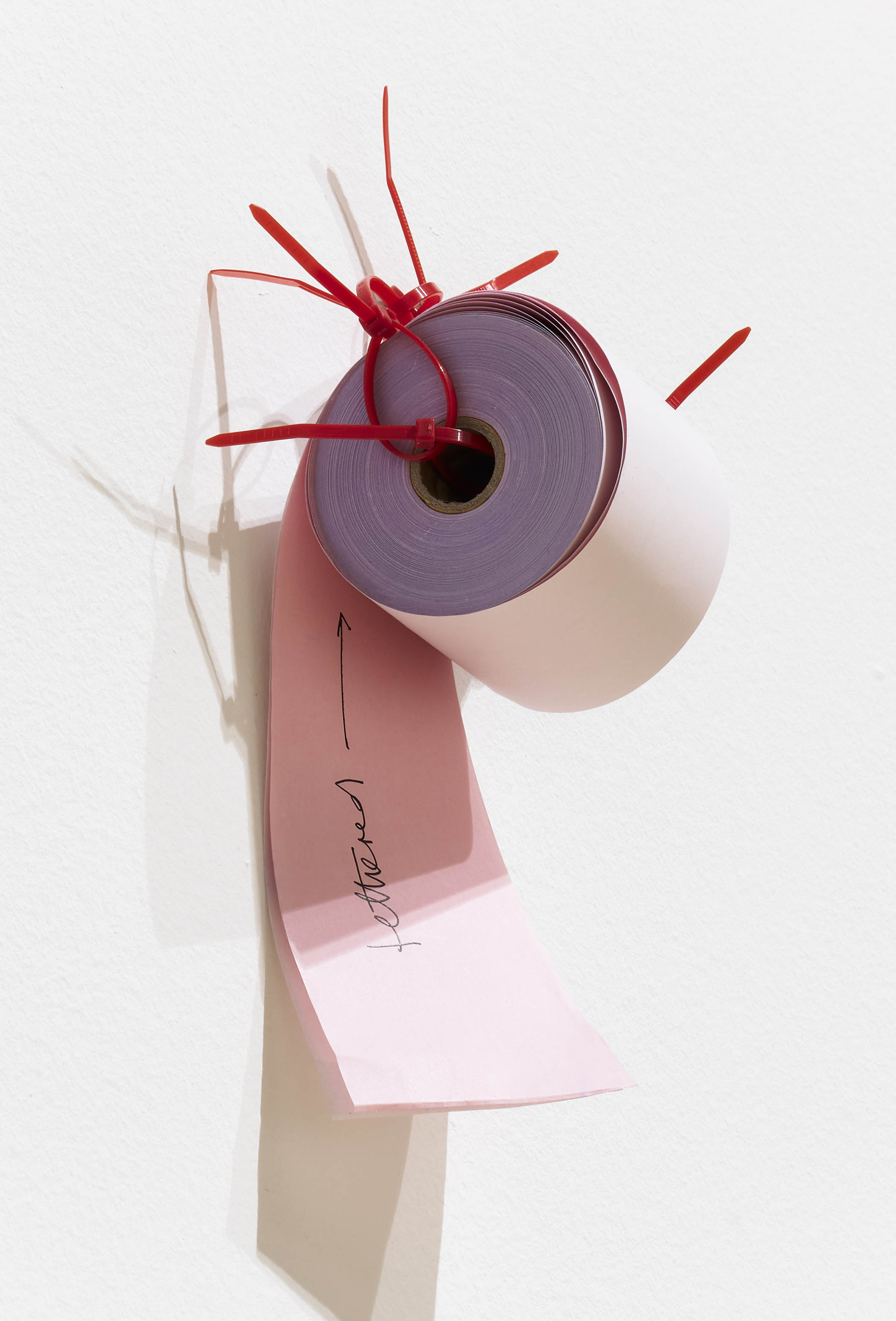
‘The significance is obscure, the reasons all too often withheld’: Veronica Ryan at the Whitechapel Gallery
A series of watercolours shows houses tossed on a sea of black lava or ash. Without the guide, you would scarcely know they allude to a volcanic eruption on Montserrat, where Ryan was born in 1956. It always feels as if she wants you to know, and yet not know. If it wasn’t so gentle, her art would be passive-aggressive.
Rarely has an exhibition had a more inaccurate title than Multiple Conversations. These objects, somewhere between art and pathology, recycling and memento, are silent on their own and withdrawn en masse. It is unusual for a show’s atmosphere to be quite so muted; or for the Whitechapel to be quite so empty. The day I visited, the ground floor galleries were so deserted I could hear an invigilator breathe. I was the only person in the upper galleries.
Newsletters
Choose the newsletters you want to receive
View more
For information about how The Observer protects your data, read our Privacy Policy
The Whitechapel Gallery is 125 this year. Founded to bring “the finest art of the world to the people of the East End”, it did so for decades: Guernica in the 1930s, Jackson Pollock in the 50s, Bridget Riley in the 60s and so on. Many 21st-century shows have brought art stars to the East End long before they were lionised by Tates Britain or Modern. But it’s beginning to feel the other way round with these solo shows. Ryan is succeeded in the autumn by the Chilean artist Cecilia Vicuña, just four years after her elegiac Turbine Hall commission at Tate Modern. The Whitechapel has never been a safe player, or a follower in the London scene. It is time to turn the tide the other way.
Photographs Courtesy Spike Island, Bristol / Max MacClure; Above Ground Studio / Matt Greenwood.
Veronica Ryan: Multiple Conversations is at Whitechapel Gallery, London, until 14 June