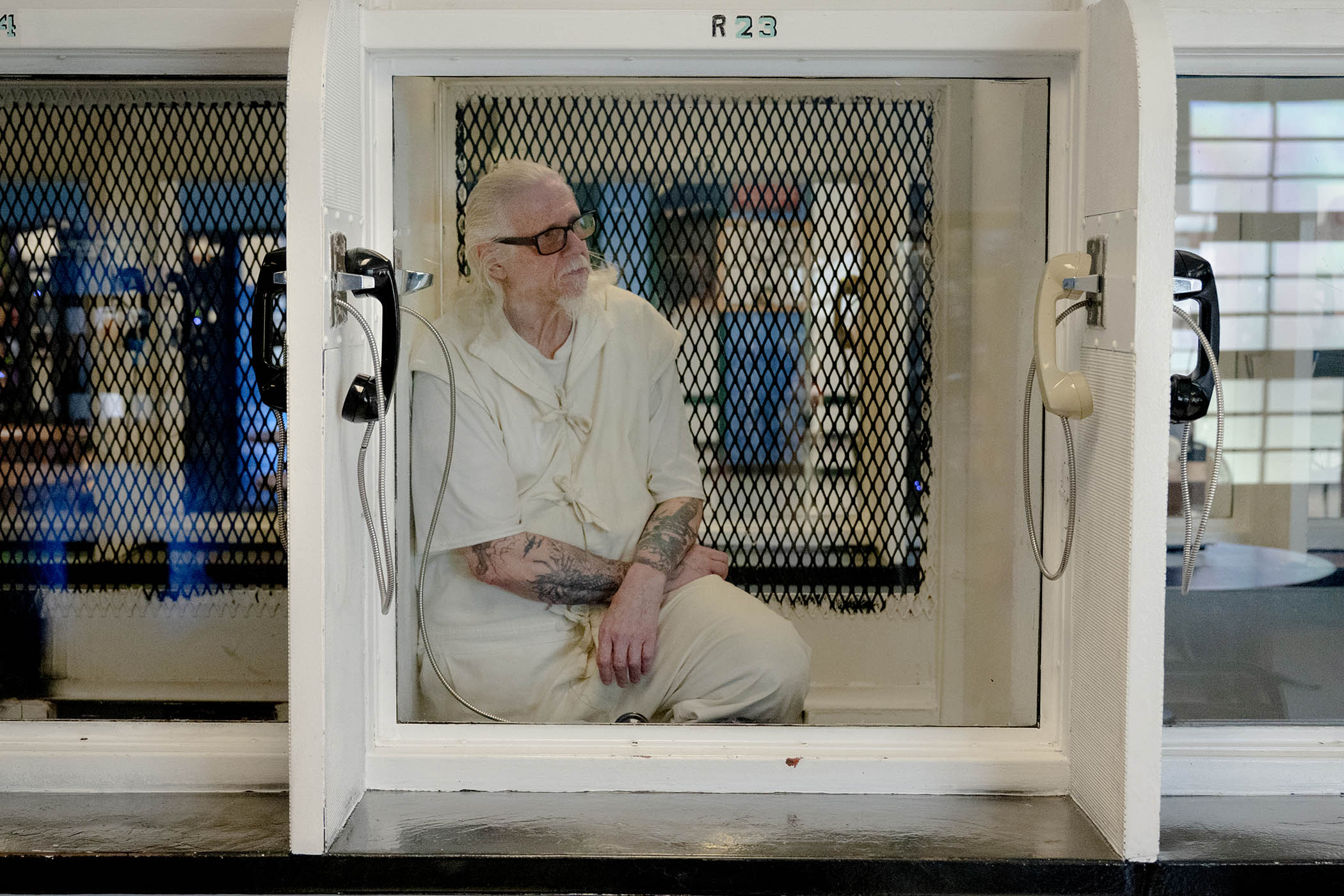
The Last 12 Weeks – now there’s a concise, confident title, propelling momentum and plot in just four pacy syllables. It also points to a grimly literal deadline: David Wood’s appointment with a lethal injection. He was sentenced to death in 1993 for murdering six girls and young women and disposing of their bodies in the El Paso desert. He has remained on death row ever since.
More dead women as content! How marvellously unsurprising, I thought – but then I listened further. This isn’t another mindless excursion into true crime’s murky waters, but a proper immersion in the waves that surround it. It helps that the series is led by Maurice Chammah, a Pulitzer prize-winning staff writer for the Marshall Project, a nonprofit US-based newsroom that seeks “to create and sustain a sense of national urgency” about the American criminal justice system. Chammah is the Marshall Project’s “death penalty guy on staff” – you can practically hear his resigned smirk as he says this – who opens the series playing an answerphone message received in autumn 2024 by Wood’s defence lawyer.
The caller is George Hall, a convicted murderer who shared a prison cell with Wood in the late 1980s and has finally completed his parole. He claims that police took him and two other prisoners out of jail, without handcuffs, on a scenic mountain drive. They bought them hamburgers, snacks and cigarettes, and encouraged them to say Wood had confessed to several murders. Hall says he refused. His fellow prisoners became the case’s star witnesses.
The Serial stable’s modus operandi is hardcore: introduce a subject, such as this court case, that seems impossible and deeply tangled, then patiently tease apart the threads, demanding the listener’s full attention. On paper, some of this should be brain-crushingly dull, like when Chammah spends several minutes in episode one describing how defence lawyer Greg Wiercioch tries to persuade a district attorney to reopen the case. But details make the story glisten: Wiercioch is described as looking “a little like a younger Dick Van Dyke, if you know that reference, which Greg would”, while his younger colleague Jeremy Schepers, a “millennial in flannel and jeans”, is his “photo-negative”.
I also loved Chammah noting a TV playing Cake Wars in the district attorney’s office, a blast of absurd normality before Wiercioch argues for the freedom of a man who many others believe is guilty. Then there’s a throwaway remark made by Chammah – “there’s this other thing, I won’t bore you with the details of why this happened” — primed for the listener to file away immediately, desperate for it to resurface three episodes later.
Episode two turns up the pressure nicely. A young woman, Michelle Bradley, enters and claims her father was the man people know as the Desert Killer. There’s a bracing moment when Schepers describes this man “chopping up” Michelle’s stepmother, then “dismembering it and tossing it around in New Mexico”. Amid this drama, Chammah gives equal weight to facial expressions on Zoom calls and conversational diversions. Every episode feels strangely comforting as it places faith in the listener’s curiosity and intelligence.
Radio 4’s Illuminated strand delivered something very beautiful this week. If We Can Walk Together presents two friends, Aziz Abu Sarah and Maoz Inon, who only disagree on a few major things: football, horses, music, Dr Who. One by one, they share their life stories. Palestinian Aziz recalls moving to East Jerusalem as a child in the 1980s, and not knowing what to do when the Israeli military carried out one of its regular raids on his school. Maoz, an Israeli, speaks about his mother and father. I won’t spoil either story. Told in their own words, they convey the realities of life under Israeli occupation and after the Hamas attack with staggering simplicity.
Aziz and Maoz also discuss friends who no longer speak to them, the many groups and events celebrating diversity and inclusion that have disappeared since October 2023, and why they both continue to work together for peace. One line from Maoz has stayed with me all week: “If Aziz and I can overcome our fear, our trauma, our pain and loss, and choose to walk together, so can you.”
Photograph by Lexi Parra for The New York Time
Newsletters
Choose the newsletters you want to receive
View more
For information about how The Observer protects your data, read our Privacy Policy