
Related articles:

In the small hours of 29 November 2019, a teenager named Zac Brettler walked out on to a balcony of the Riverwalk apartments by Vauxhall Bridge in London and flung himself into the Thames. Cameras on the MI6 building opposite captured his fall at 2.24am. Less than five hours later, at dawn, another young man crossing the bridge on his way to work saw a pale body on the shoreline. By 7.36am, Brettler was officially pronounced dead at the scene: another suicide borne by the tidal river.
The first feat of the magnificent book London Falling is that its prize-winning American author, Patrick Radden Keefe, manages to suppress any sign of incredulity or mounting outrage. For the known facts are these: in the brightly lit room behind Brettler at the moment he jumped was an extremely violent enforcer known as Indian Dave (ID), AKA Verinder Sharma, a 55-year-old criminal who was known to carry his bloody pliers in a polythene bag. And hurrying back to the Riverwalk entrance only a minute before the incident was a Mayfair charlatan in his 40s named Akbar Shamji, who had been with them for most of the evening.
The latter had introduced Brettler to ID as the son of a deceased oligarch waiting for his inheritance to come through. ID was expecting some of this money, as text message records show: “I want 5% of that 205 million.” He had now grown so alarmingly impatient that Shamji had returned, almost before he set out, from a business trip to Turkey to bring Brettler to him. “I’m thinking fuck this little kid,” ID texted Shamji that morning. “He’s not allowed to run away now.” That Brettler did try to run away, leaping into the night air to escape the dangers behind him, is almost the only certainty in the mysteries that followed.
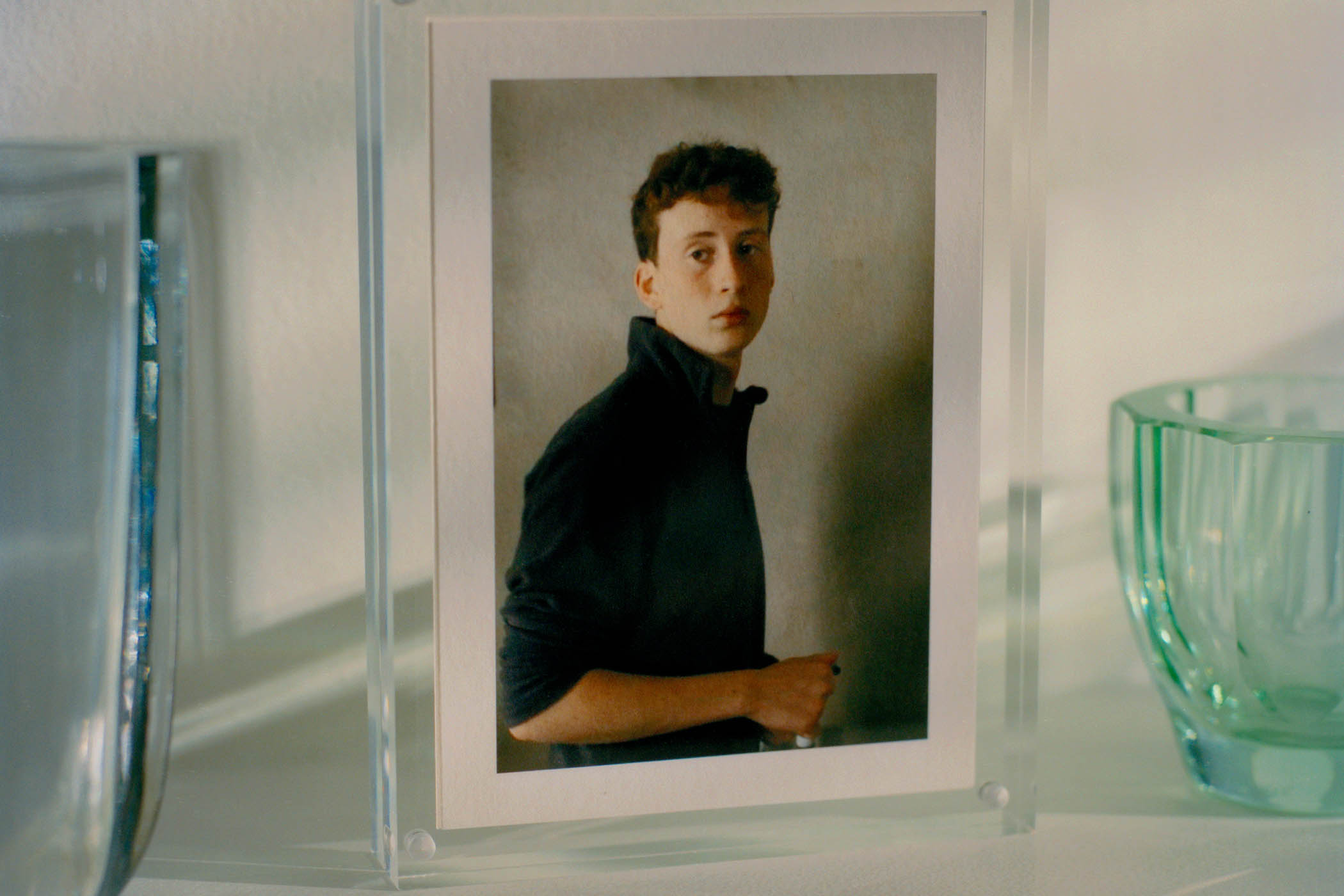
Brettler really was a kid; 18 when he met these terrible men, barely 19 when he died. An English public schoolboy who lived with his parents in Maida Vale, he was educated at Mill Hill and Ashbourne College in Kensington at a time when the offspring of oligarchs were chauffeured to lessons and the city was nicknamed “Londongrad”. He started calling himself Zac Ismailov (the surname of the young Kazakh widow across the road) while still a schoolboy and sometimes spoke – or so Shamji would later claim to the police and the Brettler family – with a Russian accent.
That Zac aspired to be a rich Russian is in no doubt. His mother hires a therapist to treat his strange behavour; his brother is appalled by his sibling’s transition to wannabe gangster; his cousin shocked to hear him fanboying Vladimir Putin in an “internet edgelord way”. The imitation game turns Brettler into a greedy poseur, going about in Moncler gilets, hustling for deals, even claiming to have sold his “line” – a burner phone for lucrative drug deals – to some Albanians for half a million; “Uncle Alex”, the unimpressed ex-con to whom he makes this extravagant boast observes, darkly, that Albanians do not pay for lines.
How did he get this way, lunging at his mother when she demurs at the suggestion they need a bigger house, pretending to his father that he has £850,000 in the bank? London Falling is partly – and brilliantly – about the way London affects its young, forcing them to grow up so fast within sight of corruption, among empty glass towers and luxury complexes owned by anonymous shell companies, where drugs are dealt inside as well as outside schools, where Oxford Street belongs to overseas corporate entities from Hong Kong to Qatar.
Brettler claims to live in One Hyde Park, the most expensive apartment complex in the capital; and Shamji claims to have believed him. But how are we to believe Shamji? The son of Abdul Shamji – the penniless Ugandan Asian refugee turned millionaire, who operated numerous failed companies out of Park Lane before serving time for his involvement in the collapse of Johnson Matthey Bankers – Akbar Shamji is himself a recent bankrupt. He lives in Mount Street, Mayfair, where his wife runs the fashion line Safiyaa, dressing the Duchess of Sussex and Jennifer Lopez.
Since Shamji’s own daughter attends Ashbourne College, it seems highly unlikely that he does not know who Brettler really is – but “fake it till you make it” seems to be everyone’s modus operandi. It is inconceivable that the police actually believe Shamji’s posture as a friendly new business partner for Brettler, a man who is as shocked as anyone when the lad suddenly kills himself. It is even more implausible that they countenance ID’s revolting claim that he was just supporting the poor boy, who had confessed to heroin addiction before suddenly jumping to his death. Yet the police are strangely slow to gather vital evidence.
Related articles:
But all of this comes later in the narrative. To begin with, nobody appears to have looked up to the balcony on that November morning. Brettler is just another “jumper” to the police, a poor suicide washed down the river from somewhere else. His body is not identified for several days (there are mutterings about his fingerprints being degraded after all that time in the water, even though it was only hours). The autopsy finds a compound fracture where he clipped his hip on the embankment wall on the way down but fails to make a finding about his broken jaw. A homeless man at the scene of the fall, however, is heard to ask how this can possibly be a suicide when he is “missing half his face”?
Readers will also wonder what happened to Brettler’s missing shirt. And why he did not plump for the pavement outside the cafe at street level if he was trying to kill himself, instead of aiming for the river, which he only just missed.
Newsletters
Choose the newsletters you want to receive
View more
For information about how The Observer protects your data, read our Privacy Policy
And why didn’t the police, on learning his identity and where he was that night, examine the freshly cleaned section of the balcony from which he jumped, or test the blood-coloured stains in the apartment, or question the reception staff – one of whom knew that the body was Brettler’s but was too frightened to say. Radden Keefe makes detectives of us all.
Radden Keefe has a dramatist’s gift for structure and a novelist’s fascination with character and motive
Radden Keefe has a dramatist’s gift for structure and a novelist’s fascination with character and motive
Covid sets in. There are terrorist incidents. The police are supposedly distracted. Still, it remains astonishing that they never questioned Indian Dave’s daughter, who was inexplicably present in the apartment that night; or the chauffeur who turned up “asking for Zac” at the Brettlers’ home next morning as a decoy; or the associate who was supposed to deliver amphetamines to Shamji at Riverwalk that night and received the horrifying text: “I have just been heating up knives and clearing up blood.”
London Falling is as riveting and powerful as Empire of Pain, Radden Keefe’s book about the Sackler dynasty, who inflicted the opioid OxyContin on the US. He is clarity itself when it comes to the dark and tangled histories of the city, all the way back to Dickens and encompassing Thatcher’s 1980s, including gangsters such as those modelled on the Adams family and their counterparts in The Long Good Friday (Bob Hoskins’s lavish boat in that film, not incidentally, belonging to Abdul Shamji).
He has a dramatist’s gift for structure and a novelist’s fascination with human character and motive, quite apart from the slow-building tension of his prose.
The book has its origins in a New Yorker article, but it goes so much deeper in its revelations. Radden Keefe has had close contact with the Brettlers throughout and found a co-investigator in Zac’s father. It is Matthew Brettler who tracks down the former Riverwalk worker who recognised Zac’s body, visits “associates” of his son and makes startling connections; degrees of separation turn out, at times, to be horrifyingly few.
But Radden Keefe takes it all further, not least in his poignant portrait of the Brettlers trying to find a way to keep their son close and out of danger. In one of the book’s most chilling scenes, just after Zac has “disappeared”, Shamji invites the Brettlers to meet him in the Piccadilly hotel where his drug dealer is staying.
He offers silken assurances that he and his friend ID will help find the boy, who he already knows to be dead. The MI6 footage shows him peering down into the Thames just after 2.48am on 29 November; the black box in his hired car shows him slowing over the bridge, perhaps to check the waters downstream. Try to imagine what kind of man would offer “comfort” to Zac’s mother, Rachelle Brettler, at this moment.
The Metropolitan police showed so little curiosity about this case thereafter as to suggest that ID – whose vicious record down the decades, including suspected murder, had resulted in nothing but a minimal sentence – must have been some kind of informant. In 2020, he died in that same Riverwalk apartment of an overdose. There was no registration, no funeral announcement, no news of a public inquest. The Brettlers wondered if he was actually dead.
Anyone who has endured the Met’s interminable silences, praying daily for an update, will feel the utmost compassion for the family. Two years pass before Det Insp Rory Wilkinson – “in the detached tones of a philosophy professor ruminating on the fundamental unknowability of human existence” – opines that though there is a law against perverting the course of justice, they can’t prove justice has been perverted. Nobody seems to be pushing Zac off that balcony; there is no proof a crime has taken place. Shamji cannot be charged with anything at all and enjoys the presumption of innocence.
But what Radden Keefe proves, in his meticulous amassing of fact and detail is that Zac Brettler did not kill himself. The book amounts to a body of evidence so strong and secure – most particularly the staggering disclosures at the very end, from a source who cannot be named – as to be incontrovertible.
A thousand details do not add up in the Met version of Brettler’s death, or in Shamji’s twisted apologia. This enthralling masterpiece, by one of the world’s great nonfiction writers, allows the reader to spot the ones that do.
• Samaritans can be contacted on freephone 116 123, or email jo@samaritans.org or jo@samaritans.ie. Youth suicide charity Papyrus can be contacted on 0800 068 4141 or email pat@papyrus-uk.org.
London Falling: A Mysterious Death in a Gilded City and a Family’s Search for Truth by Patrick Radden Keefe is published by Picador (£22). Order a copy from The Observer Shop for £19.80. Delivery charges may apply