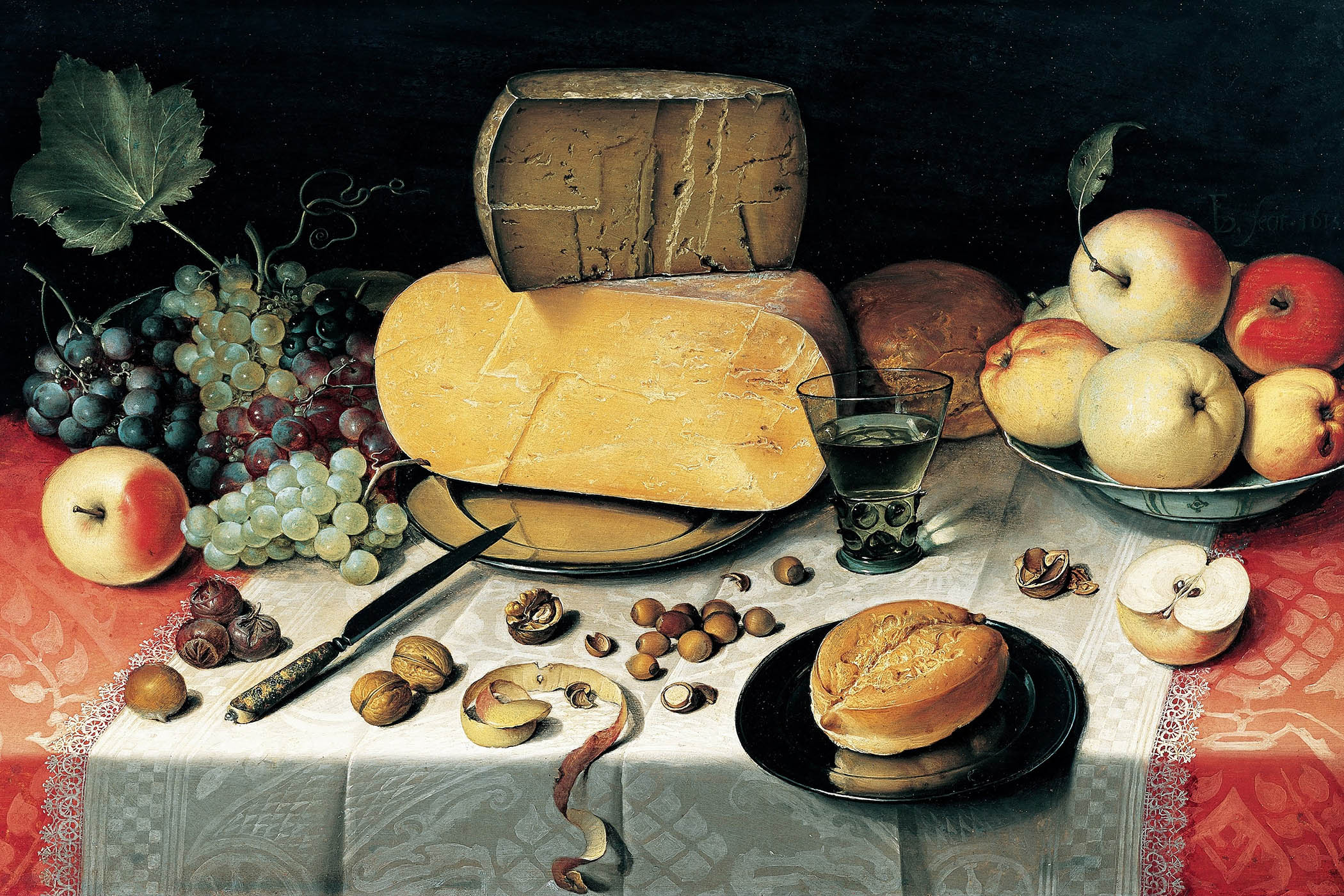



In her vivid debut novel, Rebecca Perry tests the limits of history. What at first seems like a story fixated on accuracy and dictated by historical documents eventually asks why we place such faith in the people who wrote those records.
May We Feed the King is concerned with two paranoid kingdoms. Its dual narrative drifts between an unnamed (and ungendered) curator in the present and a reclusive young king living many centuries ago, neither period quite on the solid footing of reality. Perry, who was selected as one of The Observer’s debut novelists of the year, is a poet whose work has been shortlisted for the TS Eliot prize. She is also a keen amateur gardener, and it is an eye trained in both practices that she brings to the beautiful, breathing descriptions of food conjured in this novel.
As the curator stages scenes for the 750th anniversary of a medieval palace, a bounty of replica food is ordered from a catalogue: camembert “with its tactile powdery skin”; a poached egg “with a cloudy film of white across the yolk”; “a half oyster shell, the exposed flesh shining as if with the freshest brine”; and “the most beautiful ham slice, with a pollen-like bread-crumbed edge”. One luxurious description sees the curator reach out to touch “stone so cold it seemed wet, wood as soft and warm as melted wax”.
The curator finds a kindred spirit in an archivist who opens up the historical records, luring both of them deeper into the life of the king who lived in the palace. Soon the curator prefers living in his past than their own present. They weep when they find the first entry of the young king in a ledger. The curator starts to dream of him: waking “briefly, to rearrange my position in bed, I felt his presence in my house”.
Rumours of indiscretion between the king and his young male attendant fly between palace servants
Rumours of indiscretion between the king and his young male attendant fly between palace servants
From here, Perry flicks back the pages to the subject of the curator’s fascination. We witness the reluctant young king as he takes the throne after the death of both his brothers. The third in line does not rule with violence, nor the charm of wisdom that his brothers displayed during their short reigns. Instead he feels the “duty placed on him like a boulder on the chest of a sleeping man”, and the whispers around the court begin before the crown has even touched his head. The king will not eat, nor can he produce an heir, his feminine lack of appetite of a piece with his lack of sexual prowess. Meanwhile, rumours of indiscretion between the king and his young male attendant fly between palace servants and eat away at his authority. When the king makes the fatal error of enquiring about a ruler who once abandoned the throne, he realises his days are numbered.
The sense of foreboding that roils through the book is not delivered immediately but with a discovery, many years later, of a “hand of bones, bedecked with jewels” found in the middle of the woods. It is an image of pure horror that gives the story its dark, glittering heart.
May We Feed the King is lyrical and rich, but despite its poetic chapter titles and artistic observations, it bears the marks of a novelist’s intricate plotting and sense of pace. The mounting dread of the king, who “wears the face of a man who has been dropped in the middle of the ocean without warning”, sets the story off at a sprint. Perry captures the players of the court and the chain of gossip so successfully it feels as though we are observing history as it plays out. But what the book has to say about whether we can trust historical texts and records, and the propaganda they might inadvertently contain, is far more interesting.
When we return to the world of the curator, they are asking an audience assembled at the palace: “How do we know anything about history?” Showing the group a case displaying the king’s ledger and the record of his mysterious final day, they say: “I warn you now that there are no answers to these questions,” and that “the very lack of an ending” is the greatest gift from the king. This seems Perry’s greatest gift too: resisting neat explanations of what has unfolded; creating a story that is not set in ink and confined to the dark, but instead can be “blown free of dust, held to the light”.
Related articles:
Perry stages a rich feast of images and ideas. Like the curator who hopes to focus not on the “things people could easily see and understand, things people want to see”, she looks for the small detail that might pull a thread in a reader’s mind that does not stop unravelling.
May We Feed the King by Rebecca Perry is published by Granta (£14.99). Order a copy from The Observer Shop for £13.49. Delivery charges may apply
Newsletters
Choose the newsletters you want to receive
View more
For information about how The Observer protects your data, read our Privacy Policy
Still Life with Fruits, Nuts and Cheese (Floris van Dijck, 1613) courtesy of Getty Images