
Ali Smith’s new novel, Glyph, is a companion piece to the author’s 2024 book Gliff. Gliff is a near-future dystopian novel, a difficult genre to write while present-day reality tends to overtake imagined deterioration. I don’t live in Britain any more, for reasons approximately related to Gliff’s dark imaginings, but I don’t think the state is painting red lines around the homes of citizens resisting total digital surveillance, or compelling children to work in underground rooms stripping precious metals from old electronics with their bare, maimed hands. Yet.
In comparison, elements of Glyph’s world are painfully recognisable. The body of a journalist is eventually returned to her family mutilated – the same fate as suffered by the Ukrainian journalist Viktoriia Roshchyna. A clever teenager, in trouble at a school where female teachers are subject to constant misogynist abuse from boys, is arrested for standing on the pavement chatting while holding the wrong sort of scarf. A woman who used to have a job rewriting AI-generated text to make it sound more human is made redundant, as AI learns to sound more human than humans.
The built environment and infrastructure of Glyph are those of modern Britain, where the setting of the earlier novel was – just about – speculative. The characters of Glyph have read and often discuss Gliff, borrowing phrases from real, published reviews to express disappointment in the experience. (This is Smith’s self-deprecating joke; the critical response in fact ranged from appreciative to gleefully delighted.)
In Gliff, two children, abandoned by carers fallen on hard times, try to care for each other in a disintegrating world while they wait for the grownups to come back; the situation is familiar from classic children’s books and the underlying structure is that of a traditional quest narrative. Glyph’s protagonists are a pair of adult sisters whose mother dies after a long illness – perhaps depression, perhaps related to their father’s abuse – and whose father is more tyrant than protector. Structured around timeslips and shifting points of view, the novel has to form its own organising principles.
One of the narratives that does this structural work in Glyph is also in the tradition of children’s literature: the relationship between a boy and his horse, related here in “a story our great grandfather kept to himself for most of his life, from back when he was in the Foresters”. Part of historical record or not, it’s the wholly plausible tale of a very young soldier in the trenches of the first world war, caring for a pit pony brought up from the darkness to transport military supplies instead of coal. There’s a gas attack and the horse is blinded, its eyes “turned to eggwhite”, and the young man, knowing the horse will be shot though it is “otherwise fine, wasn’t burnt or blistered”, takes off his own and the horse’s military kit and walks off into the woods with it. A few months later, the deserter is caught and made an example of “by roping him to a post early one morning, blindfolding him and having a firing squad shoot him dead”.
Smith’s project in these paired novels is a meditation on childhood, innocence and the fallen world
Smith’s project in these paired novels is a meditation on childhood, innocence and the fallen world
Inasmuch as there is any hierarchy of human inhumanity, it’s not the worst thing someone with more power does to someone with less power in this book. But the story comes back around, like the theme of a fugue, this time in the aftermath of the second world war, when a young motorcyclist carrying military dispatches in France comes across the body of a man flattened to the road as if a tank has rolled over him.
The sisters of Glyph – Petra and Patricia – hear both stories in childhood and remain haunted by them through adulthood. As in Gliff, the older sibling cares for the younger. (I cannot help hearing an echo of Noel Streatfeild’s 1936 novel Ballet Shoes in these sisters whose names begin with P; Smith’s whole project in these paired novels feels like a meditation on childhood, innocence and the fallen world that reflects many of the concerns of post-1918 children’s fiction.)
Patricia cries the night after hearing the story of the flattened man, because of “how sore it will have been to be made so flat” and “that soreness has been going round and round the world since, like a bird looking for somewhere to land, and it has landed on me”. Petra – temporarily – solves the problem with disprin and then by pretending to telephone the flattened man in the great beyond, turning back to assure Patricia that “he doesn’t want you to worry about him any more because that painfulness and that time are now completely gone”.
Petra ends up serving the neighbourhood as a casual medium until her father gets wind of it, but meanwhile the idea that pain is always looking for somewhere to land is central to the book, and also part of Smith’s answer to the question of the purpose of art in end times. Her writing, like Petra’s stories, is a place for pain to land.
As in Gliff, the siblings are half-estranged in adulthood. Patricia adopts a girl, Bill – later the teenager with the scarf – who has her own traumatic backstory and a painfully clear adolescent understanding of corrupt power. Patricia also becomes an “assistant audiologist”, occupied, in a low-paid way, with perception, communication and the ghostliness of tinnitus. And then after a long gap, Petra calls her because the ghost of that blind horse has come to haunt her apartment, and Patricia takes Bill with her when she goes, as ever, to provide solace and consolation. As in Gliff (and as in Black Beauty), the horse is both scapegoat and spectre, persistent manifestation of human sin.
The dialogue is full of wisecracks and puns, sometimes enough that Bill’s eye-rolling commentary on the sisters’ routines is a relief to the reader. The setting is lightly sketched; this isn’t a fully realist novel, as Patricia acknowledges in calling herself a “flat character” (all puns very much intended). It’s metafictional, more playful and funnier than the sometimes earnest Gliff – not that there isn’t plenty to be earnest about. Although Glyph provides plenty of literary pleasures, there is nonetheless reason to find in Smith’s writing a (not unjustifiable) deep and deeply puritan distrust of pleasure as we live through the worst kind of interesting times.
Glyph by Ali Smith is published by Hamish Hamilton (£20). Order a copy from The Observer Shop for £18. Delivery charges may apply
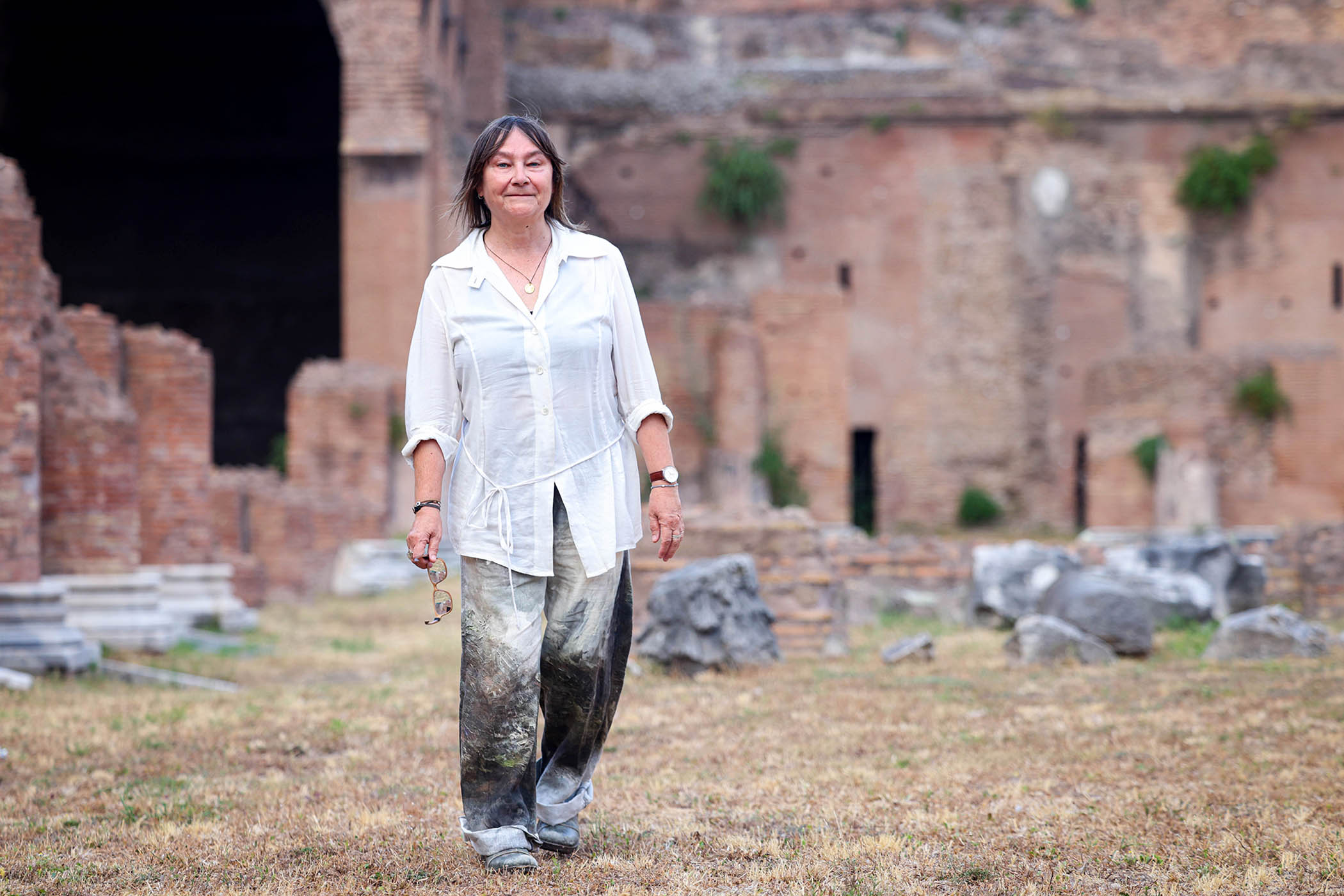
Photograph by Franco Origlia/Getty Images
Newsletters
Choose the newsletters you want to receive
View more
For information about how The Observer protects your data, read our Privacy Policy