


Literalism was once the province of the religious. Fundamentalist believers regarded the Bible or the Qur’an as the inerrant word of God, to be read literally rather than allegorically. Today, literalism is increasingly embedded in the secular world.
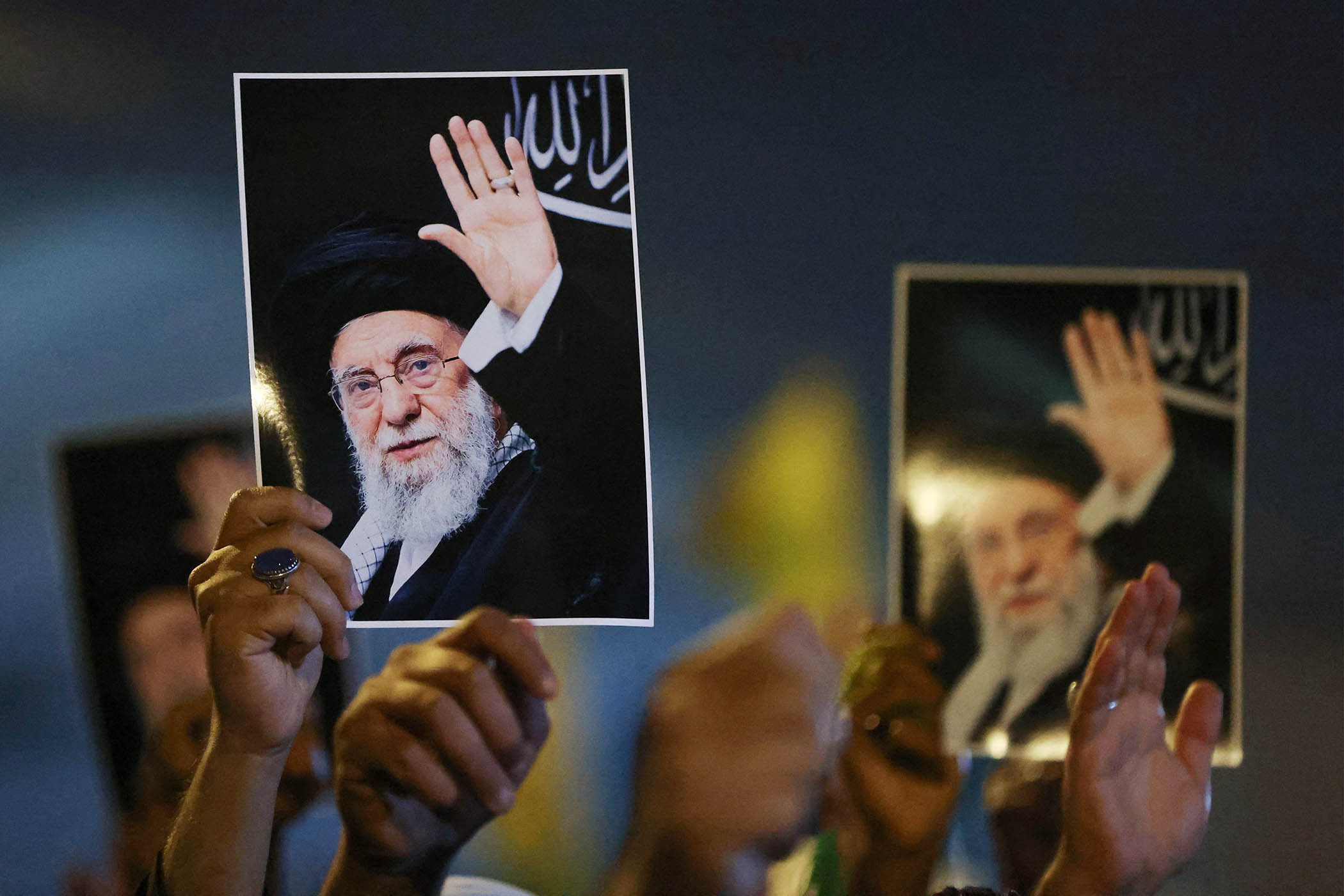
Earlier this month, the Economist published its obituary of the Ayatollah Ali Khamenei, killed on the first day of the American-Israeli war on Iran. The magazine has a quirky obituary style, retelling an individual’s life not through the eyes of other people, but from his or her own perspective. We learn from Queen Elizabeth II’s obituary that her ascent to the throne “came not just from good Hanoverian blood, but from God”. George HW Bush had “no patience for today’s blowhards”. FW de Klerk, South Africa’s last president under white minority rule “felt he had done more than Mandela to bring apartheid down”.
It is a literary style called “free indirect discourse”, in which first-person and third-person perspectives are blended to provide greater insight into a subject’s thoughts. The Khamenei obituary followed this pattern, but exaggerated the style, making it difficult to read it as anything other than sardonic disdain: “Many of his subjects grew to loathe and rise against him… Clearly, foreign enemies had fomented this. So he responded by beating, jailing and shooting, eventually ordering the killing of thousands.”
Nevertheless, the obituary created a furore, many unable to read it except as the literal view of the Economist. The magazine, wrote one, “salivates with true depravity”. The historian Tom Holland gently mocked the critics by comparing the obituary to Jonathan Swift’s “disgraceful suggestion that the starving Irish sell their babies to be eaten”. In his 1729 satirical essay A Modest Proposal, Swift had suggested that poverty in Ireland could be eradicated if the poor were to sell their children as food for the wealthy. Holland was inundated with replies educating him that Swift’s suggestion wasn’t disgraceful because it was actually satire. “Quite a fail, Tom,” tweeted one respondent, no more able to parse Holland’s tweet than the original critics were able to understand the Economist obituary.

Jonathan Swift (1667-1745), master of satire
It was a minor kerfuffle that will soon be lost in the torrent of internet stupidity. It illustrated, though, one of the features of our age: the inability, or refusal, to recognise that words should be understood not literally but only in context.
Almost half a century ago, New Yorker magazine devoted almost its entire issue to a strange, much celebrated prose-poem-cum-essay by George WS Trow entitled Within the Context of No Context. Television, Trow argued, had corroded the foundations of society, leaving individuals disconnected from a unified cultural narrative, and creating fragmented “demographics” (what today we would call “identities”). “Television itself is a context to which television will grant an access,” Trow wrote, meaning that television had come to displace the wider world as the reference point for what is real.
Few people today would attribute to TV the almost demonic power that Trow believed it possessed. Yet, his broader argument about social fragmentation and loss of meaning seems very contemporary. Except that now, the blame is placed not on television but on social media.
Cyberspace certainly flattens experience and strips it of wider context. Yet it is not technology, whether TV or the internet, that fragments society or dissolves shared meaning. Technology magnifies existing social fractures. This is true of the new literalism, too.
Because so many view the world through the lens of identity, so one’s identity can define how one construes an article, a film or an event
Because so many view the world through the lens of identity, so one’s identity can define how one construes an article, a film or an event
The recent row over the racial slur at the Baftas shows the degree to which the tendency to view words literally, and to divest them of their social context, is a characteristic of our time, not simply of social media.
Contextual readings recognise that a word, a thought, a concept, acquires meaning only within a web of relationships: in the relationship to other words, thoughts and concepts, and to the external world, both material or social. Depending on the context, even a grotesque racial slur may not be a slur at all. John Davidson’s words at the Baftas were not insults but involuntary Tourette spasms. Many were unable to make that distinction, or to grasp its significance.
Newsletters
Choose the newsletters you want to receive
View more
For information about how The Observer protects your data, read our Privacy Policy
Because meanings are not fixed, contextual readings inevitably give rise to disagreements. They can create ambiguity. The outrage over the Khamenei obituary came from precisely that. There was no signpost saying, “This is not the Economist’s view but an attempt to understand how Khamenei may have regarded his life”. Signposting, though, has become an essential part of the contemporary landscape, from Hollywood films that relentlessly explain in dialogue the meaning of what has just been witnessed on screen to speech laws and codes that act as boundary markers for the limits of acceptable discourse. Identity boundaries also act as signposts. Because so many view the world through the lens of identity, so one’s identity can define how one construes an article, a film or an event.
Where such signposts are unavailable, many now fall back on a literal reading. Whether with a racial slur at the Baftas or an obituary in the Economist, the form of the word, the sentence or the passage, is taken to be its content.
Even the most fervent believers rarely take every word in the Bible or Qur’an literally. What religious literalism does is ensure that human thinking is evacuated from the process of understanding. Meaning becomes that which is given by authority.
In our world of social signposts, we may find it more difficult to detect irony, but it would certainly be ironic if, in the process of maintaining social authority, literalism were to become embedded in the secular world, too.
Photograph by Ahmad Al-Rubaye/ AFP via Getty Images
Portrait painting of Jonathan Swift by Charles Jervas, circa 1718 /Alamy