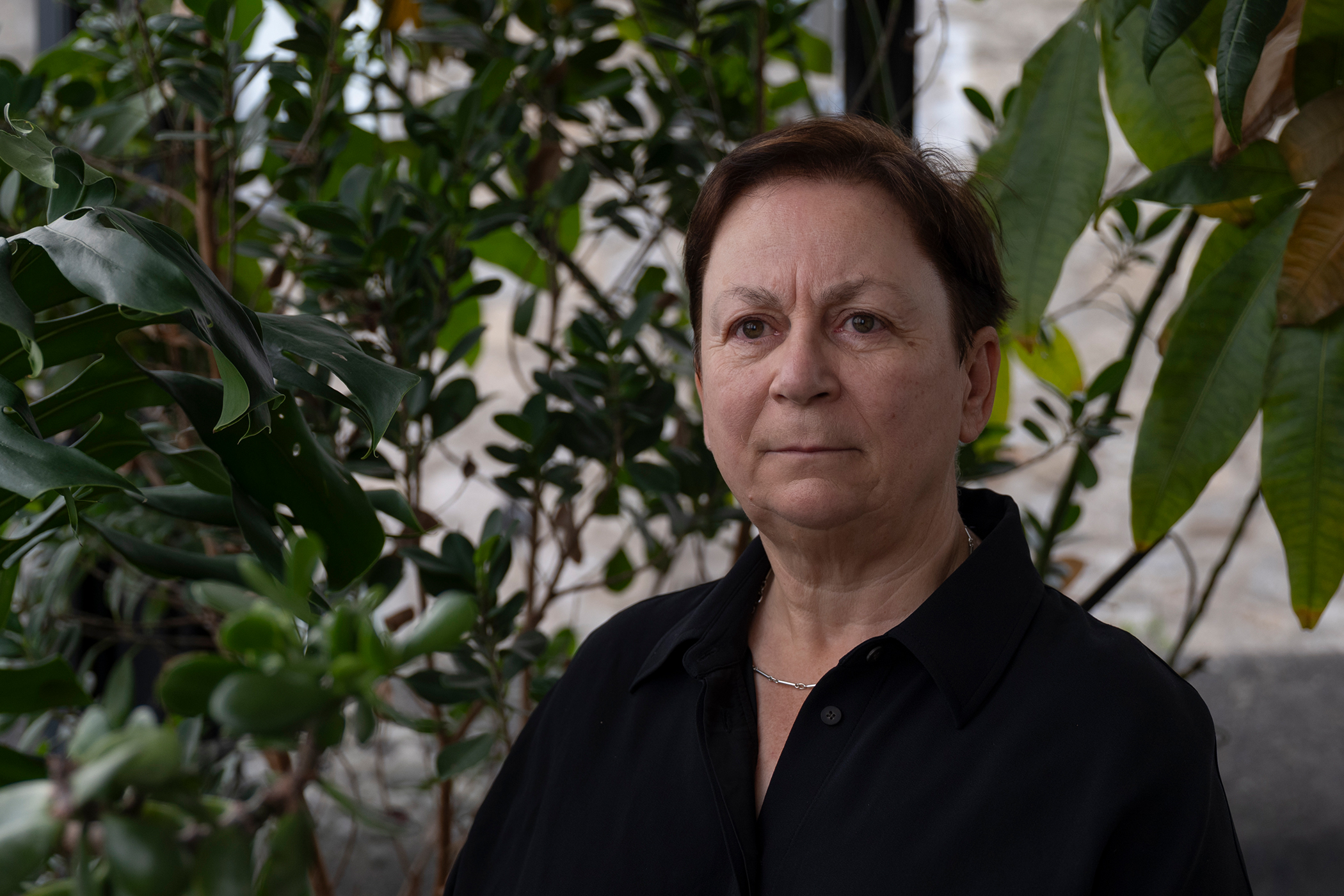



Anne Enright, 63, is the author of eight novels, three collections of short stories and a nonfiction book about motherhood. She won the 2007 Man Booker prize for her novel The Gathering. Her most recent collection of essays, Attention: Writing on Life, Art and the World, examines the complex legacies of great writers, recent history such as the Irish referendum on abortion and the #MeToo movement, and snapshots of places in time, from her native Dublin to studying in Vancouver.
In Attention, you argue the phrase “the cat sat on the mat” changes meaning depending on whether a man or a woman has written it. You advise the reader to “observe the cat”. What does the cat represent to you?
It’s about the burden of interpretation that women carry more than men. Men’s words are accepted for what they are. For women it is impossible to escape the web of interpretation and projections of various kinds.
How did you go about exposing those projections in the book?
One of the things I was really interested in doing – especially in the literary essays – was nailing the argument to the text that’s there, to make it about what actually exists. I’m trying to find a still point in the turning world, to establish a place to stand and ascertain, if not the truth then the facts. I’m increasingly wary of opinions, and opinions carry a sense of entitlement. You have to hold your argument lightly if you can; to keep moving even as you try to lock things down.
In the essay about Helen Garner’s diaries you write that, while married, her prose began to lose its edge. Can relationships get in the way of writing?
I just loved writing that Helen Garner essay; I just went typing typy type. There was this rising curiosity in her diaries – the thing that flows through really good writing, like the sap or the force – and she lost that when her confidence was whittled away by the attitudes and actions of her partner. It’s something I wrote about more directly in novel form with Actress, where the flame of her [the protagonist, Katherine O’Dell] talent was belittled by the men around her.
In one essay, you say that writing from a place of distress can be helpful. Is that something you’ve found in your own career?
You see, I’ve found nothing throughout my career. In these essays I may contradict myself from one to the next, because they take place over time. But yes, writing is a way of putting yourself back together. I think I’m also looking for that insight that reading and writing can give: of opening, of being further on, of a higher level of understanding. That feeling of things making sense is just fabulous. But a moment of insight can be very close to sensationalism. People are seized by problematic convictions all the time.
You say that your grandmother considered gossip a sin, but it also feels like a useful currency within cultures of silence.
Newsletters
Choose the newsletters you want to receive
View more
For information about how The Observer protects your data, read our Privacy Policy
There is a theory that gossip is a way that women control their environment and each other, but it’s been seen as a weak female form of conversation, rather than high philosophical discourse or political argument. I talk about silence a lot: how silences were used in Irish life to cover up anything shameful that could be replaced by the fantasy or the fabulous. Silence was part of the engines of oppression. Do I sound very high flown? [Laughs]
How do you feel about “Irish fiction” as a genre?
Although I love writing about Ireland, I’m a tiny bit wary of people saying: ‘“Oh, that’s Ireland.” It’s like: “Oh you Irish and your families!” Well, were you plucked from under a cabbage in the back garden? No. Everybody has families. I think there might be some post-colonial snoot involved.
Do you think that’s changing thanks to a new crop of writers like Anna Burns, Eimear McBride and Sally Rooney?
It has raced ahead of anything I could say about it over the last decade or so, which is interesting and wonderful. I think it is made easier by leaving the country – which I didn’t do – and if you write from exile, there is a kind of nostalgia built in, which does preserve the past in some way.
Sometimes I wonder how to describe the world I grew up in and the differences today.
You describe being asked by a male Nobel winner if Toni Morrison was really “that good” after she won the prize herself. Is that a reflection of what you came up against?
That was the male reader in the 70s: wouldn’t be capable of saying they had read and enjoyed a book by a woman, with the exception of posh women. So they might like Elizabeth Bowen or something because she had a nice big house. But anything that was styled as “too female” would be difficult. “The cat sat on the mat” went into this long essay where I tallied statistics around the gendering of readership in Ireland. The statistical interest was around the fact that women are happy to read books by men, and to criticise and review books by men, and it doesn’t work the other way around.
Why do you think that is?
I don’t have the answers to all of this because whatever is going on in the male psyche is not something they’re willing to discuss in a useful way.
You introduce the term “pregnancy without consent” in an essay about the eighth amendment referendum in Ireland, and in the same chapter you talk about a friend struggling to be “for” abortion. Do you think part of the problem with these issues is to do with language?
To me, the enduring success of the #MeToo movement is that it is no longer possible for people to say that someone is “asking for something” when they are going about their daily business. If you take that further [to the eighth amendment] you get the absolutely bizarre assumption that a woman is a mother because someone has had sex with her. I just think mother is too interesting and valuable a word to use it that way.
In the book you say that “cocaine is the dirtiest thing in the world, after oil”. What else is on that list?
It’s very hard to find clean money. Twitter, I think we’re all agreed, is a sewer. And I’m constitutionally averse to misogyny; I do think it’s really nasty.
Attention: Writing on Life, Art and the World is published by Jonathan Cape (£20). Order a copy from The Observer Shop for £17. Delivery charges may apply
Anne Enright photographed by Paulo Nunes dos Santos in Sandycove, Dublin, for The Observer