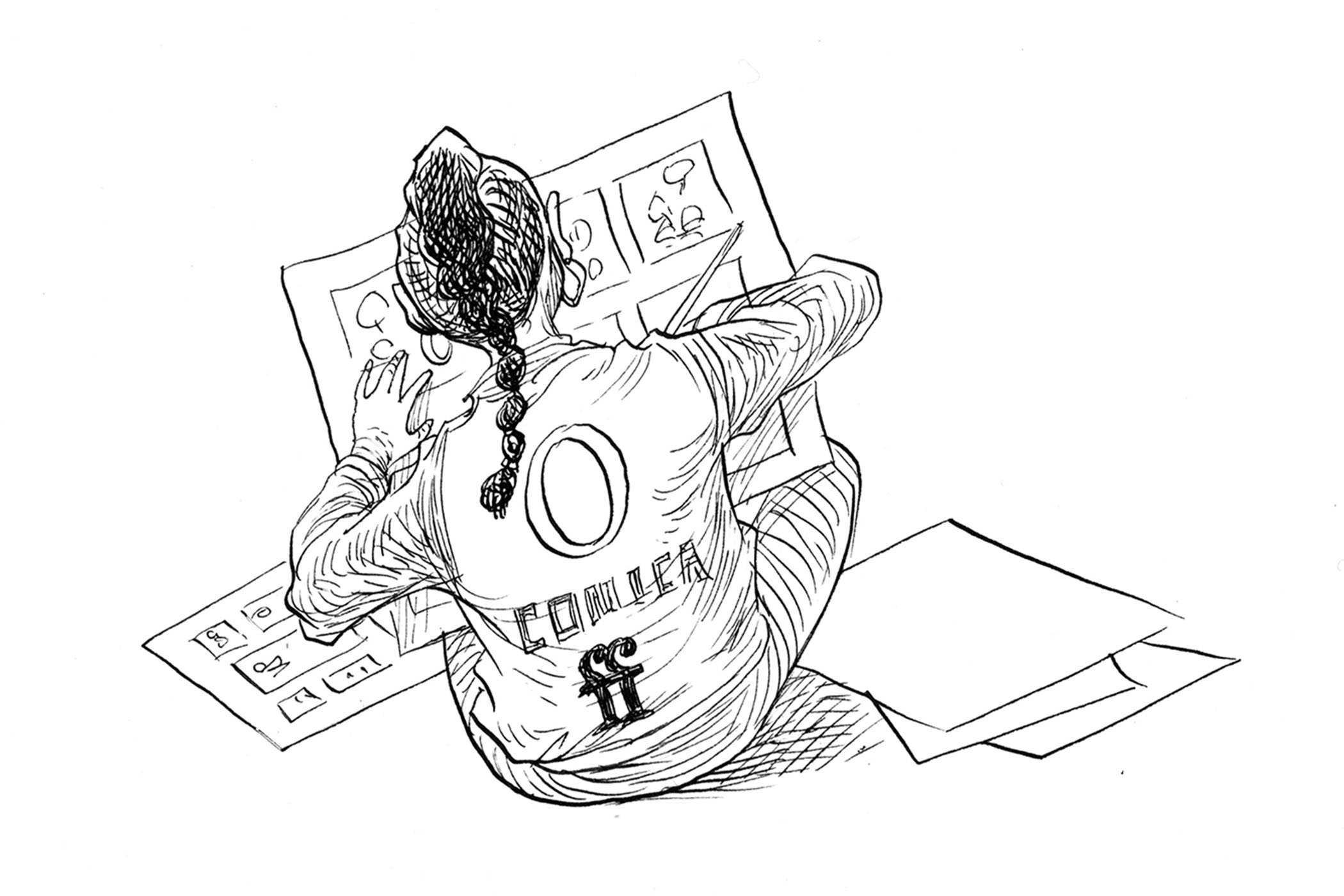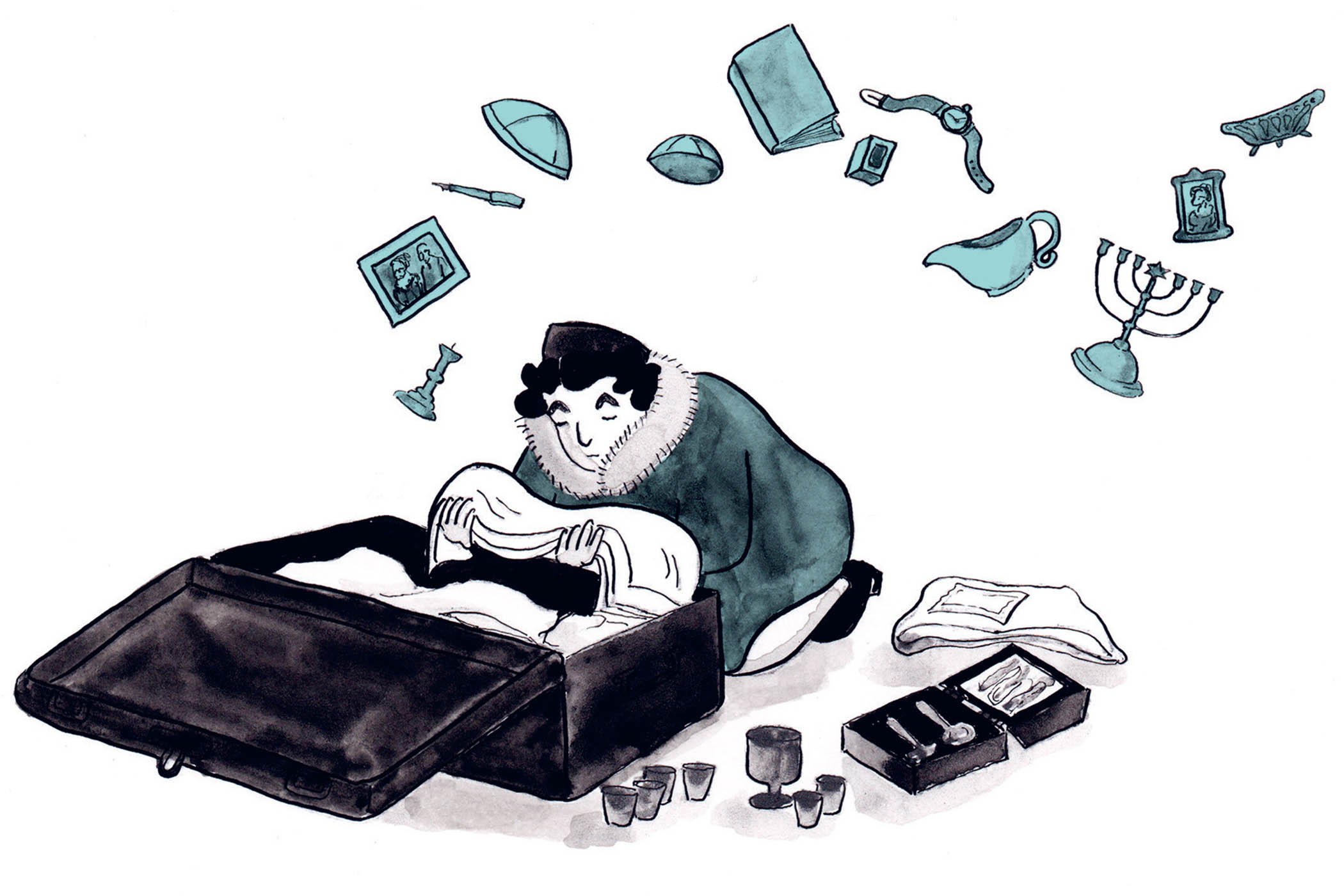

In 2022, Astrid Goldsmith won The Observer/Jonathan Cape graphic short story prize (now run in association with Faber) with A Funeral in Freiburg, a finely drawn and unexpectedly comic four-pager about the difficulties of organising a Jewish funeral service in Germany. Goldsmith’s stern but beloved grandmother Gisela had died seven years earlier in her mid-nineties. In the days that followed, the family scrambled to find a place to bury her (the city’s Jewish cemetery was full, its rabbi dismissed on embezzlement charges) and then to rein in the impulses of the funeral arranger, who was fixated on cutting their clothes in accordance with Jewish mourning rituals.
At the time, Goldsmith suggested that A Funeral in Freiburg might be the beginning of a full-length book, hinting at all the “bad behaviour” that had occurred in the wake of her grandmother’s death. Now she’s made good on her promise, and the resulting graphic memoir novel – revolving around the clear-out of Gisela’s flat in Freiburg and the memories it throws up – is every bit as rich, moving and wryly funny as those opening pages had led us to expect.
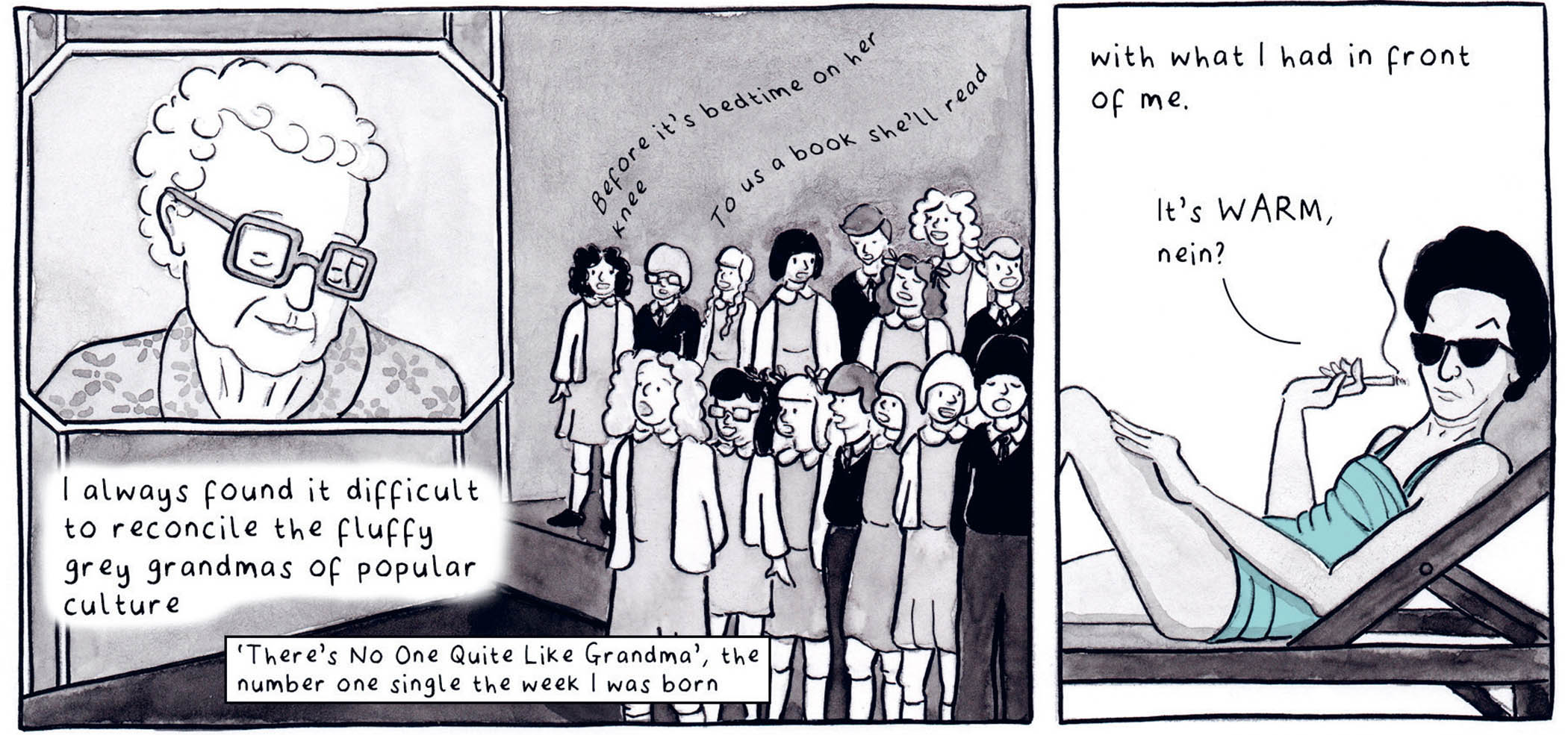
What’s extraordinary about The Crystal Vase is just how much family history Goldsmith manages to squeeze into 200 pages without overloading the narrative. She takes us as far back as Kristallnacht in 1938, when the Nazis ransacked Gisela’s magnificent childhood home in Bad Homburg, smashing everything to pieces. After that, the family scattered to the winds, the teenage Gisela travelling via Amsterdam and Johannesburg to what was then Rhodesia, where she met her husband, Hans Goldschmidt, and went on to have three children.
As befits someone who also makes stop-motion animation, Goldsmith organises her narrative with tremendous efficiency and clarity
As befits someone who also makes stop-motion animation, Goldsmith organises her narrative with tremendous efficiency and clarity
Astrid’s father and uncle later moved to England (both of them anglicised their surname), while Gisela and Hans ended up back in Germany in the late 1970s, settling in Freiburg, chosen for its proximity to the borders with France and Switzerland in case they needed to make another speedy exit.
These reminiscences are deftly intercut with Goldsmith’s 2015 journey to Freiburg with her father to pack up Gisela’s possessions and divide them up among her relatives, who are not always fully appreciative of her efforts. Goldsmith’s portrait of her extended family, a squabbling bunch of eccentrics, brilliant and hopeless in equal measure, is a delight. The challenges of dealing with the Freiburg estate send them into meltdowns of various kinds, leaving Astrid to pick up the pieces – though she, too, is capable of bad behaviour, lapsing into tantrums when she doesn’t get her way.
All of this is illustrated in the same black-white-and-grey palette, enlivened with splashes of dark turquoise, that marked out her short story. As befits someone who also makes stop-motion animation, with all the painstaking care that entails, Goldsmith organises her narrative with tremendous efficiency and clarity, moving the reader through time and space without ever losing us in the crisscross of storylines. The illustrated family tree at the outset helps, as does the inventive use of maps and portraits later in the book.
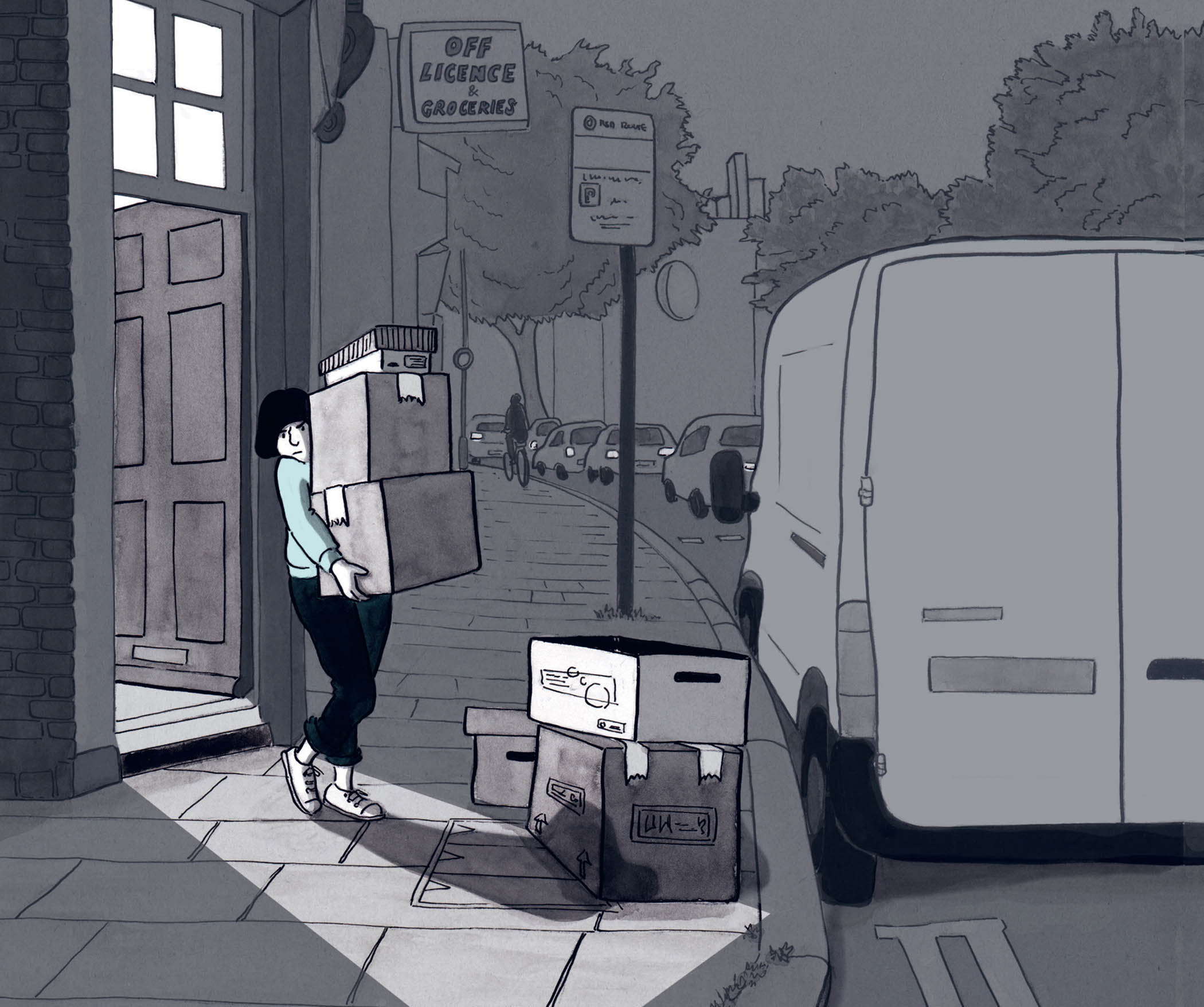
There are so many lovely touches here, it took me a second look to appreciate how the unusual framing on page 105, in which Astrid sees parallels between the lives of her father and grandmother, borrows from an architectural detail outside Gisela’s Freiburg flat. Even the more obvious breaks from naturalistic storytelling are handled with restraint. Later, when she returns from Germany with a van full of her grandmother’s possessions, Goldsmith portrays herself as a unicyclist juggling menorahs, African masks and old crockery in a desperate attempt to impress her relatives, who, after making such a fuss at the outset, want very little to do with any of it.
I was expecting the crystal vase of Goldsmith’s title to be a Tintin-ish device to drive the plot along. Instead, its significance only comes to light in the closing pages – more of a glint than a dazzling revelation. But it provides an elegant metaphor for the resilience of human lives, however fragile they might appear against the crush of history; and for the preciousness of the memories they leave behind, even if you have to dig through piles of clutter to get to them. Those who take time to appreciate these memories, to dust them off and restore them to view, will – like the readers of this book – be richly rewarded.
The Crystal Vase by Astrid Goldsmith is published by Jonathan Cape (£20). Order a copy from The Observer Shop for £17. Delivery charges may apply
Illustration by Astrid Goldsmith
Newsletters
Choose the newsletters you want to receive
View more
For information about how The Observer protects your data, read our Privacy Policy