


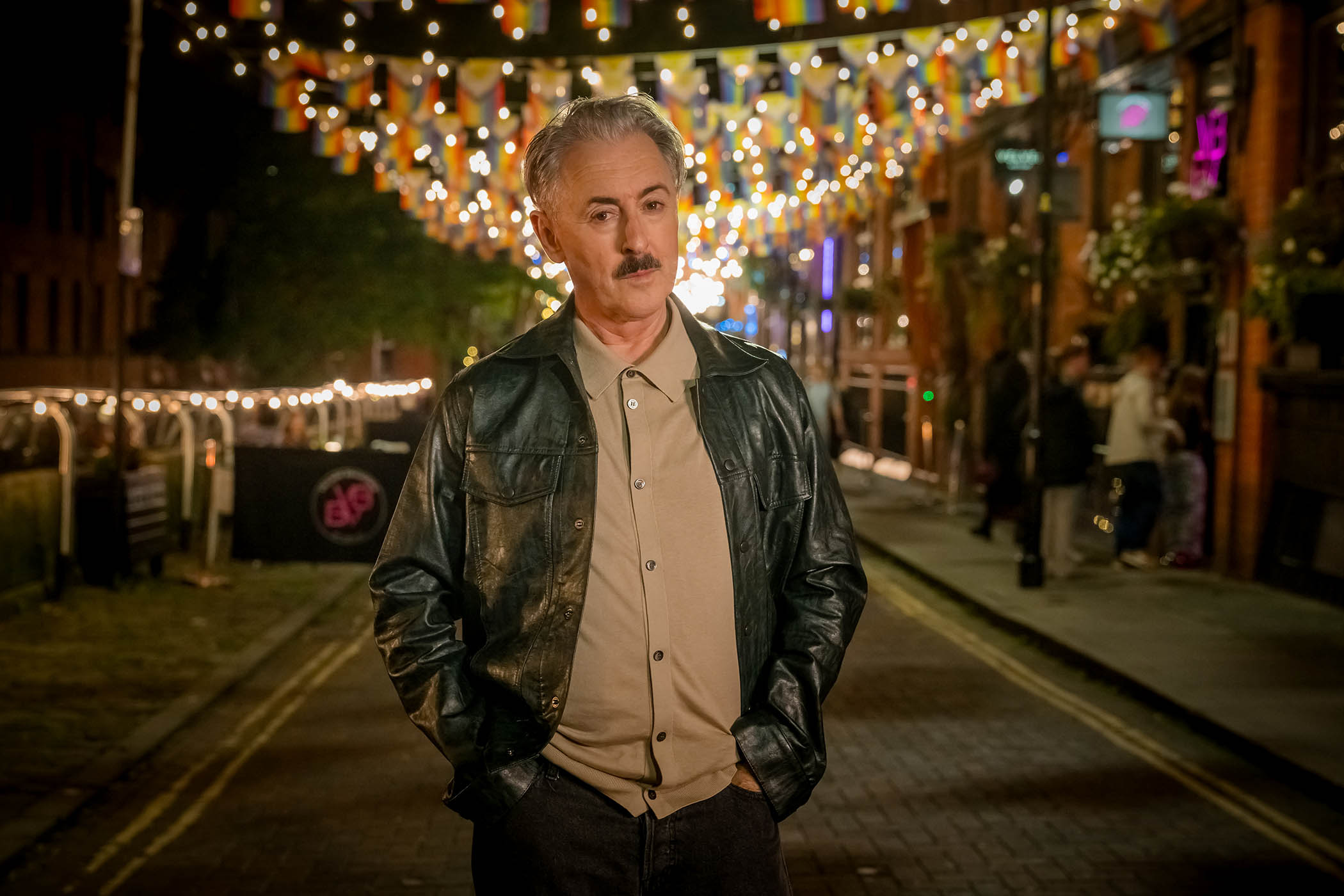
Hallie Rubenhold is a historian and broadcaster whose book The Five: The Untold Lives of the Women Killed By Jack the Ripper won the 2019 Baillie Gifford prize for nonfiction. Her bestselling new book, Story of a Murder: The Wives, the Mistress and Dr Crippen, is an examination of the 1910 murder of American music hall performer Belle Elmore. Rubenhold’s podcast series, Bad Women, explores true crime through an ethical and feminist lens. This interview is an edited version of a conversation that took place at last week’s Jaipur literature festival.
Your book The Five changed the focus of the obsession with the Jack the Ripper murders by telling the stories of his victims. Story of a Murder is a similar kind of revisionist history. Did you set out to continue that approach?
Yes. I think – I hope – The Five really changed a lot of people’s perception of how we think of true crime. In this book I wanted to really look hard at another crime: try to tell it as a kind of panoramic history. A murder is not just something that happens between a victim and a killer or between a detective and the person arrested. It’s a much bigger story. A murder story is something that happens to a family, to a community – and sometimes to a society and to a culture.
Dr Hawley Howard Crippen’s horrific murder and dismemberment of his wife, Belle Elmore, in 1910 made headlines around the world. Unbelievably, though, she became almost as demonised as Crippen, who was found guilty and hanged.
Yes. She was victimised for her own murder. Soon after the trial, a man called Alexander Bell Filson Young wrote an introduction to the court transcripts and constructed a whole story where Belle was a horrific aberration of a woman: she was a hen-pecker, she was shrewish, she was sexually unfaithful; Crippen had, he suggested, no choice but to kill her. From then on this story of the monstrous Belle Elmore was set in stone. But when I went back and I looked, there was absolutely no evidence that she was any of these things.
Some of that perception, as you show, was born of contemporary prejudice against strong women, against the women’s suffrage movement.
Filson Young was writing this at a time when women were experiencing more freedom than they had ever had. And this idea of the liberated woman – a woman who stood up and spoke, who appeared on stage, who reinvented herself – was threatening to the established order. And so, of course, Belle had to be framed in this way.
It was an early example of a culture war, with Belle and the wonderful Music Hall Ladies’ Guild – whose detective work helped to convict Crippen – on one side, and on the other, those who refused to accept that a ‘mild-mannered man’ could carry out this terrible crime.
Yes. Crippen was routinely described as a small, self-effacing man. But he used this as a front to perpetrate frauds throughout his life. He was a conman, selling patent medicines. The jury – of men – took less than half an hour to convict him. But the desire to believe his innocence – and to victimise the victim – persists [in books and documentaries] right up to the present day.
You have had some grim experience of that kind of backlash – the desire to believe the man – over The Five from ‘Ripperologists’ who, weirdly, hated the way that you humanised the victims in those cases.
It’s hard to describe what it’s like to be trolled – even stalked – digitally, as I was for about six or seven years. There are a lot of people who have immersed themselves in trying to solve the question of who Jack the Ripper is. They’ve read each other’s self-published books. And then here comes this woman – me – basically saying: “Well, actually, that approach is all wrong.” It was so shocking to them, because it was a direct assault on their egos.
Did you ever imagine that kind of attack would happen?
No. People throw around the phrase historical revisionism [as a pejorative] all the time. But of course, as historians, our job is exactly that: to revise history. We don’t just regurgitate so-called facts. We do research and we create arguments. History is meant to be rewritten. It’s not fixed.
In the ever-growing true crime genre there is a desire for the neat plotting and satisfying structure of crime fiction. How much do you think fiction has blurred our understanding of violent crime?
People read crime fiction for a number of reasons. They read it because it’s a great puzzle. But in reality, crime is not that kind of mystery. A murder is something which is more like an explosion, and as I try to show in the book, all of these people in proximity to the victim will be hit by the shrapnel of it.
Your book is a great argument for nuance and complication. Do you try to always go beyond easy headlines into the true, messy nature of things?
For a social historian, a murder provides a snapshot of a particular moment in time. It’s so rich in documentation, witness statements and trial transcripts. In all those police interviews we are hearing ordinary people’s voices and they’re just talking about what their daily lives were like. A crime is a moment literally frozen in time: it says, let’s look at all of these people in this particular week more than a century ago – what they were doing, what they were thinking, what they were saying – and examine it. It’s then that you start to find there is so much to unpack.
Portrait by David Levene
Newsletters
Choose the newsletters you want to receive
View more
For information about how The Observer protects your data, read our Privacy Policy