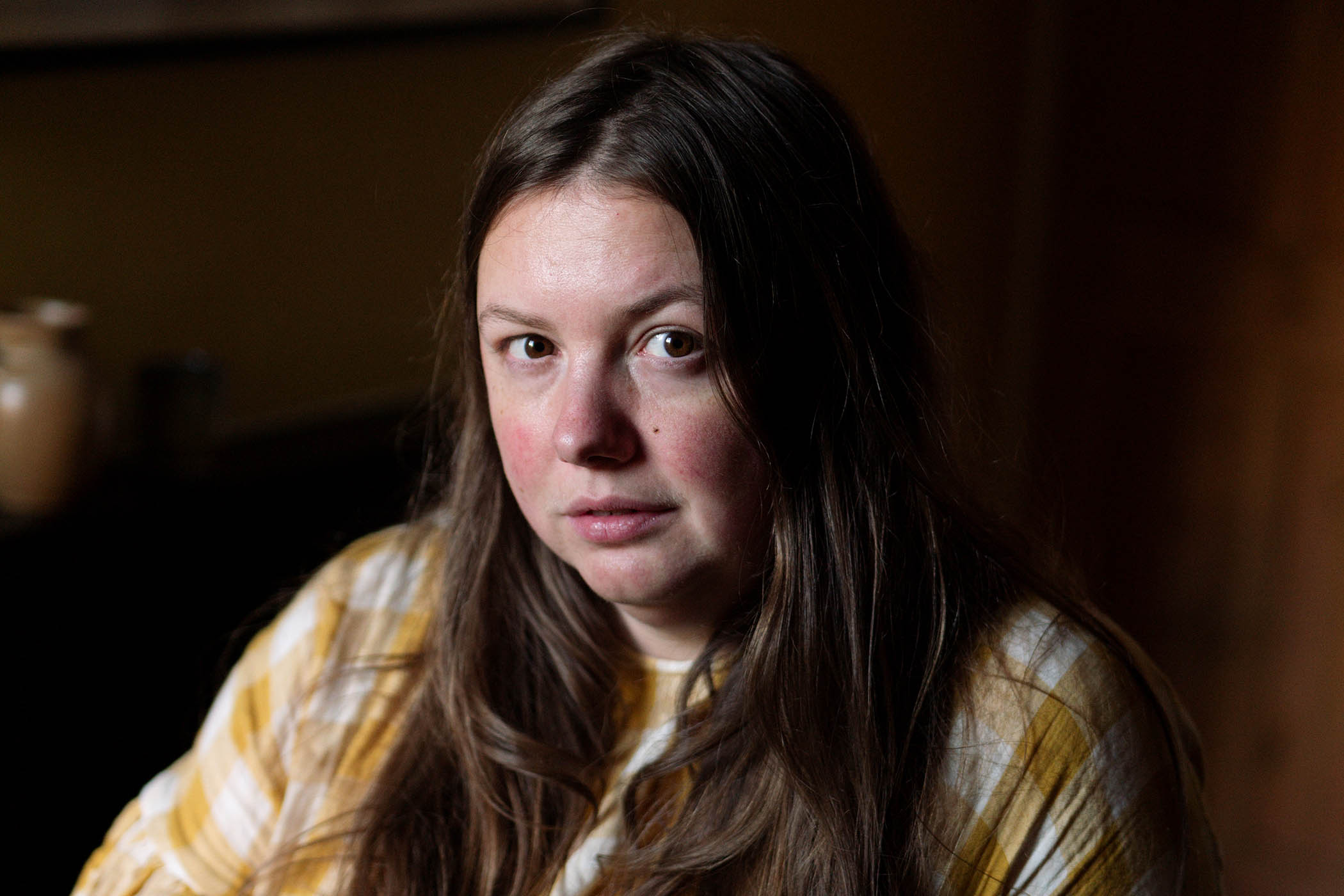
The first time Hannah Murray experiences magic, her arms float, her skull burns and she begins to cry. It is the summer of 2016 and she is in Boston in the apartment of a stranger, Grace, an energy healer with a tiny pet tortoise who promises that the healing will “bring ‘Light’ into her body”. Grace is not touching her, but Murray can feel her body start to move from an invisible force like “a blade of grass being moved by the breeze”.
“I know now that magic is real,” Murray recalls thinking, in this, her first book, The Make-Believe: A Memoir of Magic and Madness. It is confirmation of what she has hoped for since a childhood spent watching Buffy the Vampire Slayer and waiting for her letter from Hogwarts to arrive in the post. But what led her to this realisation was another kind of make-believe: a career as an actress.
Murray was in Boston to film Detroit for director Kathryn Bigelow, playing a character who is subjected to sexual assault in one violent scene. The physical stamina that Detroit required was not new to her. At 27, she had already depicted three suicide attempts on screen: the first, in Skins, left her vomiting a “sweet minty liquid in my trailer” after she swallowed over 100 Tic Tacs for an overdose scene. Best known for playing a girl who has her father’s baby in Game of Thrones, she had learned to endure mentally challenging material. But while filming Detroit, a tear in the fabric of reality occurred. Shooting the scene again and again, as her dress was repeatedly ripped from her body, she struggled to tell the difference between what was real and what was not. The next day, her body aching and burning, she was having a massage in her hotel room when she began to howl.
It is this inciting incident that leads Murray into the clutches of a cult that systematically wheedles money from her as she plummets into a mental breakdown and continues even after she is sectioned. Second-guessing readers’ scepticism, she acknowledges that of course she could have looked up the company online. There she would have seen that this group – unnamed in the book – has a sinister reach around the world, and heard from plenty of people warning her not to go down into its dark basement. But “perhaps, deep down, I knew what I would find”, she writes, so she does not. Instead, she signs up for one of the group’s £700 classes in London, where she learns how to create a “Magic Circle”, recites multiple prayers in Latin, and ultimately is breadcrumbed toward an endless pyramid scheme of increasingly expensive and ridiculous courses that cause her mind to unravel.
So badly does she want to believe, that throughout this process Murray waives her scepticism again and again – even as she questions being told that fairies, unicorns and dragons are real, and is handed a wand. When the recommended homework for a course about becoming a “Ritual Master” includes watching Kung Fu Panda and Kung Fu Panda 3 (“I have no idea why not Kung Fu Panda 2”), she focuses instead on the manic high she felt after that first healing session and on how to get back there from the depths of depression.
Murray crashes through the looking glass, taking us with her into a fantasy world of vast meadows, sea creatures and a golden chalice that exist only in her mind
Murray crashes through the looking glass, taking us with her into a fantasy world of vast meadows, sea creatures and a golden chalice that exist only in her mind
Murray is candid about why she was such an easy target. In her first session with Grace, she was aware of being carefully manipulated into sharing her deepest fears, such as the survivor’s guilt she felt over her mother’s five miscarriages before she was born. But after being opened up like a vein warmed for extraction, Murray believes “in this moment that nothing bad will ever happen to me again”.
So many “what if” moments haunt this book. Perhaps confiding in a friend might have steered her right, but she didn’t want to hear the truth. Without her strange actor’s schedule of flying around the world and checking in and out of hotels, she might have been less able to slip off the radar of family and roommates. If she had not been fearful of medication, and sought out mental health experts instead of the slippery slope of spiritual fulfilment, she might have learned sooner that her reckless one-night stands, drug binges and subsequent despairing lows were indicative of her eventual diagnosis of bipolar disorder.
Instead, Murray crashes through the looking glass, taking us with her into a fantasy world of vast meadows, sea creatures and a golden chalice embedded with amethysts that exist only in her mind. Reality bends and eventually snaps as you read on, and the immersive feel of her writing allows for a deft bit of trickery. It is so claustrophobic as to make it feel like you’re stuck in someone’s mind with their thoughts pressing up against you, and with no footing on solid ground. Impressive too is Murray’s bravery in holding up a mirror to the less sympathetic parts of herself: her hunger to find someone who loves her, and the teenage disdain for her parents that has crept into adulthood.
Related articles:
Murray is clear-eyed on wellness scammers and the magical thinking required of its victims, “an industry full of solutions, in eager need of a steady supply of people with problems”. With her LA life of 6am barre and kale salads, she was primed to see her personal trainer as someone also able to dispense mental-health recommendations. The overlap between the spiritual realm of practices such as astrology and reiki with real health problems – Jodi, whom Murray befriends on the course, goes to see Grace after fearing she would die from Crohn’s disease – is growing as faith in traditional science comes under scrutiny and conspiracy theories and misinformation flourish online. Grace, who “presented her wares to me like a drug dealer, offering the good shit if I thought I could handle it”, is guilty, but so too is the personal trainer who naively waved Murray her way.
The Make-Believe arrives in the wake of another celebrity memoir that intertwines the dislocating experiences of fame and illness: Lena Dunham’s Famesick. Both she and Murray found success and celebrity young and were expected to be grateful for their dreams coming true, to not complain about their gruelling schedules and deteriorating health. For all of Murray’s excitement at shooting Game of Thrones in a Spanish castle and eating at the best restaurant in the world, she also recounts the lows. She fell desperately ill while shooting on a Welsh beach in high winds; as her fever spiked, and despite crying uncontrollably, she was asked to carry on filming. “Please go in there looking nice,” her agent once said to her before a meeting. “They need to believe Benedict Cumberbatch could actually be attracted to you.”
Newsletters
Choose the newsletters you want to receive
View more
For information about how The Observer protects your data, read our Privacy Policy
It is not so difficult to believe how a famous actress could fall prey to such a scheme. In fact, given how our strange 21st-century world isolates and brainwashes, it is entirely understandable. As reality glitches in front of our eyes on the internet each day, and it becomes harder to be certain of when we are being fooled, are many of us not hoping for some kind of magic to make us feel better?
The Make-Believe: A Memoir of Magic and Madness by Hannah Murray is published by Hutchinson Heinemann (£18.99). Order a copy from The Observer Shop for £16.14 (15% off RRP). Delivery charges may apply
Photography by Sophie Davidson