

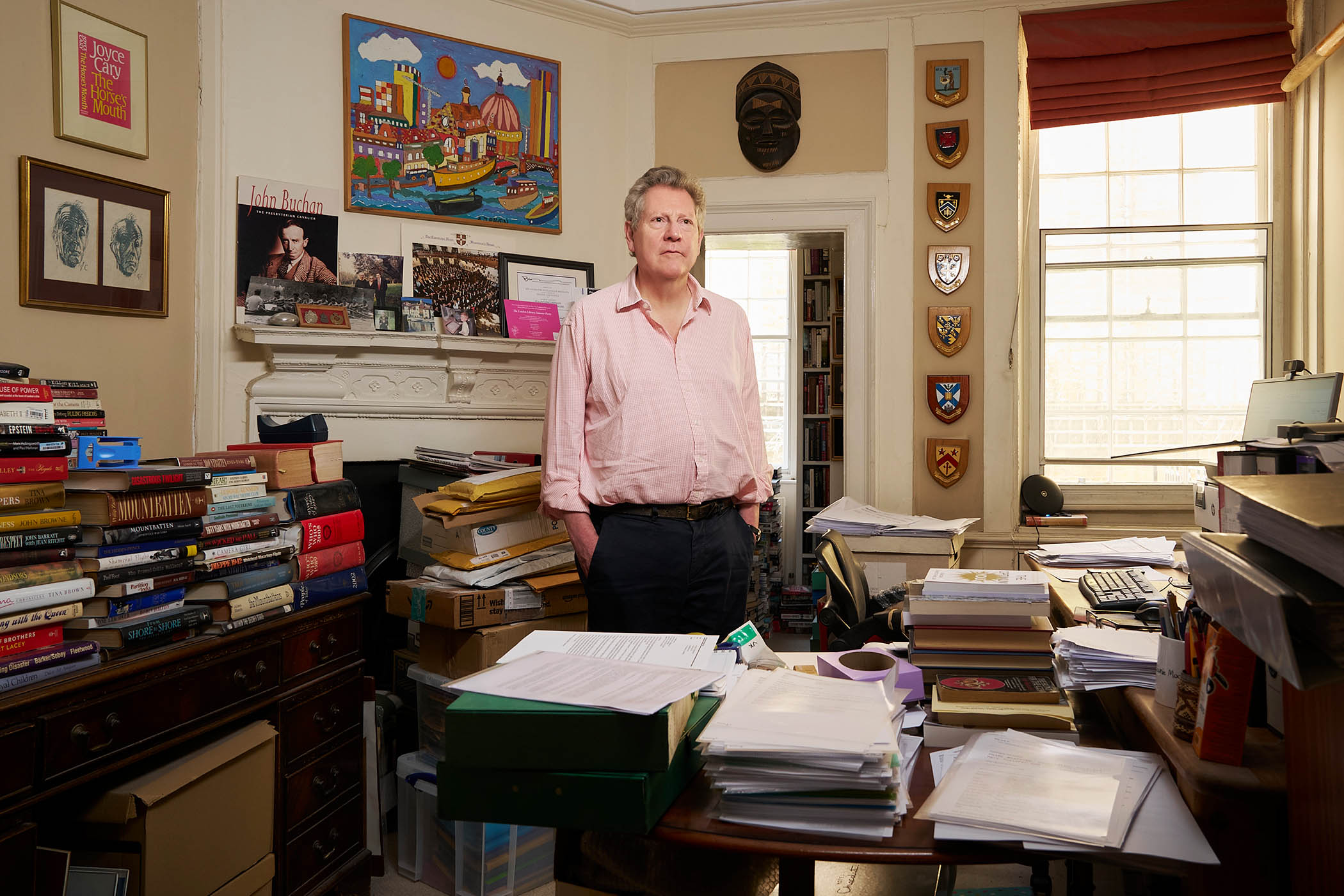
The journey to and from the toilets at Durham University library while I was an undergraduate in the early 1980s provided an opportunity for serendipitous learning. The route took me down a long row of bookshelves where large-format books were kept. One day, something made me stop and pull one of those books from the shelves at random. As soon as I started to leaf through it I was transfixed. That book became a frequent stop for me – at times I looked at it more than the drier tomes on economic history in which I should have been absorbed. The book was Henri-Cartier Bresson: Photographer, published in 1980 by Thames & Hudson. That copy still sits on the shelves of the library; its presence changed my life, sparking a deep love of photography that remains with me to this day.
The Art of the Book: 75 years of Thames & Hudson celebrates the achievements of the publishing house that produced that volume. It charts the history of the firm, both through a narrative account of the leadership of the company, which remains in family ownership, but especially through a visual account of the books it issued. As befits a company whose output was dominated by images, the book is a sumptuously illustrated history. It is an unusually large book – and will test any coffee table that it rests on – but I found it utterly absorbing and uplifting.

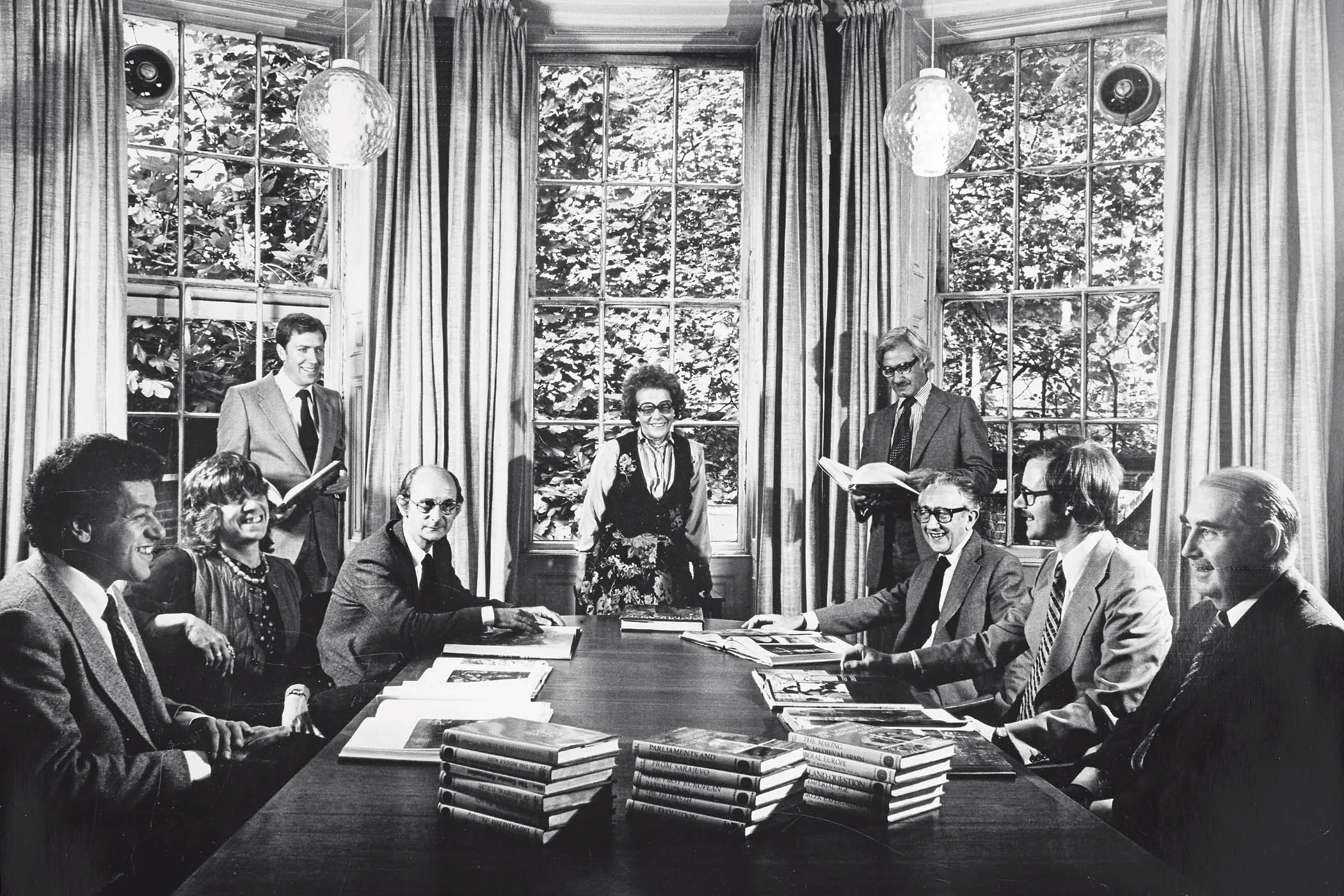
Above: the photography of Henri-Cartier Bresson; main image: a meeting of Thames & Hudson's board of directors in 1976, with Eva Neurath presiding.
The roots of Thames & Hudson, now a cultural institution in its own right, are in the cultural ferment of “Red Vienna” in the early 20th century. Its co-founder, Walter Neurath, grew up in a middle-class non-observant Jewish family, and studied art history, book design and typography. As a young man he co-founded the Neustift (“new foundations”) movement, a leftwing intellectual commune that included the psychoanalyst Bruno Bettelheim. Neurath became a member of the Institute for Art History, but had to step out of this intellectual world to run his family’s grocery business (a useful grounding in commerce), before moving into commercial publishing. The rise of Nazism in Austria in the 1920s and 1930s, with its antisemitic laws and restrictive social measures, reached the point where Neurath and his first wife were forced to flee the country, finding refuge in Britain. The book makes the striking observation that postwar British publishing was transformed by the many brilliant Jewish publishers who were welcomed as refugees from Germany and Austria: Neurath was joined by André Deutsch, George Weidenfeld and Paul Elek, as well as Béla Horovitz and Ludwig Goldscheider, founders of Phaidon.
As a refugee, Neurath soon found work in the publishing industry. The success he had in conceiving and producing for Adprint the series Britain in Pictures (regarded as being highly supportive of the war effort) emboldened Neurath to found a new publishing house with his colleague (and fellow refugee) Eva Feuchtwang, who joined him as a full business partner. Thames & Hudson was born in 1949 with a mission to provide high-quality illustrated books on art and culture: a “museum without walls”. Neurath and Feuchtwang (who eventually married) established their business with two bases, in London and New York – hence the company’s name – but their outlook was also deeply European.
With their connections in continental publishing, they saw the opportunity of combined British and American markets to co-edition their books with European publishers, so that the print runs could be maximised to make the books affordable without sacrificing quality. This business model, combined with their focus on illustrations, was the root of their success.
The setup of the firm was one thing, but the books the Neuraths commissioned or co-published were of outstanding quality. Their first book was a large-format illustrated survey of English cathedrals by another European refugee, the photographer Martin Hürlimann. It was an immediate success, but the firm’s real genius was to take the continental tradition of publishing in series and adapt it for the English-language market. The first series, World of Art, is still going strong. It began by simply taking three existing titles (Frank Elgar’s Van Gogh and Germain Bazin’s The Louvre and Impressionist Paintings at the Louvre) and packaged them in uniform black jackets. This evolved into books in black softcover, and more recently white, and they continue to be affordable entry points into art history. They have sold in their millions.
Some of the series, such as Great Civilizations or Ancient Peoples and Places, now seem outdated in terms of approach, but in their time brought new scholarship to a wide audience – helped by a range of impressive talent on the editorial side, such as the art historian Herbert Read, the architectural historian Nikolaus Pevsner and the archaeologist Jacquetta Hawkes. These innovative series were augmented by other good publishing ideas: affordable but high-quality facsimiles such as The Book of Kells (1974) and The Bayeux Tapestry (1985), which provided greater access to cultural treasures, the former having sold more than half a million copies.
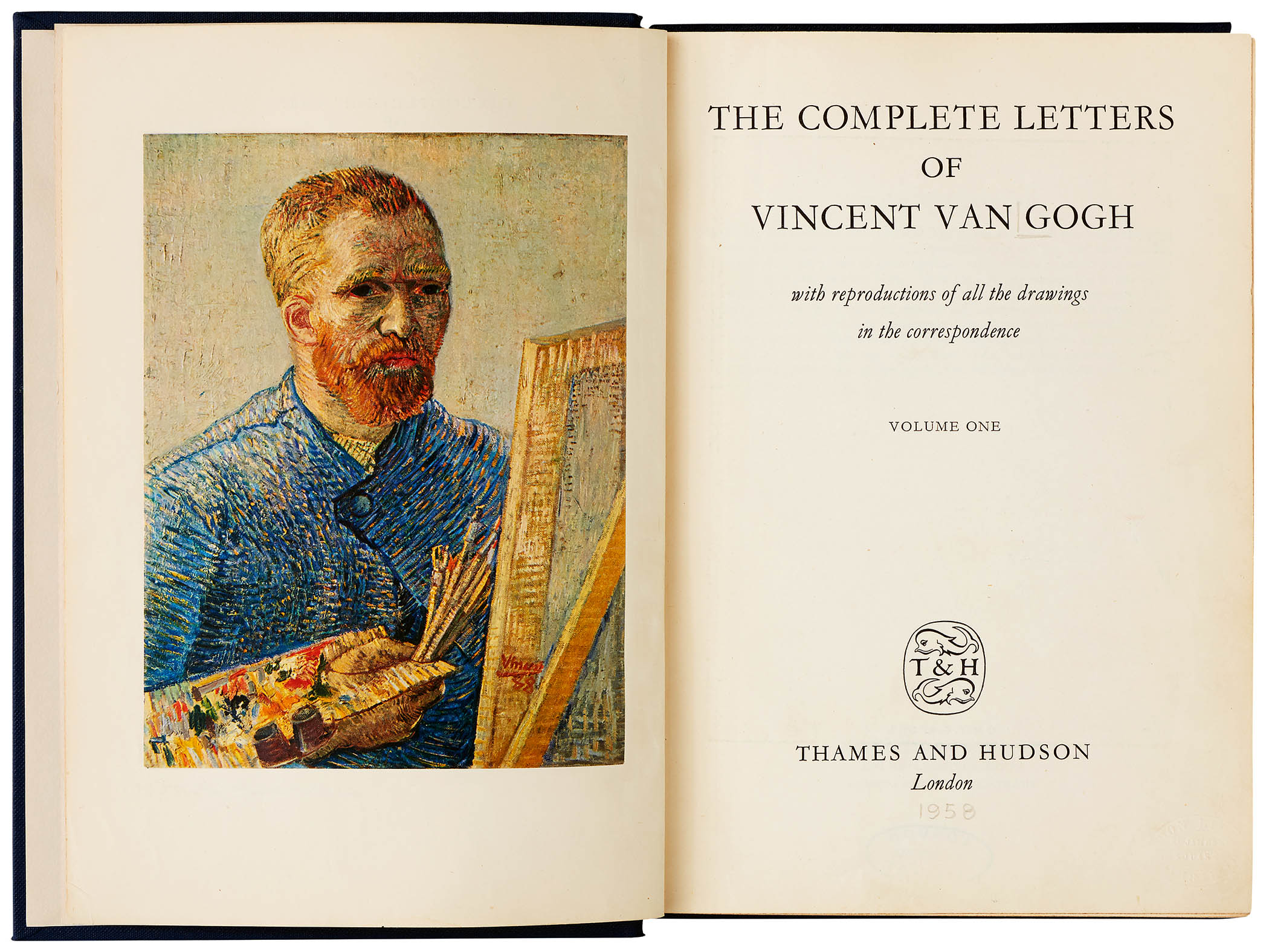
Thames & Hudson’s 1958 edition of Van Gogh’s letters.
The Neuraths built Thames & Hudson into a highly successful company with extraordinary speed. Walter’s business acumen was mixed with his great erudition and deep cultural sensibility. He also had great charm and a skill at forming and maintaining strong business relationships. In the office, he had a reputation for having a short fuse, but his temper would soon pass and be forgotten. Eva’s highly tuned aesthetic sense was a mainstay of the house. One of her last acts for the company was overseeing, over three sleepless nights, every sheet of the catalogue of the Tate’s Francis Bacon retrospective in 1985.
Walter Neurath died in 1967, being succeeded as managing director by his son Thomas Neurath, only 27 at the time. Thomas inherited his father’s learned approach with a more contemporary feel for how culture was changing. He hired two new commissioning editors: Colin Ridler continued the excellence in history and archaeology; and Nikos Stangos brought a connection to modern artists. The Thames & Hudson effect brought artists such as David Hockney, Francis Bacon and Richard Long to bookshops large and small across the country, helping establish their popular reputations. David Hockney by David Hockney, first published in 1976, began a clutch of 21 titles relating to the artist which have together sold 1.5m copies. Hockney had the reputation for being much more agreeable when approving proofs than Bacon. Alongside modern art came modern ideas in the form of critics such as TJ Clark, Linda Nochlin and Robert Hughes. The contemporary art form of photography became a natural staple of the company’s lists: Cartier-Bresson was joined by the enigmatic documentary work of Josef Koudelka, the aerial genius of Yann Arthus-Bertrand, and the powerful street photography of William Klein.
The book stands as a monument to the democratisation of art and culture, and its humanising effects
The book stands as a monument to the democratisation of art and culture, and its humanising effects
As definitions of culture have expanded, so too has Thames & Hudson’s publishing. More contemporary art forms have been championed, with Subway Art (1984) being followed by Spraycan Art (1987) and a follow-up, RIP: New York Spraycan Memorials (1994). In recent years the firm has further enhanced its interests in areas such as fashion, design and their interplay with popular culture. The Catwalks series, focusing on fashion houses such as Chanel and Jean Paul Gaultier, has sold more than 2m copies. What would Walter Neurath have thought of Sneakers: The Complete Collectors’ Guide (2005), I wonder?
Thames & Hudson began publishing in the aftermath of the war and the Holocaust: historical events that had profoundly affected its founders. The firm’s focus on art, design and culture, as well as archaeology and ancient history and the birth of civilisations, can, perhaps, be viewed as an attempt to remind the world that humanity is capable of uplifting, transcendent achievements of the soul and the intellect; that these achievements are not the product of the people of one country but are spread across the globe, made possible by people of diverse creeds and colours. The mission to make high-quality books affordable to those on modest means has enabled that vision to reach a wide public.
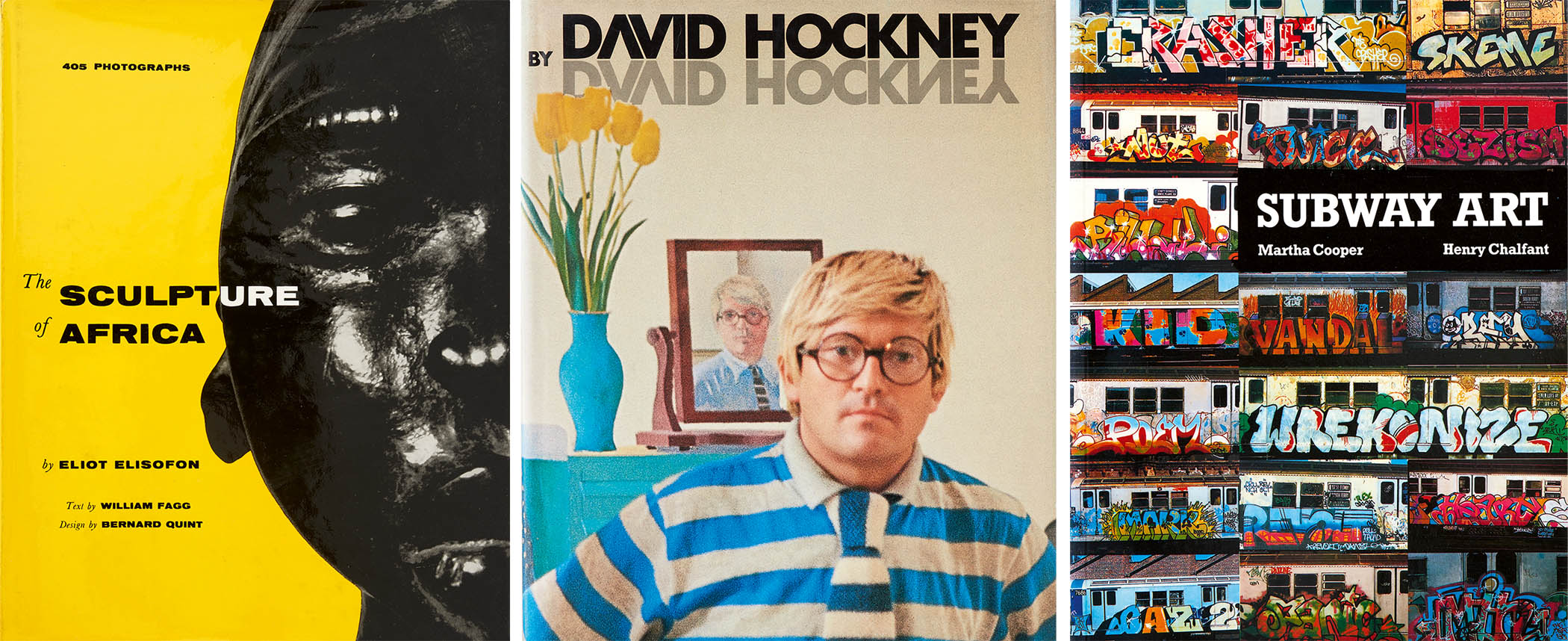
Thames & Hudson's catalogue includes The Sculpture of Africa (1958), David Hockney by David Hockney (1976) and Subway Art (1984).
The books of Thames & Hudson remain comparatively affordable and accessible for products of their kind, their scope now very much broader in terms of what constitutes art and culture. But the ethos of the firm continues, with Thomas’s daughters Johanna and Susanna still heavily involved. The helm of this great ship has been in the capable hands of Sophy Thompson (formerly of Assouline and Flammarion) since she became CEO in 2019, and it remains one of those rare but very precious things: an independent publisher.
The Art of the Book is a celebration of a great publishing house at a milestone in its history, and at times serves as a family album for the Neuraths, whose lives have been inextricably intertwined with the books they have published, the artists and curators they worked with, and their colleagues in the company. It also stands as a monument to the democratisation of art and culture, and its humanising effects. Although digital technology has transformed the way that images can be shared, the physical book remains an extraordinarily powerful technology, one that endures after more than 2,000 years. The combination of carefully chosen typography, design, paper and images reproduced with loving fidelity remains highly compelling when put together in the right way – as in The Art of the Book.
I can find many of the Cartier-Bresson images I first encountered in the early 1980s online, but the thoughtful curation and presentation of them in book form still has what Milton called “a potency of life”. We need publishers like Thames & Hudson now, just as we did at the end of the second world war, to help us experience the best that humanity can achieve.
Richard Ovenden is Bodley’s Librarian and the Helen Hamlyn Director of University Libraries, Oxford
The Art of the Book: 75 years of Thames & Hudson (£65). Order a copy from The Observer Shop for £58.50. Delivery charges may apply
Photographs courtesy Thames & Hudson
Newsletters
Choose the newsletters you want to receive
View more
For information about how The Observer protects your data, read our Privacy Policy