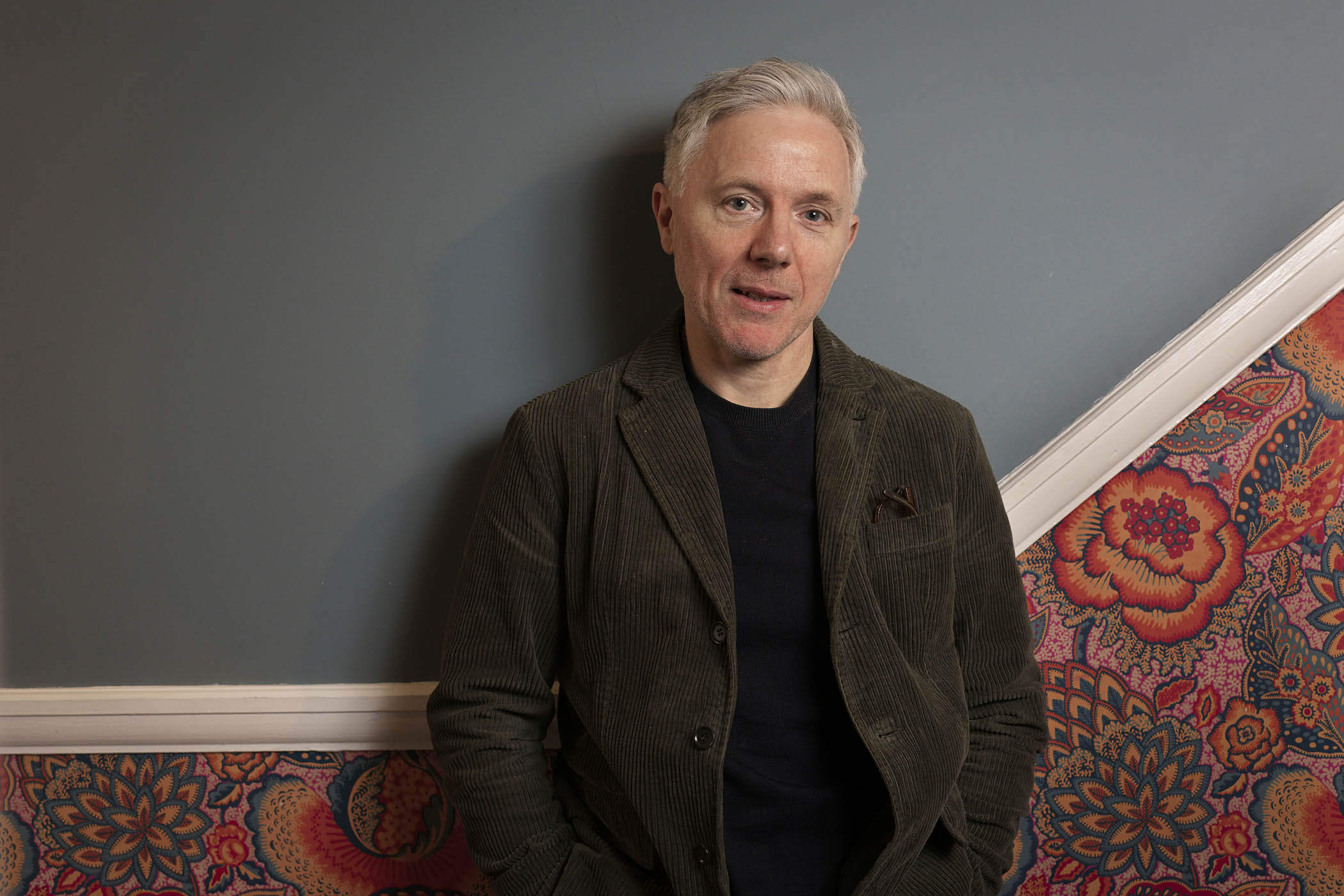

Ian Leslie’s first three books, Born Liars, Curious and Conflicted, examined among other things the drivers of human creativity and the importance of constructive disagreement; before he was a writer he was a communication strategist for major commercial brands. His latest book, John & Paul: A Love Story in Songs, casts new light on the unique bond between Lennon and McCartney. Out in paperback this month, it was described last year in The Observer’s review as the new gold standard of Beatles books, and was widely chosen as a book of the year.
John & Paul was a bit of a departure from your previous work. How did it come about?
You know that jokey idea that 90 per cent of men spend half their time thinking about the Roman empire? For me that’s always been the Beatles. But even though I’d loved them most of my life, and even though I write books, I was never thinking: I’m going to write a book about the Beatles. There were too many, and I’m not a music writer.
What changed?
During the pandemic, I had a lot of time on my hands and I started writing notes towards an essay about Paul McCartney. I wanted to try to restore a sense of astonishment and awe towards him. I put this 10,000-word piece on my Substack [The Ruffian] because I didn’t think any magazine was going to publish a long essay making the case that Paul McCartney is very good at music. But then it went viral or whatever. There was a big emotional response to it. That gave me licence in my own mind to think about a book. And I knew immediately that would be a book about John and Paul, which I realised, astonishingly, hadn’t really been done before.
You write beautifully about their instant attraction to each other as teenagers, when Paul saw John playing at a fete in Liverpool in July 1957. Your account has the feel of a gospel.
I’m glad you sensed that. Tom Holland, the historian, is writing a book about the 1960s being as important a decade as the 1510s, say, to the Reformation. A huge, pivotal moment in cultural history, to which the Beatles are absolutely central. It’s sort of incredible that we have photos of that day they met. And I think there’s no doubt they immediately recognised each other as special somehow. John had been fronting his band, but suddenly, despite the age difference [nearly two years], there were the two of them up there together.
One of the fascinations of their partnership is the vulnerability and trust they brought to writing together. Is that best explained as a love story?
We don’t really have much of a frame to describe this kind of male friendship, which is very, very intense and romantic without being sexual. We have a box for mates. We have a box for homosexual lovers. But we don’t have a language for this. Often, when people talk or write about the Beatles they say, “Oh, they were clearly like brothers.” But this is nothing like the relationship between me and my brother. There are a few examples from the past, maybe Wordsworth and Coleridge, at the beginning – creating something together, needing each other to do that.
John and Paul had a shared trauma of losing their mothers at a young age. What effect did it have on them?
I think the mutual bereavements gave them this shared belief that what you take for granted as reality, as normal life, can just be ripped away from you. It can be shattered. I think that leads directly to what Ian MacDonald called [in the words of the title of his own Beatles book] the “revolution in the head” – you know, that psychedelic understanding, post 1965, that they could reinvent consciousness and so on.
Has Paul responded to the book at all?
No, nothing. I’m sure he knows about the existence of it; he keeps a kind of close eye on what’s going on. But I’m almost certain he hasn’t read it and won’t read it because, you know, there’s been a million books written about him, and he’s kind of annoyed by most of them.
I’ve always thought McCartney’s persona was a kind of psychological necessity to shield himself from the extremes of his talent. Which of them was easier to analyse?
The comparison with John and Paul, I think, is really encapsulated by the Penny Lane/Strawberry Fields double A side, because they’re both majestic achievements, but the strangeness of [Lennon’s] Strawberry Fields is very obvious, right? It’s all on the surface. Penny Lane is this shiny pop song, but when you look hard at what’s going on in the lyrics and musically as well, it’s so much more complex and emotionally conflicted than you ever realised.
Is this the kind of book you are going to write from now on?
I don’t know. It has sort of destroyed my sense of what kind of writer I am. It’s not really a replicable formula though. I’ll probably do something quite different.
I get the sense you love the freedom of writing primarily on your Substack these days?
I do. It has changed my life because it’s now the centre of my day. It means that I’m constantly in the groove of writing, whereas as a freelance journalist, sometimes you’re writing, sometimes you’re not. The Substack evens things out. It also means I can try out whatever I like.
Have you been surprised by the outpouring of love for this book?
I’ve been hugely gratified by it. They’re nice people to hang out with, the Beatles. In a world that is full of bad news and doom and anxiety, it’s just great to be able to spend time with some of the best things that humans are capable of.
John & Paul: A Love Story in Songs is published in paperback by Faber on 29 January (£12.99). Order a copy from The Observer Shop for £11.04. Delivery charges may apply
Portrait by Karen Robinson for The Observer
Newsletters
Choose the newsletters you want to receive
View more
For information about how The Observer protects your data, read our Privacy Policy