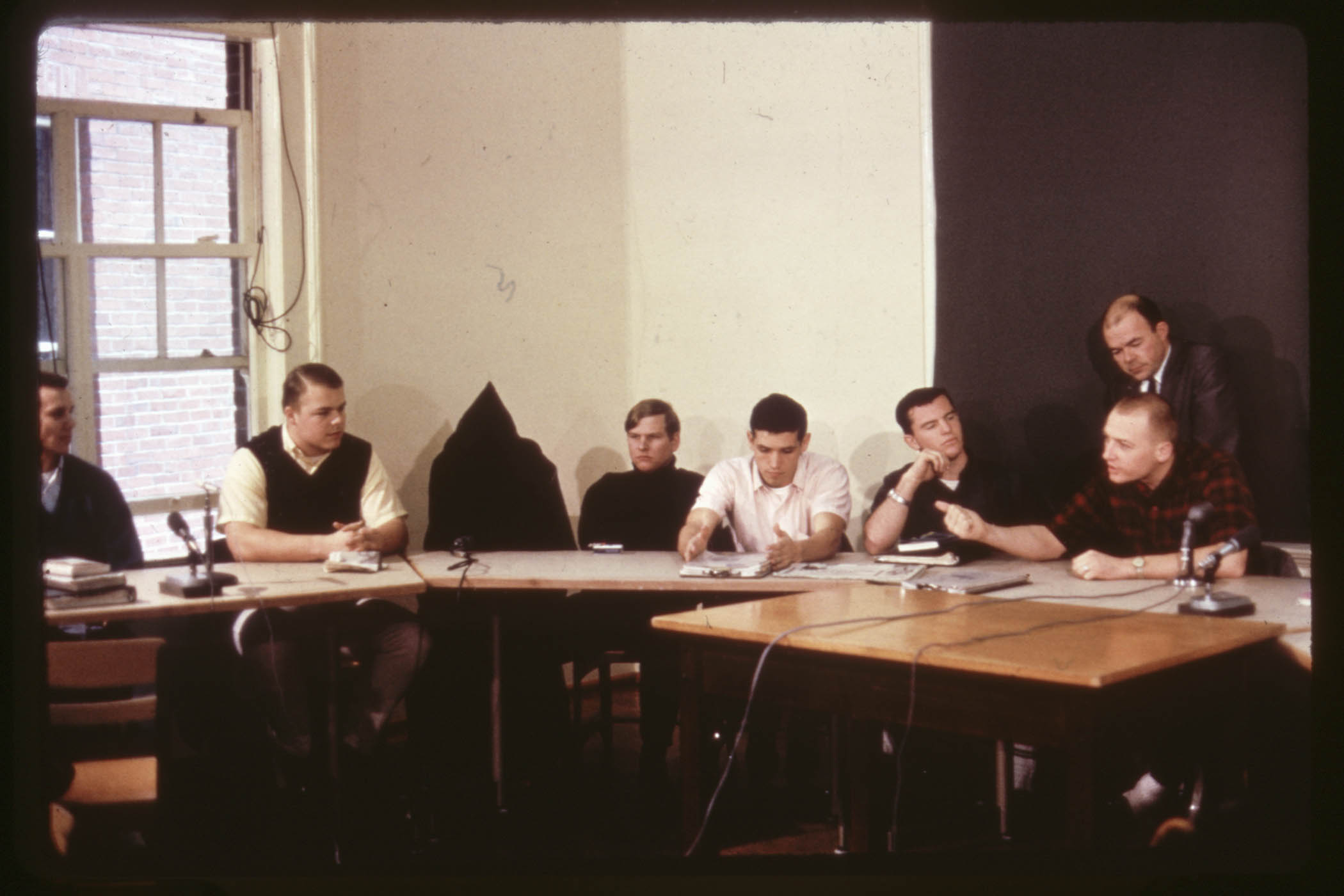



In 1967, at Oregon State University, Charles Goetzinger, professor of social psychology, undertook an experiment where a figure dressed head to foot in a black bag sat in his classes for an entire term. The black bag was to say nothing at all, and to move as little as possible, and was not to react when spoken to or interact in any way with his classmates. Goetzinger observed that, over the course of the winter term, “the students’ attitude changed from hostility toward the black bag to curiosity and finally to friendship”.
For Goetzinger, the black bag proved the “mere exposure effect”, which had been posited by a colleague in the field, Robert Zajonc: that repeated exposure to the same stimulus (unpleasant, unsettling or otherwise) gradually wears down our kneejerk repulsion to a kind of acceptance, and even affection.
This happens “non-consciously”, but there is, still, disagreement as to whether the effect is “cognitive” (arising from thinking, reason and knowledge) or “affective” (arising from emotion, mood and feeling). Many laboratory monkeys have died in the quest to establish the latter; a fact I find hard to accept, no matter how many times I’m exposed to it.
In previous studies, Zajonc tested the mere exposure effect using music, photographs of faces and nonsense words as the stimuli, and found, conclusively, that participants’ positive attitudes increased with familiarity. We might think of the way aesthetics such as cubism or modernism were initially met with shock and derision before ultimately becoming venerated traditions. Architecture too. Guy de Maupassant famously liked to eat his lunch in the Eiffel Tower’s restaurant because it was the only place in Paris he didn’t have to look at the structure. Similarly, the only time when I’m not feeling stressed about emails is when I’m answering emails; this is the closest I get to happiness. Does my partner only love me because she’s got used to me? I blanch at the idea.
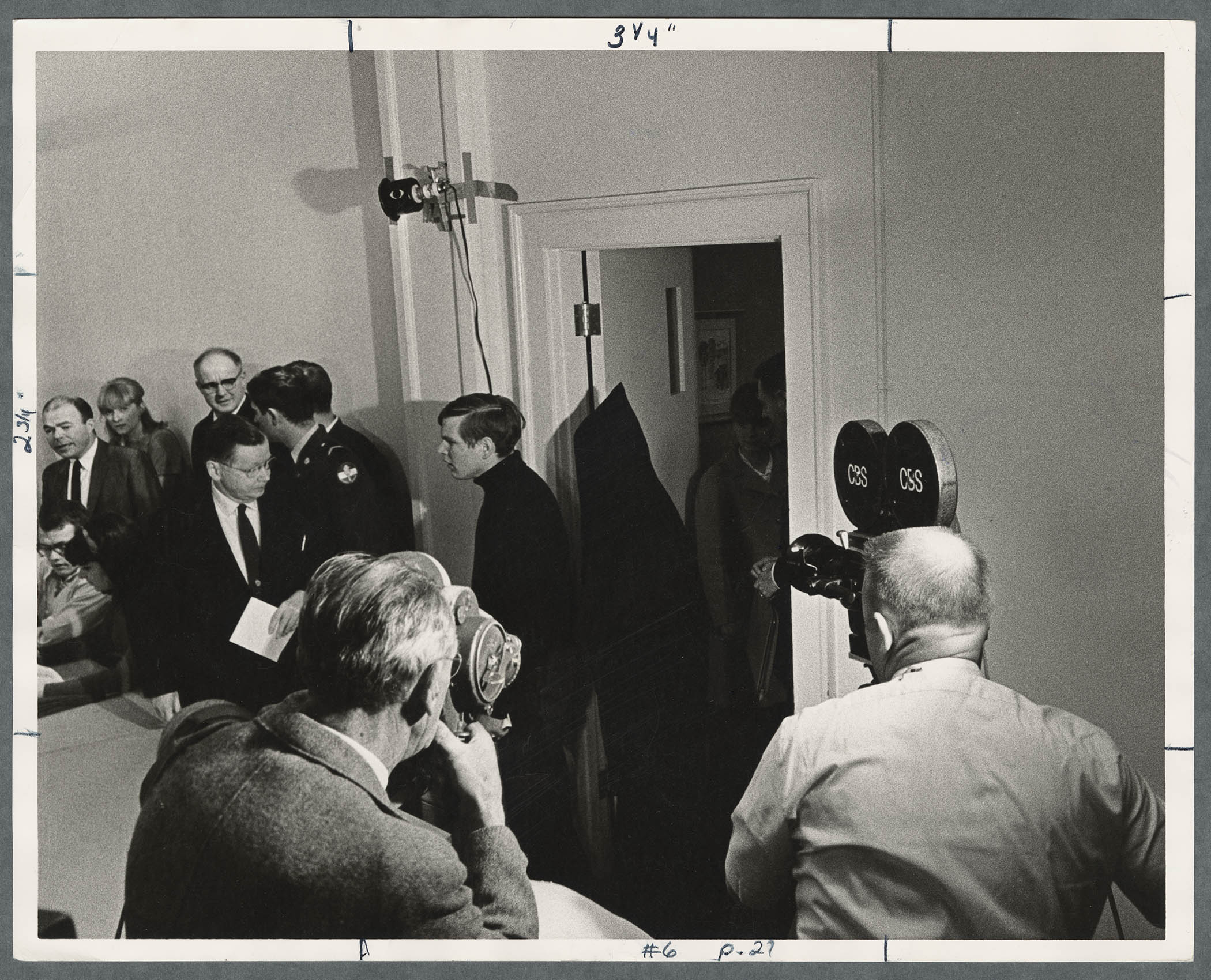
Black bag arrives at a lecture at Oregon State University in the late 1960s
Goetzinger was the first to undertake a study of a more theatrical nature, with unwitting participants and a lengthy period of observation. The black bag experiment garnered media attention at the time, with the Associated Press running a story about a “mysterious student” whose reasons for his attire and silence were inscrutable.
It remains an eye-catching study for anyone curious about attraction theory or social psychology in general. But the write-up itself contains little detail aside from its conclusion. We don’t know exactly how the students expressed their hostility towards black bag in the early sessions, nor how this discernibly changed to fondness: a friendly pat on the head, a completely one-sided intimate chat, invitations to a drink after the final seminar, perhaps? These “affective” gaps in the scientific method – or at least in its writing up – were part of my motivation for my novel Black Bag, in which the narrator, an out-of-work actor, accepts the role of black bag in a modern-day reiteration of the experiment. This allowed me to write something of a neo-campus novel in our corporatised era.
I happened across black bag by chance while reading social psychology essays – something I like to do for their insights and their touching absurdities – and it stood out to me, partly because it was charmingly odd, and partly because it seemed like a genuinely good way of testing the theory. Also, for the fact that the focus was on the students – all of whom would have had their own complex reactions for their own complex reasons – and not on black bag, whose cognitive and affective reactions to being black bag struck me as just as interesting.
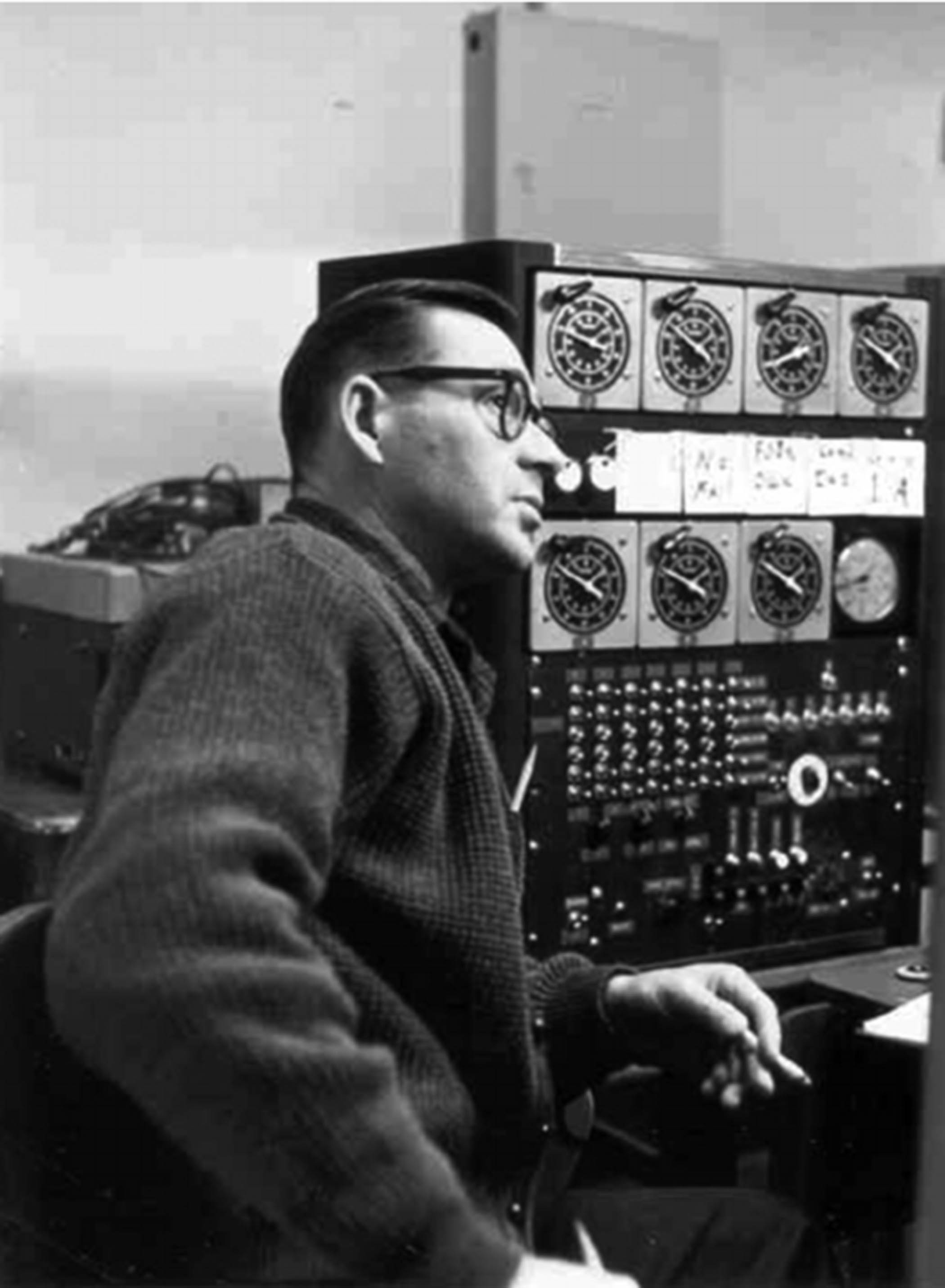
The experiment tested Robert Zajonc’s ‘mere exposure effect’ theory
The 1960s was a time of frontier psychology with extremely lax ethical guidelines. Reading these studies, you begin to feel – were you alive in that era – that you could have found yourself an unwitting participant in a psychological case study without your consent at more or less any point in your day.
Related articles:
Compared with the more infamous social psychology investigations of the decade, black bag was relatively benign: nobody was traumatised and no monkeys were tortured. But black bag did still involve messing with people’s heads and couldn’t have worked otherwise. Social psychology is a noble, perhaps quixotic endeavour to understand ourselves, to untangle the knots of our feelings and reasoning in all their obtuse, capricious strangeness, and to do so in the language of science and equations.
Perhaps if we can explain ourselves in those terms, we can also change, maybe even for the better. And yet academia depends on the instrumentalisation of its findings in industry – for better and worse. So a lot of these elegant and insightful principles tended to be most helpful to advertisers, brand managers and marketers. Like writing a beautiful poem that accidentally improves the efficiency of the homing missile.
In the case of the mere exposure effect, an invasive YouTube advert – its hideous jingle and insufferably twee voice acting – will disgust and annoy me the first few times I encounter it; less so the 10th or 11th time, once the irritating edges have been sanded down, because they’re so familiar to me. After a while, I come to associate it with watching content I’m interested in; the charmingly stupid bell that rings before I get fed. And which company is on my mind the next time I want to renew my car insurance or book a package holiday?
Black bag’s fellow students became quite protective, defending him when faculty members criticised his appearance
Black bag’s fellow students became quite protective, defending him when faculty members criticised his appearance
This has plenty of political ramifications too: parties depend on name recognition and branding as much as anything so dry as actual, clearly communicated policy, to the point where the name and the logo might separate from whatever they used to stand for. Does anyone in the 21st century associate Labour’s rose with workers’ rights, for instance? It tends to remind me of briefcases and expense accounts.
We might compare the mere exposure effect to the Overton window: a concept that describes the range of arguments and subjects that are acceptable within mainstream discourse, on a scale from popular to sensible to radical to unthinkable. This window can shift, shrink or expand. I will never accept that immigration is to blame for the ills caused by the rampant kleptomania of the managerial class, but by this point, I’ve heard it so many times that I almost take people at their word when they claim to believe it.
The hopeful interpretation of the black bag experiment is that it demonstrates how the mere exposure effect reduces prejudice; this stands to reason, and numerous studies have shown that, for instance, white people living in diverse, populous cities exhibit less implicit racial bias over time.
Newsletters
Choose the newsletters you want to receive
View more
For information about how The Observer protects your data, read our Privacy Policy
However, it can just as readily serve as a reminder of how easy we are to manipulate. In a 1976 experiment, Richard L Miller installed posters in three college dormitories stating: “Reduce foreign aid”, and some text regarding taking back control and reserving tax money for domestic problems. One hall of residence got a standard couple of posters on its foyer noticeboards, another was plastered in them – every wall, unmissable, up to 170 posters – and the third hall got none. There was an attitudinal questionnaire, before and after, followed by an opportunity to volunteer for a time-consuming campaign against foreign aid, with targeted communications to Congress: 63% of the students overexposed to the posters in their halls volunteered, 23% of those “moderately exposed” did likewise and 0% from the hall with none.
I suppose that Miller was likely quite in favour of foreign aid, and in any case, no such pressure campaign existed, despite enthusiastic participant uptake; the experiment was over. But just imagine the malign influence a bad actor could have in our own age of mass communication if they decide to take advantage of it. Thank goodness our media literacy is at an all-time high, and thank goodness arts and humanities degrees are held in such regard by the powers that be.
There are individual actions we can take to defend ourselves against the weaponisation of the mere exposure effect. A 2013 study tested the effectiveness of cinema adverts on audiences eating popcorn and audiences eating nothing. It was found that the subjects who weren’t eating later expressed higher preference for the advertised brands and were significantly more likely to have bought them between the screening and the questionnaire; those eating popcorn had no recollection of the advertised brands at all. In conclusion, “oral interference” (eating or chatting) reduces the efficacy of advertising almost to zero, which is something I think all of us can take forward and apply to our evenings. Always be snacking.
As a writer, my issue is with the way experiments such as black bag isolate a single problem in order to adequately test it. Therefore every participant, researcher included, is reduced to their demographic type. Aren’t there an infinite number of factors outside the remit of the test that influenced – no, not influenced, defined – how all of this was set up and how it went at this specific moment in history?
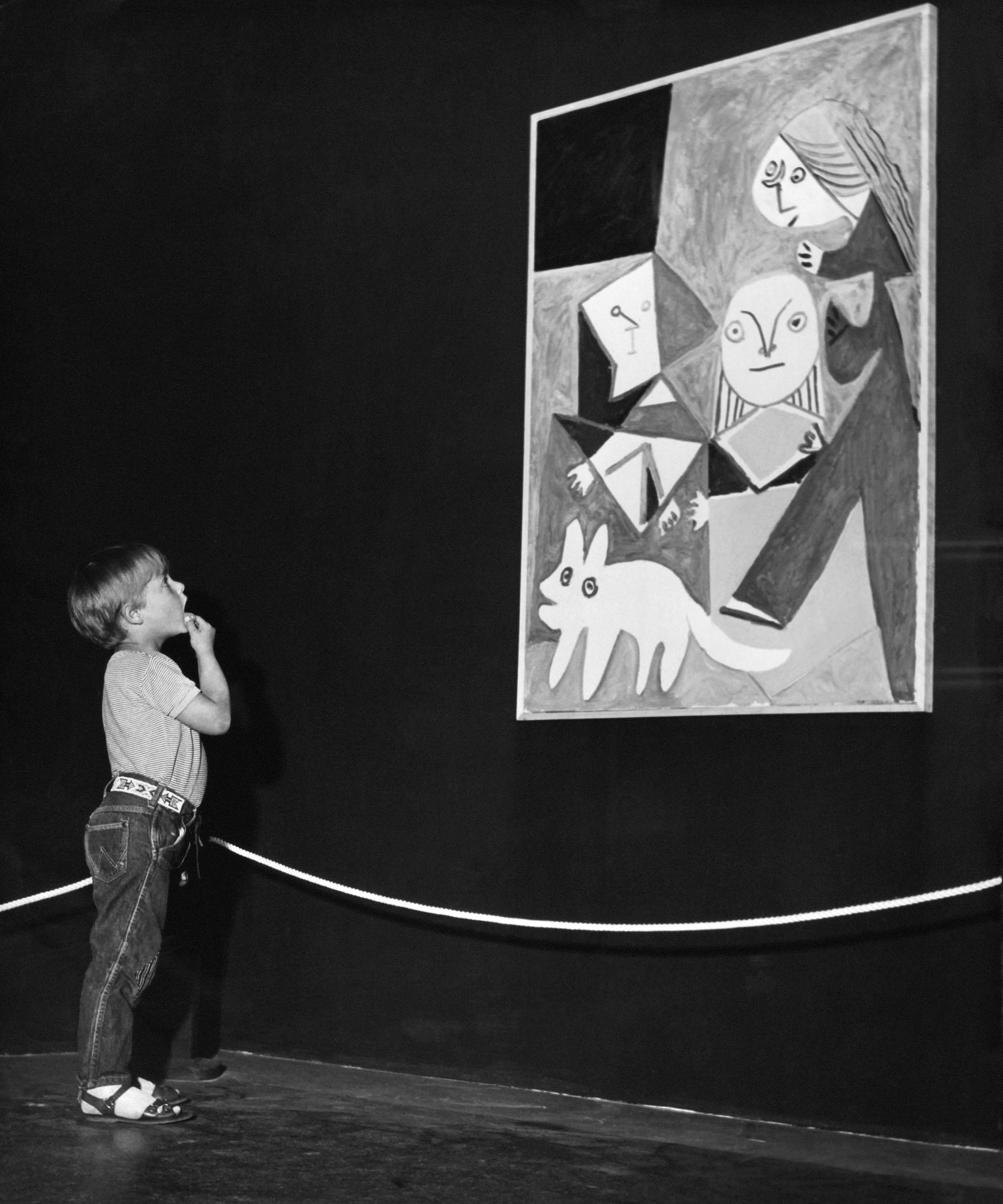
Cubism was initially met with shock and derision before ultimately becoming venerated – the mere exposure effect in action
In my novel, the narrator suffers from a form of maladaptive daydreaming; whenever he sits in his bag in the lecture theatre, he cannot help but come up with characters and histories for every case study participant he hears about from the professor. I have no intention of claiming any disciplinary superiority, but there are several dozen novels in every coolly reported investigation into human behaviour.
Sometime after the initial report on black bag, the southern California Desert Sun ran the story: “Student in black bag talks, loses mystery.” While black bag was still a blank canvas, his fellow students had imagined all manner of esoteric or personal motives; they had also become quite protective, defending him to any faculty members who criticised his presence or appearance. But when he gave a three-minute presentation to the class about his own reasons and reflections in rather general terms (we judge based on clothes and looks; makes you think, huh?), they were disillusioned: “He blew my image of what a mystery should be,” said one student.
Through his voice and his words, black bag had reduced himself from a cipher of infinite possibility to an ordinary man with mundane opinions; about as disappointing a figure as one can be. If reality has a habit of falling short of our expectations, then the role of art is to re-enchant – to reopen our eyes and minds to the point where we might even find something remarkable in him.
This may just be the magician’s sleight of hand, but Goetzinger is quoted in the same report as saying that it wasn’t really his experiment at all; at the beginning of the winter term, a student approached him and asked if he could dress in a bag for its duration and: “I was nut enough to allow it.”
Black Bag is published by John Murray (£18.99). Order a copy at The Observer Shop for £17.09. Free UK standard P&P on orders over £25.
Photographs by Oregon State University Special Collections and Archives Research Center, Corvallis, Oregon, Researchgate, Gamma-Keystone/Getty Images